

Collector Insights · Art History
10 Movements That Shaped Contemporary Art
A history told as a pendulum — each movement a reaction to the one before it

Contemporary art rarely invents itself from nothing. Nearly every movement that matters arrived as an argument with the one before it — a rejection, a correction, sometimes a rescue. Chaos is answered by control. Gesture is answered by silence. Image is answered by idea, and idea is answered, eventually, by image again. This is the story of that pendulum: ten movements, each one a direct reaction to what came before it, each one still visible — sometimes unmistakably — in the work being made and collected today.
1916 — Zurich
Dada
The Refusal of Reason
In February 1916, a small group of artists and writers opened the Cabaret Voltaire in Zurich — a neutral city, deliberately chosen, surrounded by a Europe tearing itself apart. Hugo Ball, one of the founders, performed sound poems in cardboard costumes, reciting nonsense syllables to an audience that didn't know whether to laugh or riot. Tristan Tzara wrote a manifesto built almost entirely from contradiction and refusal.
"Dada means nothing."
— Tristan Tzara, Dada Manifesto, 1918
That refusal was the point. Dada rejected the idea that art needed skill, beauty, or even intention — and in 1917, Marcel Duchamp gave that rejection its most lasting form. He bought a urinal, signed it with a pseudonym, and submitted it to an exhibition as Fountain. It was rejected, photographed, and lost — and it changed everything anyway. Duchamp's argument was simple and irreversible: a work of art could be designated rather than made. Selection could replace skill. Once that idea existed, it could not be un-thought.
Its afterlife runs directly through art made decades later. Damien Hirst's The Physical Impossibility of Death in the Mind of Someone Living (1991) — a tiger shark suspended in formaldehyde — applies Duchamp's exact logic to something that was never altered at all: the artist's decision to present it is the entire work. Jeff Koons's The New (1980s), a series of vacuum cleaners and consumer appliances sealed pristine in fluorescent-lit vitrines, treats domestic products with the reverence of museum relics, asking whether newness itself can be the subject of a work. Ai Weiwei took the opposite route in Dropping a Han Dynasty Urn (1995), photographing himself destroying a two-thousand-year-old vessel — not designating an object as art, but interrogating the same question from its inverse: if selection alone can create value, can destruction alone expose it?
Dada did not last. By the early 1920s its energy had already begun redirecting — not outward, against the world, but inward, into the unconscious mind that its own embrace of chance had started to uncover.
1924 — Paris
Surrealism
The Unconscious Made Visible
By 1924, Dada had exhausted its own contradictions — a movement built on refusing meaning cannot easily build anything to replace it. André Breton broke away and published the Manifesto of Surrealism that year, redirecting Dada's assault on reason inward. Max Ernst, who had worked within Cologne Dada before joining Breton's circle, became one of the bridge figures between the two movements. Breton's own method was automatism — writing or drawing as fast as possible, without conscious control, to let the unconscious speak before reason could edit it.
"Beauty will be convulsive or will not be at all."
— André Breton, Nadja, 1928
A parallel, quite different strand of Surrealist painting pursued the same unconscious material through the opposite technique. René Magritte, Yves Tanguy, and Salvador Dalí rendered dream imagery with near-photographic precision rather than chance — nothing about Magritte's 1929 painting of a pipe, captioned "this is not a pipe," was left to accident. The exactness was the point: language and image, presented with total clarity, still refusing to align.
That logic of the meticulously rendered dream runs forward with unusual directness. Marcel Dzama's masked, folkloric figures inhabit exactly the kind of carefully illustrated private mythology this second strand pioneered.
Even as Surrealism pursued the irrational, a very different, opposing conviction was taking hold elsewhere in Europe — not that reason should be escaped, but that it could, if applied with enough rigour, remake the world entirely.
1917–1933 — Weimar, Moscow
Constructivism, Bauhaus & De Stijl
The Utopia of Order
While Surrealism went looking for the unconscious, Russian Constructivism emerged directly out of the 1917 Revolution, with artists like Vladimir Tatlin arguing that art should serve the new society as engineering serves a bridge. In the Netherlands, Theo van Doesburg and Piet Mondrian founded De Stijl on a parallel conviction: that a visual language reduced to lines, primary colours, and flat planes could express a universal harmony beneath the chaos of appearances. Germany's Bauhaus, founded by Walter Gropius in 1919, fused both impulses into a single institution — art, architecture, and design taught as one discipline, governed by function rather than ornament.
"Form follows function."
— a principle closely associated with Bauhaus design philosophy, though the phrase itself predates the school
What united all three movements was a shared bet: that geometry was not neutral — it was an argument for clarity and a world rebuilt on rational principles after a catastrophic war. That bet would resurface, stripped of its politics but not its logic, four decades later in Minimalism's insistence that a cube needed no more justification than its own precise dimensions.
By the 1930s, political pressure had scattered this generation — many fled Nazi Germany for the United States, carrying geometric conviction into a country about to produce something almost entirely opposite: an art of raw, unguarded gesture.
c. 1943 — New York
Abstract Expressionism
The Return of the Gesture
The Bauhaus generation that fled to America carried geometric conviction with them — but postwar American painters had little interest in continuing it. After a war that had turned rational civilisation into a machine for mass death, certainty itself felt like exactly what needed abandoning. Jackson Pollock dripped and poured paint directly onto canvas laid flat on the floor, working from all sides at once. Willem de Kooning brought the same raw energy to the figure, his Woman series tearing the body apart through violent, layered brushwork. Clyfford Still built jagged fields of colour with almost geological force, while Mark Rothko pursued the opposite temperature — luminous colour he insisted was genuine emotional confrontation, not decoration.
"The people who weep before my pictures are having the same religious experience I had when I painted them."
— Mark Rothko
Abstract Expressionism made New York, for the first time, the centre of the Western art world rather than Paris — and made the artist's psychological interior, not the finished object, the actual subject of painting.
That premise would not survive the 1960s intact. A younger generation, raised on television and supermarkets, began to find its high seriousness suffocating — and looked for a way to bring art back down into ordinary life.
1961
Fluxus
Art as Ordinary Life
If Abstract Expressionism had turned the artist's inner life into a subject worthy of reverence, Fluxus rejected the reverence entirely. Emerging around the composer George Maciunas, the movement took its name from the Latin word for "flow" — there would be no pedestal separating artwork from room, no reverent genius separating maker from anyone else. George Brecht's Drip Music (1959–62), one of the movement's defining event scores, consisted of nothing more than a single instruction: pour water from one vessel into another, from some height, and listen. That was the entire work.
"Art is Life, Life is Art."
— a Fluxus principle often summarised this way, distilling ideas voiced by figures including Maciunas and Beuys
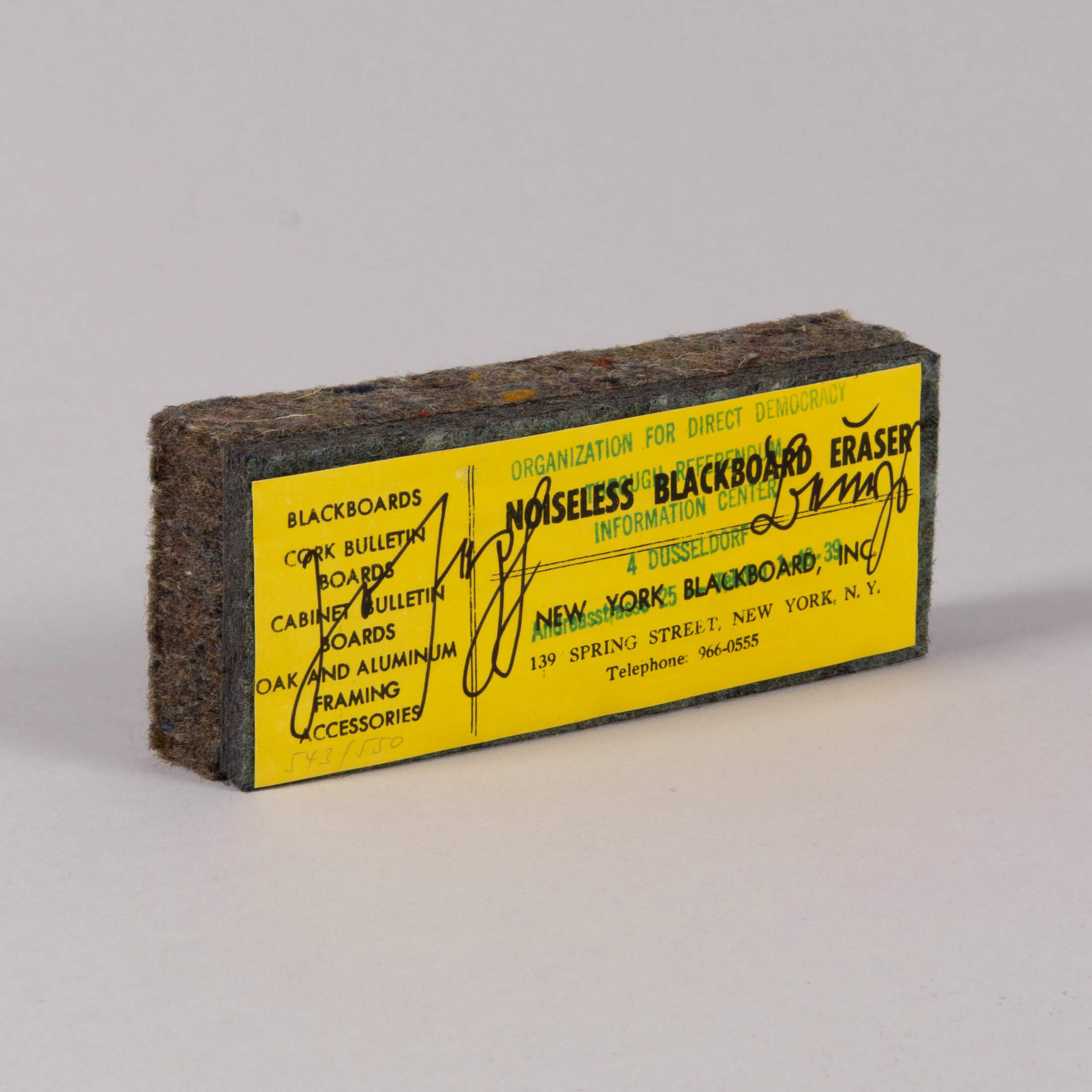
Where Duchamp's readymade had asked whether selection could be authorship, Fluxus asked whether the object even needed to be precious at all. Joseph Beuys, moving fluidly between Fluxus and his own idea of "social sculpture," captured the logic in his often-repeated claim about his own multiples: that owning enough of them meant owning the artist himself — proof of how completely art and life had been made to flow into one another.
Fluxus never became a movement with a signature style — that was the point. Its central bet, that value lay in circulation rather than scarcity, would resurface in the deliberate accessibility of the multiple, and in Conceptual Art's later insistence that an idea needed no object at all.
1962 — New York
Pop Art
Mass Culture as Subject
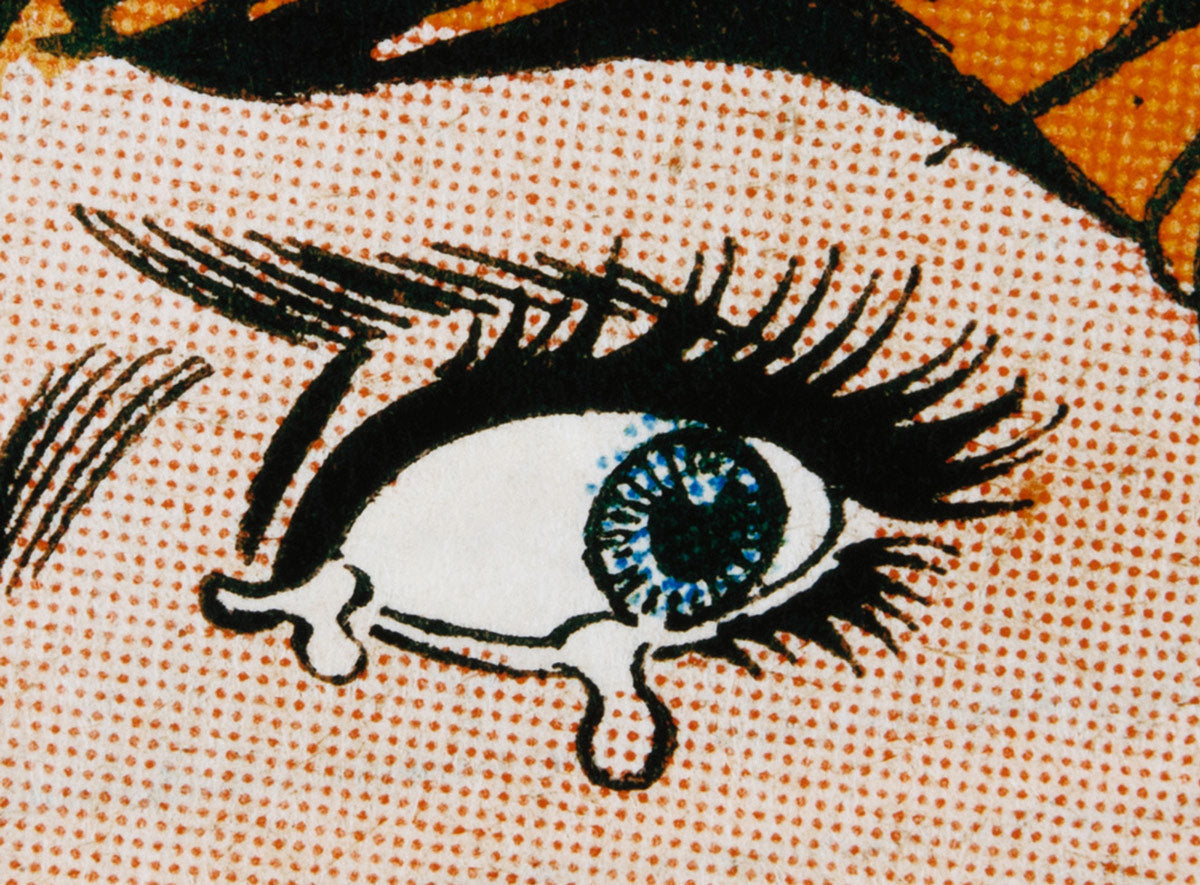
Fluxus had tried to dissolve the art object into ordinary life. Pop Art took the opposite route: it embraced the most artificial, mass-produced objects life had to offer, and declared them worthy subjects without apology. The term originated in Britain — Richard Hamilton used "pop art" in a 1957 letter years before the movement's American explosion. That explosion arrived with Andy Warhol's 1962 exhibition of thirty-two Campbell's Soup Can paintings, treating repetition itself as the subject.
Strip away four decades of accumulated meaning and the soup can is, structurally, not so different from Duchamp's urinal — an ordinary object elevated to art through nothing but a decision to point at it. What Warhol added was a layer Duchamp never included: the object was already a symbol of consumer capitalism, so pointing at it was never neutral.
"Pop Art is for everyone."
— Andy Warhol
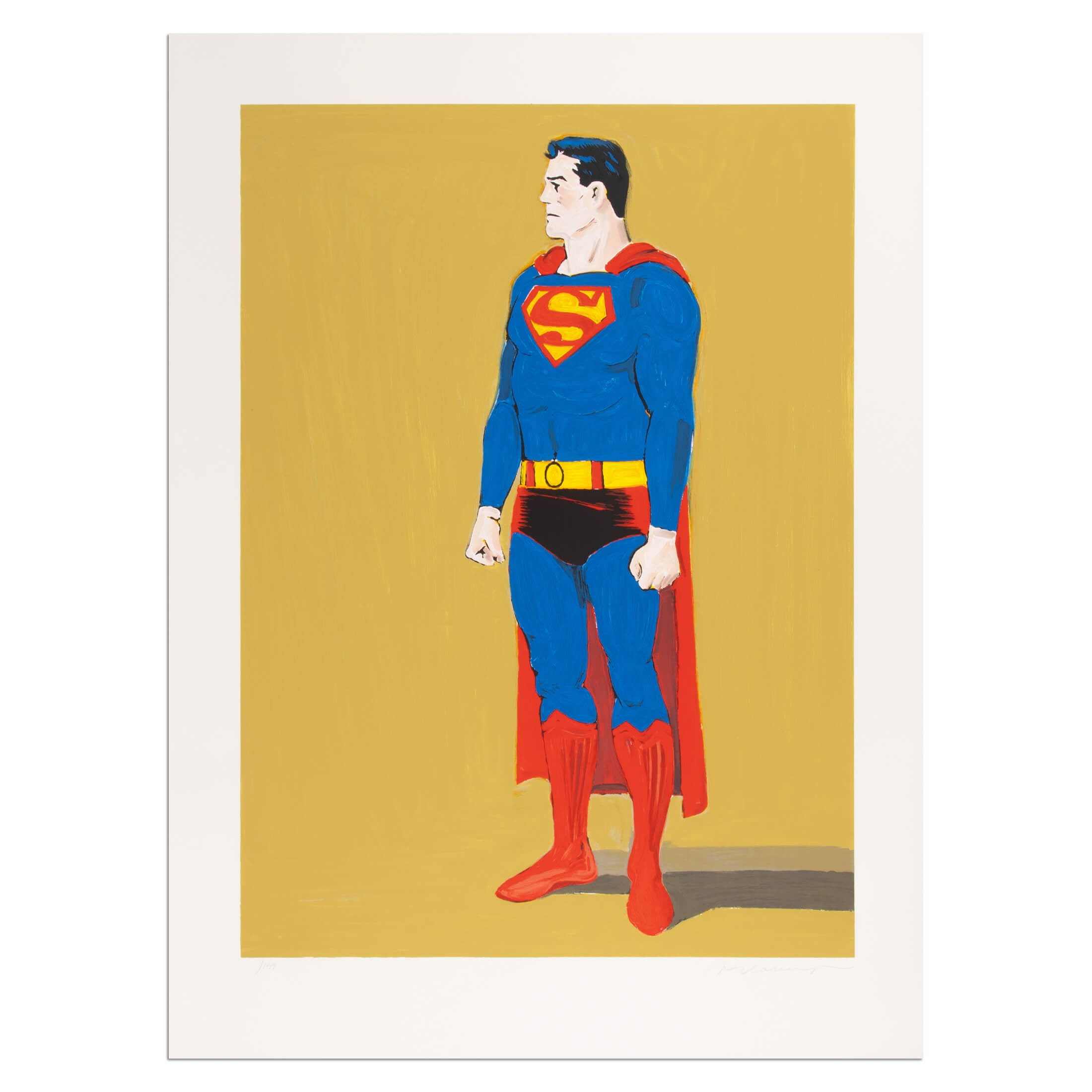
Where Abstract Expressionism had demanded specialist reverence, Pop Art required nothing but familiarity with a supermarket shelf. Explore this movement's full legacy in our Pop Art collection.
Almost simultaneously, a colder and much more radical reaction was taking shape — not more imagery, but the deliberate removal of image, gesture, and reference altogether.
1960s
Minimalism
Neither Gesture Nor Image
Pop Art had answered Abstract Expressionism with image. Minimalism answered it with the opposite: the deliberate removal of image, gesture, and reference, until nothing remained but the object's own physical presence. Donald Judd insisted on the term "specific objects" over "sculpture," arguing his stacked boxes were something that simply existed, without metaphor, exactly as built.
"A work needs only to be interesting."
— Donald Judd

That sentence dismantled a century of assumptions. Sol LeWitt formalised the logic into pure instruction, arguing the idea generating a work mattered more than the hand executing it — a position that would prove decisive for what followed.
Minimalism inherited the geometric conviction of the Bauhaus but stripped it of utopian politics. And in following Judd's insistence to its logical end, it opened a question it could not itself answer: if the idea mattered more than the object, did the object need to exist at all?
1967
Conceptual Art
The Idea as the Work
Minimalism had ended on an unanswered question. In 1967, Sol LeWitt answered it directly, in an essay that became one of the most quoted texts in postwar art.
"The idea becomes a machine that makes the art."
— Sol LeWitt, Paragraphs on Conceptual Art, 1967

LeWitt meant this literally. His wall drawings existed as written instructions rather than fixed objects — assistants, not LeWitt, carried them out. Joseph Kosuth pushed the same logic to its cleanest demonstration with One and Three Chairs (1965): a chair, a photograph of that chair, and a dictionary definition, presented together — three systems for representing one object, none more "real" than the others.
The artwork could be an instruction, a document, a sentence — anything, provided the idea was rigorous enough to survive without a crafted object at all. Explore this movement's full legacy in our Conceptual Art collection.
That confidence would not go unanswered. By the late 1970s, a new generation of painters — openly hostile to Conceptual Art's cool detachment — began arguing that something essential had been lost.
Late 1970s
Neo-Expressionism
The Return of Paint
If Minimalism had emptied art of gesture and Conceptual Art had emptied it of the object, Neo-Expressionism answered with the loudest possible reversal: raw paint, mythic subject matter, and the unmistakable presence of the artist's hand. Georg Baselitz gave the movement one of its most distinctive gestures in 1969, when he began painting his figures upside down — a way of forcing the viewer back toward paint itself.
"The object does not represent anything. It represents nothing at all."
— Georg Baselitz, on his approach to the inverted figure
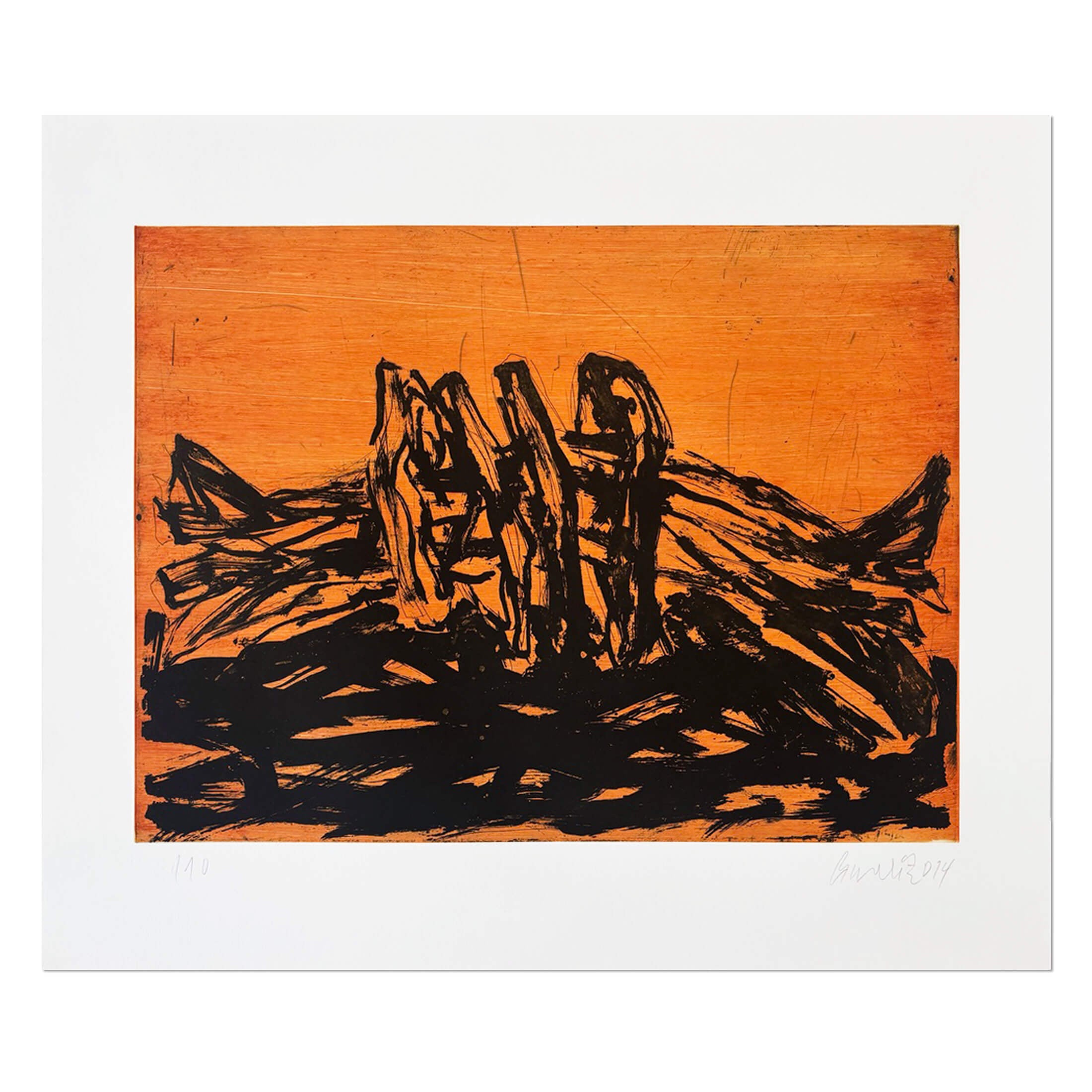
The movement spread quickly and unevenly. Anselm Kiefer built thickly encrusted, ash-and-lead landscapes confronting German myth directly. Julian Schnabel embedded broken crockery into his canvases. Jean-Michel Basquiat fused raw, graffiti-born mark-making with dense historical reference, becoming, before his death in 1988, one of the decade's most consequential painters.
The pendulum was now nearly back where it started — but one more reversal remained: a movement that would fuse Pop Art's imagery with Conceptual Art's rigour.
1977–1980s
Appropriation Art / Pictures Generation
Closing the Loop
A new generation in New York looked at Pop Art and Conceptual Art and saw unfinished business in each. First defined by Douglas Crimp's 1977 exhibition Pictures, which included Robert Longo, this generation set out to take mass media's saturated imagery and subject it to genuine critical pressure. Sherrie Levine pushed the logic furthest: in 1981 she rephotographed Walker Evans's Depression-era photographs from a museum catalogue and exhibited the results, unaltered, as her own work.
"Every word, every image, is leased and mortgaged."
— a line closely associated with Sherrie Levine's 1982 statement on appropriation and originality
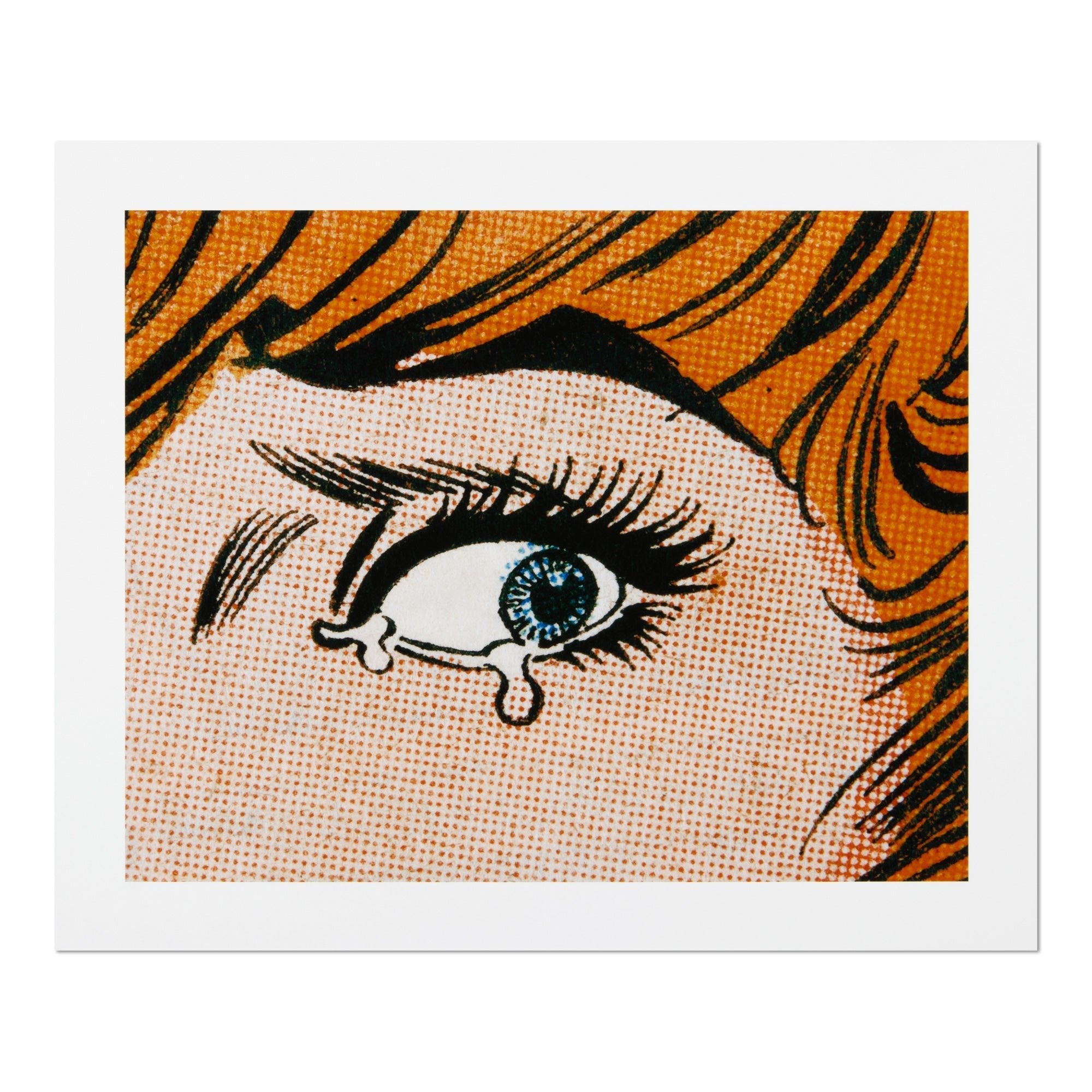
Cindy Sherman photographed herself in imagined film stills. Richard Prince rephotographed Marlboro advertisements. John Baldessari paired appropriated photographs with text. Robert Longo's charcoal drawings turned advertising's visual language back on the bodies it usually sold products through.
The pendulum this history has traced does not stop swinging in the 1980s. It runs directly into the movements shaping galleries today.
Where the Timeline Leads Today
Every movement in this history believed it had found the argument that would settle the question — chaos or control, gesture or silence, image or idea. None of them settled anything permanently. What actually happened is that each argument stayed available, a tool later artists could pick up again, in combination, without needing to resolve which side had won.
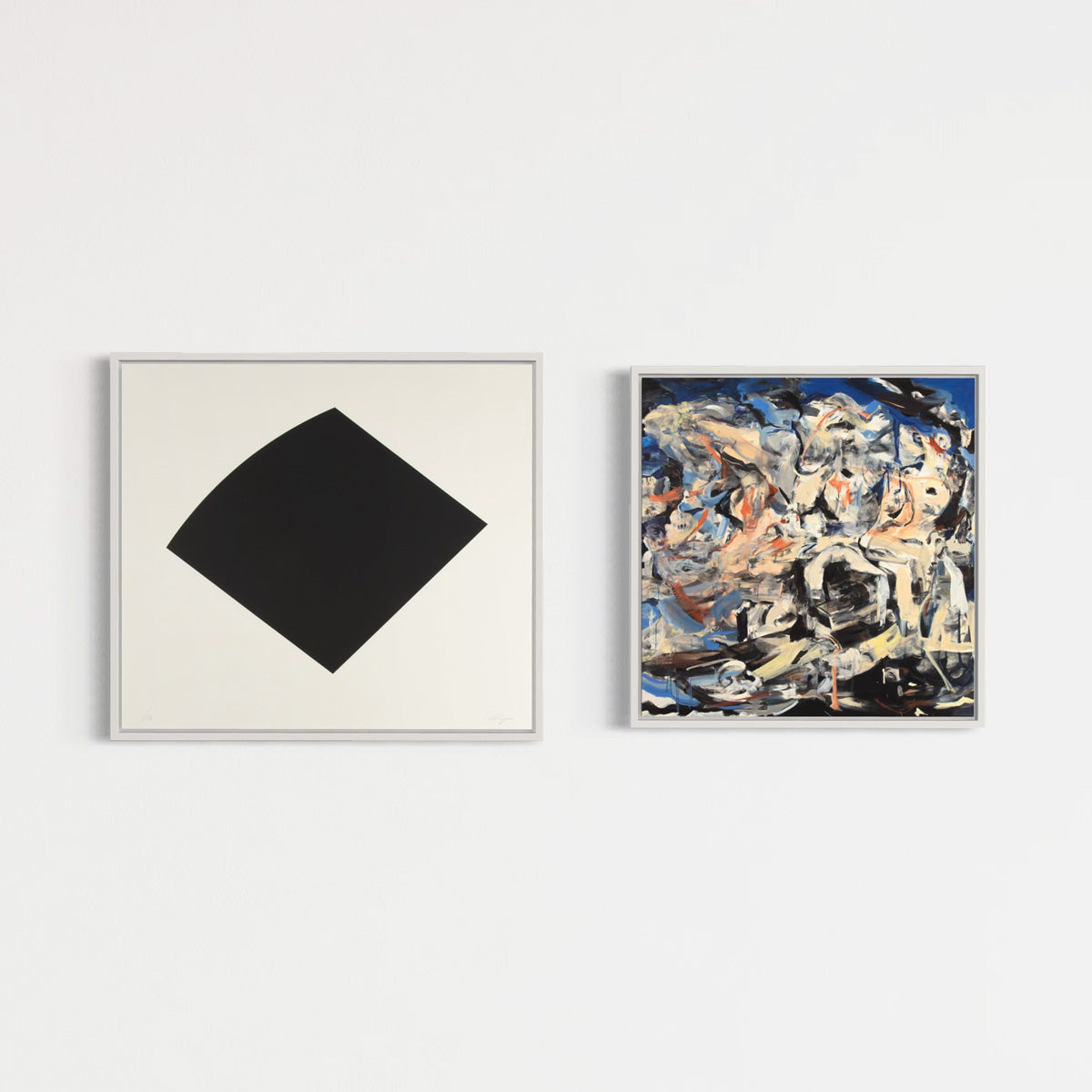
That is largely what defines the strongest painting being made right now. Peter Doig builds landscapes from half-remembered photographs, holding Surrealism's trust in the dream-image alongside a painterly physicality Neo-Expressionism would recognise immediately. Cecily Brown paints with a gestural intensity that runs directly back through Abstract Expressionism, applied with an appropriative, media-saturated eye the Pictures Generation would recognise as its own. Marlene Dumas works from a personal archive of found photographs, translating appropriation's central insight into paint rather than photography.
The inheritance runs well beyond painting. Sarah Morris builds hard-edged geometric compositions directly from the architecture and infrastructure of specific cities, carrying Constructivism and the Bauhaus's conviction that a grid could be a serious statement about how a system actually functions. Tom Sachs extends Pop Art's fascination with branded consumer objects into something rougher and more handmade, exposing brand worship as a belief system rather than simply depicting it. And Maurizio Cattelan, whose banana duct-taped to a wall sold for millions in 2019, proves Duchamp's century-old wager has lost none of its force: that an artist's decision to designate something as art remains, on its own, entirely sufficient.
None of these artists are working in a single lane. They are treating a century of arguments not as a sequence to choose between, but as a shared inheritance, available all at once.
Read this way, the pendulum stops looking like a series of separate rebellions and starts looking like something closer to an experiment — art testing, again and again, exactly how far a definition can be pushed before it breaks. Every movement here is a hypothesis about what art could still be once its previous limit had been reached: avant-garde, literally, the advance guard, sent ahead to find where the boundary actually sits. Art functions as something close to a wordless conversation — one movement answering another not in language, but in form, colour, gesture, and refusal.
Explore the ideas behind these movements further in The History of Art Editions, or browse signed prints and editions by the artists who carry this history forward today.
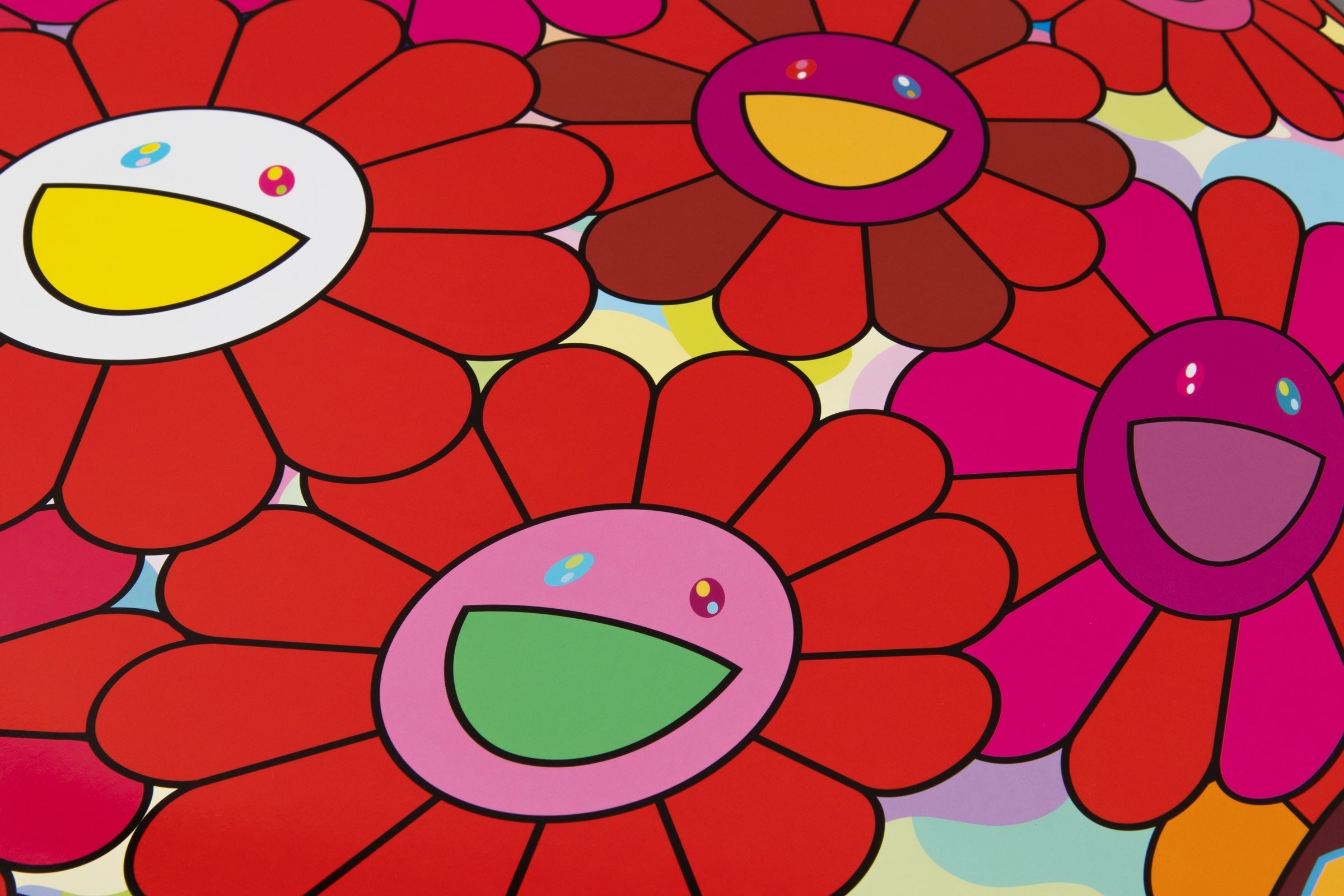
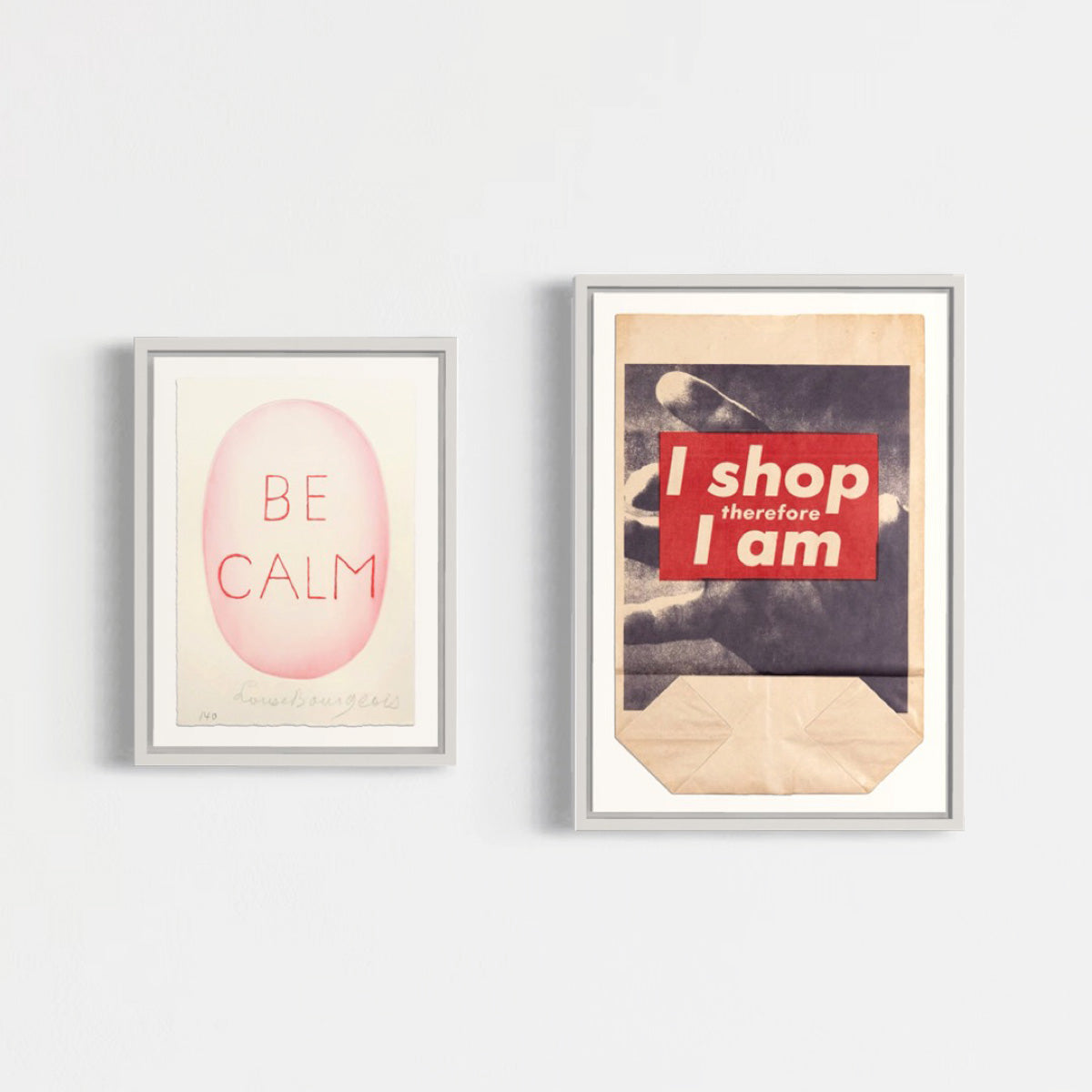
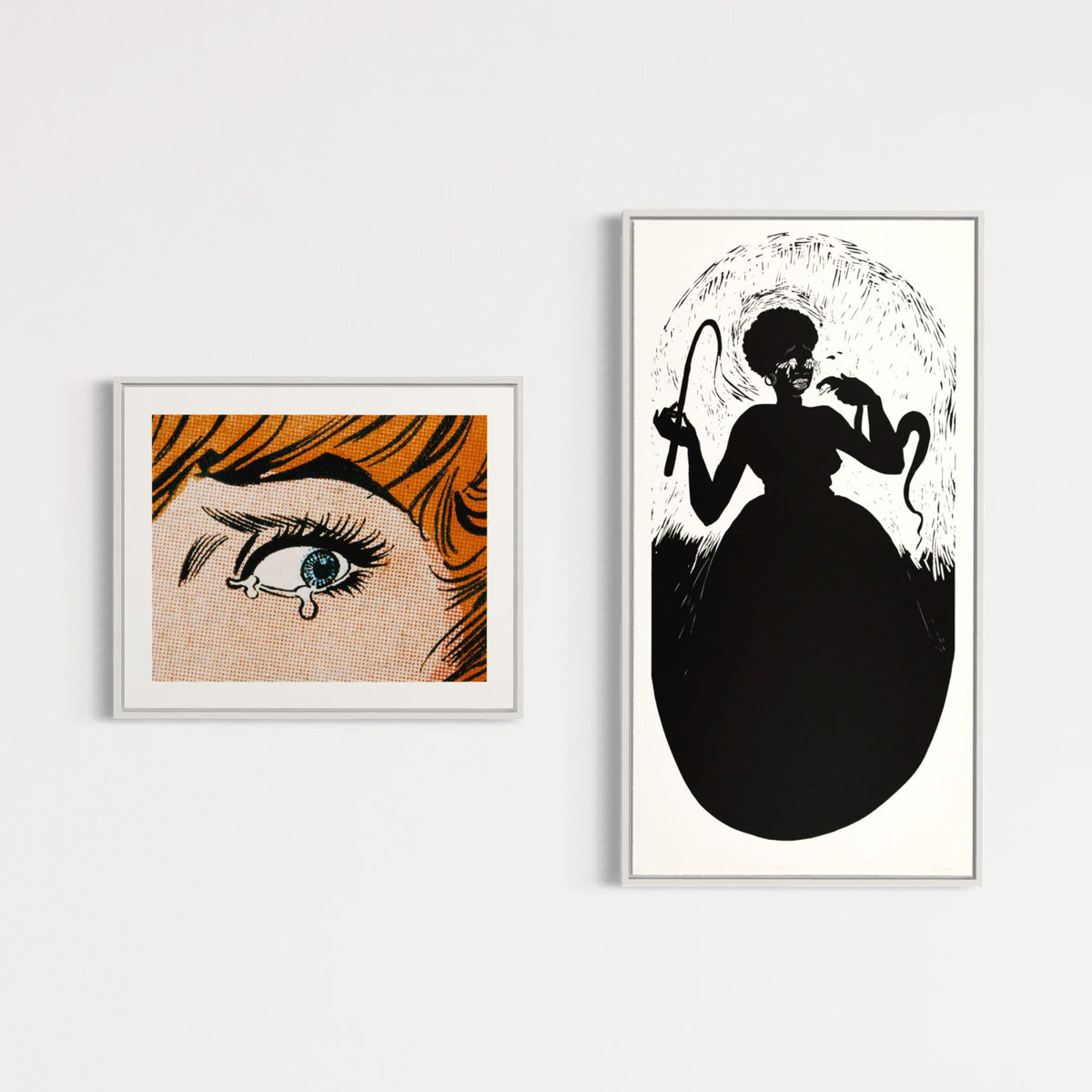
Pop Art
Mass culture as subject rather than backdrop. From soup cans to comic panels, this is the moment everyday imagery became worthy of the gallery wall.

Conceptual Art
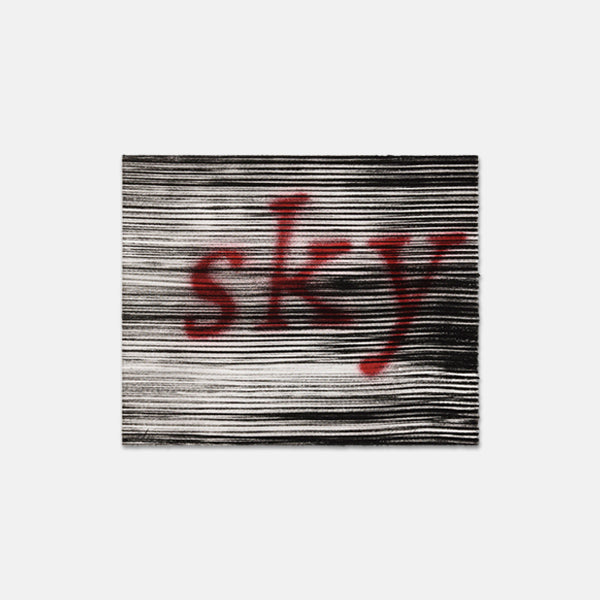
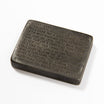
The idea as the work itself. Instructions, documents, and language stand in for the crafted object — proof that rigour alone can carry a piece.
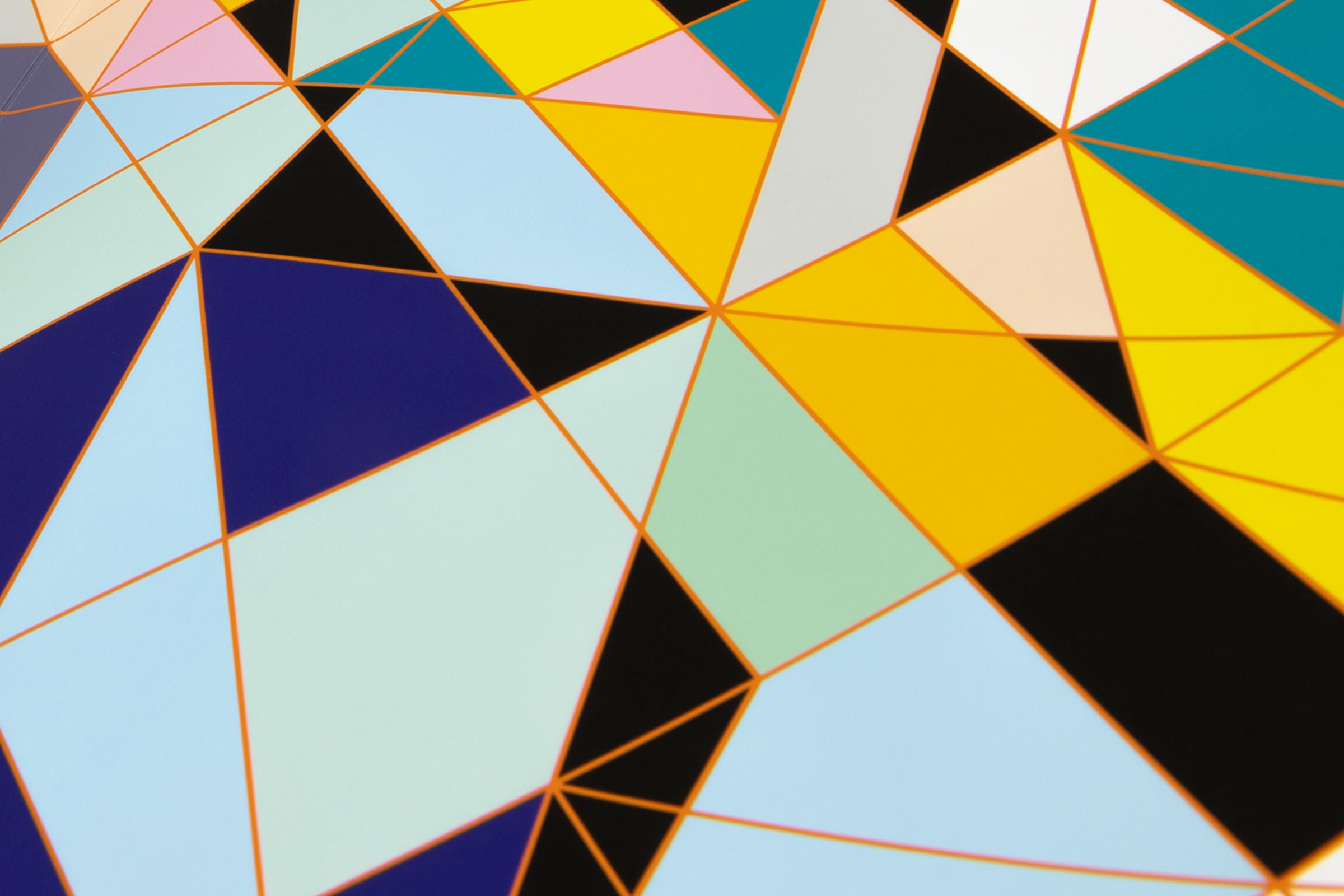
Geometric Art
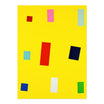
Line, plane, and colour reduced to their essentials. A visual language built on precision, carried forward from Bauhaus and De Stijl into work being made today.


