Marcel Dzama

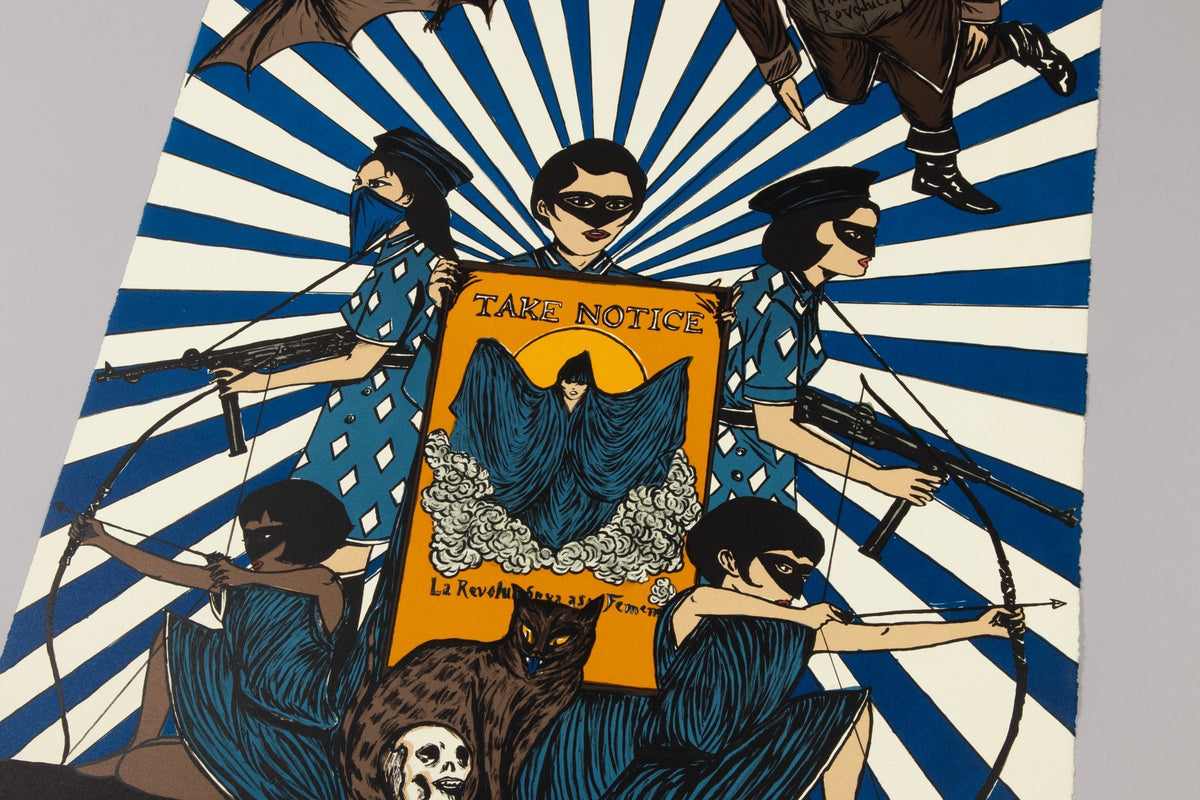
Marcel Dzama - The Arrow of Truth

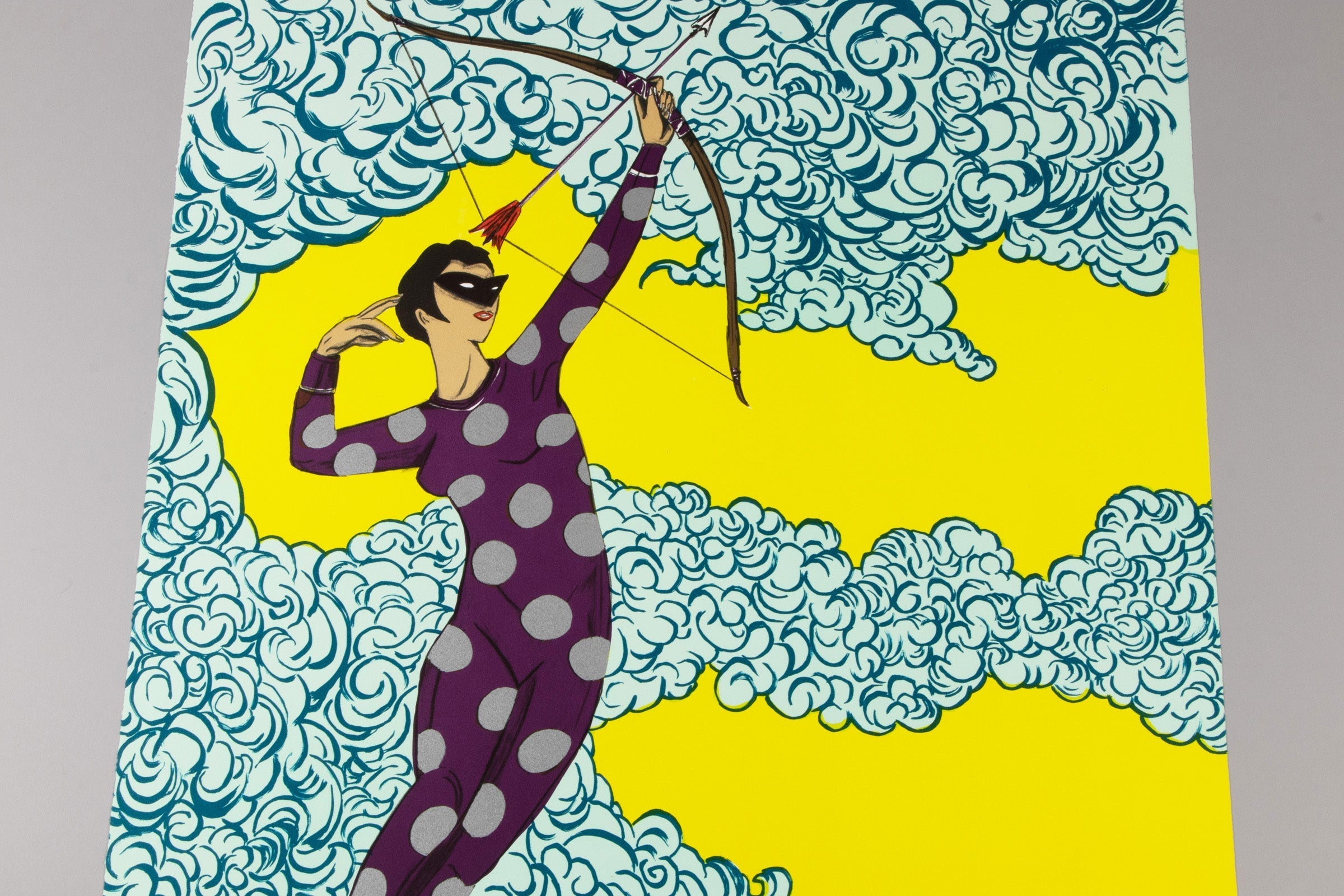
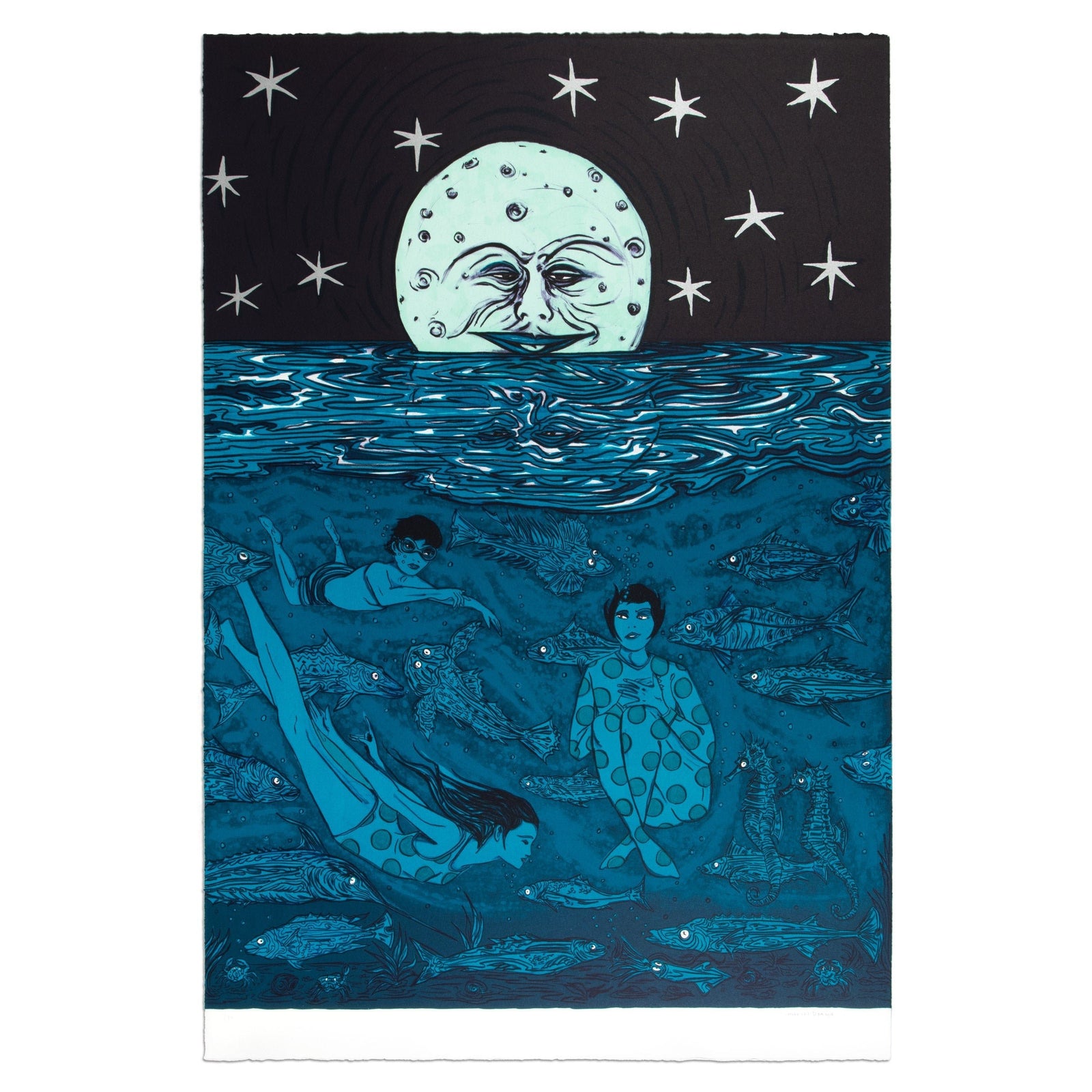
Marcel Dzama's prints operate like mythologies — recurring figures that accumulate meaning across works: masked performers, chess pieces, dancers mid-revolt. Born in Winnipeg in 1974, he built a visual vocabulary rooted in Dada, prairie folklore, and political allegory that reads as entirely his own. Works in the permanent collections of MoMA, Tate, and the Centre Pompidou confirm what collectors already know: this is an imagery that holds.

Browse signed Marcel Dzama prints and editions now.

Available Prints & Editions

01

Marcel Dzama Biography

Marcel Dzama builds his world from contradiction: figures that are equal parts comic and unsettling, drawn in a palette so muted it reads as archival before the ink has even dried. Born in Winnipeg in 1974, he earned his BFA from the University of Manitoba in 1997 and, within a year, had already caught the attention of David Zwirner — a partnership that continues today and has produced fifteen solo exhibitions across New York, London, Paris, Los Angeles, and Hong Kong.

His visual language pulls from Dada's absurdism and Surrealism's dream logic as much as from prairie folklore and the political allegories he grew up around. Dancers, masked performers, chess pieces, and animal hybrids recur across his work like characters returning for another act — never fully explained, always half-familiar. From 1996 to 2008, Dzama co-founded and worked within the Royal Art Lodge, a Winnipeg-based collective whose collaborative drawing sessions shaped his instinct for narrative built from fragments rather than a single fixed story.

That instinct for narrative crossed disciplines early. Dzama has designed costumes and sets for the New York City Ballet, directed the film Une danse des bouffons, and collaborated with Raymond Pettibon on joint exhibitions in New York and London. His work sits in the permanent collections of MoMA, Tate, and the Centre Pompidou — institutional footing that runs alongside a body of politically charged imagery that has made his prints and editions a consistent point of entry for new collectors.

02

Recurring Motifs & Mythology

Dzama's work operates less like a series of individual pieces and more like a single, continuously expanding mythology. The same cast keeps reappearing across drawings, prints, and sculpture: masked performers whose identities are never revealed, dancers caught mid-gesture between grace and violence, chess pieces standing in for figures locked in strategy rather than combat, and animal-human hybrids that blur the line between folklore and invention.

This recurring cast traces directly back to the Royal Art Lodge, the Winnipeg collective Dzama co-founded in 1996 and worked within until 2008. The group's method — passing drawings between members, building images collaboratively rather than in isolation — left a lasting mark on how Dzama constructs narrative: in fragments, through accumulation, rather than as a single fixed story with a beginning and an end.

The muted palette that unifies this universe has its own origin story. Early in his career, Dzama began mixing root beer concentrate into his ink washes, producing the warm, sepia-toned browns that still define much of his work today — a technical accident that became a signature. Combined with his recurring figures, it gives even his most unsettling scenes a strange familiarity, as though each print were a page pulled from a much larger, half-remembered book.

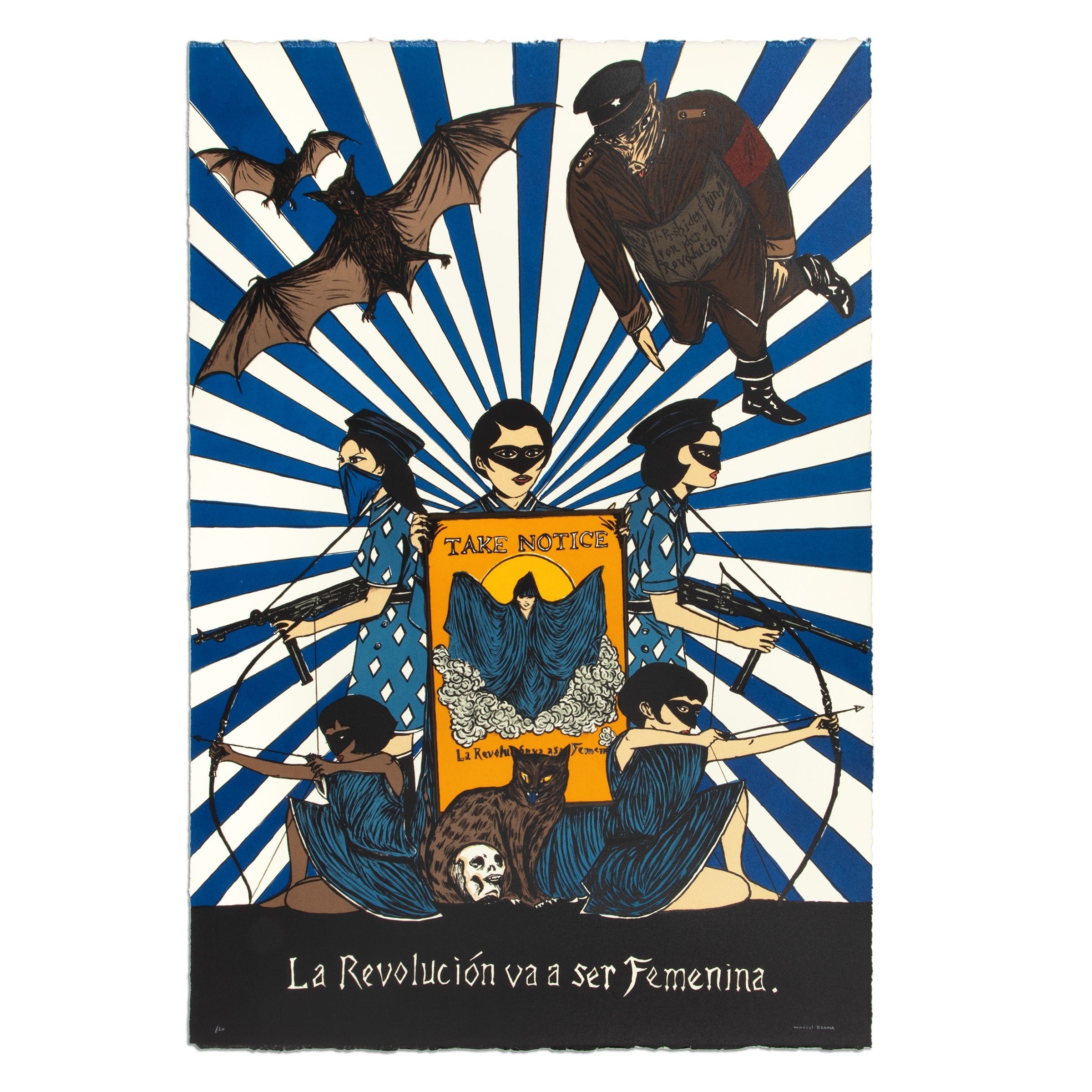
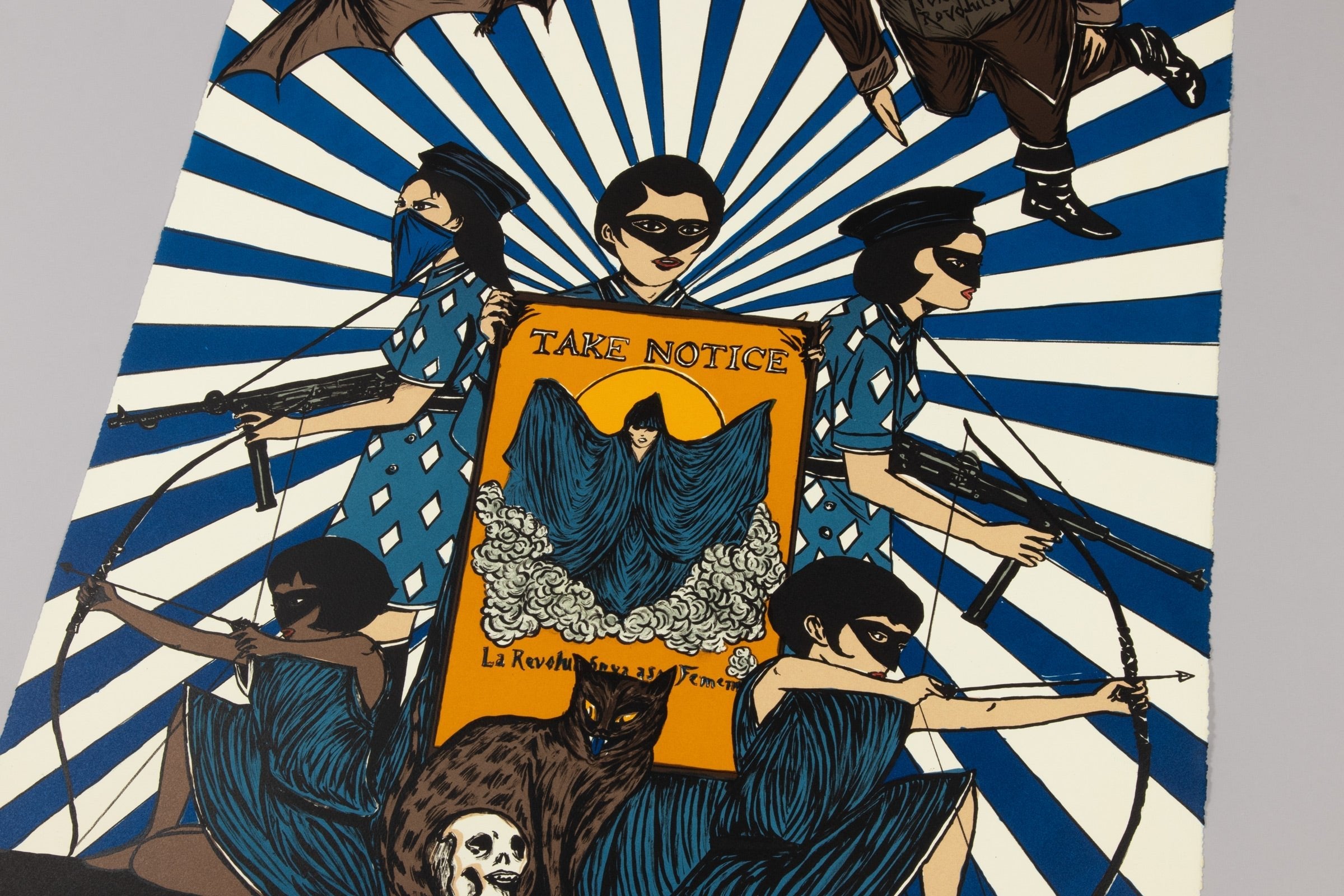
Politics moves through this mythology without ever announcing itself directly. Dancers holding rifles, masked crowds, and ambiguous confrontations recur often enough to read as commentary — though Dzama tends to leave the specific target of that commentary open, closer to allegory than statement. It's this openness, paired with instantly recognisable figures, that gives his prints and editions their particular appeal: collectible entry points into a mythology large enough that no single work needs to summarise the whole.

Marcel Dzama – Farewell loved ones (black)
03

Marcel Dzama Prints & Editions

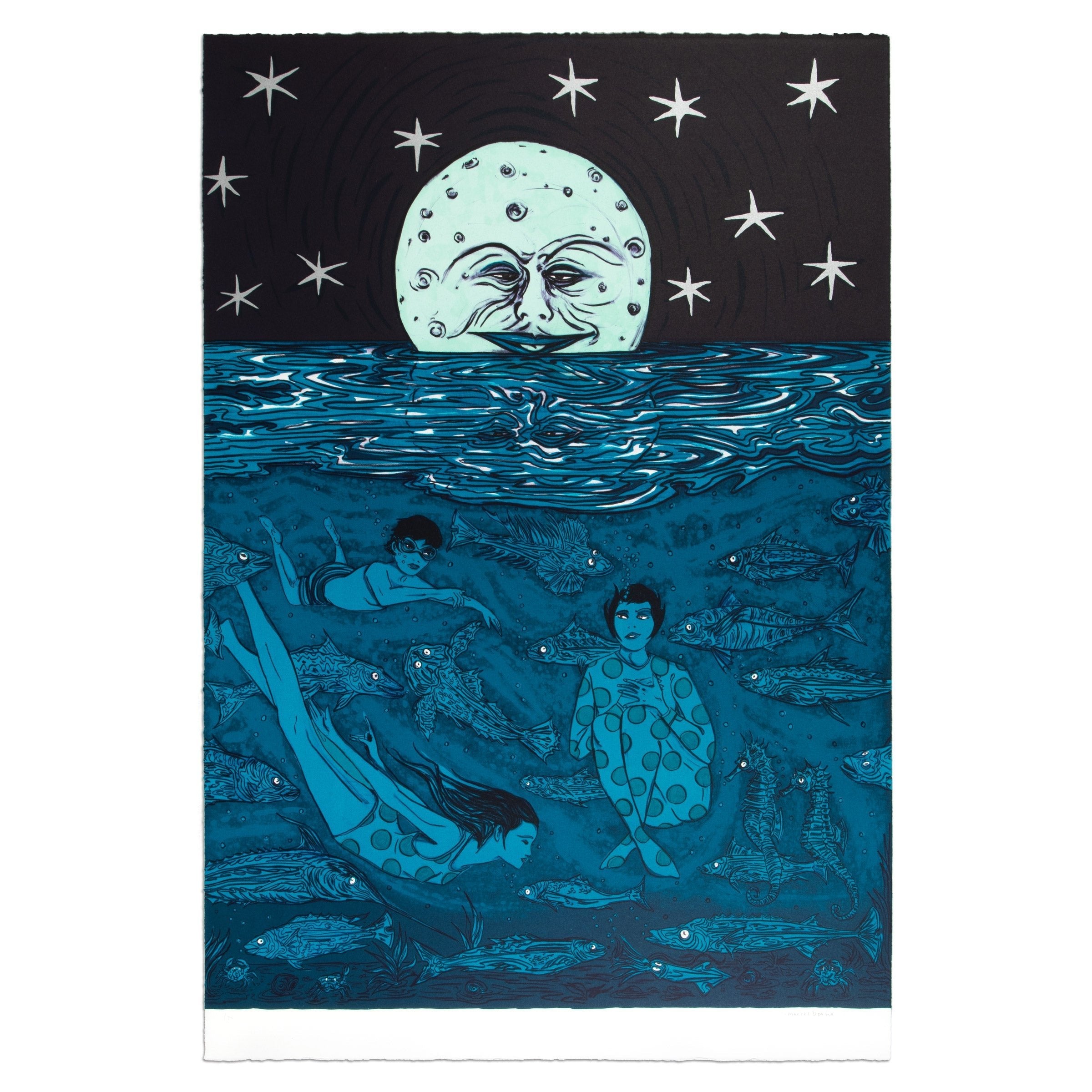
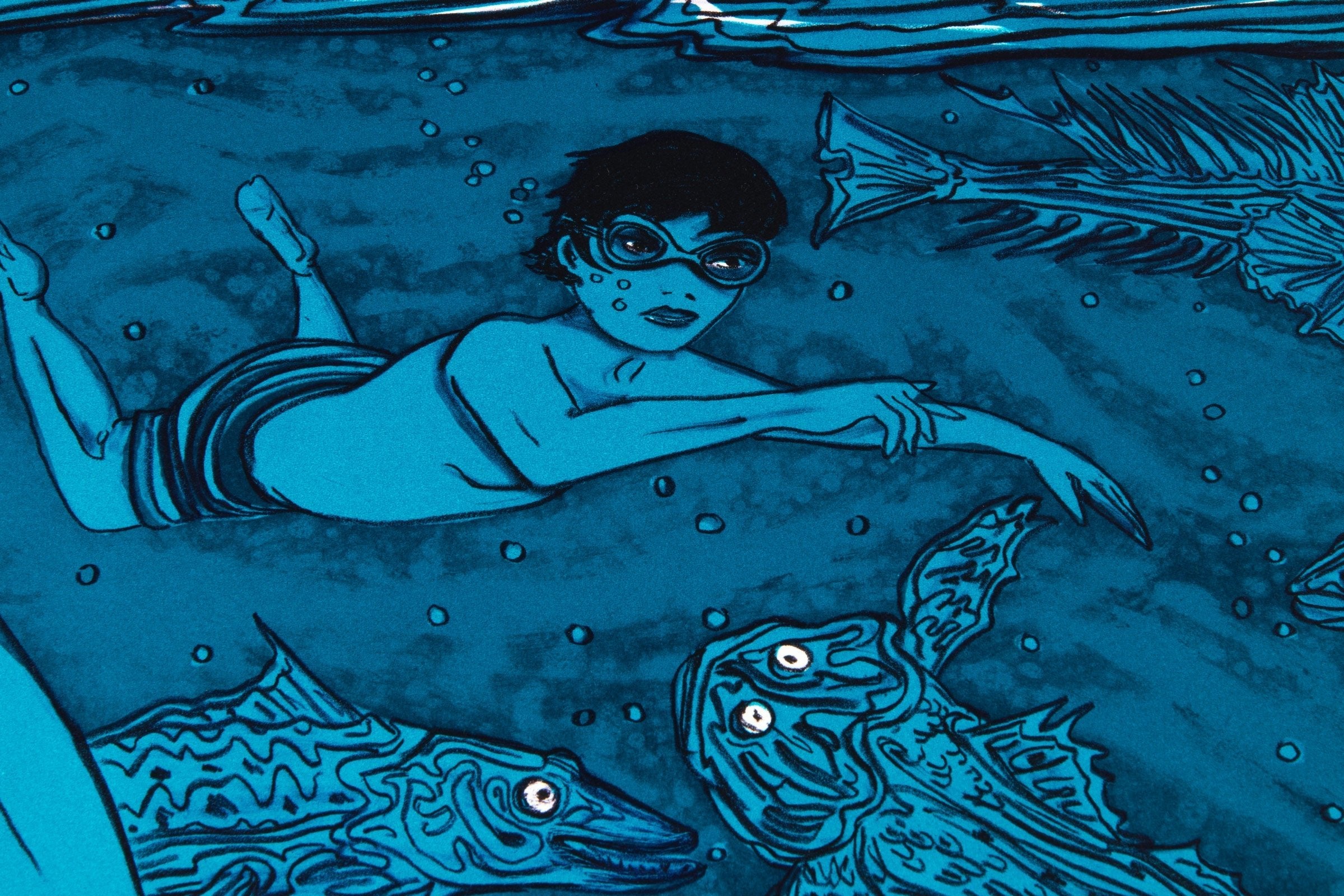
Dzama's limited edition prints span lithography, hand-coloured screenprint, and archival pigment, frequently finished with metallic gold or silver ink alongside his signature muted, root beer-tinted palette — a technical choice that gives the prints a presence closer to illuminated manuscript than mass-produced multiple.

Run sizes vary considerably by project: his 2004 debut portfolio was issued in an edition of just 26, while some later prints have run into the low hundreds — a spread that shapes what collectors can expect to find on the secondary market at a given price point. Editions are signed and numbered by the artist, and early lithographs from his Royal Art Lodge years have become increasingly difficult to source as smaller original run sizes limit how often they resurface for resale.

Prints from across his career are held in the permanent collections of MoMA, the National Gallery of Art, and the New York Public Library.

01

Marcel Dzama Biography

Marcel Dzama builds his world from contradiction: figures that are equal parts comic and unsettling, drawn in a palette so muted it reads as archival before the ink has even dried. Born in Winnipeg in 1974, he earned his BFA from the University of Manitoba in 1997 and, within a year, had already caught the attention of David Zwirner — a partnership that continues today and has produced fifteen solo exhibitions across New York, London, Paris, Los Angeles, and Hong Kong.

His visual language pulls from Dada's absurdism and Surrealism's dream logic as much as from prairie folklore and the political allegories he grew up around. Dancers, masked performers, chess pieces, and animal hybrids recur across his work like characters returning for another act — never fully explained, always half-familiar. From 1996 to 2008, Dzama co-founded and worked within the Royal Art Lodge, a Winnipeg-based collective whose collaborative drawing sessions shaped his instinct for narrative built from fragments rather than a single fixed story.

That instinct for narrative crossed disciplines early. Dzama has designed costumes and sets for the New York City Ballet, directed the film Une danse des bouffons, and collaborated with Raymond Pettibon on joint exhibitions in New York and London. His work sits in the permanent collections of MoMA, Tate, and the Centre Pompidou — institutional footing that runs alongside a body of politically charged imagery that has made his prints and editions a consistent point of entry for new collectors.

02

Recurring Motifs & Mythology

Dzama's work operates less like a series of individual pieces and more like a single, continuously expanding mythology. The same cast keeps reappearing across drawings, prints, and sculpture: masked performers whose identities are never revealed, dancers caught mid-gesture between grace and violence, chess pieces standing in for figures locked in strategy rather than combat, and animal-human hybrids that blur the line between folklore and invention.

This recurring cast traces directly back to the Royal Art Lodge, the Winnipeg collective Dzama co-founded in 1996 and worked within until 2008. The group's method — passing drawings between members, building images collaboratively rather than in isolation — left a lasting mark on how Dzama constructs narrative: in fragments, through accumulation, rather than as a single fixed story with a beginning and an end.

The muted palette that unifies this universe has its own origin story. Early in his career, Dzama began mixing root beer concentrate into his ink washes, producing the warm, sepia-toned browns that still define much of his work today — a technical accident that became a signature. Combined with his recurring figures, it gives even his most unsettling scenes a strange familiarity, as though each print were a page pulled from a much larger, half-remembered book.

Politics moves through this mythology without ever announcing itself directly. Dancers holding rifles, masked crowds, and ambiguous confrontations recur often enough to read as commentary — though Dzama tends to leave the specific target of that commentary open, closer to allegory than statement. It's this openness, paired with instantly recognisable figures, that gives his prints and editions their particular appeal: collectible entry points into a mythology large enough that no single work needs to summarise the whole.

03

Marcel Dzama Prints & Editions

Dzama's limited edition prints span lithography, hand-coloured screenprint, and archival pigment, frequently finished with metallic gold or silver ink alongside his signature muted, root beer-tinted palette — a technical choice that gives the prints a presence closer to illuminated manuscript than mass-produced multiple.

Run sizes vary considerably by project: his 2004 debut portfolio was issued in an edition of just 26, while some later prints have run into the low hundreds — a spread that shapes what collectors can expect to find on the secondary market at a given price point. Editions are signed and numbered by the artist, and early lithographs from his Royal Art Lodge years have become increasingly difficult to source as smaller original run sizes limit how often they resurface for resale.

Prints from across his career are held in the permanent collections of MoMA, the National Gallery of Art, and the New York Public Library.

Marcel Dzama – Farewell loved ones (black)

Marcel Dzama: Key Questions

Collecting Marcel Dzama?

Looking for a specific artwork or have a question about an edition? We're happy to advise on availability, pricing, condition, and provenance — and to source artworks beyond our current selection.

Contact us

Prints, Photographs & Multiples

View our full collection of

Prints, Photographs & Multiples

Explore editions