





Artist Insight
Pandemonium, Berlin, and the need to offend
Georg Baselitz's story begins with a refusal of "acceptable" postwar culture. In the early 1960s, he and Eugen Schönebeck circulated the "Pandemonic Manifesto" in Berlin—an intentionally abrasive polemic that declared ugliness, obscenity, and blasphemy as necessary themes for a new figurative painting. Baselitz later described the aim as stirring up the "harmony mush" of a bland, complacent atmosphere. This is an origin story that matters: the provocation was not decorative scandal, it was a strategy for forcing painting back into conflict with public life and public taste.
That strategy had immediate consequences. In 1963, at his first solo exhibition in West Berlin (Galerie Werner & Katz), works including Die große Nacht im Eimer were seized by prosecutors on grounds of immorality. The episode is often told as a scandal, but institutionally it reads as a sign of intent: Baselitz was insisting that painting could not simply become tasteful again, and that postwar representation—especially the body—would remain contested territory.

The Heroes: broken bodies, broken narratives
If the early period announces the desire to rupture, the Heroes paintings of 1965–66 articulate what rupture looks like inside the figure. These are not triumphant monuments; they are paradoxical anti-heroes—ragged, exposed, and psychologically heavy—standing amid implied devastation. Institutions repeatedly frame this group as pivotal precisely because it refuses both heroic reconstruction narratives and the cool neutrality of abstraction. It insists that Germany's postwar condition cannot be painted cleanly.
This is Baselitz's core contribution: he keeps the figure in play while sabotaging its promise of identification. The paintings are "about" history not through illustration, but through a damaged pictorial grammar—awkward scale, stressed anatomy, aggressive handling—that makes the act of looking feel unstable rather than resolved.
1969: turning the image over
In 1969, Baselitz made the move that became both his signature and his most rigorous formal tool: he began painting motifs upside down. Institutions describe this not as a gimmick but as a deliberate attempt to expunge narrative reading and refocus attention on painting itself—surface, facture, and compositional structure—while still retaining figuration. In other words, inversion offered a third route between Postwar Abstraction and representation, producing a mode that can be understood as Figurative Abstraction: the figure remains present, but the viewer’s normal habits of recognition are interrupted.
This is the story's turning point: Baselitz doesn't abandon the image; he makes it harder to consume. When the motif is inverted, recognition slows, and the painting's decisions—color, rhythm, pressure, weight—become unavoidable. That's why institutions treat 1969 as pivotal and why later exhibitions have returned to these works as a hinge moment.

Sculpture: carving as confrontation
Baselitz’s sculptural practice extends the same ethic of resistance that defines his painting into three dimensions. Beginning in the late 1970s, he turned increasingly to direct carving, working primarily in wood and allowing the medium’s physical demands to remain visible. The resulting forms are deliberately rough-hewn, their surfaces marked by cuts, splinters, and asymmetries. Rather than smoothing the material into finish, Baselitz preserves the evidence of force. The object records its own making.
This refusal of polish is not anti-formal; it is anti-idealizing. Just as his inverted paintings disrupt pictorial coherence, his sculptures resist sculptural harmony. They stand with a deliberate awkwardness, often monumental yet unstable, asserting presence without offering classical balance. The body appears fragmented, strained, or roughly assembled, echoing the historical and psychological tensions that permeate his painted figures.
Sculpture for Baselitz is not a secondary exploration of volume, nor a retreat into tradition. It is a continuation of the same structural inquiry: how can form carry rupture without collapsing into expressionist excess? By carving directly into wood—rather than modeling or casting—he reintroduces risk into the process. The block is confronted, not refined. The gesture remains visible and irreversible.
In this sense, his sculpture does not soften the aggression of his painting; it amplifies it. The viewer encounters not an image of confrontation, but an object that embodies it. Material, scale, and surface become inseparable from meaning, reinforcing Baselitz’s sustained insistence that art remain resistant—formally, historically, and physically.
After the masterpiece: remix, return, and self-quotation
A late and under-discussed strength of Baselitz is his willingness to treat his own career as material. Institutional accounts of his retrospective practice emphasize series in which he revisits earlier motifs—Remix and later bodies of work—as a way of testing memory, repetition, and the instability of the "original." This is not nostalgia; it's self-interrogation. The painter who broke images apart early on also breaks apart his own timeline, returning to earlier forms to see what they still do under new conditions.

Influence and the Return of Painting
Often associated with the resurgence of painting later described as Neo-Expressionism, Baselitz’s influence extends well beyond his signature inversion. In the late twentieth century, when Minimalism, Conceptual Art, and Arte Povera appeared to displace painting's centrality, his work demonstrated that the medium could remain critically viable without retreating into tradition. By subjecting figuration to structural rupture rather than narrative affirmation, he repositioned painting as materially forceful, historically burdened, and conceptually self-aware — opening a path for subsequent generations to treat painting not as nostalgia, but as inquiry.
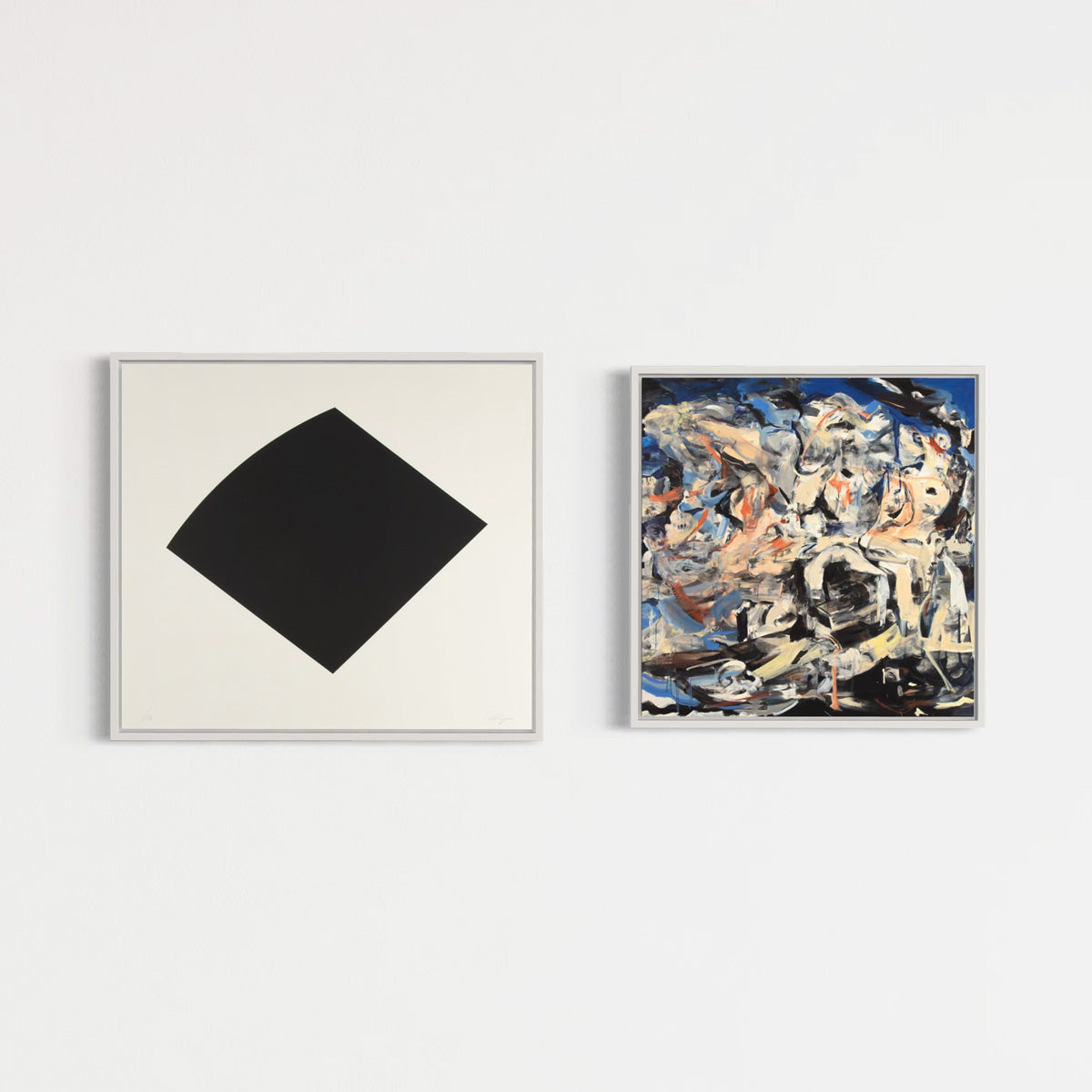
This impact is visible in later painters who reclaimed figuration without apology — a trajectory that would crystallize in what is now often discussed as Figuration after 1980. Artists such as Cecily Brown have embraced physicality, excess, and instability in ways that echo Baselitz’s insistence on rupture over refinement. Tracey Emin has credited him with keeping “emotional doors” open for her generation, describing his art as “unapologetic.” What this signals is less stylistic inheritance than permission: the authorization to pursue emotional intensity without irony, and to sustain painting as a site of exposure rather than resolution.
Institutional Position and Legacy
Institutional recognition consolidated this position. His participation in documenta 5 (1972) and the Venice Biennale (1980) placed him within defining postwar exhibitions. Major retrospectives — including the Solomon R. Guggenheim Museum survey in 1995 and later presentations at the Fondation Beyeler and the Centre Pompidou — reaffirmed his centrality across decades of experimentation.
Held in leading public collections worldwide, Baselitz occupies a defining place in narratives of postwar and contemporary art. His legacy lies not only in turning the image upside down, but in insisting that painting remain a site of rupture rather than reassurance.
Selected works by Georg Baselitz are available through our collection.
I paint my pictures upside down because I want to empty them of content.
Selected questions on the artist’s practice, major artworks, and editions.
Georg Baselitz: Key Questions


