




Artist Insight
Painting at a Moment of Doubt
When Cecily Brown emerged in the late 1990s, painting carried a quiet stigma in much of contemporary art discourse. Installation, photography, and concept-driven practices set the critical tempo, while painting was often treated as either historically resolved or stylistically retrograde. Brown’s intervention was neither revival nor nostalgia. It was a refusal of the premise that painting could no longer generate new knowledge.
Her wager was double. First, she asserted painterly skill as contemporary: composition, figure construction, surface control, and the orchestration of complex pictorial space. Second, she treated art history as living material, not distant authority. Brown’s paintings show a sustained attentiveness to Old Master structure and invention, including the density and movement of Rubens, while also absorbing the physical urgency and revisionary tempo associated with gestural modernism.
This synthesis is the core story: she reopened the field for contemporary painting by proving that craftsmanship and visual intelligence could coexist with contemporary instability, speed, and erotic charge.

Painting as Craft, Process, and Revision
Cecily Brown’s paintings are built, not declared. They accumulate through layers of application, scraping back, reworking, and repainting until the image becomes something like weather: forming, breaking, returning. Craftsmanship in her art is not polished finish. It is control under pressure, a capacity to keep multiple registers active at once: figure, ground, motion, flesh, paint, and the memory of earlier states.
This is where her relationship to Abstract Expressionism matters, but only as part of a larger system. Brown uses gestural energy as a tool, not an identity. The brushwork accelerates perception, then disrupts it, so that the viewer moves between recognition and dissolution. The painting holds the frontier between abstraction and figuration as a permanent condition rather than a problem to solve.
The Body and the Instability of Looking
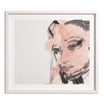
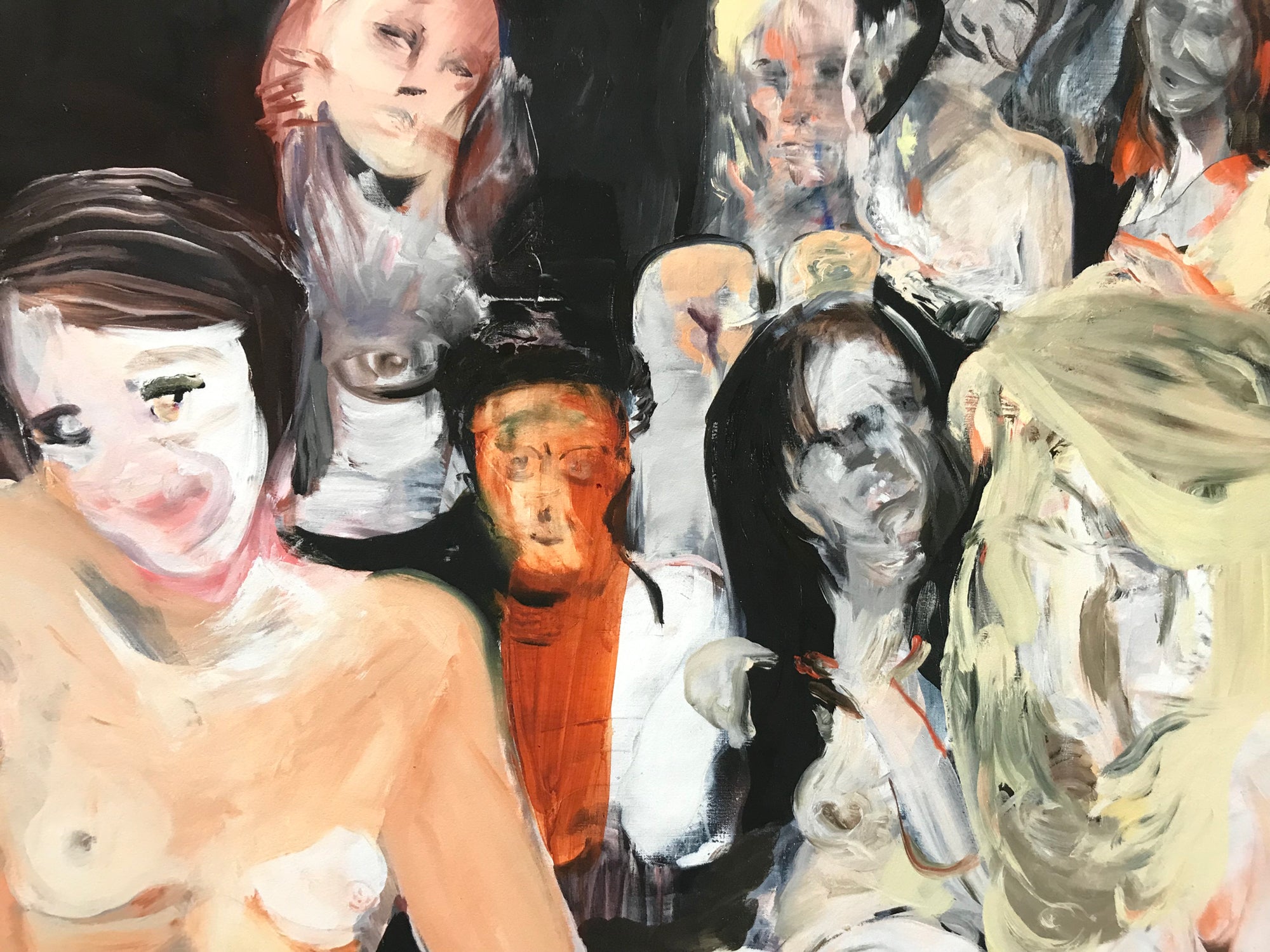
The human body is central to Cecily Brown's paintings, yet it rarely appears complete or secure. Limbs collide, forms overlap, and surfaces blur into painterly density. Eroticism operates as an underlying force rather than explicit depiction. Desire, aggression, intimacy, and vulnerability are embedded within gesture rather than illustrated.
This instability is deliberate. Brown's work examines how images of bodies circulate through art history and contemporary culture. Her paintings complicate traditional hierarchies of subject and object, aligning her work with broader conversations within Feminist Art while refusing fixed positions.
Looking, in Brown's paintings, is never neutral. The viewer must negotiate between recognition and uncertainty. What appears initially legible dissolves under closer inspection. Meaning remains provisional.

Art History as Living Material
Cecily Brown’s paintings are deeply engaged with Western art history, yet they do not operate as quotation or homage. Her works frequently begin with recognizable historical genres: female nudes, pastoral landscapes, seascapes, 17th-century Dutch and Flemish still lifes, baroque battle scenes, and vanitas imagery. These sources are not reproduced. They are structurally reworked.
Brown’s sustained study of Old Master painting is visible in her compositional intelligence. The muscular dynamism of Rubens, the decorative eroticism of Fragonard, and the unstable framing of Degas function not as references but as engines. She absorbs their strategies of movement, flesh, and spatial compression, then subjects them to gestural disruption. Craftsmanship here is not nostalgia. It is control under pressure.
Her engagement with 17th-century still life painting, particularly Dutch and Flemish “spoils of the hunt,” introduces a charged material vocabulary. Flesh, dead game, abundance, and decay blur into human forms within her paintings, linking display, violence, and vulnerability. In later works inspired by baroque battle scenes and historical contexts such as Blenheim Palace, conflict becomes painterly turbulence. Red-saturated fields fracture figures into motion. Narrative dissolves into structure.
Vanitas motifs, including skulls and signs of mortality, surface intermittently within the density of paint, half-visible and unstable. Across these genres, history is not stable inheritance in Brown’s art. It is material under tension, pressed through contemporary gesture until past and present occupy the same pictorial field.
Repetition, Gesture, and Seriality
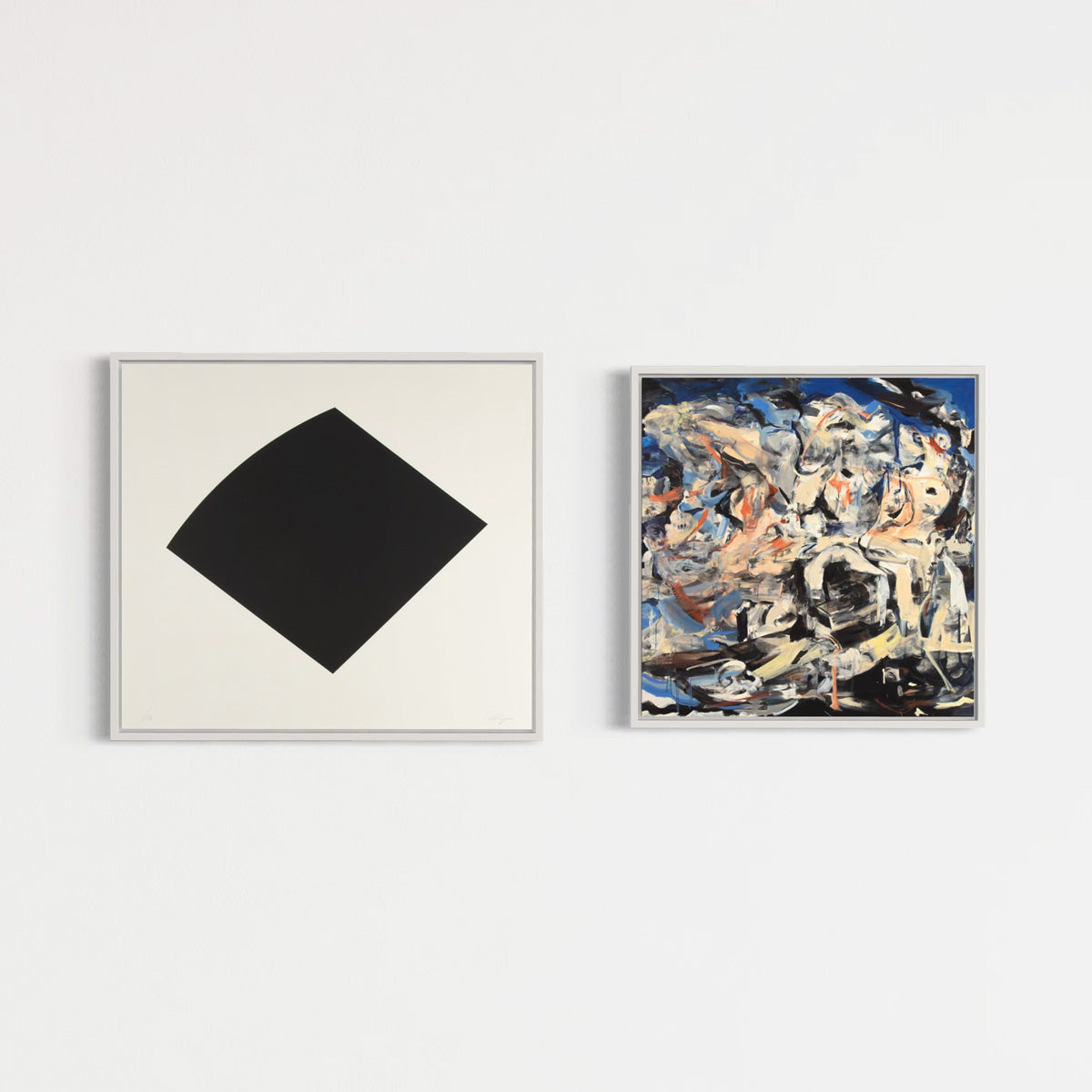
For Cecily Brown, the transition from canvas to paper is an essential part of her painterly inquiry. Editions and works on paper are not merely reproductions; they are autonomous spaces where the mechanics of gesture are laid bare. In the printmaking process, the fluid chaos of her larger paintings is distilled into line and rhythm, allowing for a different kind of structural clarity.
By engaging with serial formats, Brown extends her vocabulary of movement and corporeality into a medium that emphasizes fragmentation and seriality. This approach allows the energy of her practice to circulate through a broader system of distribution, reinforcing the idea that her work is not a fixed object, but a continuous process of layering and revelation.

Institutional Exhibitions and Collections
Cecily Brown has been the subject of major institutional exhibitions internationally. Her work has been presented at institutions including Tate, London; the Solomon R. Guggenheim Museum, New York; the Museo Nacional Centro de Arte Reina Sofía, Madrid; and the Louisiana Museum of Modern Art, Humlebæk.
Her works of art are held in leading public collections worldwide, where they are positioned within narratives addressing contemporary painting, abstraction, figuration, and the evolving politics of representation.
Institutional presentations consistently emphasize the physical scale, density, and material force of her paintings, reinforcing her position within the ongoing discourse surrounding the return and transformation of painting in contemporary art.
Cecily Brown's Position within Contemporary Art
Cecily Brown holds a pivotal position in contemporary art because she helped re-legitimate painting at a moment when its cultural permission was uncertain. She did this not by choosing sides between abstraction and figuration, but by making their collision productive. Her paintings show that the most contemporary images can be built from the oldest pictorial engines, provided the artist can sustain that instability.
That combination is what opened the field. Brown’s influence is visible in how many contemporary painters now treat the canvas as a site where art history, desire, and perception can be staged without becoming illustration. Her contribution is not only stylistic. It is structural: she restored the idea that painting can still be a primary arena of contemporary thought, and that mastery can be redefined as sustained risk.
I often avoid using the terms ‘figuration’ and ‘abstraction’ because I’ve always tried to have it both ways.
Selected questions on the artist’s practice, major artworks, and editions.
Cecily Brown: Key Questions


