












Artist Insight
Early Interventions and the Urban Field
In 1977, Holzer began pasting anonymous posters across lower Manhattan. These short, declarative statements appeared overnight on construction barriers and vacant storefronts, blending into a city saturated with commercial messaging. The phrases were concise and emphatic, mimicking the moral clarity of slogans and public instruction. Yet read sequentially, they contradicted one another, destabilizing any singular ideological position. The effect was subtle but disruptive: language that looked authoritative began to fracture under its own certainty.
These early works place Holzer in dialogue with Conceptual Art and, more specifically, with the expanded field of Text and Language in Art, yet her approach diverged from studio-bound linguistic inquiry. Instead of presenting language within the neutral space of the gallery, she inserted it directly into the urban field. The street became both medium and context.
The anonymity of these early interventions was essential. Without signature or attribution, the voice of the work seemed to belong to the city itself. The reader encountered statements untethered from identifiable authorship, heightening their ambiguity. This strategy anticipated one of Holzer’s enduring concerns: the instability of voice. Who speaks? On whose behalf? Under what conditions does a sentence acquire legitimacy?
The early works were not initially framed within institutional art contexts. They operated as part of the urban visual field, infiltrating the same channels as advertising and political messaging. Only later were they recognized as foundational contributions to contemporary art. This trajectory from street intervention to canonization mirrors a broader shift in late twentieth-century practice, in which the boundaries between art, media, and public communication became increasingly porous.

From Aphorism to Archive
As Holzer’s practice evolved, her language shifted from authored aphorisms toward the incorporation of existing documents. Declassified government materials, testimonies, military records, and bureaucratic memoranda entered her work. This movement from invention to appropriation marked a significant transformation. The artist’s voice receded; institutional speech moved to the foreground.
These later works often retain the visual structure of official documents, including redactions and formal typographic hierarchies. The redacted passages, rendered as blocks of absence, operate both visually and conceptually. They make visible the mechanisms of concealment embedded within systems of governance. What remains unreadable becomes a sign of withheld power.
Holzer’s engagement with such material does not sensationalize its content. Instead, she presents it with formal restraint, allowing tone and structure to reveal their own implications. The language is procedural, neutral, administrative — and therefore unsettling. In exposing the rhetoric of institutional documentation, Holzer demonstrates how violence and authority are frequently embedded in bureaucratic clarity.
This shift expanded the scope of her practice beyond provocation. It positioned her work within broader conversations about state power, transparency, and the ethics of representation.

Media, Monumentality, and Architecture
Holzer’s use of electronic signage in the 1980s and beyond remains one of her most recognizable formal strategies. LED displays, scrolling text, and illuminated statements draw upon the visual vocabulary of financial markets and news media. These formats carry implicit authority; they are designed to inform, instruct, and command attention. By adopting them, Holzer enters a preexisting field of legitimacy.
The movement of text across electronic surfaces introduces temporality. Reading becomes sequential and time-bound. The viewer cannot apprehend the work in a single glance but must follow its progression. This pacing reinforces the experiential dimension of language. Urgency is produced not only by content but by movement.
Her large-scale projections onto buildings and landscapes extend this logic into architectural space. Civic monuments and institutional facades become temporary carriers of text, suggesting that even structures associated with permanence can be re-scripted. The projection is both monumental and ephemeral. It illuminates and then disappears, leaving behind the memory of an intervention.
In these works, Holzer expands the definition of public art. Monumentality is no longer equated with physical mass but with rhetorical presence. Language becomes architecture.
Circulation, Editions, and the Persistence of Text
Reproducibility is not incidental to Holzer’s practice; it is fundamental to it. From the earliest posters to later editions and works on paper, the dissemination of language remains a central concern. The edition format aligns with the conceptual premise that text gains power through repetition and distribution.
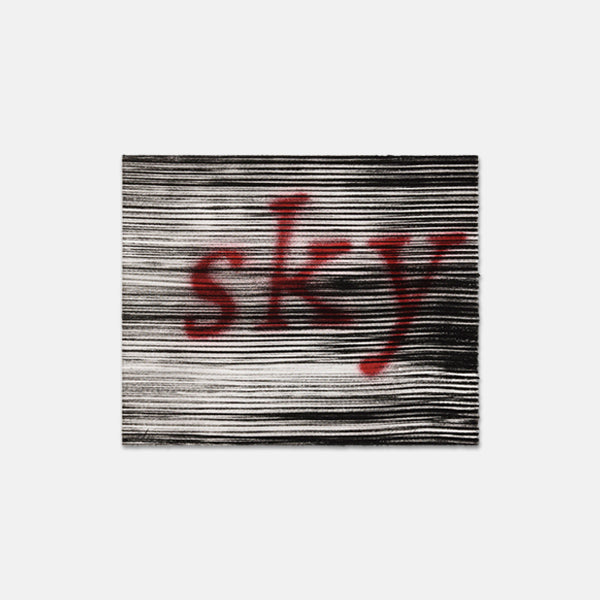
In printed works, the scale shifts from public confrontation to intimate encounter. Yet the underlying structure persists. Typography, layout, and spacing reinforce the declarative force of the statements. These artworks do not illustrate ideas; they enact them. A sentence placed on paper retains its performative character.
The collectability of these editions does not neutralize their critical dimension. On the contrary, the movement of politically charged language into private collections underscores the tension between critique and circulation that has long animated Holzer’s practice. Her work acknowledges that dissent can enter institutional and commercial frameworks without relinquishing its structural inquiry.

Enduring Influence
Jenny Holzer’s contribution to contemporary art lies not merely in her adoption of text, but in her normalization of language as primary material. Alongside figures such as Barbara Kruger and John Baldessari, she helped shift text from supplemental caption to structural medium. By the end of the twentieth century, language was no longer supplementary to image; it had become one of contemporary art’s primary materials.
Her influence is visible across multiple generations. Artists such as Ai Weiwei employ language and public address as tools of political confrontation. Adam Pendleton integrates text and typography into conceptual abstraction. Laure Prouvost mobilizes voice and narrative instability in ways that echo Holzer’s interrogation of authority. David Shrigley and Grayson Perry use declarative language to destabilize moral and cultural assumptions. In each case, text is not illustrative; it structures the work’s meaning.
Holzer demonstrated that public communication systems could be appropriated without aesthetic embellishment and without relinquishing conceptual rigor. She revealed that authority is often a matter of format — that repetition produces belief and tone manufactures legitimacy. In a cultural environment defined by algorithmic circulation, branding, and rhetorical saturation, this insight appears increasingly prescient.
Her work continues to resonate not because it provides answers, but because it exposes conditions. It slows the act of reading and restores attention to interpretation itself. By isolating language as visible structure rather than transparent vehicle, Holzer permanently altered the terrain of contemporary art.
Selected artworks by Jenny Holzer are available through our collection.
Abuse of power comes as no surprise.
Selected questions on the artist’s practice, major artworks, and editions.
Jenny Holzer: Key Questions


