




Art Movement Insight

A Short History of Text-Based Art
Text-based art, though firmly established in the 1960s with the rise of conceptual art, has roots that extend back to the early twentieth century. Avant-garde movements such as Dada and Futurism began to experiment with words and typography as artistic elements, challenging the boundaries between language and image. This early experimentation revealed that text could function not only as communication, but as form, structure, and disruption.
A key precursor can be found in the work of René Magritte, whose paintings explored the relationship between words and images. His seminal work The Treachery of Images (1929), inscribed with the phrase “Ceci n’est pas une pipe,” demonstrates that an image and its linguistic description are not the same. By separating representation from meaning, Magritte anticipated later conceptual approaches in which language becomes central to artistic inquiry.
The Dadaists, working in the aftermath of World War I, embraced text as a means of destabilizing meaning. Artists such as Tristan Tzara and Kurt Schwitters incorporated fragmented poetry, nonsensical phrases, and collaged newspaper clippings into their works, rejecting traditional aesthetics in favor of provocation and absurdity. For Dada, language was not a stable carrier of meaning but a tool to undermine it.
At the same time, Futurist artists explored the visual potential of typography through their “words in freedom,” abandoning linear structure in favor of dynamic, expressive compositions. These experiments laid the groundwork for later developments, demonstrating that language could operate as both visual and conceptual material.
By the 1960s, text-based art took on new significance through conceptual art. Artists such as Joseph Kosuth used language to question the nature of representation itself. In One and Three Chairs (1965), Kosuth juxtaposes an object, its photographic image, and its dictionary definition, forcing viewers to consider how meaning is constructed across different systems.
Lawrence Weiner extended this approach by reducing the artwork to language alone. His declarative statements, presented as text installations, exist as ideas rather than objects, emphasizing that language can be sufficient to constitute an artwork.
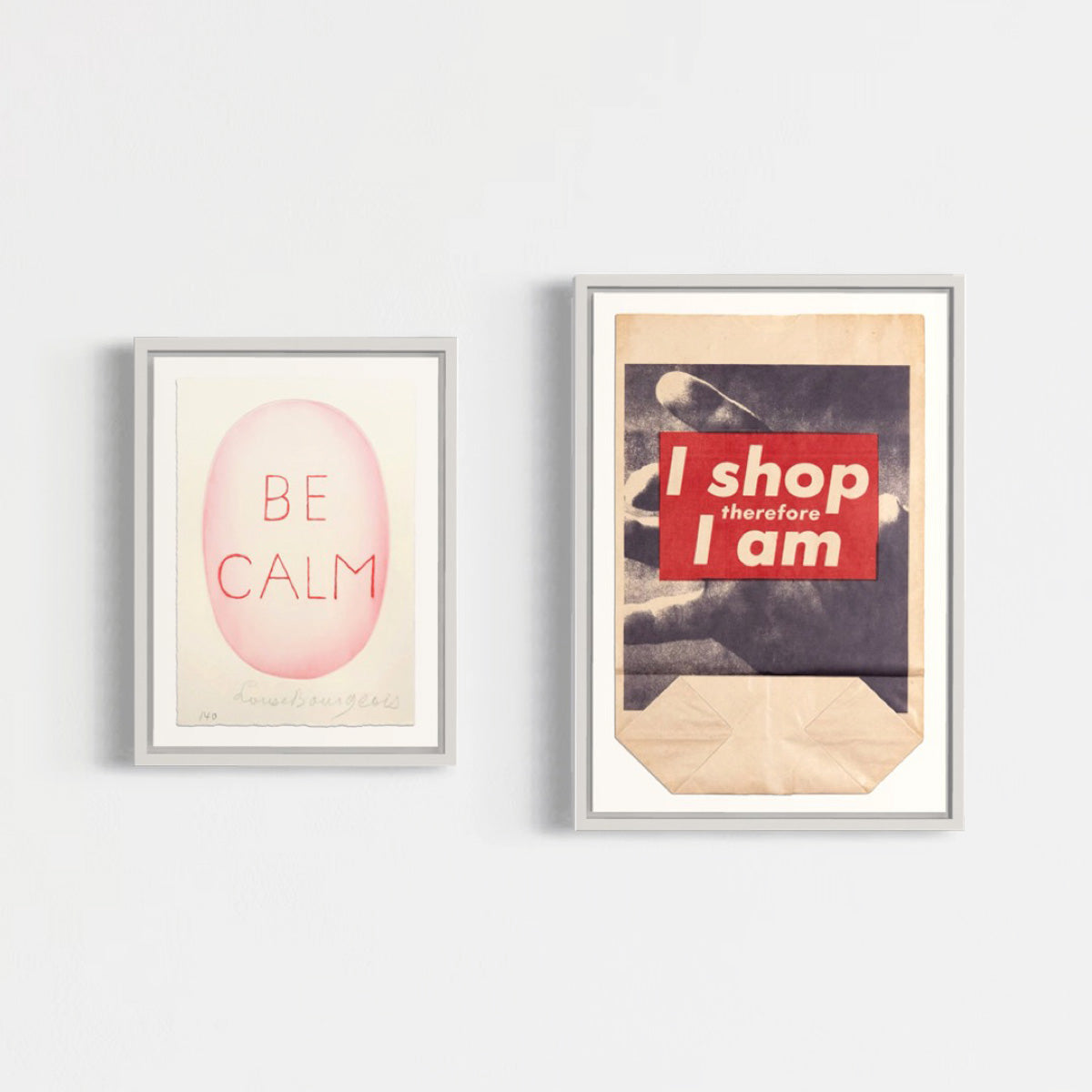
In the 1980s and 1990s, text-based art moved beyond the gallery into public space. Artists such as Jenny Holzer and Barbara Kruger used language to address political and social issues, placing text on billboards, posters, and electronic displays. By adopting the visual language of mass media, these works confronted viewers directly and revealed how language operates within systems of power.

Language, Image, and Visual Culture
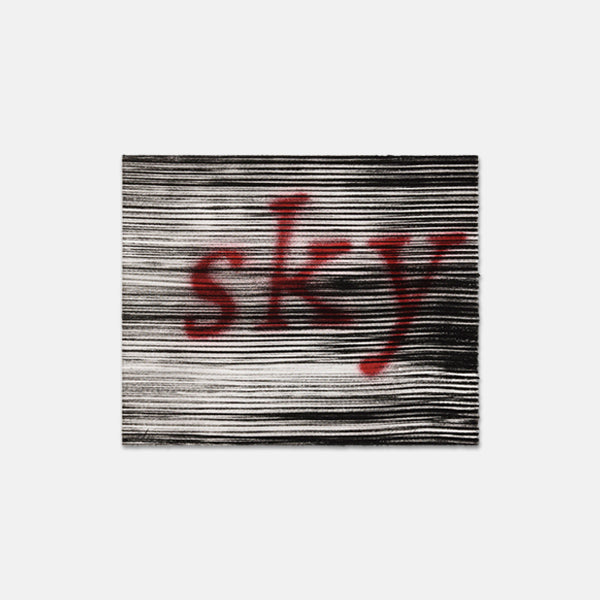
Text-based art operates at the intersection of language and visual culture, where words are both read and seen. Typography, scale, and placement become central compositional tools, shaping how language functions within the visual field. In this context, text is not separate from image but becomes image itself.
Ed Ruscha’s work exemplifies this approach. His word paintings isolate single words or short phrases, presenting them with deliberate neutrality and precision. By removing expressive gesture and narrative context, Ruscha reveals how language operates within systems of popular culture, where meaning is shaped as much by presentation as by content.
John Baldessari further expanded the relationship between text and image through conceptual juxtapositions. Works such as I Will Not Make Any More Boring Art (1971) use repetition and instruction to question artistic authority, while his later compositions combine photographic imagery with seemingly unrelated text. These strategies expose the instability of meaning and the arbitrary relationship between words and images.
Through these practices, text-based art demonstrates that language is not a transparent vehicle for communication, but a constructed system that shapes how images are perceived and understood.
Language, Power, and Public Address
The use of language in art is closely tied to questions of power, authority, and ideology. Text-based works often function as direct address, confronting viewers with statements that operate within or against dominant systems of communication.
Barbara Kruger’s work exemplifies this approach, combining bold typographic statements with visual strategies drawn from advertising and mass media. By appropriating these formats, she exposes how language shapes identity, desire, and belief within contemporary culture.
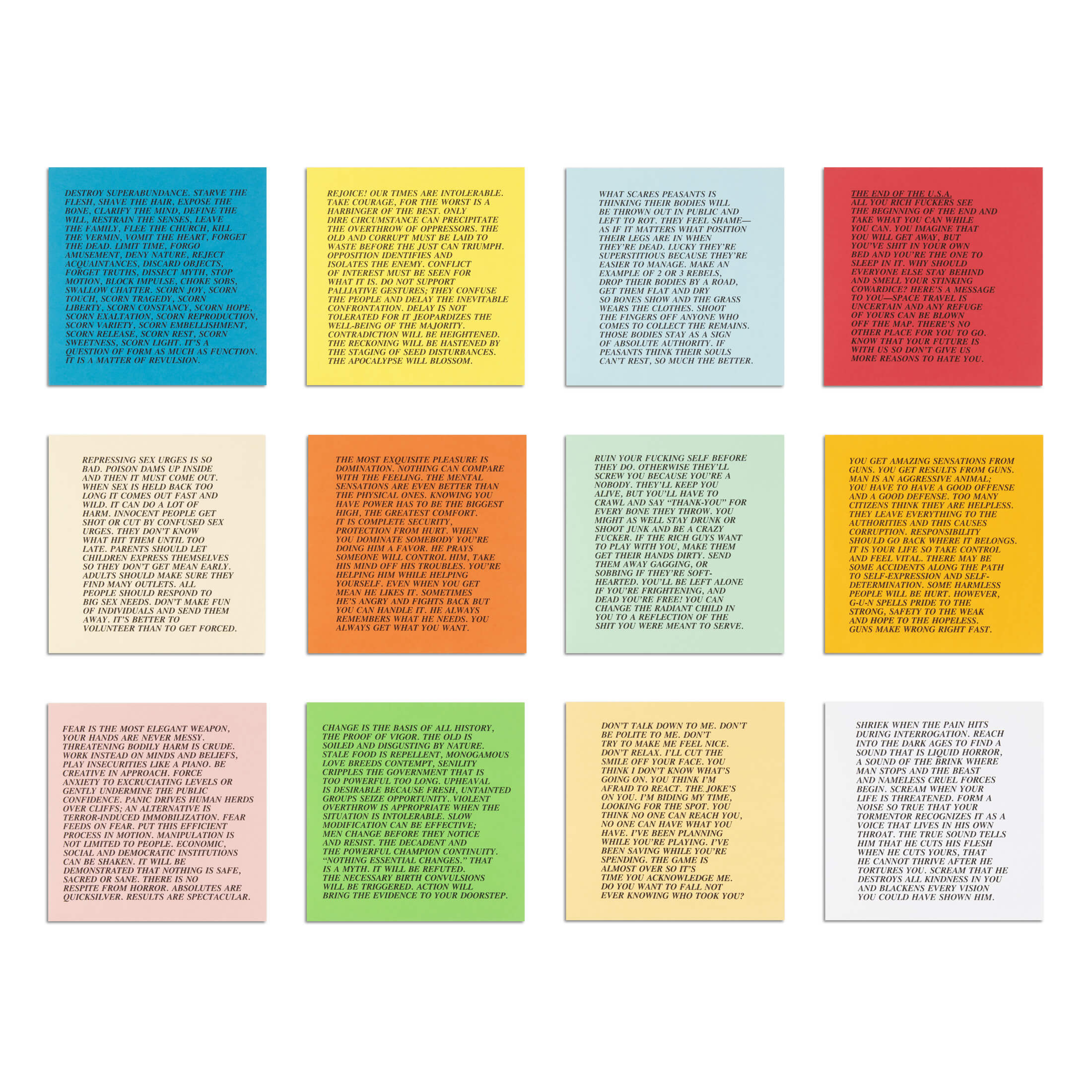
Jenny Holzer similarly uses language as a form of public intervention. Her Truisms, presented through LED displays and projections, place language directly into urban space, where it competes with advertising, news, and information systems. In doing so, her work transforms public space into a site of reflection and critique.
These practices collapse the boundaries between art, communication, and propaganda, revealing how language functions within broader systems of power and influence.

Circulation, Reproduction, and Media
Language-based art is inherently suited to reproduction and circulation. Unlike unique objects, text can be printed, translated, and disseminated across multiple contexts without losing its structural integrity. This makes text-based practices closely aligned with printmaking, publishing, and edition-based formats.
Historically, printed text has played a central role in the distribution of ideas, from political pamphlets to mass media. Text-based art continues this tradition by operating across formats that enable wide circulation. Repetition and distribution are not secondary to the work but form part of its meaning, emphasizing how language moves through different contexts.
This capacity for circulation challenges traditional hierarchies of originality and uniqueness. Rather than privileging singular objects, text-based practices foreground the movement of meaning across systems of communication, reinforcing the connection between art and broader cultural networks.
Key Artists and Works in Text-Based Art
The development of text-based art is closely tied to a number of influential artists whose works have defined the field.
René Magritte’s The Treachery of Images (1929) remains a foundational work in understanding the relationship between language and representation. By declaring “This is not a pipe” beneath a painted image of a pipe, Magritte demonstrates that images and words operate within different systems of meaning, anticipating later conceptual practices.
Joseph Kosuth’s One and Three Chairs (1965) further develops this inquiry by presenting object, image, and definition side by side. The work emphasizes that meaning is not inherent but constructed through language and representation.
Lawrence Weiner’s text-based statements reduce the artwork to language itself. Presented as declarative sentences, his works exist equally as idea, instruction, or realization, removing the necessity of physical form.
Jenny Holzer’s Truisms (1977–87) use concise, often contradictory statements to confront viewers in public space, highlighting the ideological power of language.
Barbara Kruger’s work combines bold typographic statements with appropriated imagery, drawing on the visual language of advertising. Her compositions expose how language operates within systems of power, addressing identity, consumer culture, and authority through direct and confrontational forms.
Ed Ruscha’s word paintings and John Baldessari’s text-image juxtapositions expand the field by exploring how language operates within visual culture. Ruscha isolates words as visual objects shaped by context and presentation, while Baldessari’s works, including I Will Not Make Any More Boring Art (1971), use repetition and instruction to question authorship, meaning, and artistic convention.

Contemporary Practice and Relevance
In contemporary art, text continues to function as a highly adaptable and critical medium. Artists work across installation, video, digital platforms, and print, using language to construct complex relationships between image, narrative, and interpretation. Meaning is often produced through fragmentation, ambiguity, and contradiction, reflecting the instability of language in a media-saturated environment.
As communication becomes increasingly mediated through digital systems, language plays a central role in shaping how information is produced and understood. Text-based art engages directly with this condition by isolating, recontextualizing, and disrupting language, revealing the structures through which meaning is constructed.
Rather than offering fixed interpretations, these works create space for reflection and critical engagement. They transform reading into a visual and conceptual act, emphasizing that language is not neutral, but a powerful tool that shapes perception and knowledge.

Text-Based Art and Contemporary Collecting
Text-based art holds a distinct position within contemporary art through its close relationship to reproducible formats such as prints, publications, and multiples. The use of language allows works to retain conceptual clarity across different contexts, making them particularly suited to circulation without loss of meaning.
Within collections, these works often function as intersections between visual art, literature, and critical discourse. Their presence reflects a broader shift in contemporary art toward ideas, systems, and communication, rather than purely formal concerns.
As a result, text-based art occupies an important place within both institutional and private collections, where it contributes to a wider understanding of how language operates within contemporary culture.
Selected works can be explored in the dedicated collection of text-based art prints and editions.
I was trying to make art that could not be easily reduced to a single image, so I used language.
Selected questions on this topic, its key figures, and its editions.
Text and Language in Art: Key Questions


