


The Gasoline Station as Proposition
Ed Ruscha's breakthrough arrived not with fanfare but with a paperback. In 1963, he self-published Twentysix Gasoline Stations — photographs of exactly that, shot along the route between Los Angeles and Oklahoma City. No commentary. No hierarchy. Just stations, sequenced.
It sounds simple. It was radical. In an art world still largely organized around the primacy of gesture and expression, Ruscha offered something almost aggressively neutral. The subject was not transformed by being photographed. It was not beautified, criticized, or mourned. It was simply shown — and the act of showing, repeated twenty-six times, turned banal fact into conceptual structure.
This is the essential Ruscha move, and it never really changes. He demonstrates that the most generic elements of the built environment — the gas station, the parking lot, the sunset strip — are already organised by language, design, and cultural expectation. His work does not impose meaning on them. It reveals the meaning that was always already there.

Words That Don't Explain Anything
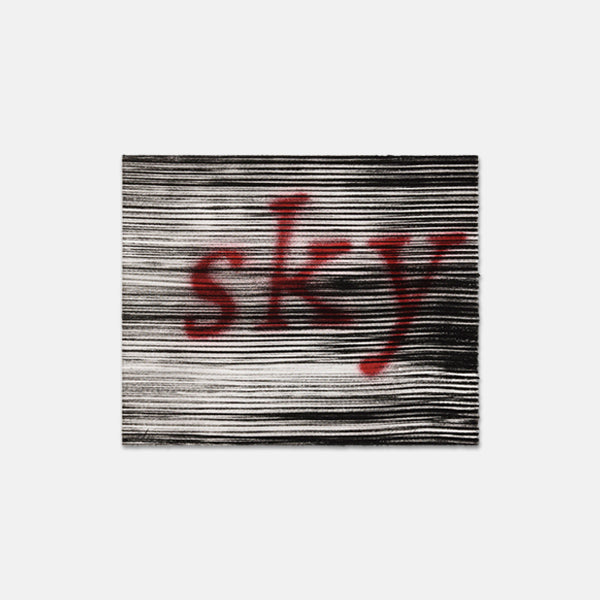
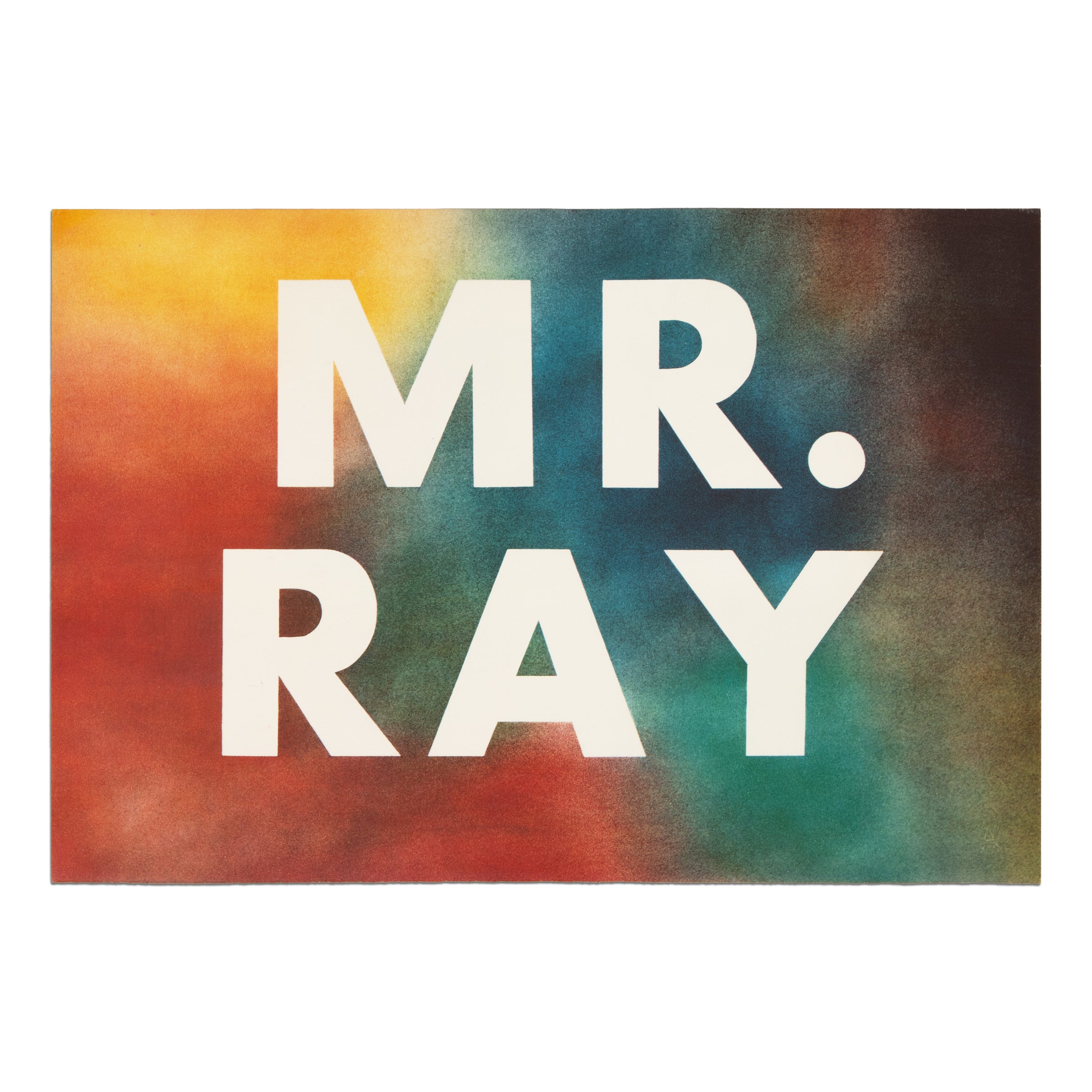
The paintings came in parallel, and they raised the same question from a different angle. In the early 1960s, Ruscha began placing words — single words, short phrases — against painted grounds. OOF. HONK. BOSS. SPAM. Words of no particular consequence, removed from any context that might anchor them.
This was not illustration. The words in Ruscha's paintings are neither captions nor declarations. They function as visual objects: isolated, enlarged, and suspended between meaning and pure material presence. A word like NOISE painted in large letters against a pale ground feels cinematic, vaguely ominous, and slightly comic all at once. It means too much and not quite enough. That hovering quality — the refusal to resolve — is where Ruscha lives.
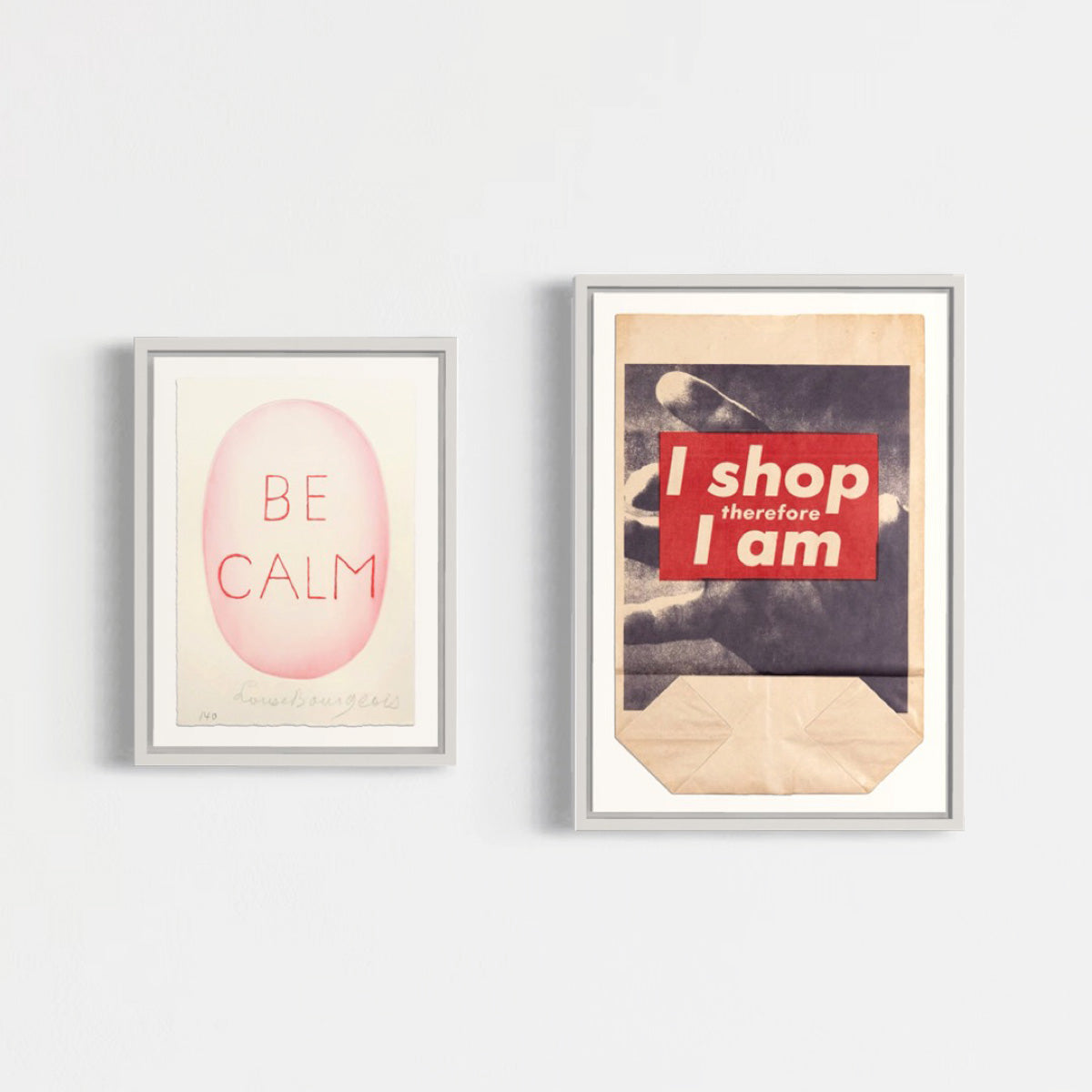
It places him at the centre of text-based art, though his position there is characteristically oblique. Where artists like Joseph Kosuth used language analytically, and Jenny Holzer and Barbara Kruger deployed it as direct address, Ruscha keeps his language slightly out of reach. It resonates without arguing. It suggests without concluding. The viewer is left holding a word that has somehow become an image, and an image that won't quite stop being a word.

The Book as Object, the City as Archive
If the paintings established his visibility, the artist's books defined his structural importance — and they remain among the most genuinely influential objects in postwar art. Every Building on the Sunset Strip (1966) is the starkest example: a continuous accordion-fold photograph of both sides of a single Los Angeles street, shot from a motorized camera mounted to a slow-moving car. Every building. No selection. No editing for interest or beauty.
What Ruscha grasped, early and clearly, was that the book could function as a conceptual form rather than a container. It could distribute images without elevating them. It could hold a city — or a category of objects — without needing to make a point about them. The democratic format of the paperback became, paradoxically, a vehicle for some of the most rigorous thinking in contemporary art.
The logic running through all of it is serial and accumulative. Meaning emerges not from any single image but from the act of repetition itself — the sense that the world is made of systems, and that showing those systems, without comment, is already a form of knowledge.

Neither Pop nor Conceptual — Both and Neither
Ruscha is routinely filed underPop Art, and the association is not wrong: he worked with the imagery of American consumer culture at the same moment as Andy Warhol and Roy Lichtenstein, and with comparable deadpan affect. But the comparison only goes so far. Where Pop frequently embraced spectacle, irony, and the seductive surface of mass culture, Ruscha introduced restraint, distance, and something closer to philosophical suspension.
His work does not celebrate the gas station or mourn it. It does not satirize commercial signage or aestheticize it. It holds it at precisely the distance required to make its underlying structure visible. This is closer in spirit to conceptual art — to the idea that a work's proposition matters more than its appearance — but without the dryness that conceptual art sometimes retreats into. Ruscha's work has atmosphere. It has a specific quality of light and air that feels, unmistakably, like California.
That combination — conceptual rigor with sensory presence, neutrality with mood — is what makes him genuinely difficult to place, and genuinely influential. Artists working with photography, language, seriality, and the everyday all carry some trace of the questions he first asked.

From the Strip to History
In later series, Ruscha expanded his frame of reference beyond immediate observation. Works like Course of Empire introduced a temporal dimension — placing contemporary structures within longer cycles of rise, decline, and disappearance. The gas station and the parking lot, read through this lens, become not just cultural documents but archaeological ones: evidence of a civilization's habits, available to be read by anyone patient enough to look.
It is a logical extension of everything that came before. Ruscha has always been interested in time — in the way the ordinary world accumulates meaning through repetition, and loses it through forgetting. What changes in the later work is not the method but the scale of the question it asks.
Why Ed Ruscha Matters
Ed Ruscha's influence is not easy to point at because it is everywhere. He showed that neutrality could be a position, that repetition could generate meaning, and that the most common elements of the built environment were worthy of sustained, rigorous attention. He gave artists a way to engage with language that was neither purely analytical nor purely expressive — and a way to work with photography that neither documented nor aestheticized.
More than sixty years on, his questions remain open. What does a word do when you remove it from its sentence? What does a building mean when you show it alongside every other building on the same street? What does the ordinary reveal when you look at it long enough, and seriously enough, to let its structure show? Ruscha never quite answers. That is precisely the point.
Selected works byEd Ruscha are available in our collection.
I like the idea of a word becoming a picture, almost leaving its body behind.
Selected questions on the artist’s practice, major artworks, and editions.
Ed Ruscha: Key Questions


