
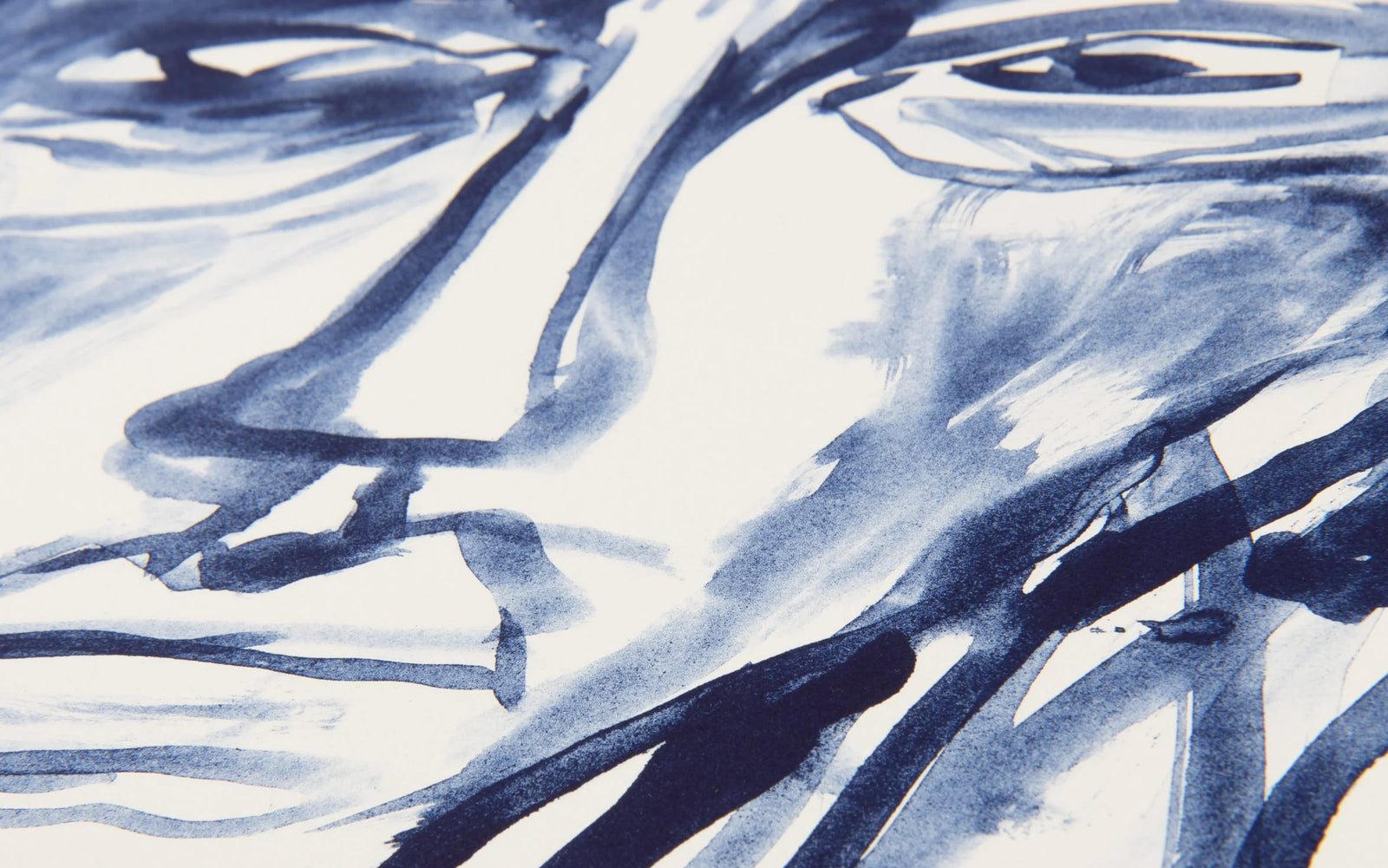
Tracey Emin

Tracey Emin – I Just Felt Hurt

Tracey Emin turned her own life into her primary material — love, sex, loss, trauma, transcribed with a rawness that made her one of the defining Young British Artists. Her My Bed, shown at the 1999 Turner Prize, made private experience unavoidably public. But it is in drawing and print that her practice finds its most direct form: the tremor of an unsteady line, the intimacy of handwritten confession. These are not reproductions of her paintings — they are where her voice is most exposed. Works held at Tate and the Royal Academy, where she is a Royal Academician.

Browse signed Tracey Emin prints and editions now.

Available Prints & Editions

7 products
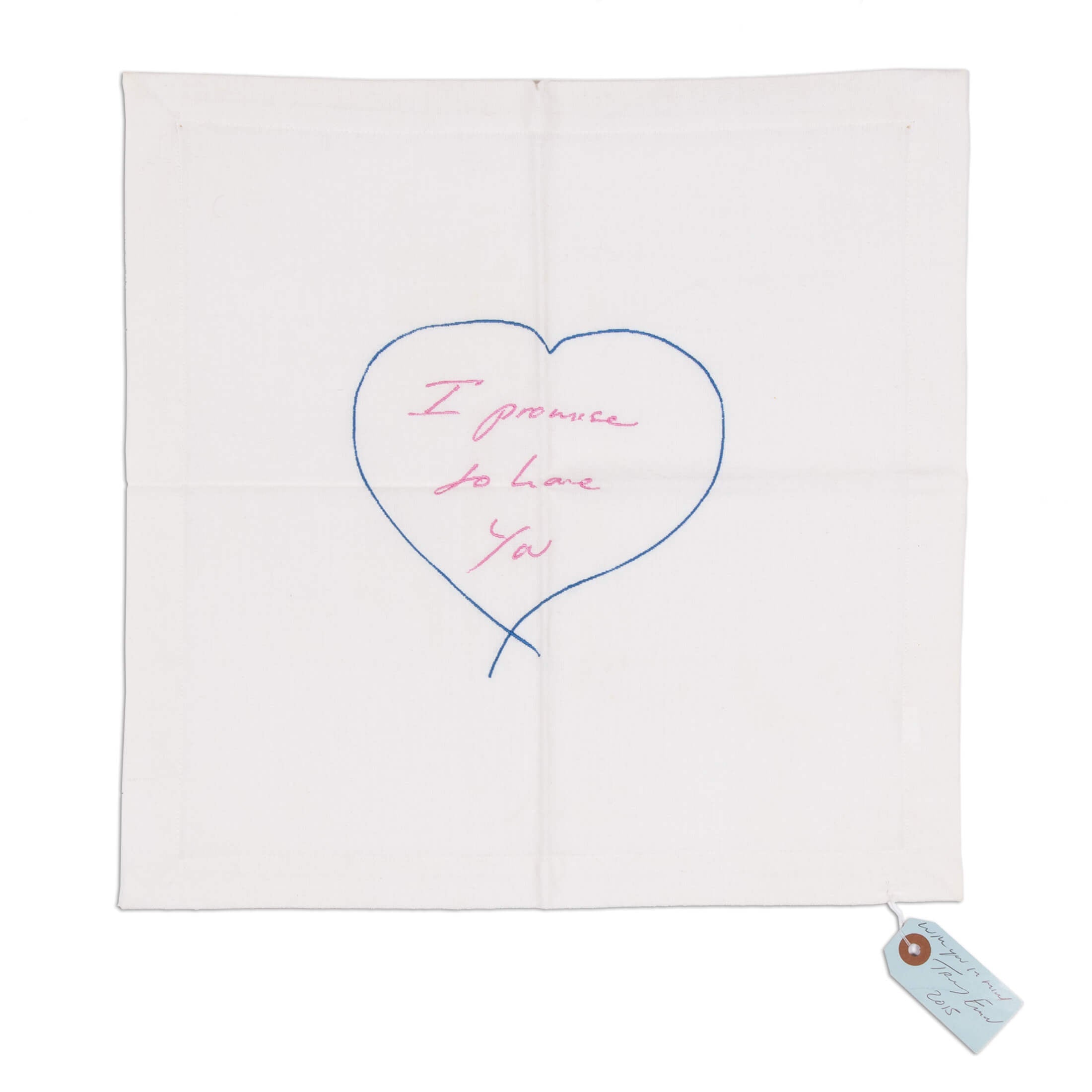
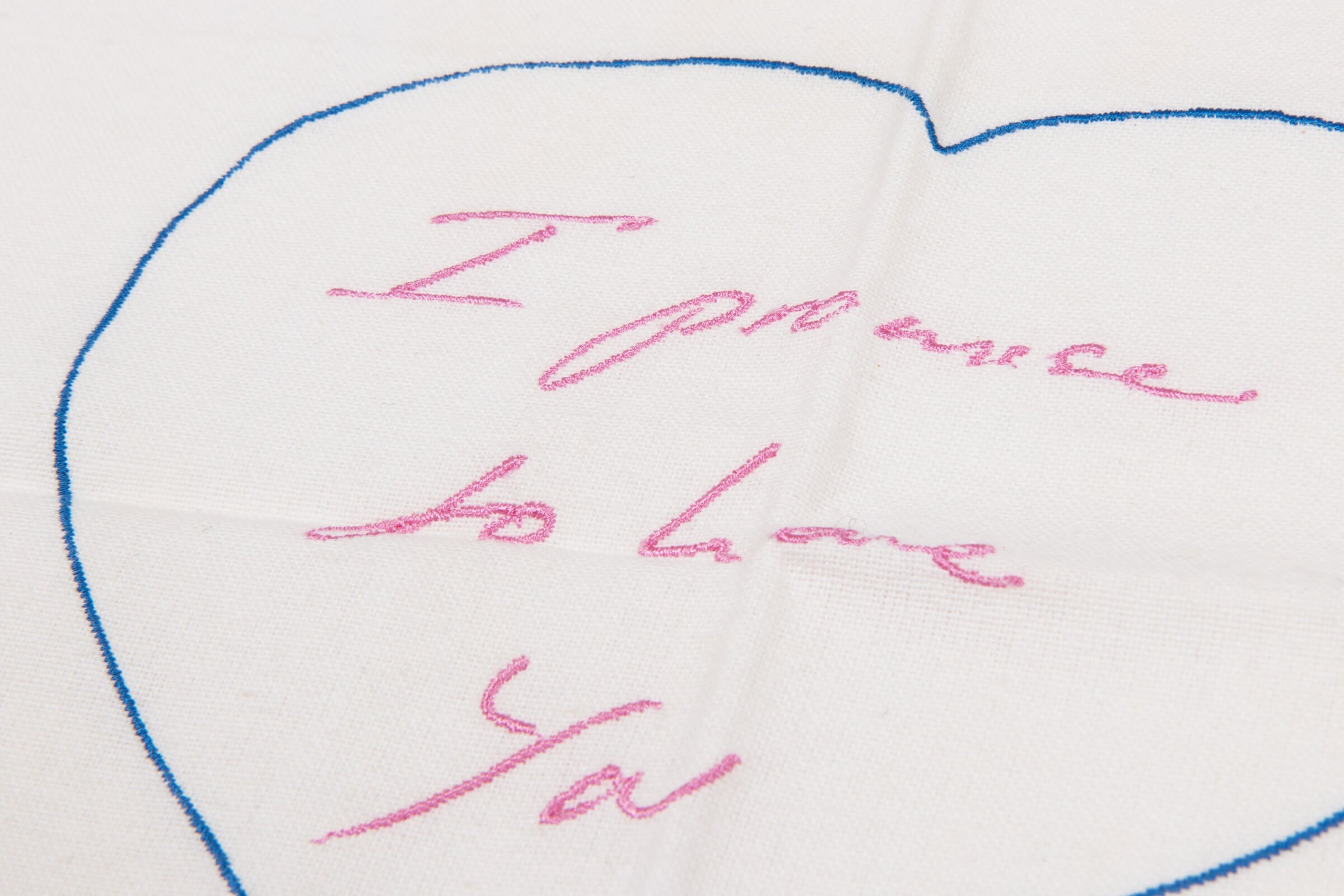
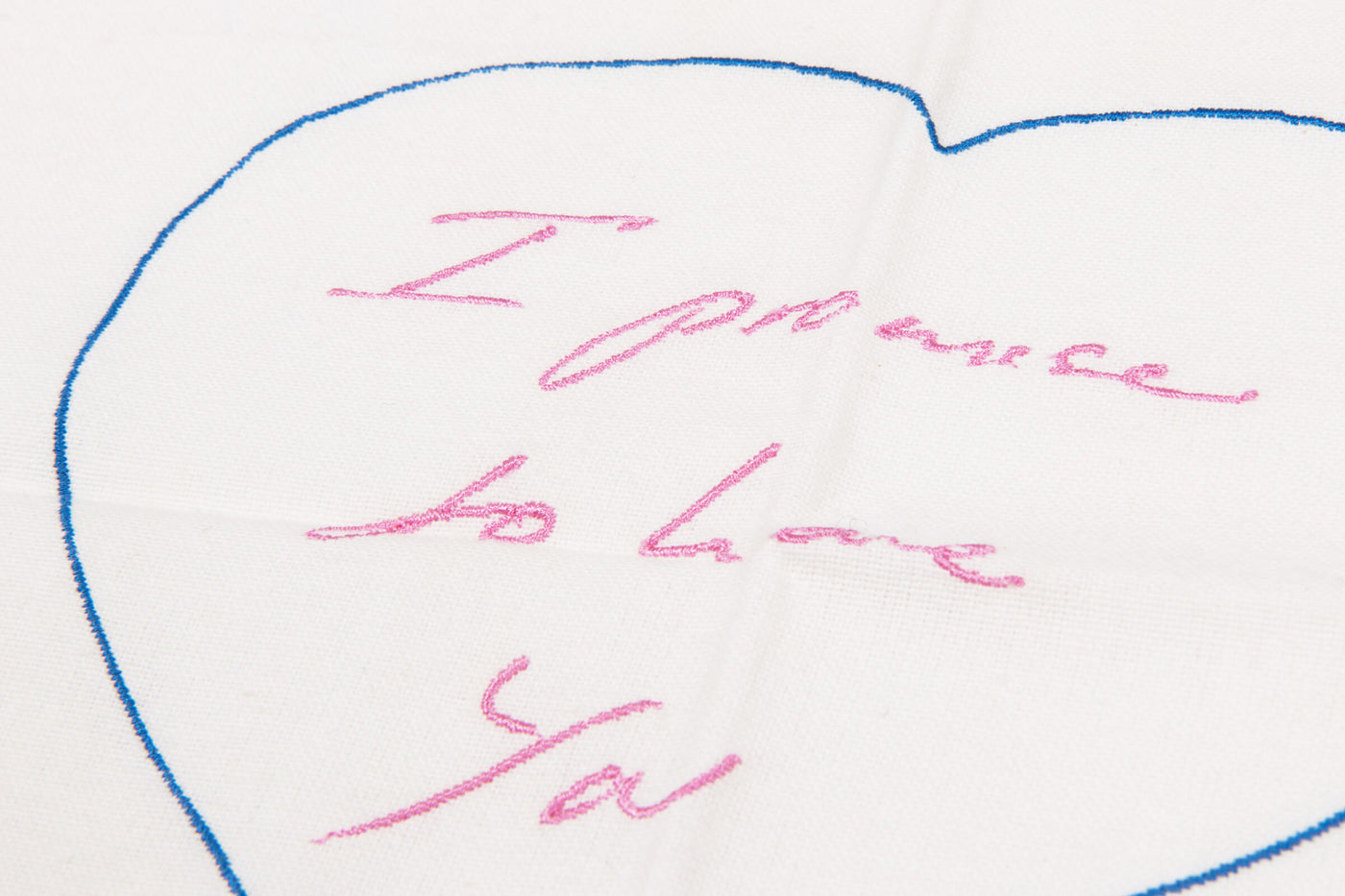
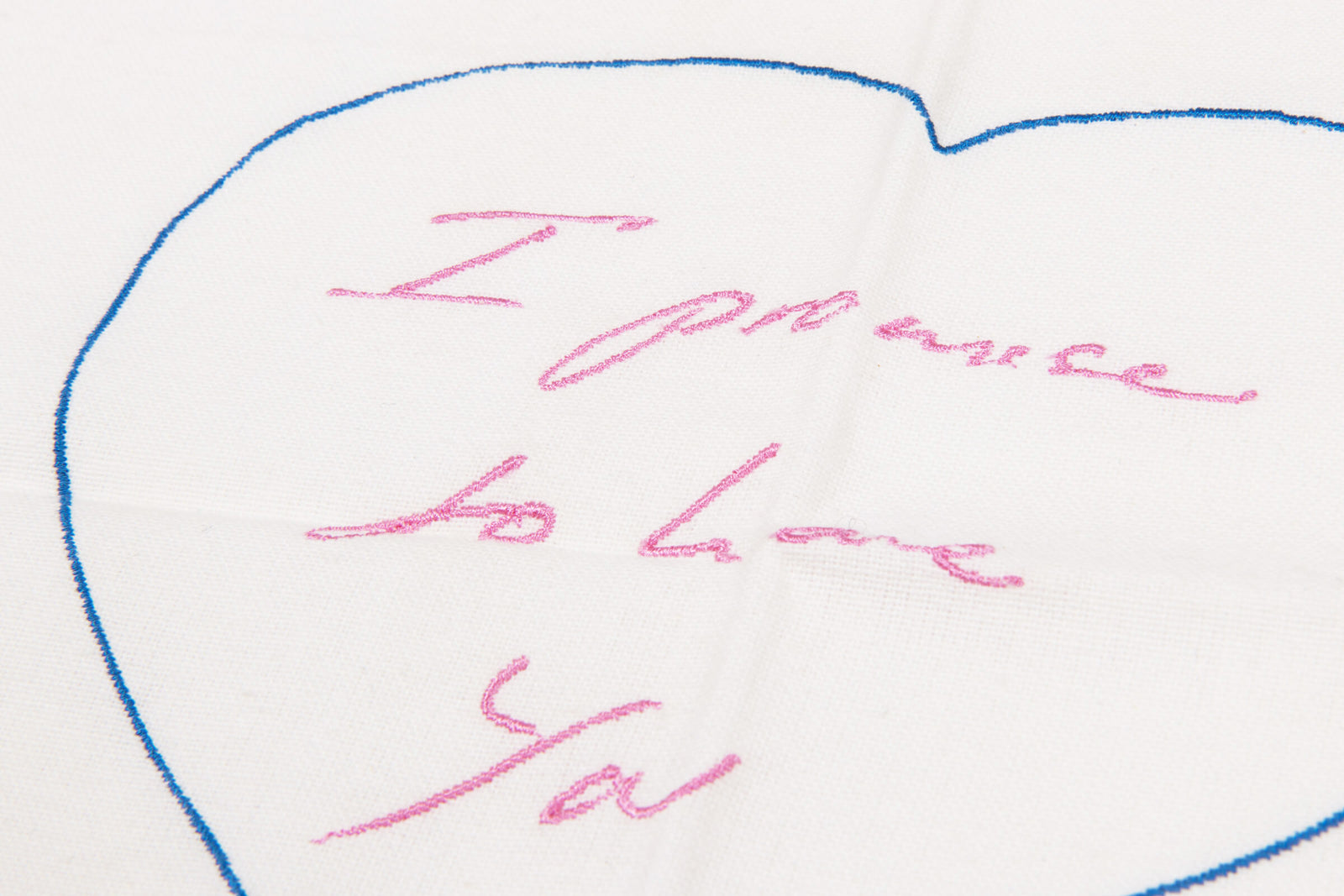
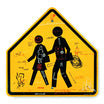
Tracey Emin - I Promise to Love YouTracey Emin - I Promise to Love You
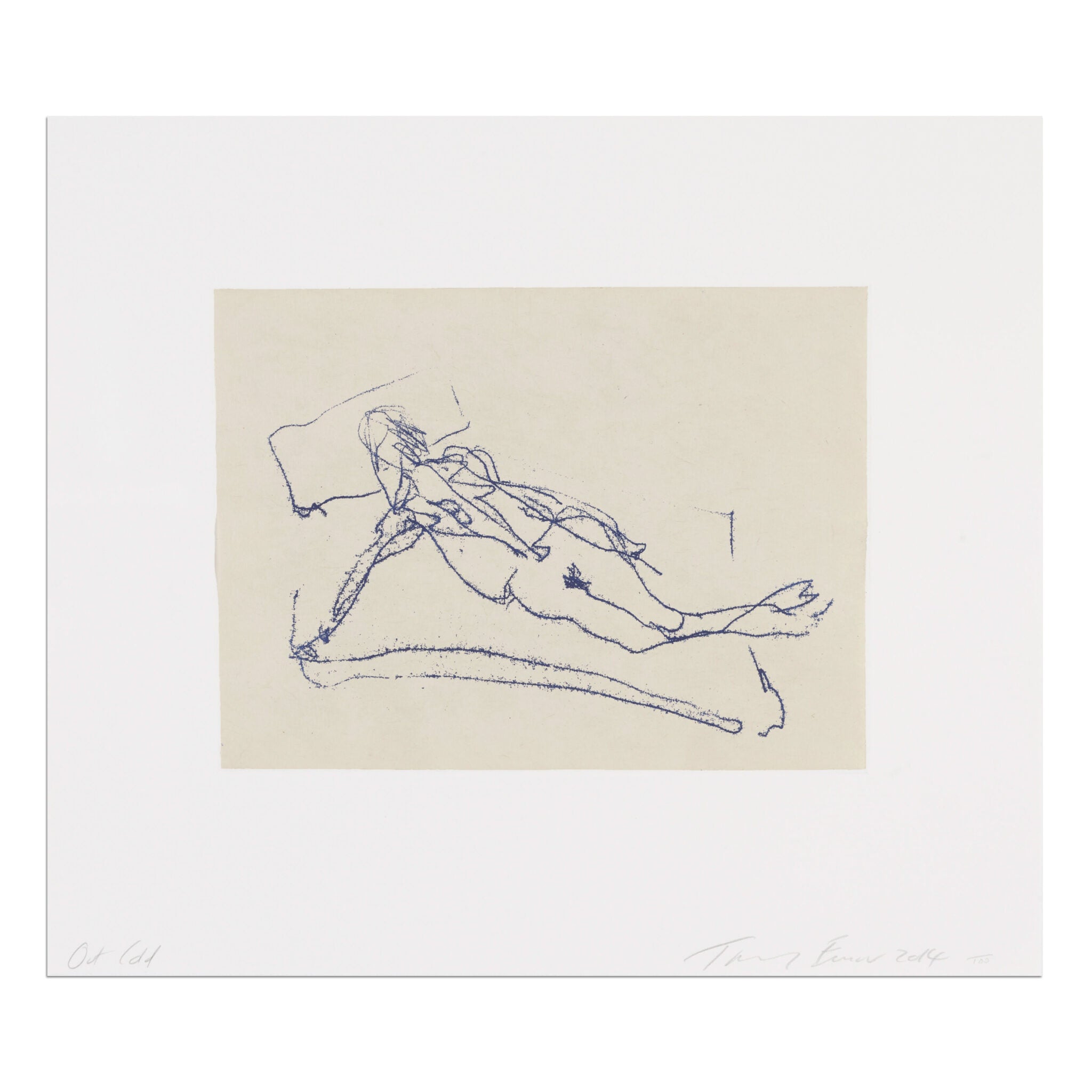
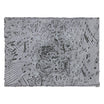
Tracey Emin - Out ColdTracey Emin - Out Cold
Tracey Emin – Out Cold Sale price€3.800,00
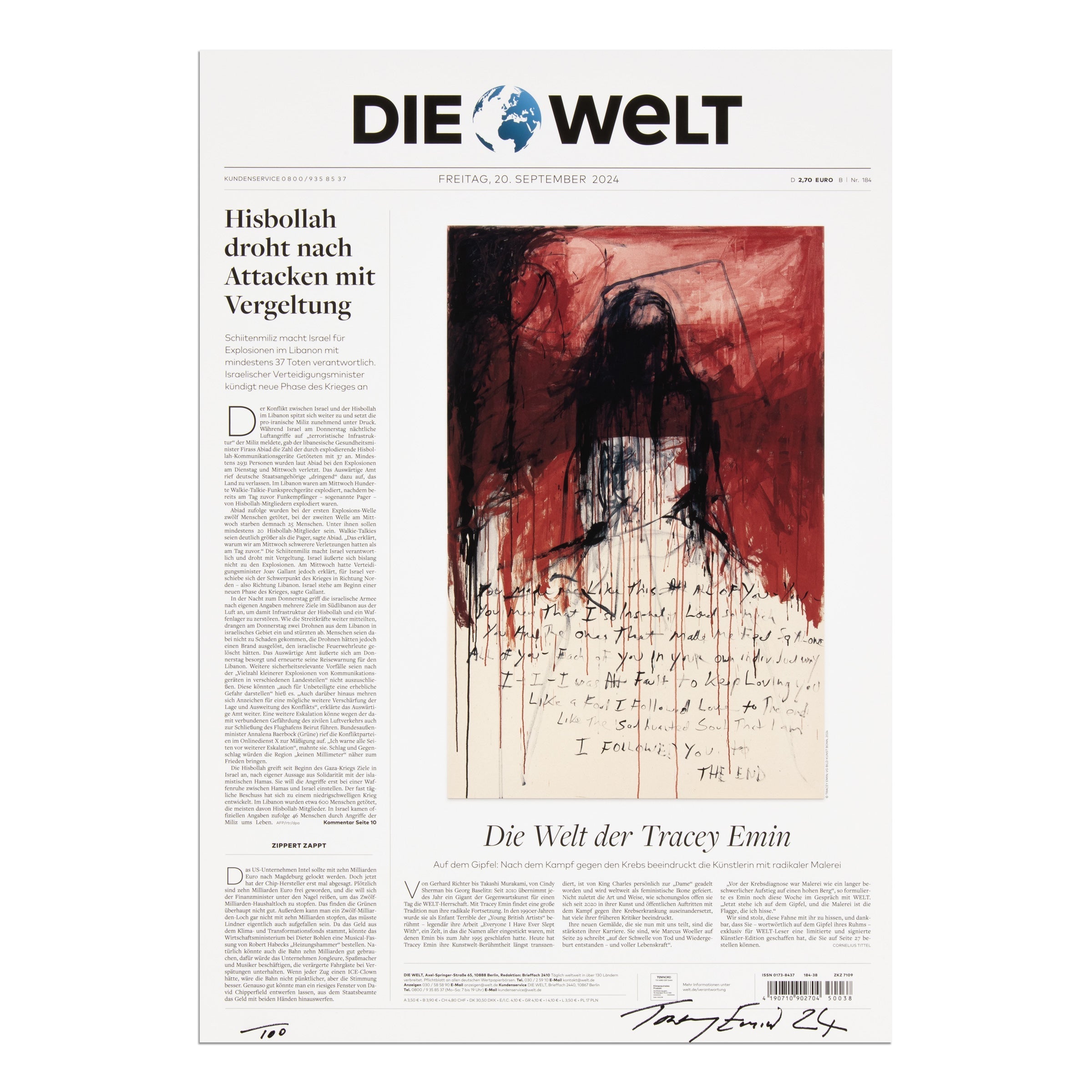
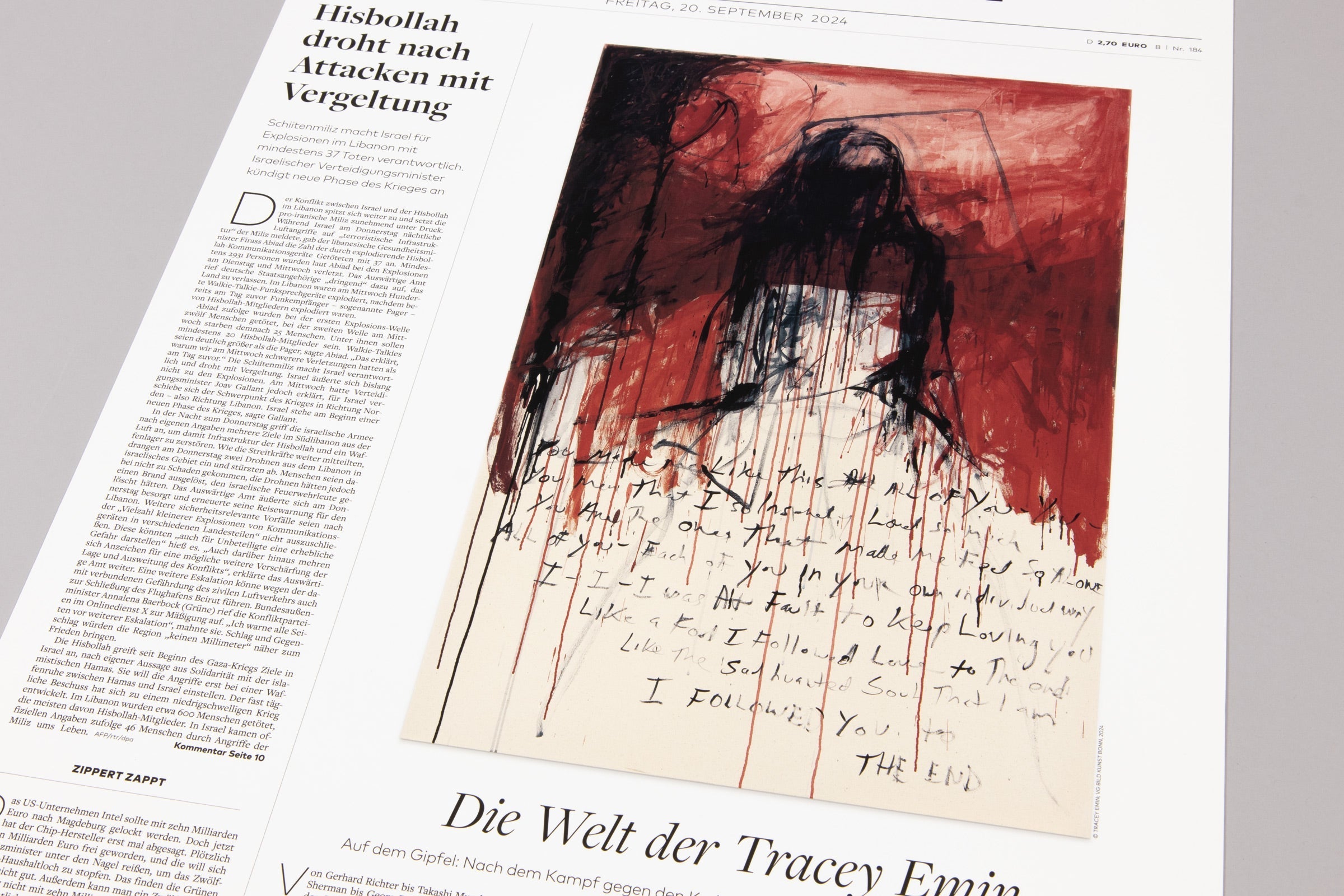
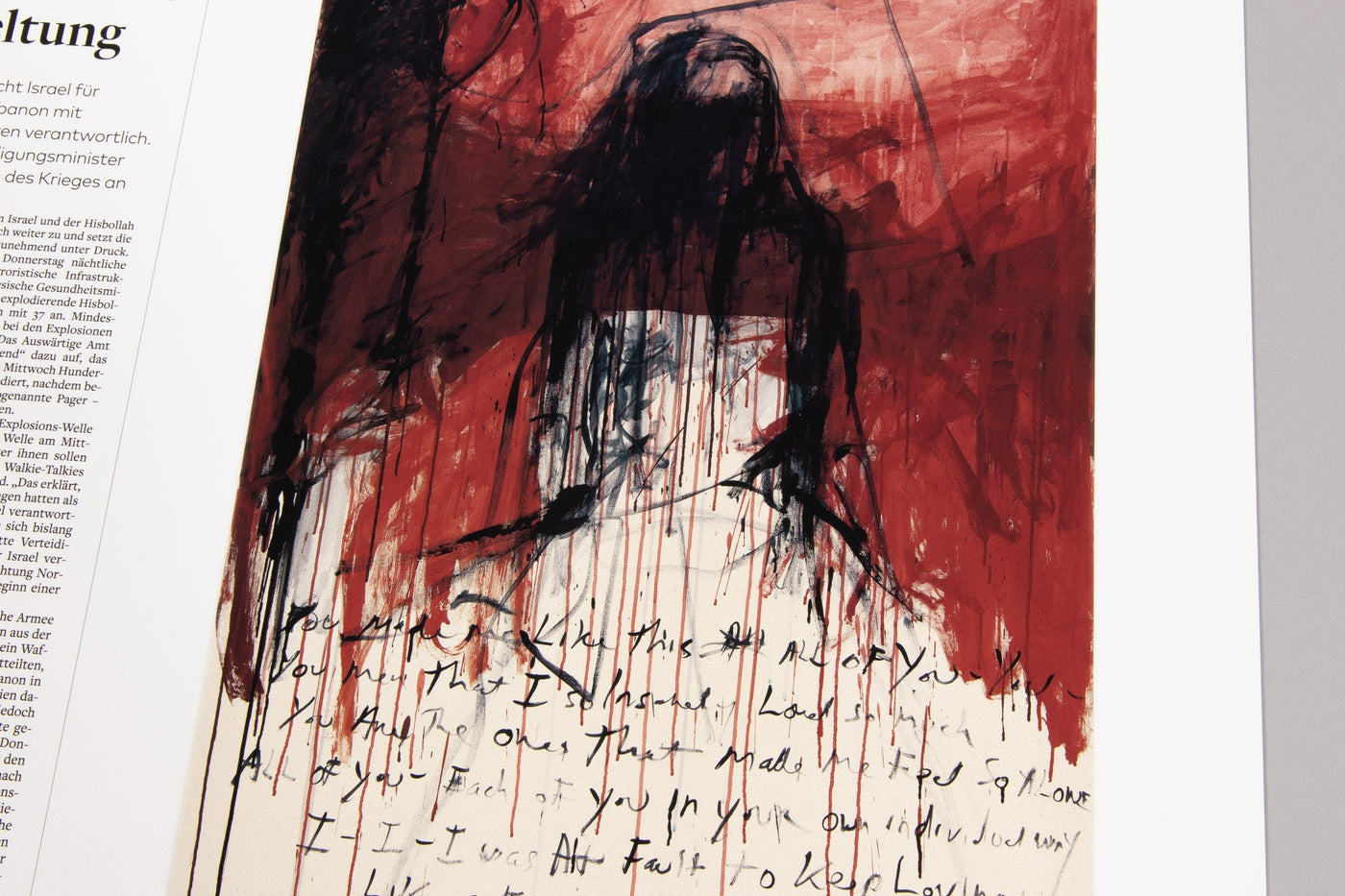
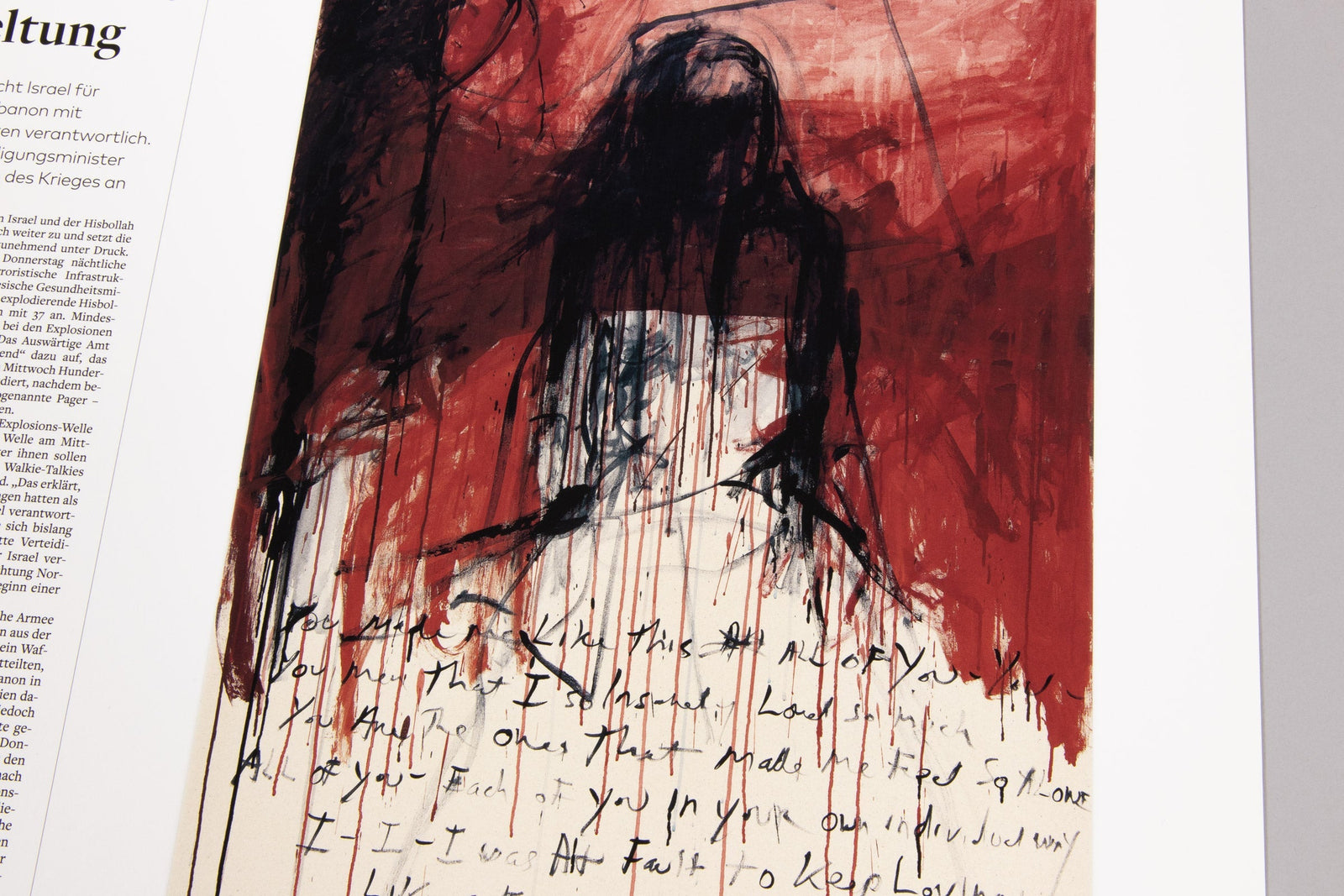
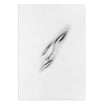
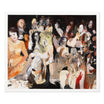
Tracey Emin – I Followed You to the End (Die Welt)Tracey Emin – I Followed You to the End (Die Welt)
Tracey Emin – This is ForeverTracey Emin – This is Forever
Tracey Emin – This is Forever Sale price€7.800,00
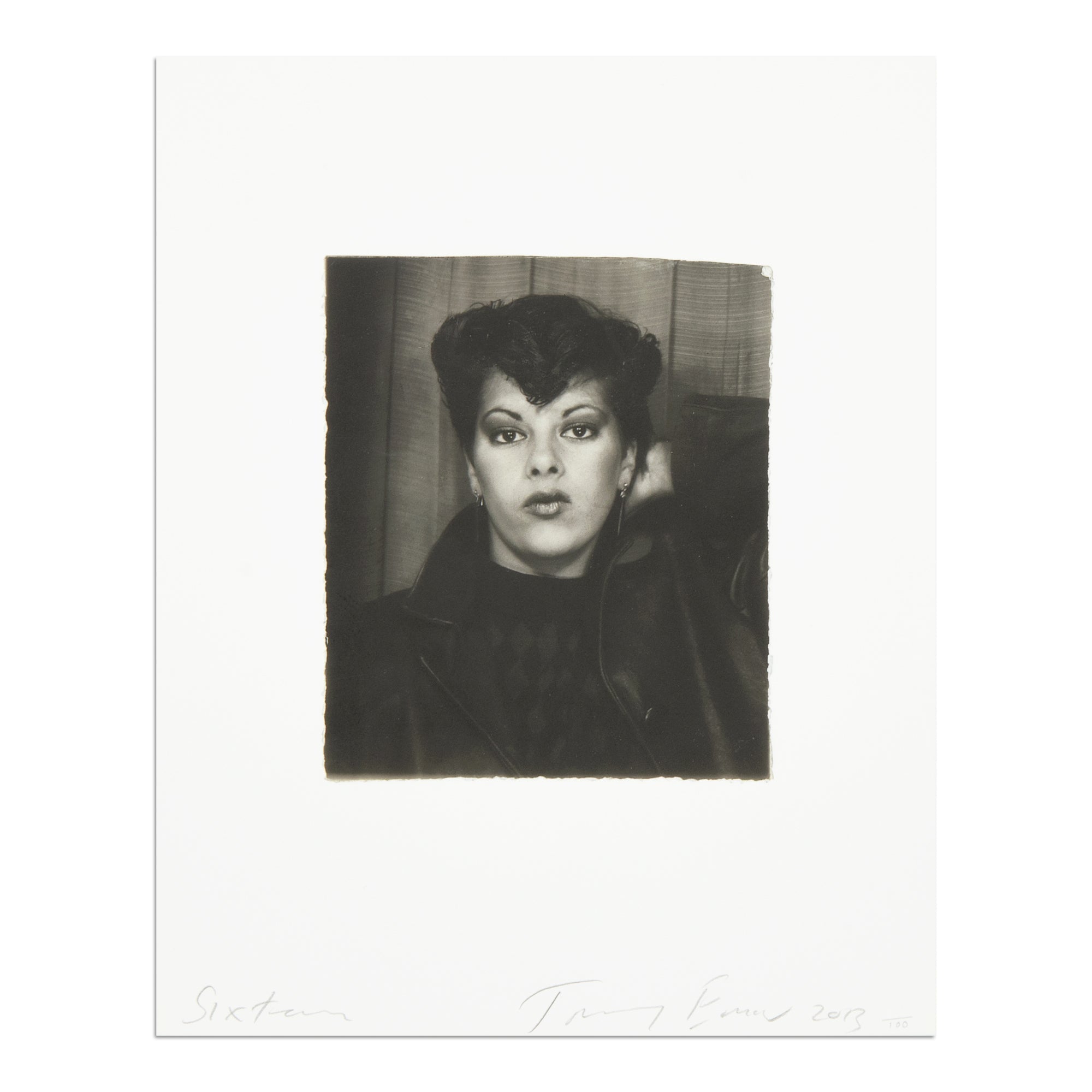
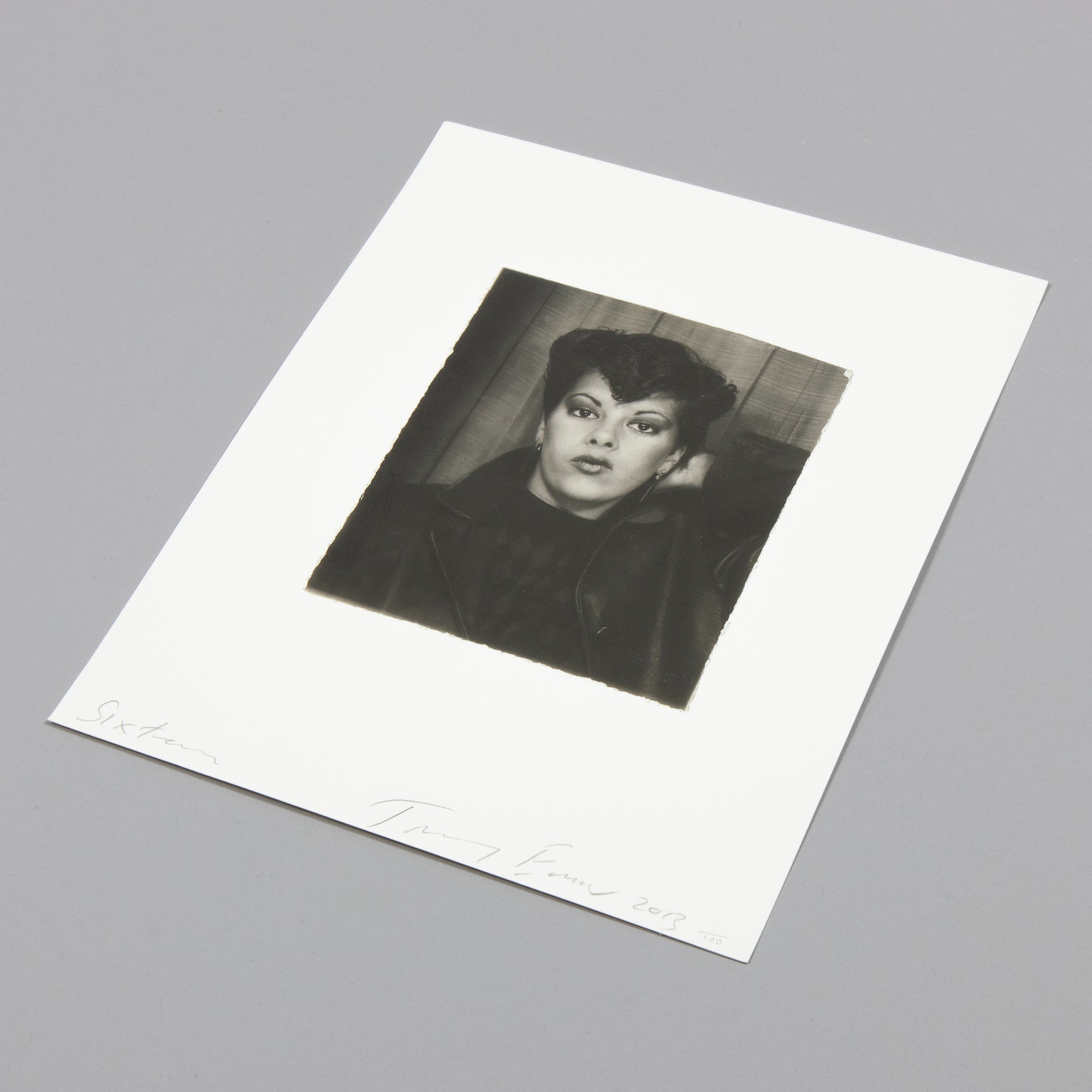
Tracey Emin - SixteenTracey Emin - Sixteen
Tracey Emin – Sixteen Sale price€2.900,00
Tracey Emin - Choose LoveTracey Emin - Choose Love
Tracey Emin - Choose Love Sale price€7.700,00
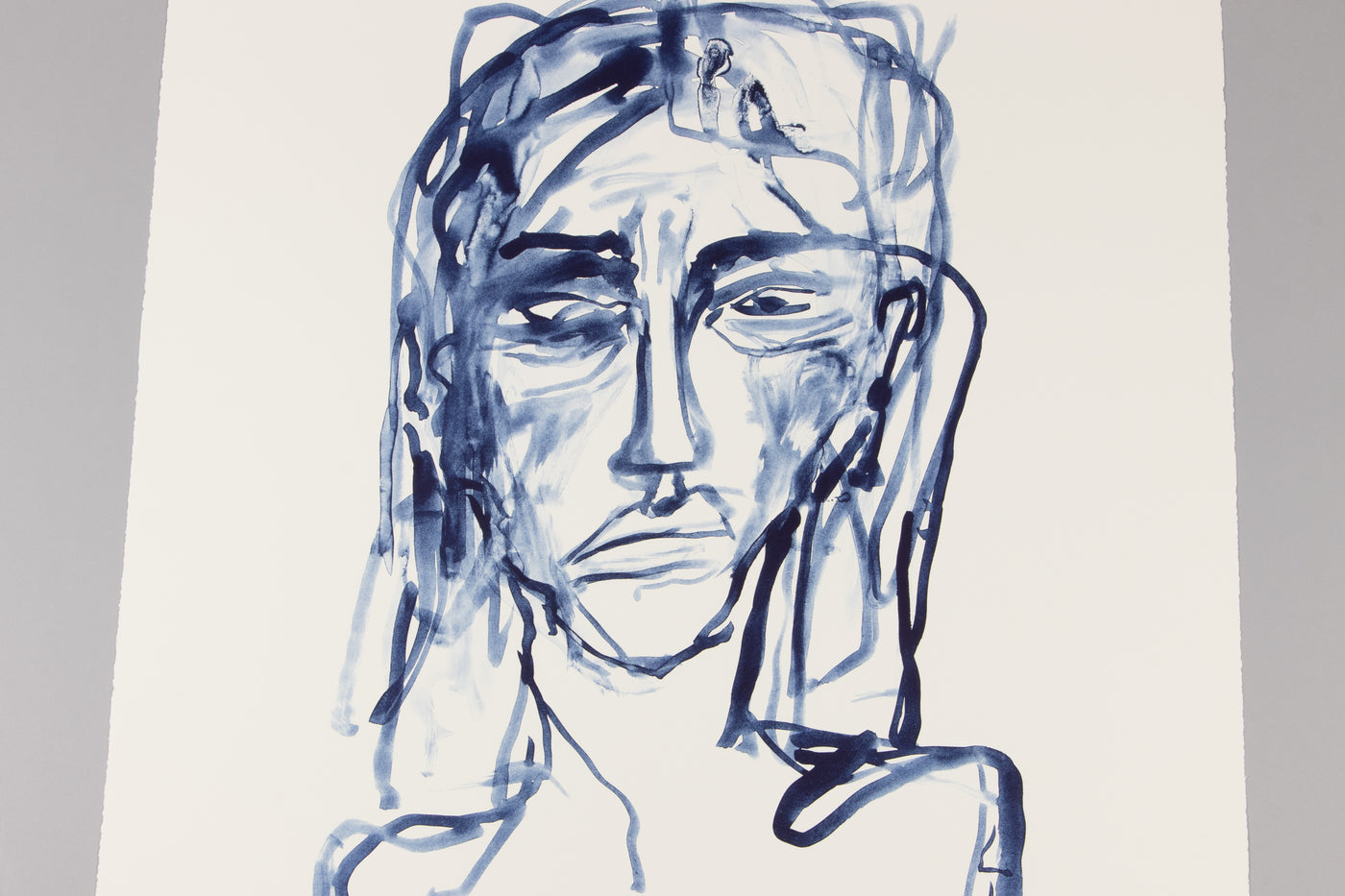
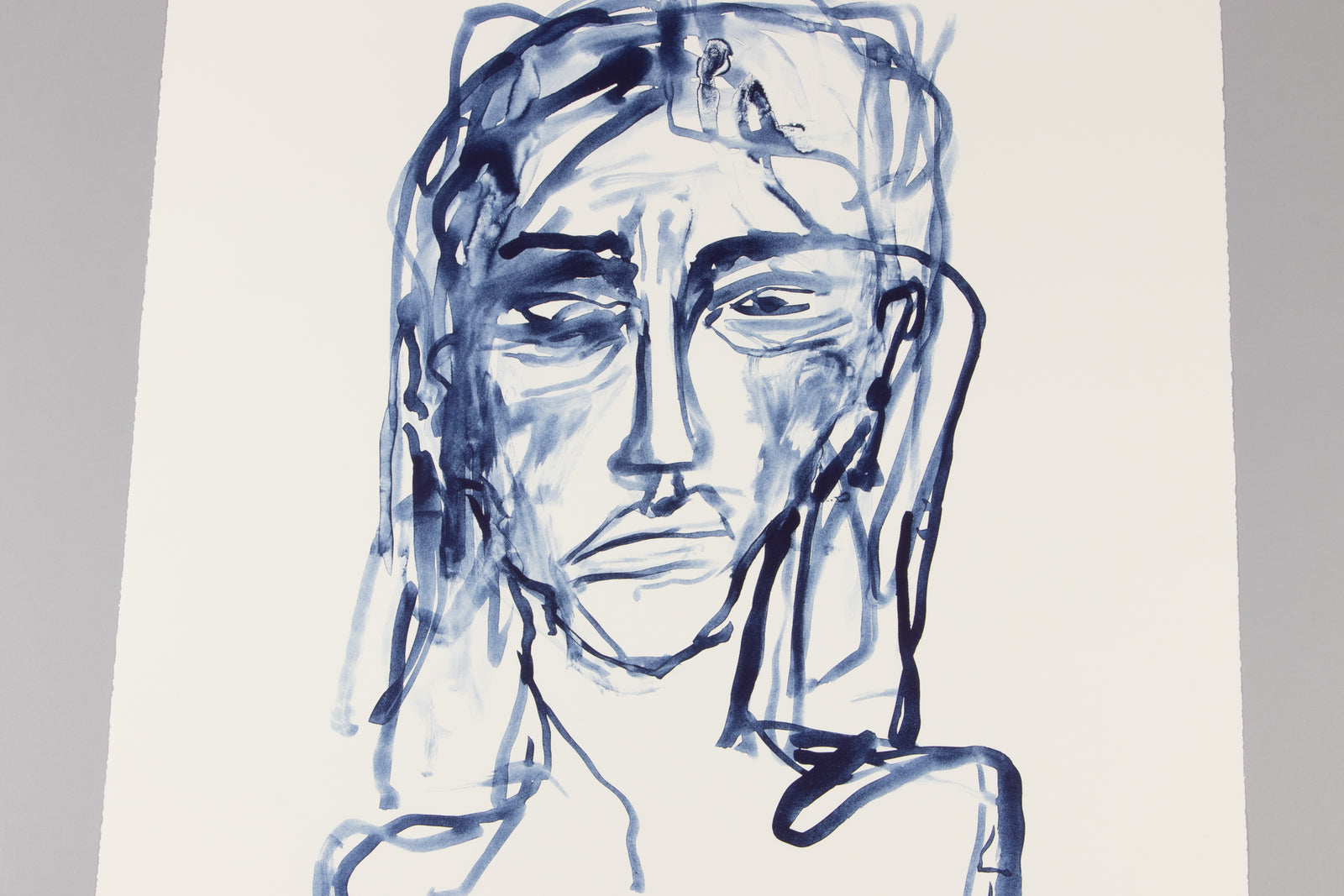
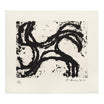
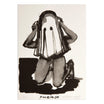
Tracey Emin - I Just Felt HurtTracey Emin - I Just Felt Hurt
Tracey Emin – I Just Felt Hurt Sale price€7.800,00
01

Tracey Emin Biography

Tracey Emin (born 1963 in London) rose to prominence in the early 1990s as one of the Young British Artists, and has spent four decades building a practice on a single radical premise: that her own life — its disorder, shame, grief, and desire — is legitimate artistic material, presented without the protective distance most art maintains.

She shared the ambition of her YBA contemporaries but not their method. Where Damien Hirst built systems around mortality, Emin turned inward, treating the self not as a stable identity to be expressed but as a site of accumulation — memory, sexuality, loss, survival. What she contributed to contemporary art was not simply self-revelation, which had existed long before her, but confession as form: a structural decision with visual and material consequences. Her spelling errors, broken syntax, and trembling line are not naivety; they are the architecture of the work.

That practice connects her to a longer history of figurative and feminist art — artists who returned to the body after its stability as a symbol had been contested. But where much of that tradition treated the body as cultural construct, Emin's figures are specific, lived, hers: registered as events rather than depictions. Her critical standing has only deepened with time. She represented Britain at the Venice Biennale in 2007, was appointed Professor of Drawing at the Royal Academy in 2011, and in 2019 exhibited at the Musée d'Orsay in Paris — one of very few living artists to do so — in dialogue with Edvard Munch, the artist to whom her raw emotional register is most often compared.

Tracey Emin – I Followed You to the End (Die Welt)
02

Famous Tracey Emin Artworks

Three bodies of work fixed Emin in the public imagination, and each rewards a second look beyond the scandal that first greeted it.

My Bed (1998) presented the artist's own unmade bed, surrounded by the debris of a genuine psychological collapse — bottles, tissues, contraceptive packaging — installed in a gallery and nominated for the 1999 Turner Prize. The tabloids treated it as provocation. But My Bed operates as a self-portrait without a body, a space in which absence speaks more eloquently than presence. Standing before it, the viewer is not looking at an object but standing inside someone else's crisis. That refusal to let the viewer remain a safely distanced spectator is one of the defining qualities of Emin's practice.

Everyone I Have Ever Slept With 1963–1995 — a tent appliquéd with 102 names — carried a similar charge. The title invited prurient reading; the work refused it. The names included childhood friends, family members, and a twin who died at birth: a document of intimacy in its full, non-sexual complexity. It was destroyed in the 2004 Momart warehouse fire, which gave it retroactively the quality of something irretrievable — a memory of a memory.

Her neon works form a third defining strand. Handwritten phrases in coloured light — I Promise to Love You, You Loved Me Like a Distant Star — take the medium of commercial signage and turn it toward raw emotional address. These are not slogans or propositions but private sentences made public, suspended in light, speaking to no one and everyone at once. The neons brought Emin's handwriting — the core of her visual identity — into a form that could hold an entire room.

Tracey Emin - I Just Felt Hurt
03

Tracey Emin Prints & Editions

Drawing is the heart of Emin's practice — the place, in her own words, where "my drawings are like my handwriting; they can't lie." Even in her largest installations, drawing is the underlying discipline, and it is in works on paper and editioned prints that her voice is most directly exposed.

Her figures are almost never complete. They tremble, open, or withdraw — and what could be read as incompleteness is in fact a form of precision, registering emotional states that finished form would neutralise. Her monoprints, produced in a single pass that permits no correction, carry this immediacy most acutely: each is a unique record of the hand moving in real time. Alongside them, her etchings, lithographs, and handwritten neon-derived text works extend the same concerns into limited editions that are fully consistent with — never secondary to — her larger practice.

For collectors, Emin's prints and editions offer the most direct access to what makes her work matter: the moment before experience settles into image, caught and held. Her works are held in major public collections worldwide, including Tate and the Royal Academy, where she is a Royal Academician.

01

Tracey Emin Biography

Tracey Emin (born 1963 in London) rose to prominence in the early 1990s as one of the Young British Artists, and has spent four decades building a practice on a single radical premise: that her own life — its disorder, shame, grief, and desire — is legitimate artistic material, presented without the protective distance most art maintains.

She shared the ambition of her YBA contemporaries but not their method. Where Damien Hirst built systems around mortality, Emin turned inward, treating the self not as a stable identity to be expressed but as a site of accumulation — memory, sexuality, loss, survival. What she contributed to contemporary art was not simply self-revelation, which had existed long before her, but confession as form: a structural decision with visual and material consequences. Her spelling errors, broken syntax, and trembling line are not naivety; they are the architecture of the work.

That practice connects her to a longer history of figurative and feminist art — artists who returned to the body after its stability as a symbol had been contested. But where much of that tradition treated the body as cultural construct, Emin's figures are specific, lived, hers: registered as events rather than depictions. Her critical standing has only deepened with time. She represented Britain at the Venice Biennale in 2007, was appointed Professor of Drawing at the Royal Academy in 2011, and in 2019 exhibited at the Musée d'Orsay in Paris — one of very few living artists to do so — in dialogue with Edvard Munch, the artist to whom her raw emotional register is most often compared.

02

Famous Tracey Emin Artworks

Three bodies of work fixed Emin in the public imagination, and each rewards a second look beyond the scandal that first greeted it.

My Bed (1998) presented the artist's own unmade bed, surrounded by the debris of a genuine psychological collapse — bottles, tissues, contraceptive packaging — installed in a gallery and nominated for the 1999 Turner Prize. The tabloids treated it as provocation. But My Bed operates as a self-portrait without a body, a space in which absence speaks more eloquently than presence. Standing before it, the viewer is not looking at an object but standing inside someone else's crisis. That refusal to let the viewer remain a safely distanced spectator is one of the defining qualities of Emin's practice.

Everyone I Have Ever Slept With 1963–1995 — a tent appliquéd with 102 names — carried a similar charge. The title invited prurient reading; the work refused it. The names included childhood friends, family members, and a twin who died at birth: a document of intimacy in its full, non-sexual complexity. It was destroyed in the 2004 Momart warehouse fire, which gave it retroactively the quality of something irretrievable — a memory of a memory.

Her neon works form a third defining strand. Handwritten phrases in coloured light — I Promise to Love You, You Loved Me Like a Distant Star — take the medium of commercial signage and turn it toward raw emotional address. These are not slogans or propositions but private sentences made public, suspended in light, speaking to no one and everyone at once. The neons brought Emin's handwriting — the core of her visual identity — into a form that could hold an entire room.

03

Tracey Emin Prints & Editions

Drawing is the heart of Emin's practice — the place, in her own words, where "my drawings are like my handwriting; they can't lie." Even in her largest installations, drawing is the underlying discipline, and it is in works on paper and editioned prints that her voice is most directly exposed.

Her figures are almost never complete. They tremble, open, or withdraw — and what could be read as incompleteness is in fact a form of precision, registering emotional states that finished form would neutralise. Her monoprints, produced in a single pass that permits no correction, carry this immediacy most acutely: each is a unique record of the hand moving in real time. Alongside them, her etchings, lithographs, and handwritten neon-derived text works extend the same concerns into limited editions that are fully consistent with — never secondary to — her larger practice.

For collectors, Emin's prints and editions offer the most direct access to what makes her work matter: the moment before experience settles into image, caught and held. Her works are held in major public collections worldwide, including Tate and the Royal Academy, where she is a Royal Academician.

Tracey Emin – I Followed You to the End (Die Welt)Tracey Emin - I Just Felt Hurt

Tracey Emin: Key Questions

Collecting Tracey Emin?

Looking for a specific artwork or have a question about an edition? We're happy to advise on availability, pricing, condition, and provenance — and to source artworks beyond our current selection.

Contact us

Prints, Photographs & Multiples

View our full collection of

Prints, Photographs & Multiples

Explore editions