



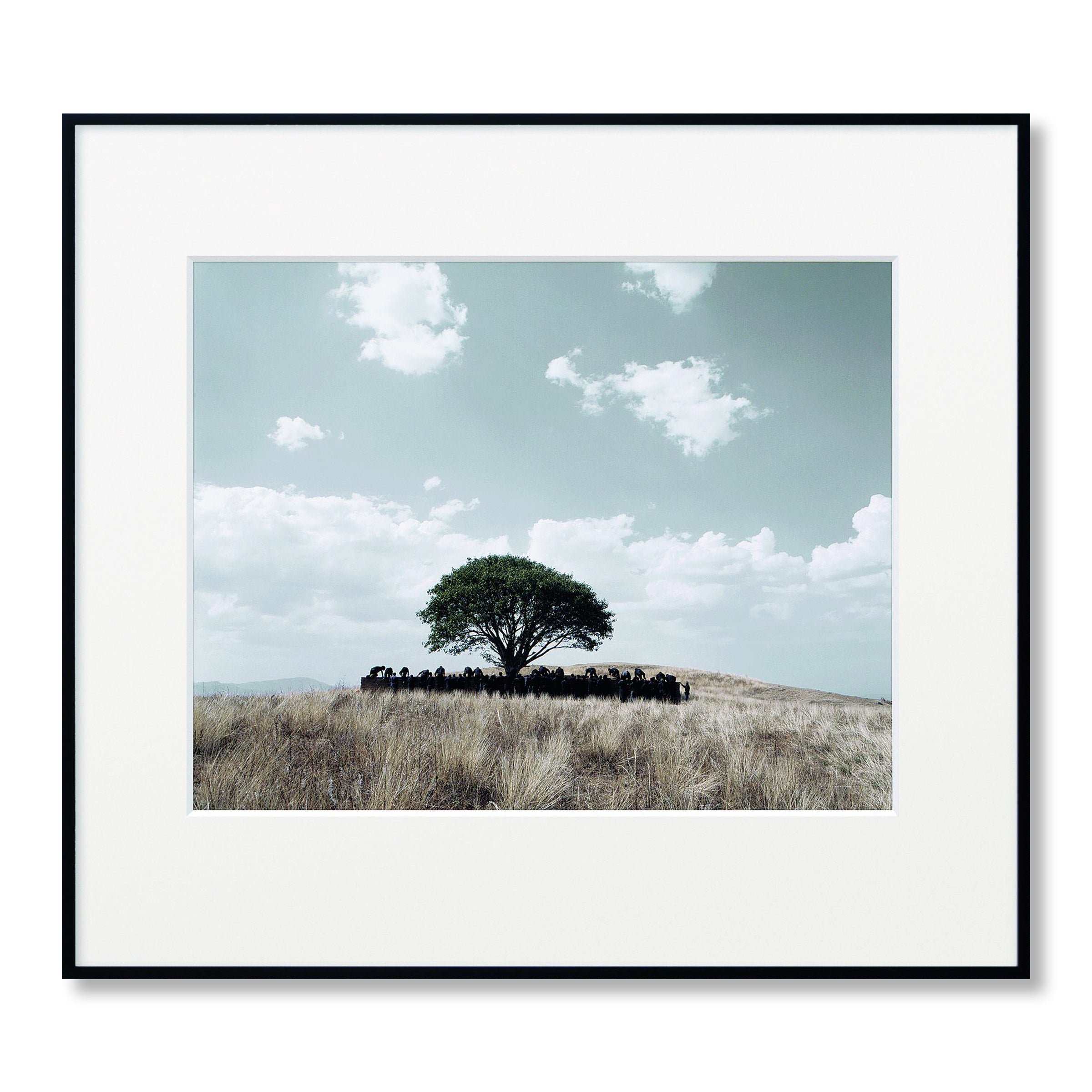

About Shirin Neshat
Shirin Neshat (born 1957, Iran) is a seminal figure in contemporary art, internationally acclaimed for her photography, film, and multimedia artworks exploring identity, gender, power, and cultural displacement. Living in exile since 1975, Neshat draws on personal and political histories to examine the tensions between tradition, authority, and individual freedom. Her works have become central to discussions of contemporary art from the Middle East and the global diaspora.
Neshat first gained international recognition with her photographic series Women of Allah (1993–1997), a body of black-and-white photographs portraying veiled women inscribed with Persian calligraphy. These powerful artworks confront themes of femininity, Islam, martyrdom, and resistance, while challenging Western perceptions of Muslim women. By appropriating calligraphy, historically dominated by male artists in Islamic culture, Neshat subverts established gender hierarchies and reclaims visual and political agency.
Working across large-scale photography, video installations, and film, Neshat creates emotionally charged works that combine aesthetic precision with political urgency. Her acclaimed feature film Women Without Men (2009) further expanded her practice, offering a poetic yet critical reflection on female subjectivity during a pivotal moment in Iranian history.
Neshat's photographic prints and limited edition artworks are held in major museum collections worldwide and are highly sought after by collectors of contemporary art. Her prints continue to resonate through their uncompromising engagement with exile, censorship, and resistance, securing her position as one of the most influential artists of her generation.


