




About Günther Förg
Günther Förg (1952–2013) was a pivotal figure in postwar German abstraction, renowned for a rigorously intellectual practice spanning painting, printmaking, photography, sculpture, and works on paper. Central to Förg’s oeuvre was a sustained engagement with the legacy of Modernism, approached not nostalgically but as a critical framework to be tested, fractured, and reactivated for a contemporary context.
Förg’s artworks draw on architectural and artistic movements such as Russian Constructivism, Italian Rationalism, Minimalism, and Abstract Expressionism. Rather than quoting these traditions directly, he translated their formal languages into a new visual syntax marked by instability, tension, and material presence. His commitment to abstraction and monochrome painting stood in sharp contrast to the figurative trends dominant in Germany during the 1980s and 1990s, positioning his work as both resistant and conceptually autonomous.
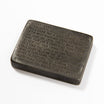
Among Förg’s most influential contributions are his lead paintings, in which acrylic paint is applied to sheets of lead mounted on wooden supports. These works blur the boundary between painting and sculpture, emphasizing weight, surface, and physicality while rejecting illusionistic depth. Through this object-like approach, Förg challenged the autonomy of painting, transforming it into a materially assertive presence within space.
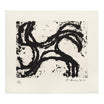
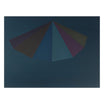
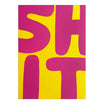
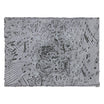
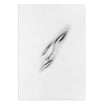
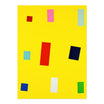
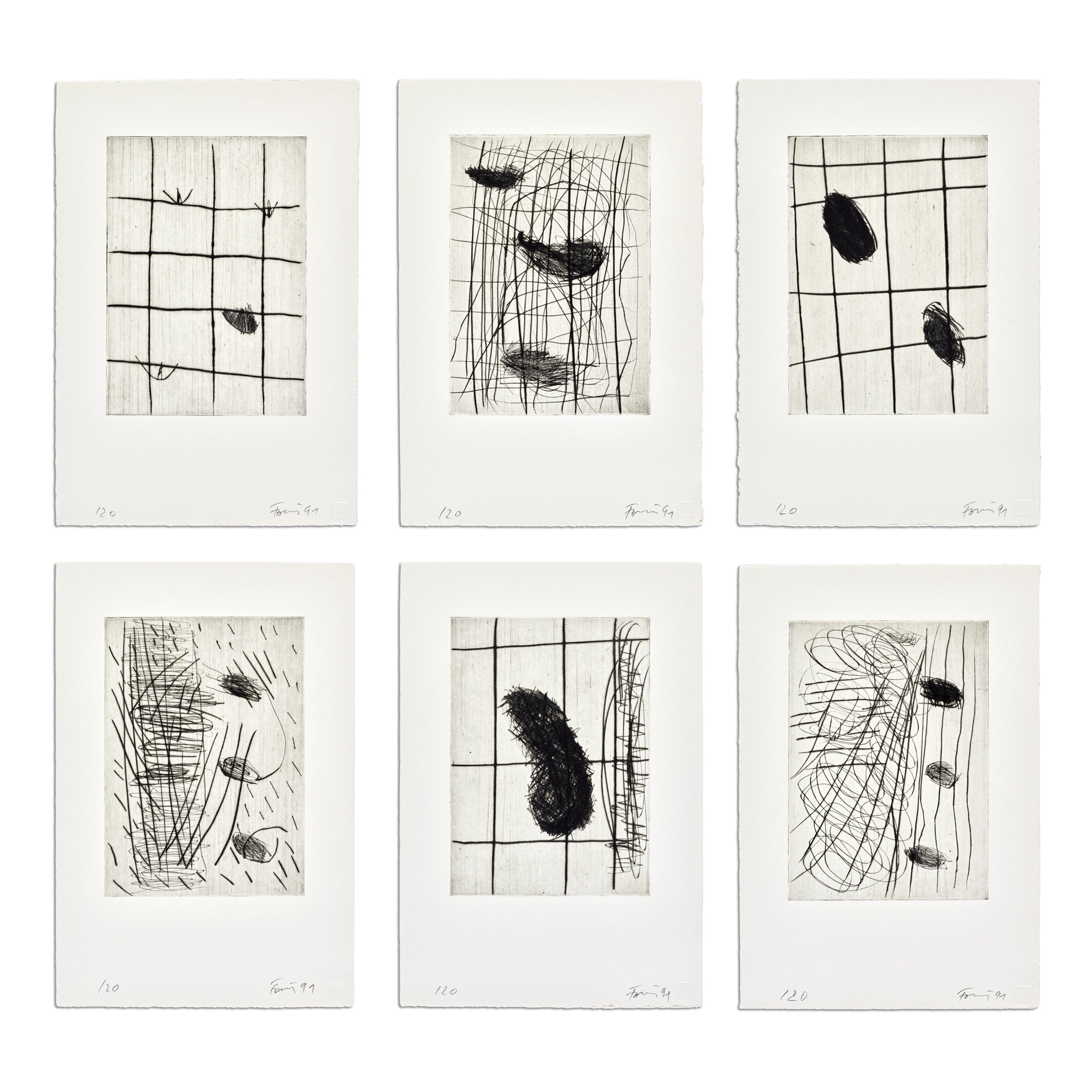
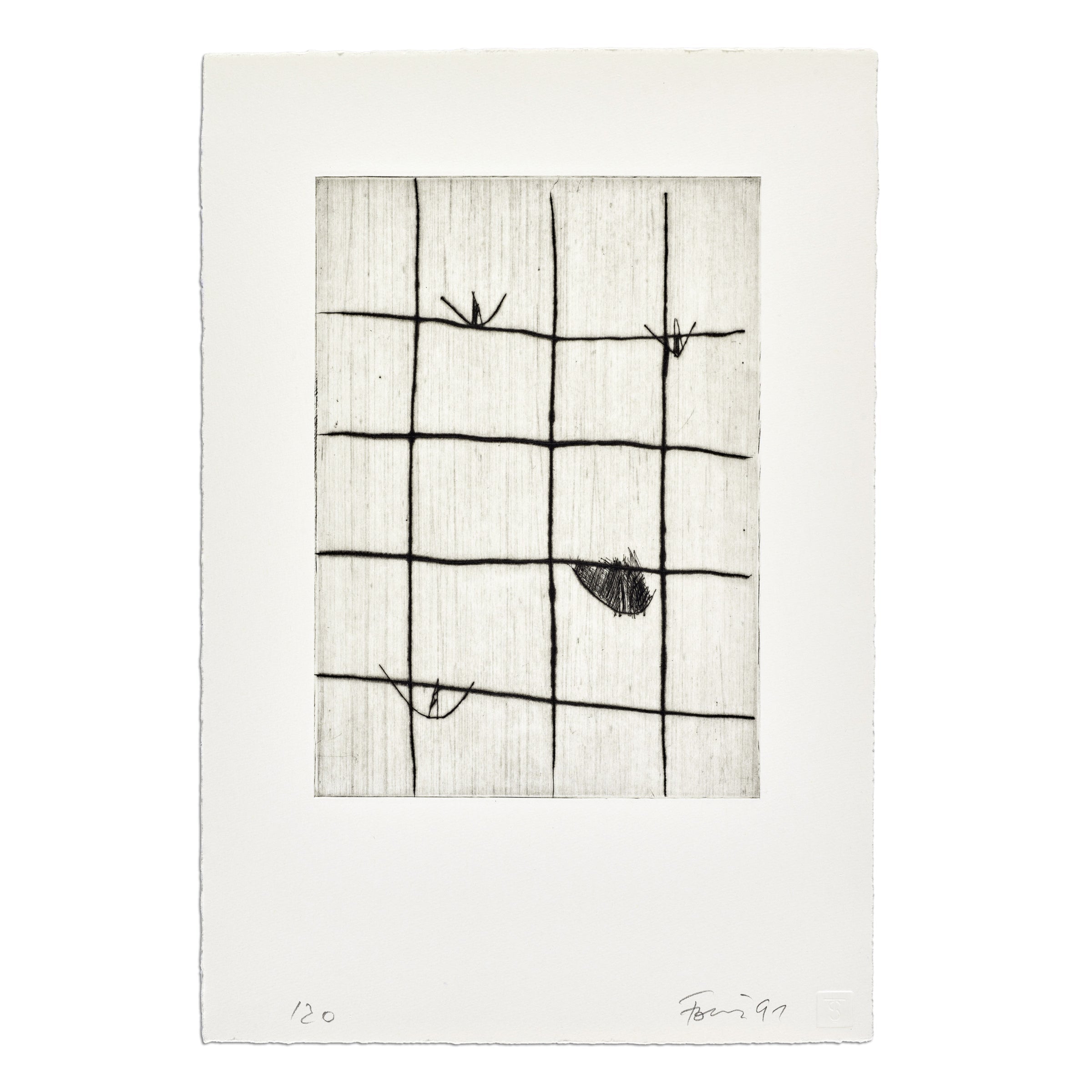
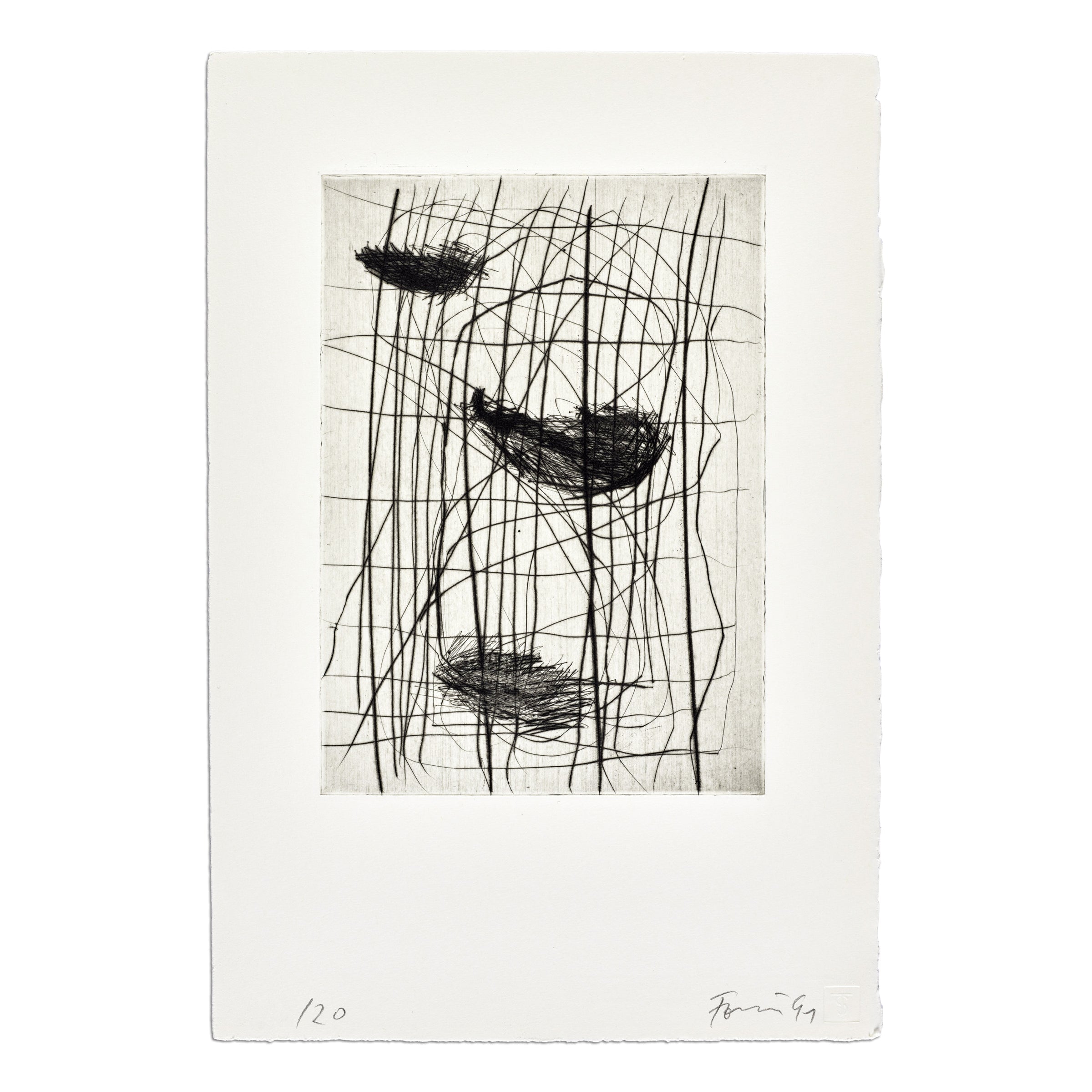
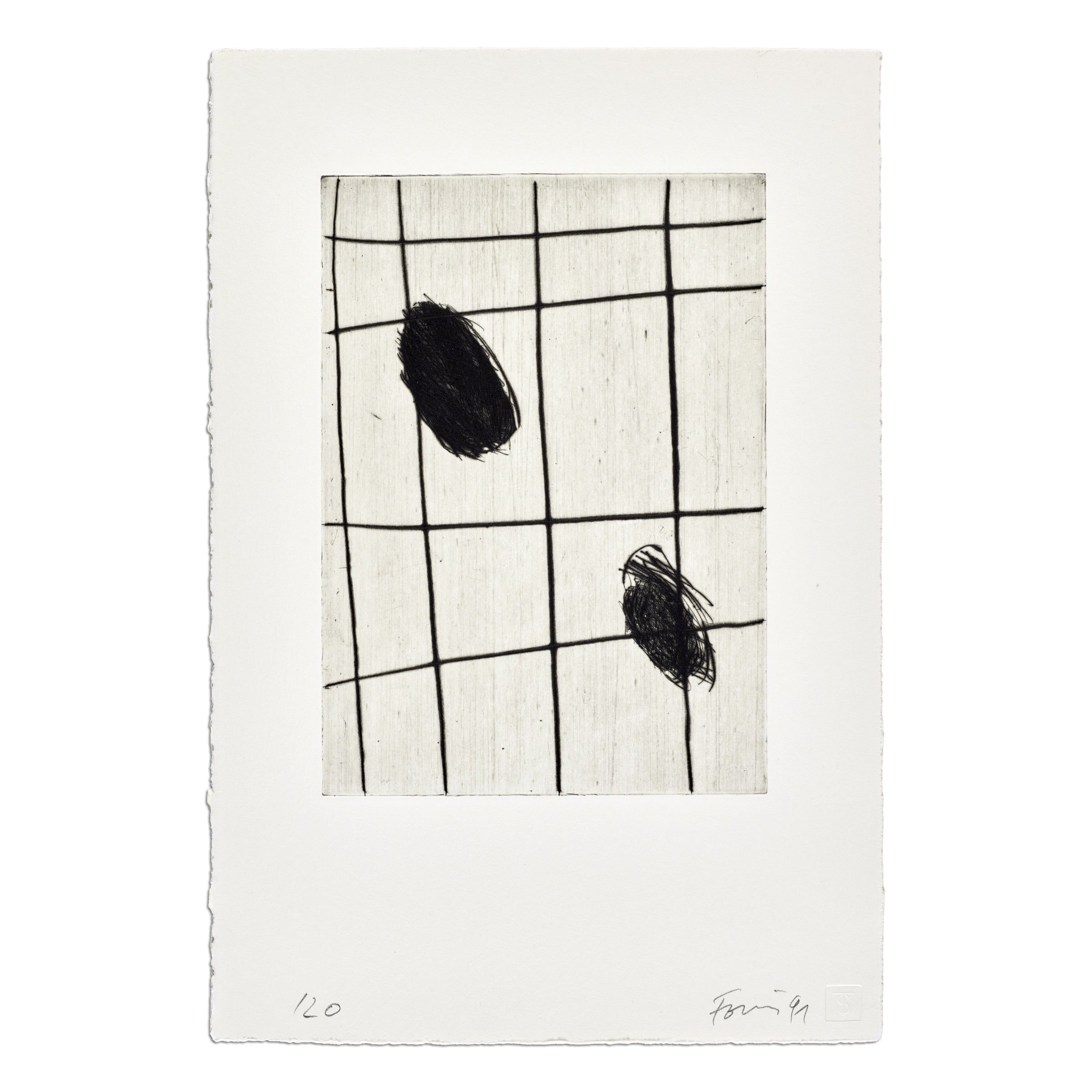
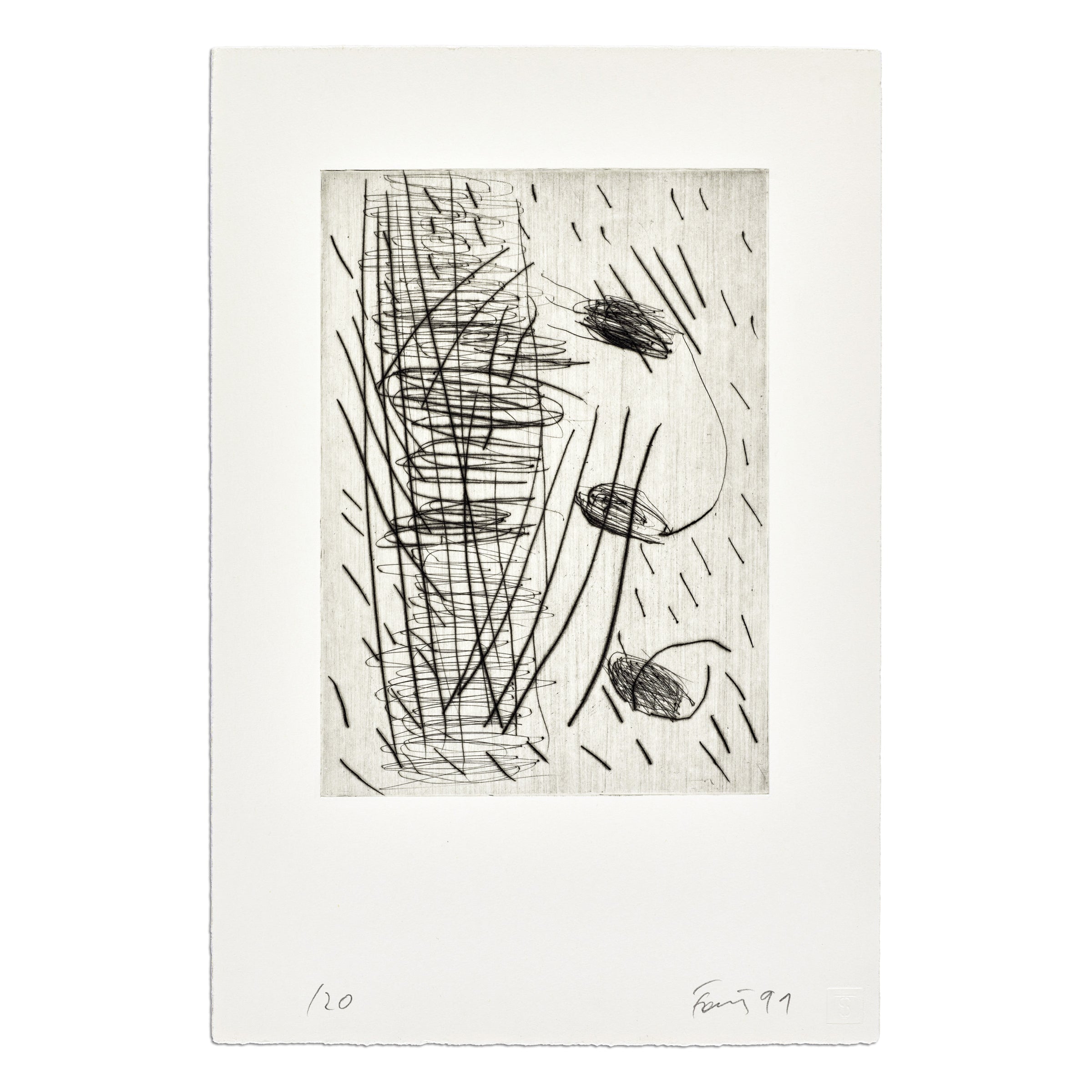
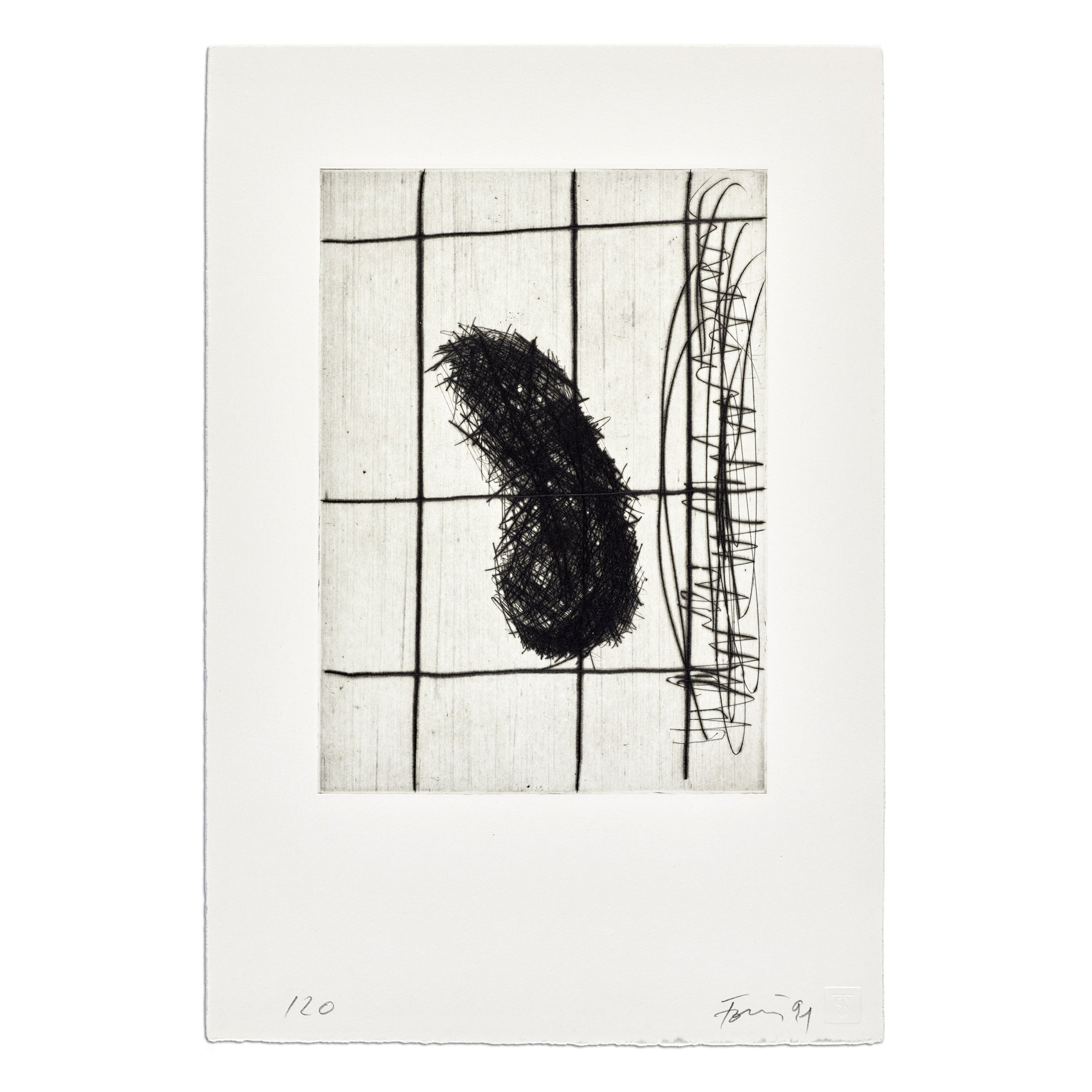
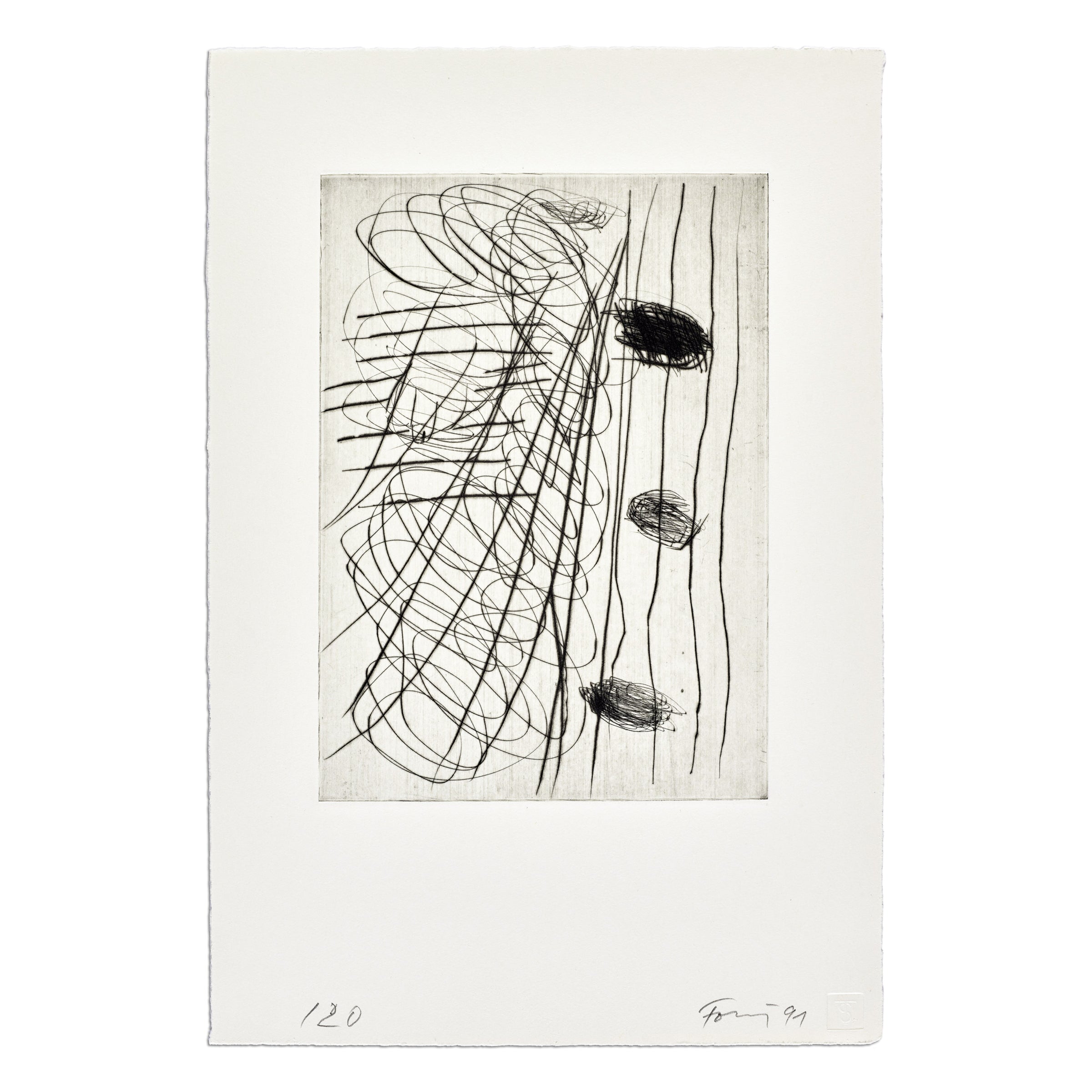
This conceptual rigor extends into Förg’s printmaking practice. His signed limited edition prints and etchings are defined by bold color fields, architectural grids, and geometric forms, often executed with deliberate irregularity. Far from secondary works, these fine art prints continue his investigation into abstraction, structure, and materiality, offering collectors direct access to his visual language in highly resolved formats.


