





Artist Insight
Art After Philosophy
Joseph Kosuth’s 1969 essay Art after Philosophy crystallized this position with uncommon clarity. Art, he asserted, is a tautology: it defines itself through its own internal propositions. To make art after modernism is not to refine form but to analyze the concept of art. This claim repositioned artistic practice within the terrain of analytic philosophy, particularly the linguistic investigations of Wittgenstein, whose argument that meaning arises from use rather than essence provided a critical framework.
The artwork One and Three Chairs stages this logic without spectacle. A physical chair, a photograph of that chair, and a dictionary definition of the word “chair” coexist as parallel registers. The work does not privilege object over image or language over matter; it exposes their interdependence. What appears at first as a clever juxtaposition is in fact a structural proposition about representation. The artwork is not the chair. It is the question of how a chair becomes legible as such.
This distinction — between object and concept, between appearance and definition — reshaped the trajectory of postwar art.

Language as Structure in Joseph Kosuth's Art
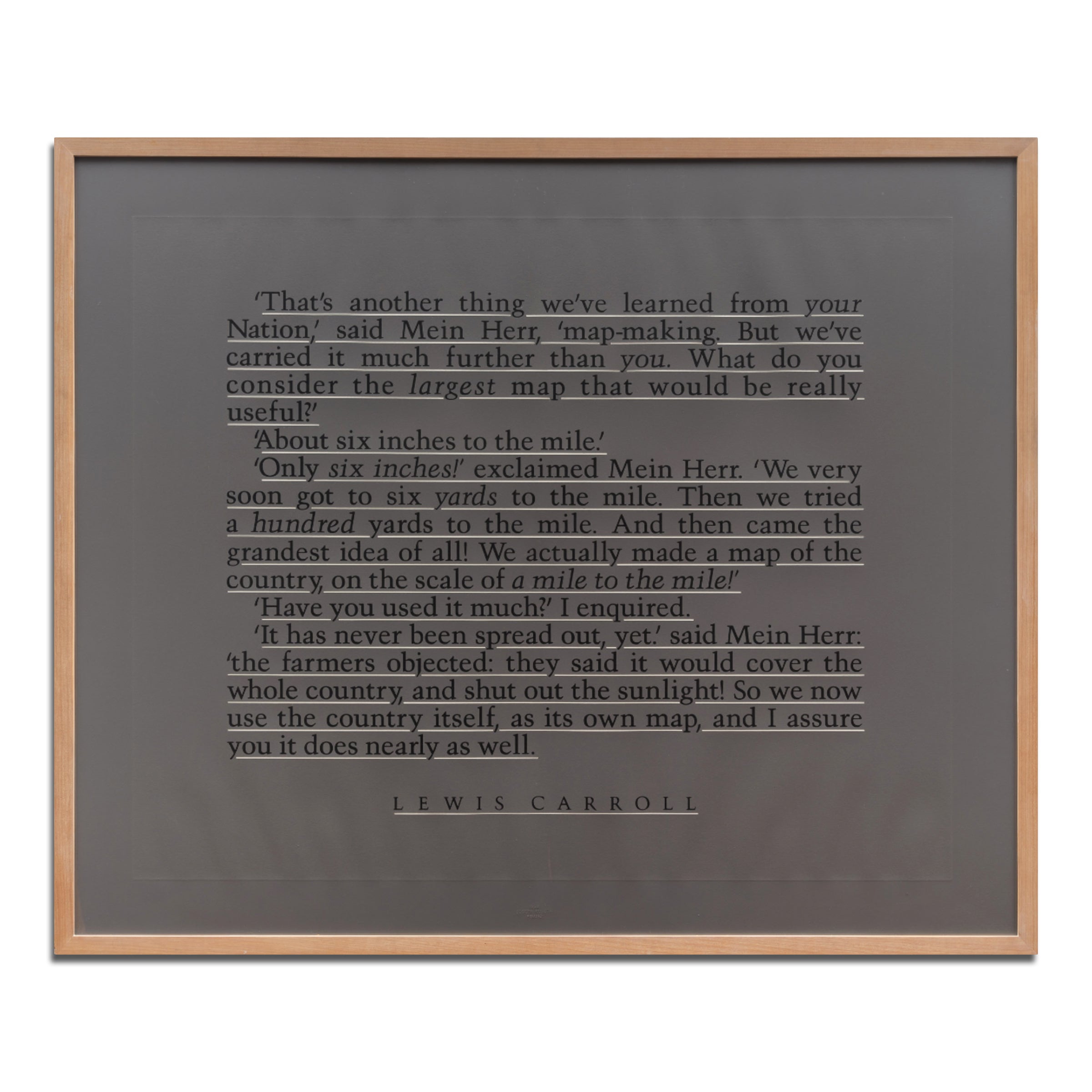
By the late 1960s, Joseph Kosuth's artworks moved almost entirely into language, anticipating what would later be described as text-based art. Dictionary definitions, philosophical citations, and analytic statements were presented directly on walls in typographic formats stripped of expressive flourish. This austerity was strategic. By neutralizing aesthetic seduction, Kosuth foregrounded the artwork’s discursive function. The gallery became a site of reading; art became a field of propositions.
Language, in his practice, is not illustrative. It is structural. Words do not describe images; they generate meaning. In isolating definitions from their customary context and repositioning them as artworks, Kosuth revealed the instability of categories and the contingency of authority. The museum does not display meaning; it produces it. Context becomes constitutive.
This move placed his artworks at the forefront of what would later be termed Institutional Critique. Long before the term stabilized, Kosuth had already shifted attention from object to framework, from aesthetic judgment to epistemological inquiry.

Seriality and the Question of Originality in Conceptual Art
If art is an idea, its material manifestation becomes secondary. Joseph Kosuth’s artworks often exist in multiple iterations, their identity residing not in singular fabrication but in conceptual structure. Seriality is not repetition for variation’s sake; it is a logical consequence of privileging proposition over object. The aura of uniqueness dissolves into reproducibility.
This repositioning of authorship proved decisive. It destabilized romantic notions of originality and aligned artistic practice with research, discourse, and critical methodology. The artwork becomes a site of investigation rather than a singular artifact to be preserved as relic.
Public Language and Text-Based Art
In subsequent decades, Joseph Kosuth extended his inquiry into architectural and public contexts, embedding textual works within historically charged sites. Neon inscriptions, etched glass installations, and large-scale wall texts activate space through language, layering philosophical quotations with the memory of place. These artworks do not monumentalize text; they situate thought within lived environments.
Here, his project acquires a temporal dimension. Quotations drawn from philosophy, literature, and political history intersect with contemporary spectatorship, creating dialogues across eras. Meaning unfolds relationally. The viewer is not asked to admire, but to consider.
In an era increasingly dominated by image saturation and instantaneous consumption, Kosuth’s insistence on reading — on the disciplined encounter with language — remains pointedly relevant.

Continuing Relevance in Contemporary Art
Kosuth’s influence is less visible in stylistic imitation than in structural inheritance. Research-driven practices, text-based installations, archival strategies, and discursive exhibitions all operate within a conceptual field he helped define. The contemporary understanding of art as inquiry — as a form of thinking rather than making — is inseparable from his early propositions.
He demonstrated that art need not produce visual novelty to remain radical. It must instead clarify its own premises. That demand continues to resonate. In a cultural landscape where images circulate with unprecedented speed and authority is constantly negotiated, Kosuth’s analytic rigor offers a model of resistance: art as critical examination rather than affirmation.
Joseph Kosuth’s legacy is therefore not an object, nor even a body of work. It is a position — that art is fundamentally an investigation into meaning, and that its deepest responsibility lies in questioning the structures that render meaning possible.
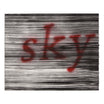
Selected text-based Joseph Kosuth artworks are available through our collection.
Seeing is not as simple as looking.
Selected questions on the artist’s practice, major artworks, and editions.
Joseph Kosuth: Key Questions


