






Artist Insight
Myth, Survival, and Material Transformation
Joseph Beuys's material language emerges from a narrative he deliberately cultivated around his wartime experience. He recounted that in 1944, after his plane crashed in Crimea, he was rescued by Tatar nomads who wrapped him in felt and fat to preserve warmth and sustain life. The historical details of this story have been questioned, yet its significance lies elsewhere. Beuys transformed the episode into a founding myth — a symbolic origin through which material, survival, and transformation became inseparable.
Felt and fat recur throughout his practice not as eccentric substances but as conceptual instruments. Felt insulates and protects; fat stores energy and changes state. These materials suggest warmth, vulnerability, potential, and flux. They resist permanence and ideal form. By repeatedly incorporating them into installations, vitrines, actions, and multiples, Beuys constructed a sculptural vocabulary grounded in regeneration rather than monumentality. Matter, in his understanding, is active — capable of holding and releasing forces.
Emerging in postwar Germany, where cultural reconstruction unfolded amid unresolved trauma, Beuys translated these materials into a broader inquiry: how can society regenerate itself? Sculpture, therefore, becomes less an object than a field of transformation. Drawing played a foundational role in this development. His works on paper function as diagrams of thought, mapping relationships between myth, economy, education, ecology, and human will. They reveal a practice concerned not with representation, but with structural propositions.
Expanded Practice and Early Development
By the early 1960s, Joseph Beuys began to foreground performance — which he termed "actions" — as a primary medium. These events were neither theatrical spectacles nor demonstrations of virtuosity. They were ritualized encounters structured through duration, gesture, and symbolic materials. In How to Explain Pictures to a Dead Hare (1965), the artist, his head covered in honey and gold leaf, murmured explanations to a lifeless animal while viewers observed from outside the gallery. Communication here becomes estranged; understanding becomes provisional. The work stages the limits of explanation and the fragility of meaning.
Beuys's actions repositioned the artwork as an event of transformation. The artist's body, materials, space, and audience form a temporary constellation. What remains afterward — objects, residues, documentation — are traces of an enacted process. Sculpture shifts from static presence to temporal intervention.
This expanded practice destabilized medium boundaries. Installation, drawing, lecture, debate, and political assembly were no longer separate categories. Each functioned as a variation within a broader sculptural logic.

Social Sculpture: Art as Participatory Praxis
The theoretical culmination of Joseph Beuys's thinking is his concept of social sculpture. He proposed that society itself can be understood as a sculptural process shaped by collective creativity. The statement "everyone is an artist" is not a dismissal of expertise but an assertion that creative capacity is a universal human faculty. Art, therefore, extends beyond the studio into education, governance, economics, and environmental responsibility.
Social sculpture reframes authorship. The artwork becomes distributed across participants. Lectures, discussions, political campaigns, and institutional reforms operate as sculptural gestures. Beuys sought not to illustrate political ideas, but to embed artistic thinking within civic structures.
This expansion also introduced tension. If society is sculptural material, then institutions become sites of intervention. In this sense, Beuys positioned himself at the outer edge of Conceptual Art while anticipating the concerns that would later be formalized as Institutional Critique.
Performance, Engagement, and Symbolic Action
Joseph Beuys's actions often staged encounters charged with historical and cultural symbolism. In I Like America and America Likes Me (1974), he spent several days in a New York gallery space with a live coyote. The work invokes frontier mythology, Indigenous presence, and postwar geopolitical anxiety. Beuys entered and exited the United States wrapped in felt, avoiding direct contact with the city. The gesture reframes performance as negotiation rather than spectacle.
Such works demonstrate his conviction that art must operate within zones of friction. The symbolic encounter — between human and animal, Europe and America, vulnerability and aggression — becomes a sculptural process. Transformation occurs not through resolution but through sustained tension.

7000 Oaks and Ecological Sculpture
Joseph Beuys's most enduring ecological intervention, 7000 Oaks – City Forestation Instead of City Administration, initiated at documenta 7 in 1982, extends social sculpture into urban and environmental terrain. The project proposed planting 7,000 oak trees throughout Kassel, each paired with a basalt column. Unlike conventional public sculpture, the work unfolds over years. Growth, participation, controversy, and municipal negotiation become integral components.
The basalt stones function as markers of intention; the trees embody temporal change. The project integrates citizens into its realization, transforming ecological stewardship into sculptural activity. Decades later, the trees remain — living evidence of a work conceived not as static form but as long-duration transformation.
7000 Oaks stands as one of the clearest demonstrations of Beuys's belief that art can operate within ecological systems without relinquishing symbolic intensity.
Institutional Engagement and Pedagogy
Joseph Beuys's pedagogical practice at the Kunstakademie Düsseldorf reflected his expanded vision. He challenged admission restrictions and advocated open access, arguing that education must serve as a space for creative self-determination. His dismissal in 1972 crystallized the conflict between institutional regulation and participatory creativity.
In response, he co-founded the Free International University for Creativity and Interdisciplinary Research (FIU) in 1973. Conceived as an alternative platform for interdisciplinary learning, the FIU linked art with economics, ecology, and political discourse. It operated less as a fixed institution than as an evolving network — a sculptural structure shaped by dialogue and collective inquiry.
Through these initiatives, pedagogy itself became medium. Institutional critique was not rhetorical; it was enacted.

Editions and Multiples
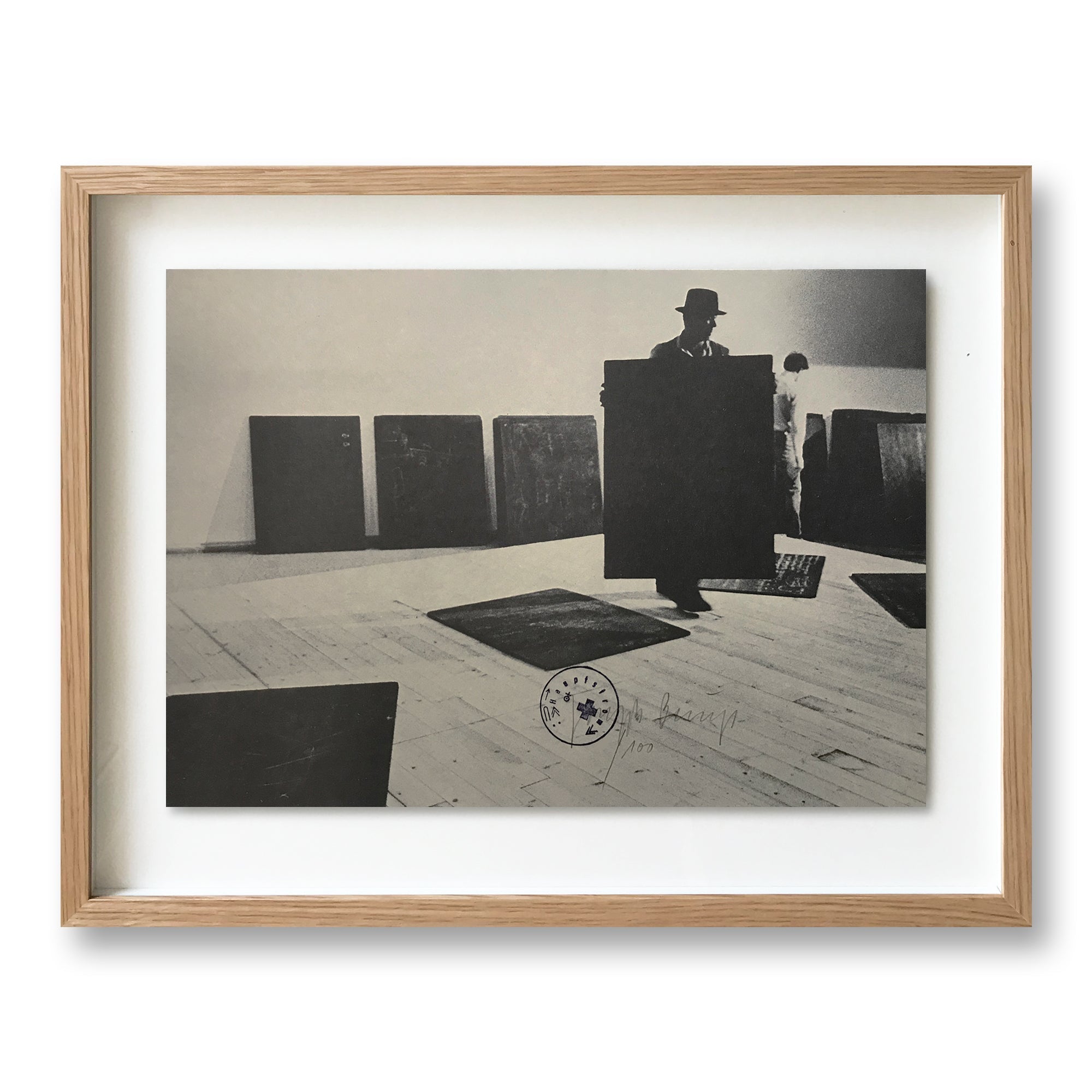
Parallel to his actions and ecological interventions, Joseph Beuys cultivated the multiple as a deliberate and conceptually charged form. He did not treat editions as secondary objects or supplementary merchandise; he understood them as vehicles of transmission. For Beuys, the edition was not a diminished artwork but a democratic instrument — a means of extending sculptural thought beyond the singular event or institution.
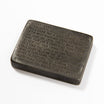
Multiples allowed his ideas to travel. Incorporating materials such as felt, fat, copper, printed diagrams, and symbolic implements, these works condense central propositions into portable form. They function neither as replicas nor as souvenirs, but as active carriers of energy, memory, and argument. Through editions, Beuys placed his concepts into circulation, embedding them within everyday contexts without sacrificing conceptual rigor.
This embrace of reproducibility aligns directly with his theory of social sculpture. If creativity is a distributed human capacity, then the artwork must likewise resist confinement. The multiple becomes an ethical structure: art not as rarefied object, but as disseminated impulse. In championing the edition, Beuys affirmed that circulation itself can be sculptural — a process through which ideas are shared, activated, and sustained across communities.
Legacy and Continuing Influence
Joseph Beuys's influence persists because he articulated a model rather than a style. His conception of art as participatory transformation continues to shape socially engaged practice, ecological art, performance, and artist-led education.
Artists such as Marina Abramović have engaged directly with his performative lineage; Imi Knoebel's trajectory reflects the intellectual environment of his Düsseldorf teaching; Olafur Eliasson's ecological and perceptual investigations resonate with Beuys's insistence that art engage environmental consciousness. Across institutions, the language of participation, sustainability, and collective agency echoes Beuys's expanded sculptural framework.
Museums continue to frame his practice as foundational to narratives of dematerialization, institutional critique, and ecological intervention. Projects such as 7000 Oaks remain active reference points in discussions of long-term environmental art.
Beuys endures not because his mythology remains uncontested, but because his central question remains urgent: how can creativity operate as a formative force within society? In insisting that art is inseparable from responsibility, transformation, and collective participation, Joseph Beuys redefined the terrain on which contemporary art continues to operate.
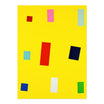
Selected works by Joseph Beuys are available through our collection.
The work of art is not the object. The real work of art is to change consciousness.
Selected questions on the artist’s practice, major artworks, and editions.
Joseph Beuys: Key Questions


