Richard Long

In June 1967, on his way to art school, Richard Long got off a train in Wiltshire, found an empty field, and walked back and forth until the flattened grass caught the light and became visible as a line. He photographed it, called it a sculpture, and never stopped. Nearly six decades later, Long remains the most consequential figure to insist that walking itself — no canvas, no chisel, nothing but sustained physical movement through landscape — could be art. Works held at MoMA, Tate, and the Centre Pompidou.
Browse signed Richard Long prints and editions now.
Available Prints & Editions
3 products
Richard Long (born 1945 in Bristol, England) studied at the West of England College of Art before enrolling at St Martin's School of Art in London in 1966, where his contemporaries included Gilbert & George, Barry Flanagan, and Hamish Fulton — part of a generation of British artists collectively redefining what sculpture could be. Where Gilbert & George would soon declare themselves "living sculptures," Long chose the opposite direction: using the landscape itself, and his own physical passage through it, as his material.
A Line Made by Walking (1967) announced the method with startling simplicity. Commuting the roughly 120 miles between Bristol and London, the 22-year-old student stopped in a field in Wiltshire, walked a straight path back and forth until the grass flattened enough to catch the light, and photographed the result. The gesture proposed something genuinely new: that art needn't leave a permanent object behind at all, only a record of an action performed with total sincerity. His first solo exhibition followed in 1968 at Konrad Fischer's gallery in Düsseldorf, where he showed Sculpture — 1,318 sticks gathered during a single walk through the English countryside, arranged directly on the gallery floor.
Because his outdoor interventions are inherently temporary — a line trodden into grass, stones arranged on a hillside, mud applied directly to a wall — photographs, maps, and text works are not secondary documentation for Long; they are frequently the only form in which the work survives at all. His technique with river mud, developed from the 1980s onward, involves hand-pressing or throwing wet mud sourced from specific waterways directly onto paper or a wall, working quickly before it dries, cracks, and shifts — the material's own instability becoming part of the finished work. "I like the idea that art can be made anywhere," he has said, a principle that has taken him walking through the Sahara, the Andes, and the Himalayas over a career spanning more than five decades.
Institutional recognition arrived early and has never really stopped. Long represented Great Britain at the Venice Biennale in both 1976 and 1980, won the Turner Prize in 1989, and received the Praemium Imperiale in 2009. In 2018, he was appointed Knight Bachelor. As recently as 2025, he created Mud Sun, a five-metre River Avon mud commission installed at the top of the National Gallery's newly reopened Sainsbury Wing staircase in London — proof that, nearly six decades after that first line in a Wiltshire field, he remains as active as ever.

A Line Made by Walking (1967), his foundational work, remains the clearest possible statement of his method — a straight path trodden into grass, photographed and titled, proposing that the simple record of a physical action could stand as sculpture.
Sculpture (1968), his debut solo exhibition piece at Konrad Fischer's Düsseldorf gallery, arranged 1,318 sticks gathered on a single walk directly onto the gallery floor — proof that materials collected without alteration could carry full sculptural weight.
Mud Sun (2025), a five-metre commission for London's National Gallery, applies tidal mud from the River Avon directly to the wall at the top of the Sainsbury Wing's grand staircase — six decades of walking-based practice condensed into a single, monumental gesture inside one of the world's most visited museums.

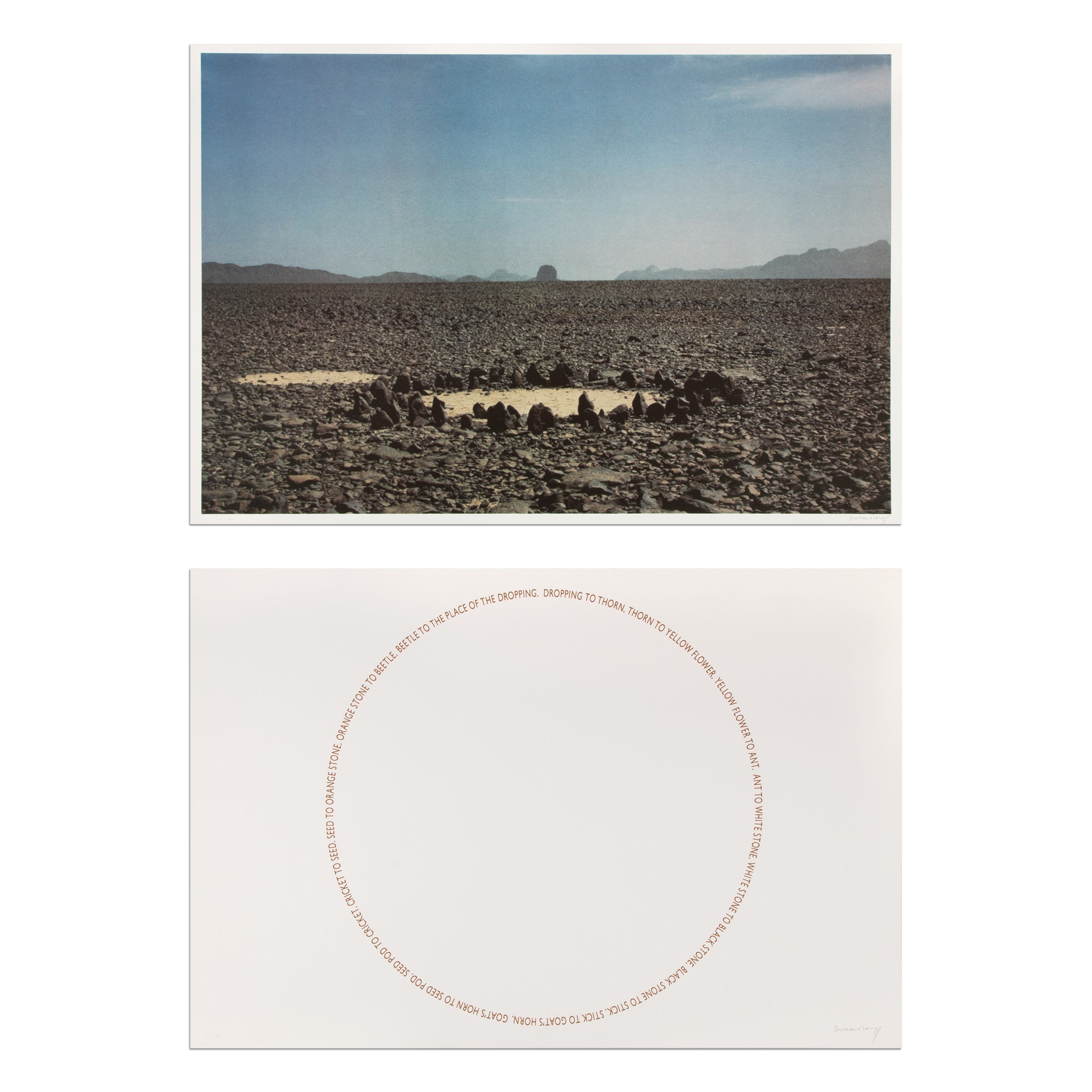
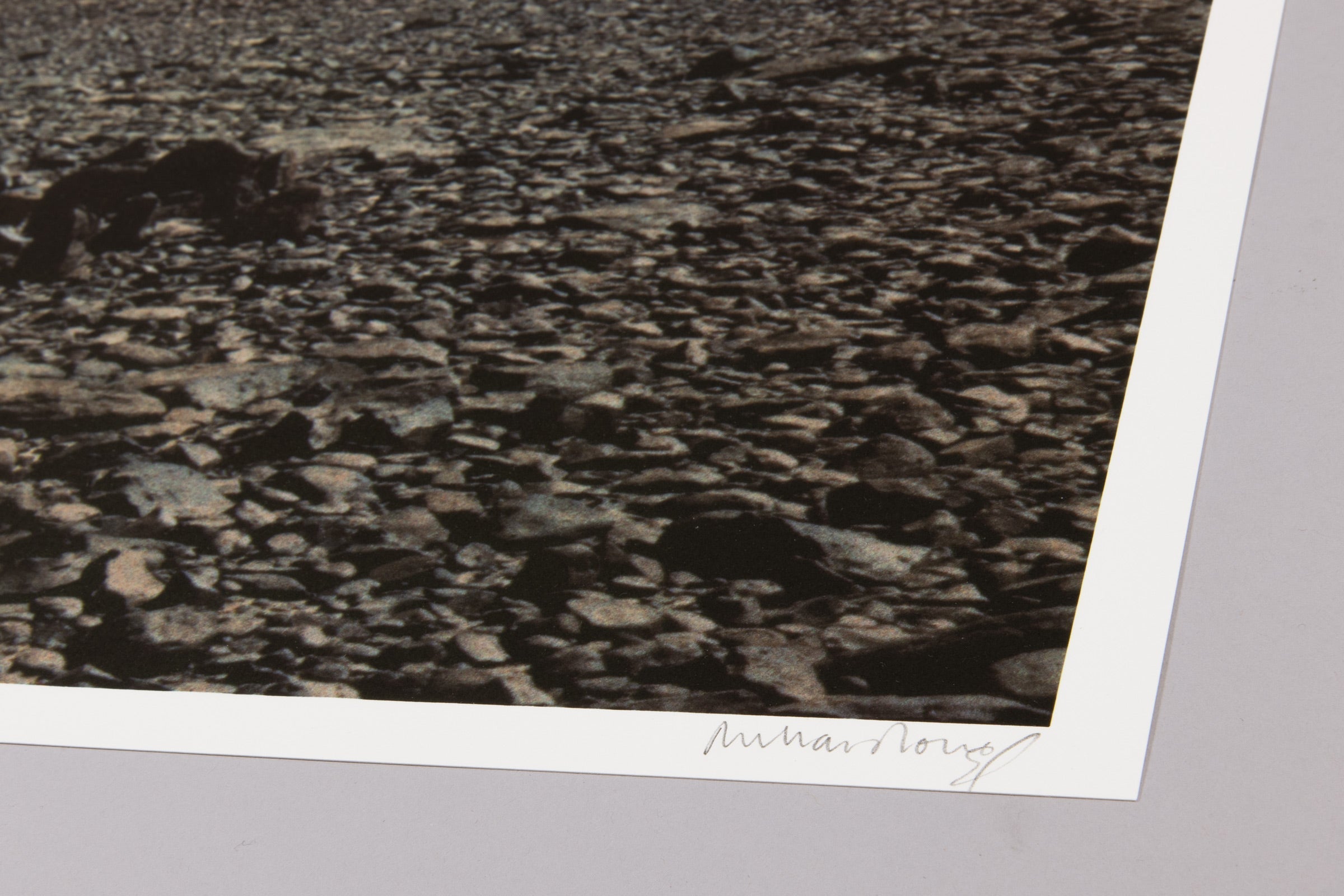
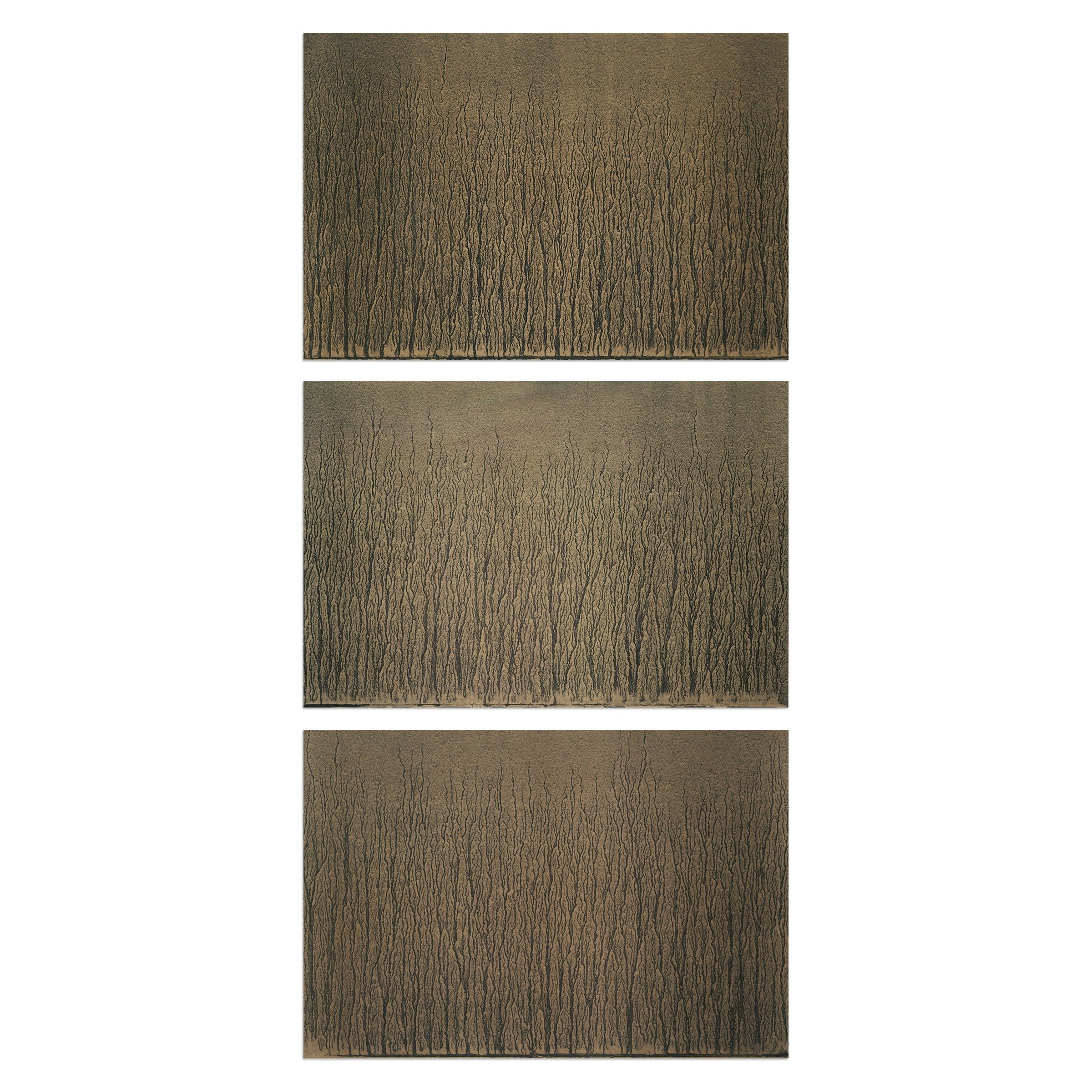
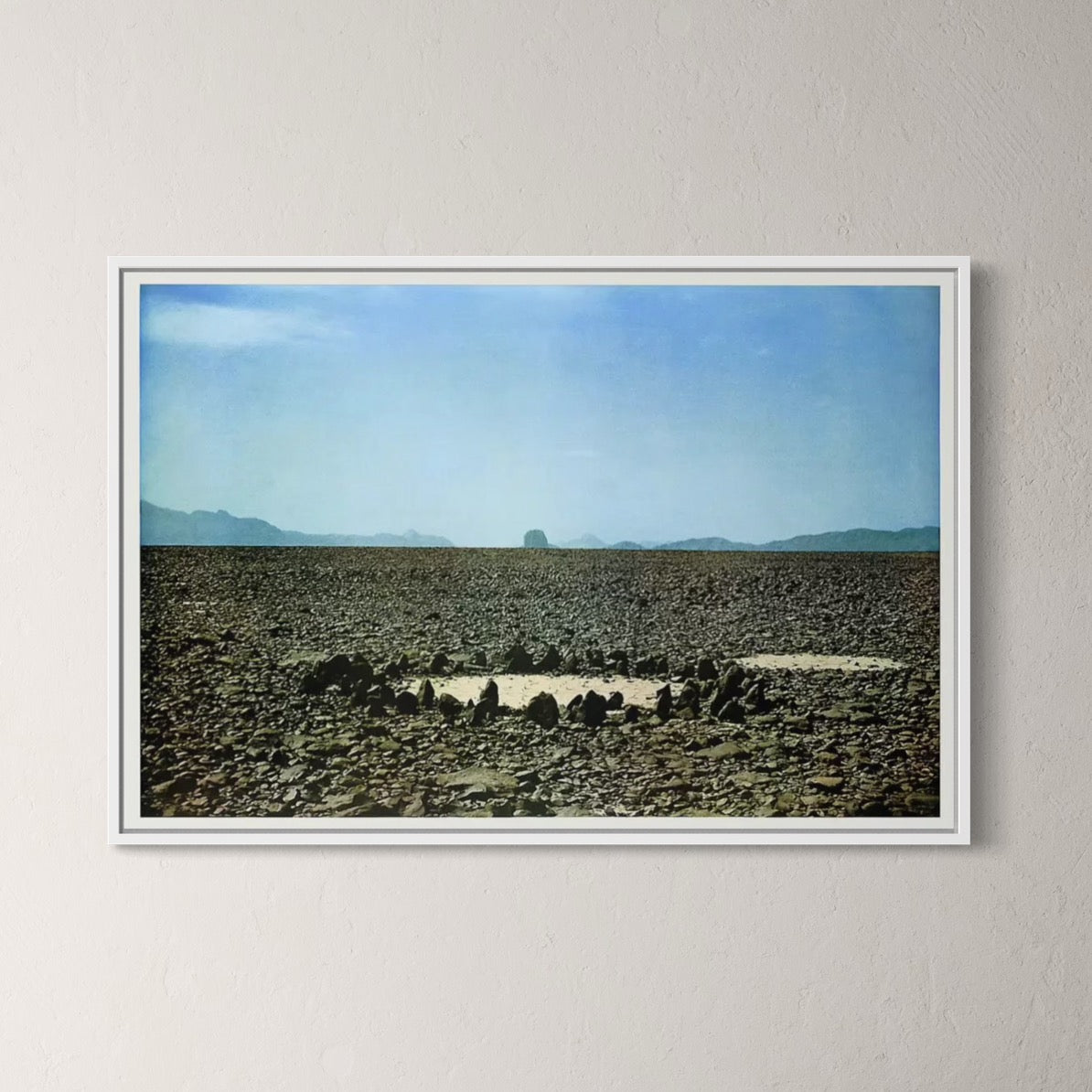
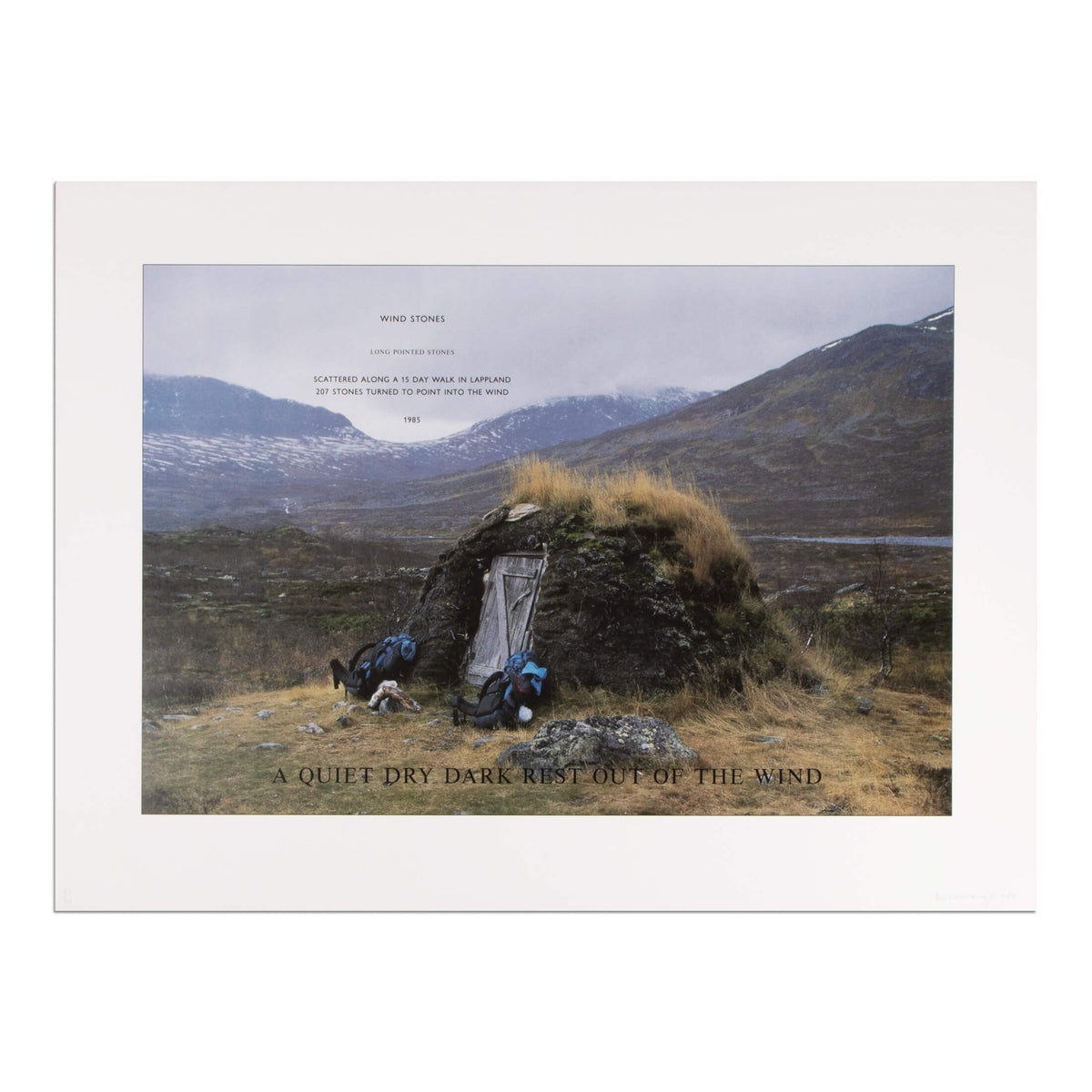
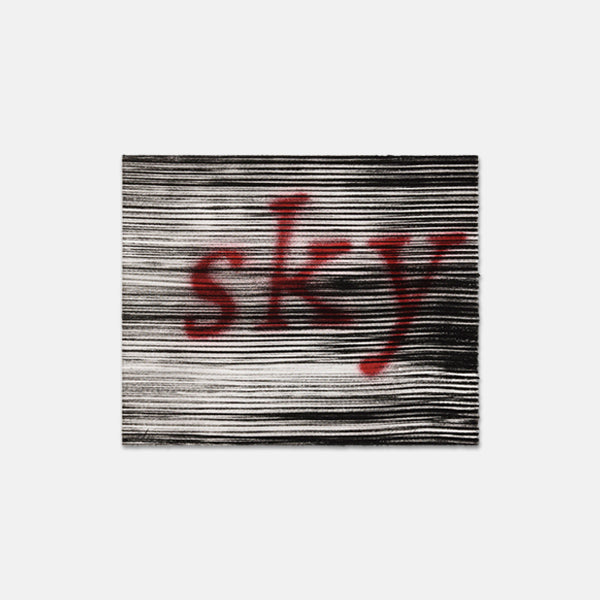
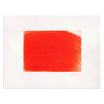
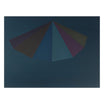
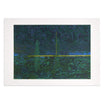
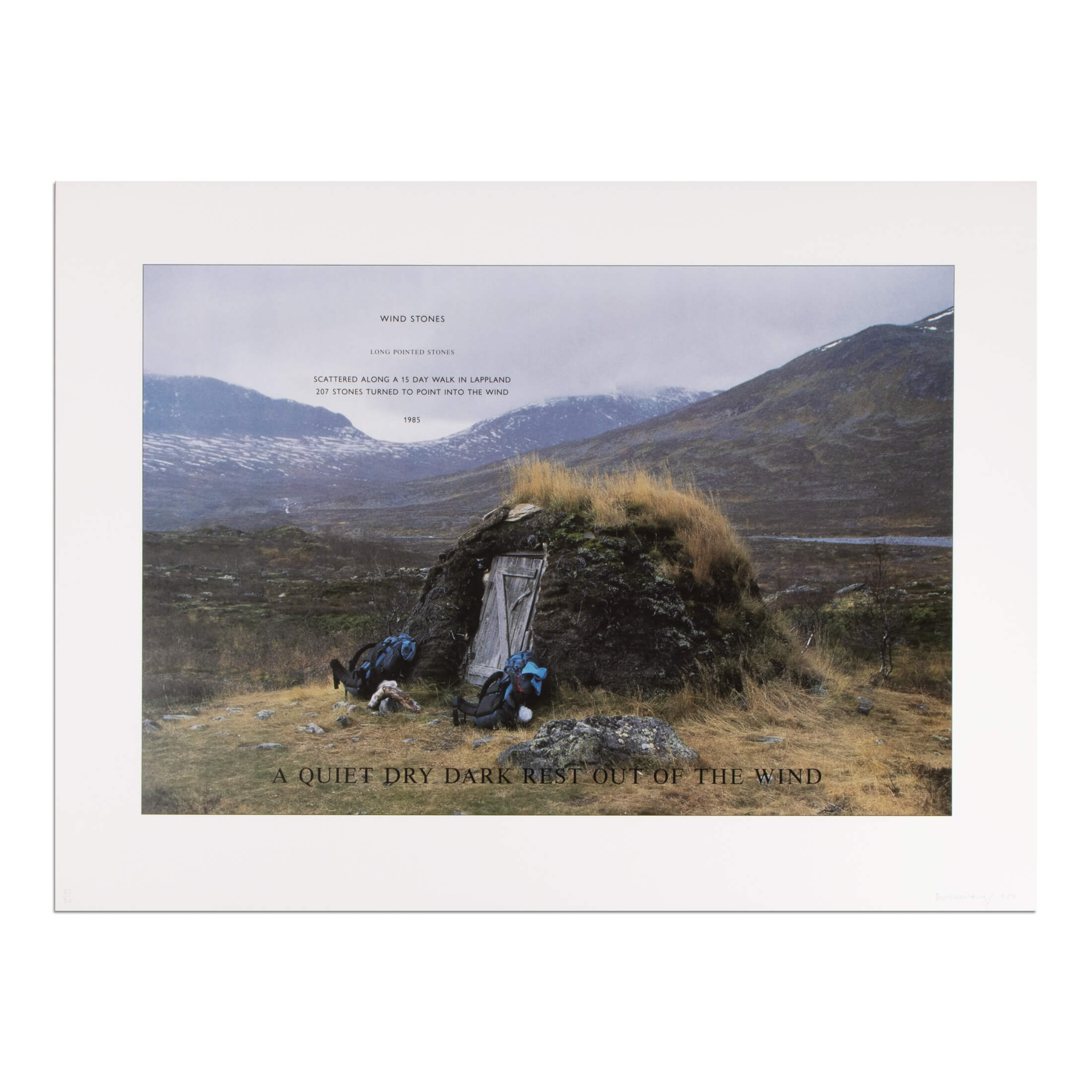
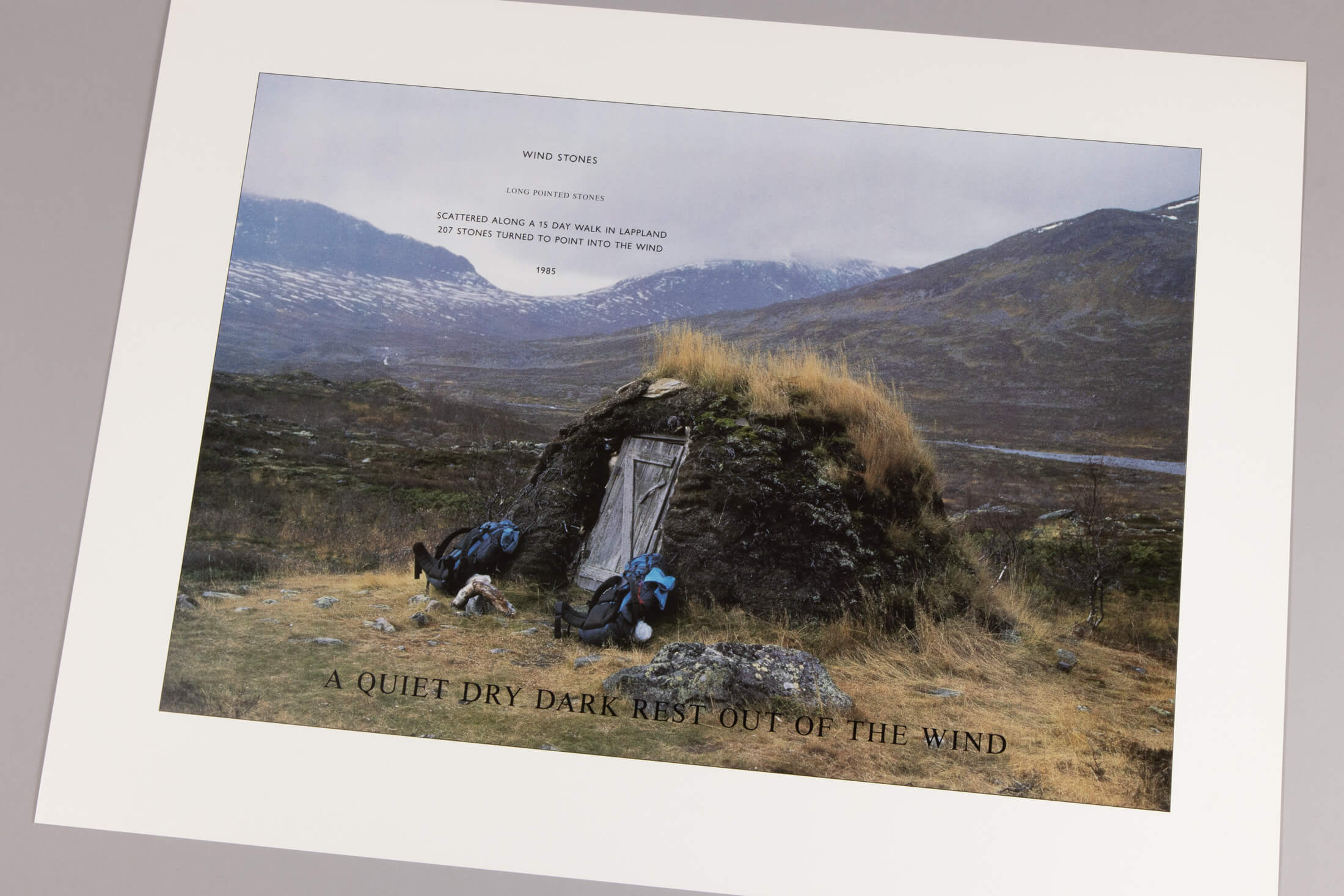
Richard Long's editions extend the same walking-based practice that defines his outdoor interventions, translated into printed and hand-applied form. River Avon Mud Drawings, a set of three grano-lithographs, incorporates actual mud sourced from the River Avon near his home in Bristol — abstract, gestural marks that carry the tactile, unrepeatable quality of the material directly onto paper. Other editions document specific walks and expeditions, including artworks drawn from his journeys through the Sahara, presented as maps, texts, and photographic records of routes travelled rather than objects made.
Because his outdoor works are inherently temporary and rarely enter private hands at all, prints and editions represent one of the only ways collectors can own a direct trace of Long's practice — carrying real material from the landscapes he has walked, not merely an image of it.
For collectors, Long's editions offer genuine access to nearly six decades of walking as a serious artistic method. Works are held in the permanent collections of MoMA, Tate, and the Centre Pompidou.
Richard Long (born 1945 in Bristol, England) studied at the West of England College of Art before enrolling at St Martin's School of Art in London in 1966, where his contemporaries included Gilbert & George, Barry Flanagan, and Hamish Fulton — part of a generation of British artists collectively redefining what sculpture could be. Where Gilbert & George would soon declare themselves "living sculptures," Long chose the opposite direction: using the landscape itself, and his own physical passage through it, as his material.
A Line Made by Walking (1967) announced the method with startling simplicity. Commuting the roughly 120 miles between Bristol and London, the 22-year-old student stopped in a field in Wiltshire, walked a straight path back and forth until the grass flattened enough to catch the light, and photographed the result. The gesture proposed something genuinely new: that art needn't leave a permanent object behind at all, only a record of an action performed with total sincerity. His first solo exhibition followed in 1968 at Konrad Fischer's gallery in Düsseldorf, where he showed Sculpture — 1,318 sticks gathered during a single walk through the English countryside, arranged directly on the gallery floor.
Because his outdoor interventions are inherently temporary — a line trodden into grass, stones arranged on a hillside, mud applied directly to a wall — photographs, maps, and text works are not secondary documentation for Long; they are frequently the only form in which the work survives at all. His technique with river mud, developed from the 1980s onward, involves hand-pressing or throwing wet mud sourced from specific waterways directly onto paper or a wall, working quickly before it dries, cracks, and shifts — the material's own instability becoming part of the finished work. "I like the idea that art can be made anywhere," he has said, a principle that has taken him walking through the Sahara, the Andes, and the Himalayas over a career spanning more than five decades.
Institutional recognition arrived early and has never really stopped. Long represented Great Britain at the Venice Biennale in both 1976 and 1980, won the Turner Prize in 1989, and received the Praemium Imperiale in 2009. In 2018, he was appointed Knight Bachelor. As recently as 2025, he created Mud Sun, a five-metre River Avon mud commission installed at the top of the National Gallery's newly reopened Sainsbury Wing staircase in London — proof that, nearly six decades after that first line in a Wiltshire field, he remains as active as ever.
A Line Made by Walking (1967), his foundational work, remains the clearest possible statement of his method — a straight path trodden into grass, photographed and titled, proposing that the simple record of a physical action could stand as sculpture.
Sculpture (1968), his debut solo exhibition piece at Konrad Fischer's Düsseldorf gallery, arranged 1,318 sticks gathered on a single walk directly onto the gallery floor — proof that materials collected without alteration could carry full sculptural weight.
Mud Sun (2025), a five-metre commission for London's National Gallery, applies tidal mud from the River Avon directly to the wall at the top of the Sainsbury Wing's grand staircase — six decades of walking-based practice condensed into a single, monumental gesture inside one of the world's most visited museums.
Richard Long's editions extend the same walking-based practice that defines his outdoor interventions, translated into printed and hand-applied form. River Avon Mud Drawings, a set of three grano-lithographs, incorporates actual mud sourced from the River Avon near his home in Bristol — abstract, gestural marks that carry the tactile, unrepeatable quality of the material directly onto paper. Other editions document specific walks and expeditions, including artworks drawn from his journeys through the Sahara, presented as maps, texts, and photographic records of routes travelled rather than objects made.
Because his outdoor works are inherently temporary and rarely enter private hands at all, prints and editions represent one of the only ways collectors can own a direct trace of Long's practice — carrying real material from the landscapes he has walked, not merely an image of it.
For collectors, Long's editions offer genuine access to nearly six decades of walking as a serious artistic method. Works are held in the permanent collections of MoMA, Tate, and the Centre Pompidou.


Richard Long: Key Questions
Collecting Richard Long?
Looking for a specific artwork or have a question about an edition? We're happy to advise on availability, pricing, condition, and provenance — and to source artworks beyond our current selection.
What is Richard Long known for?
Richard Long is known for pioneering Land Art through the simple act of walking — creating lines, circles, and spirals in landscapes worldwide, then documenting the resulting, often temporary interventions through photography, maps, and text. A defining figure of British Conceptual Art since the late 1960s, he won the Turner Prize in 1989 and was knighted in 2018.
What was Richard Long's A Line Made by Walking?
A Line Made by Walking (1967) was Long's foundational work, made by walking back and forth across a Wiltshire field until the flattened grass became visible as a line, then photographed. Made while he was still a student, it proposed that the record of a sincere physical action could function as sculpture in its own right.
How does Richard Long use mud in his art?
Since the 1980s, Long has hand-pressed or thrown wet river mud directly onto paper or gallery walls, working quickly before the material dries, cracks, and shifts. Mud is always sourced from specific waterways — most often the River Avon near his home in Bristol — carrying the physical trace of a particular place directly into the finished work.
Is Richard Long associated with conceptual art?
Yes, closely. Long emerged from St Martin's School of Art alongside contemporaries including Gilbert & George, part of a generation redefining sculpture through idea and action rather than traditional material and craft. His insistence that a documented walk could constitute a complete artwork places him firmly within Conceptual Art's founding decade.
How much do Richard Long works sell for?
Long's unique sculptures have reached significant prices at auction — his record stands at $200,000, set at Christie's New York in 2018. His signed prints and editions occupy a considerably more accessible range, in the mid to low thousands, offering direct entry into a practice built on walking rather than traditional material.

Buy art online
Shop editions with transparent pricing, accurate condition reports, and fast dispatch. Built for international collectors — buying original art made simple and reliable.
Worldwide shipping
Every work ships fully insured and tracked, handled only by trusted international express carriers — DHL Express, FedEx, UPS — and typically dispatched within five days.
Professional packaging
Meticulous packing is our craft. Each artwork is packed in-house to archival standards — multi-layer construction built to ensure it arrives in mint condition, anywhere in the world.
Secure payment
Checkout is powered by Shopify Payments — the same encrypted, PCI-compliant infrastructure trusted by millions of merchants worldwide.