




Joseph Beuys
Joseph Beuys prints and multiples for sale.
Joseph Beuys believed the artwork was never the object — it was the change in consciousness the object could provoke. His material language — felt, fat, warmth — traces back to a founding myth: rescued from a 1944 plane crash by Tatar nomads who wrapped him in the two materials to save his life. His conviction that "everyone is an artist" was not a slogan but a working method, most fully realised in the signed prints and editions he produced to put his ideas into direct circulation. His artworks are held at Tate, the Centre Pompidou, and the Guggenheim.
Available Prints & Editions
6 products
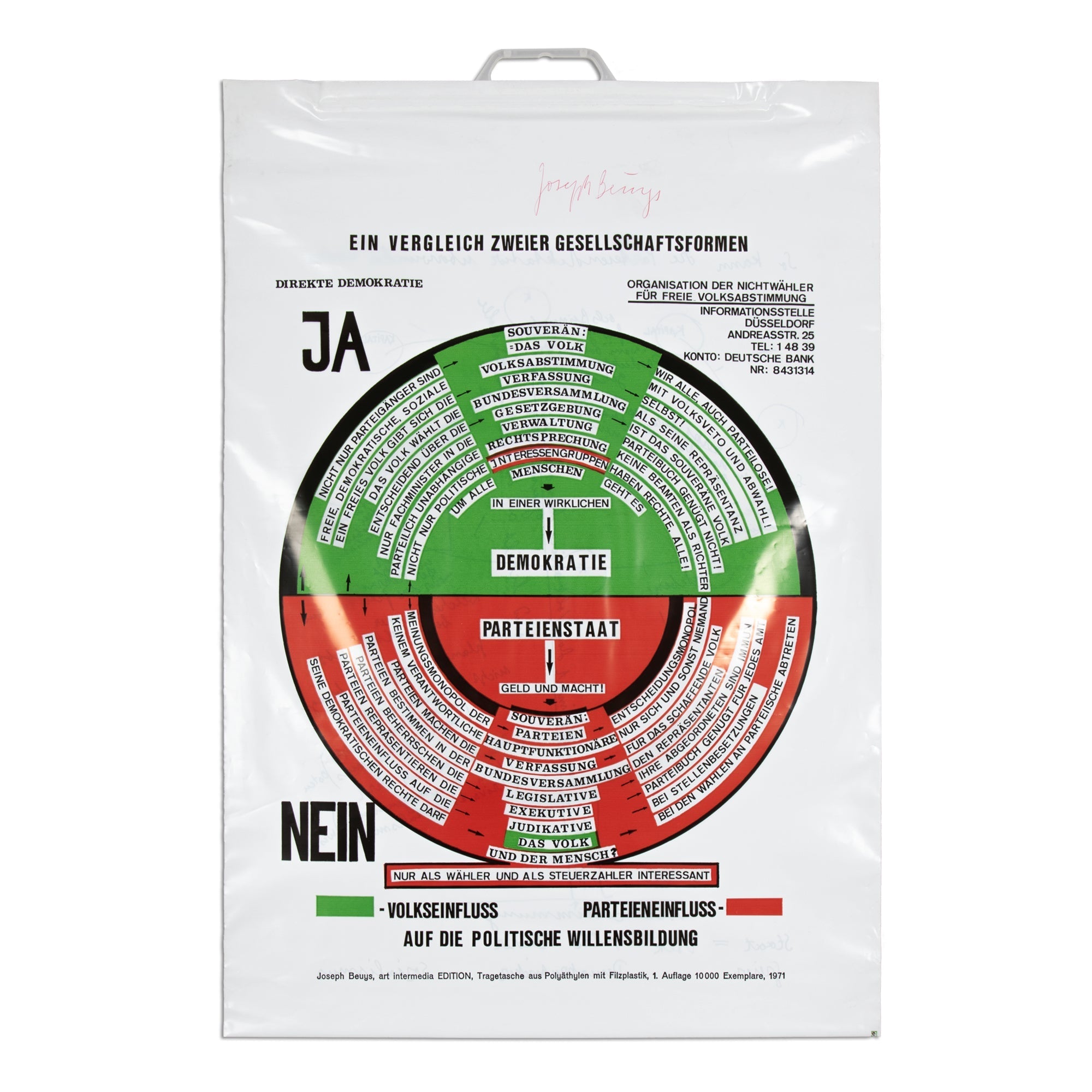
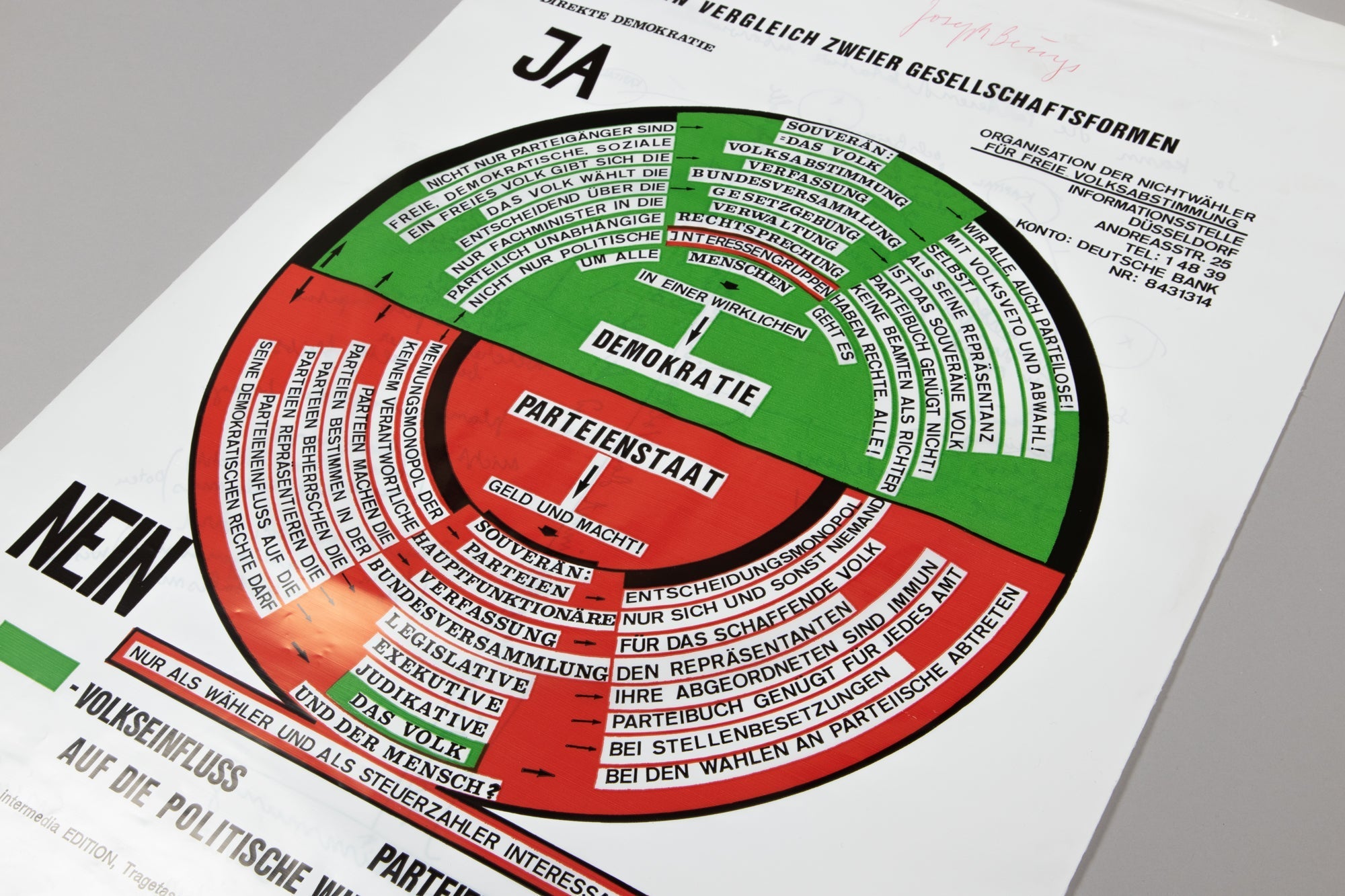
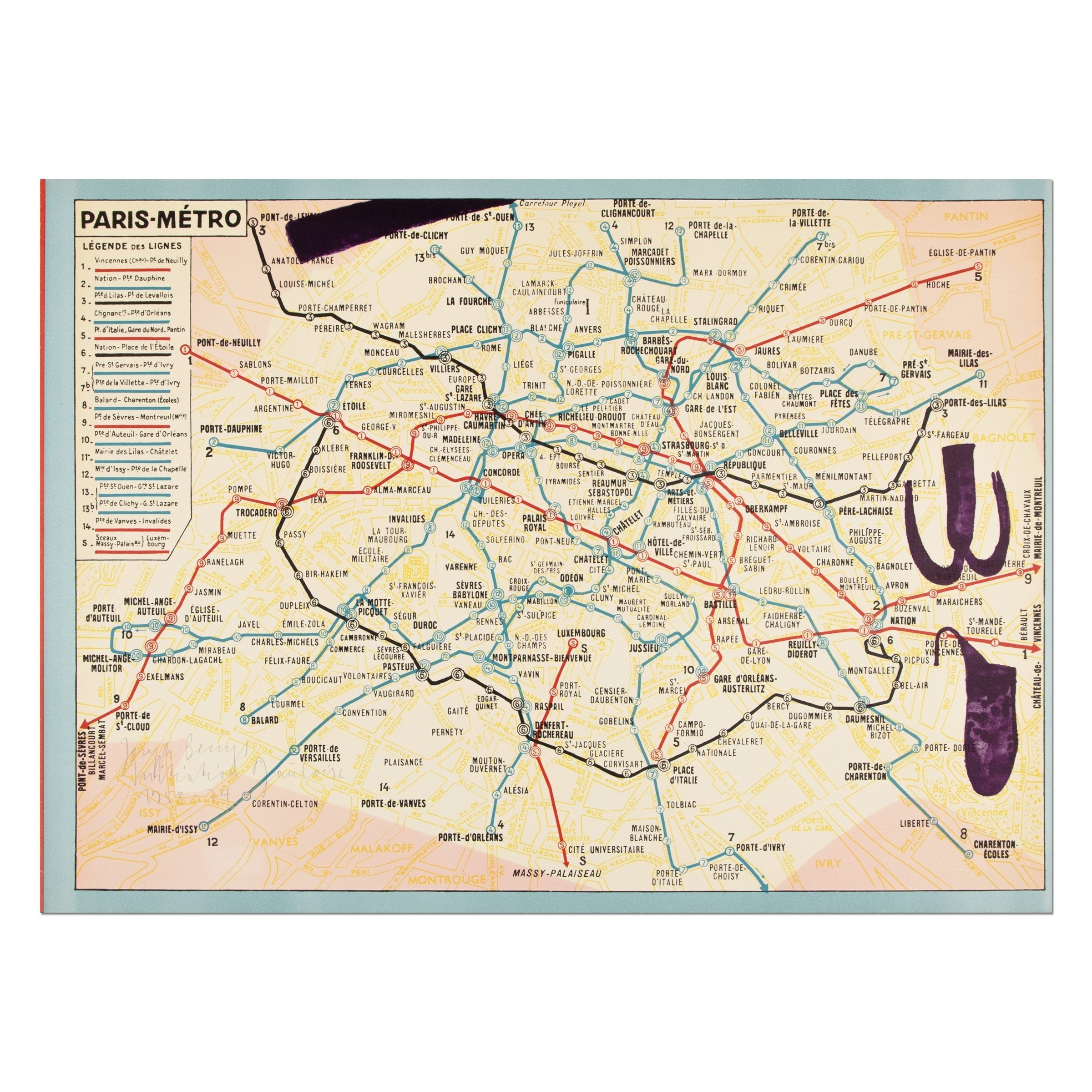
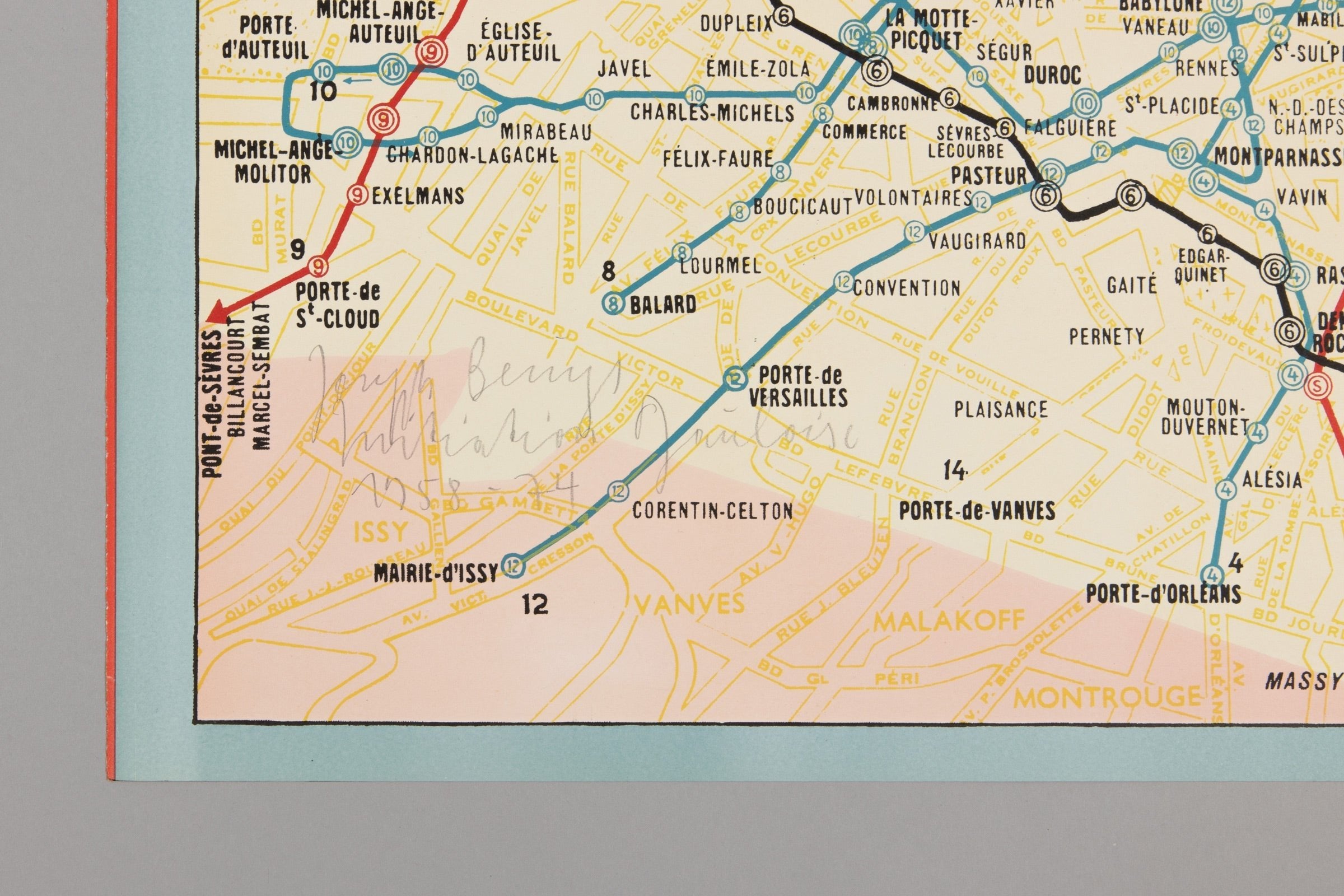
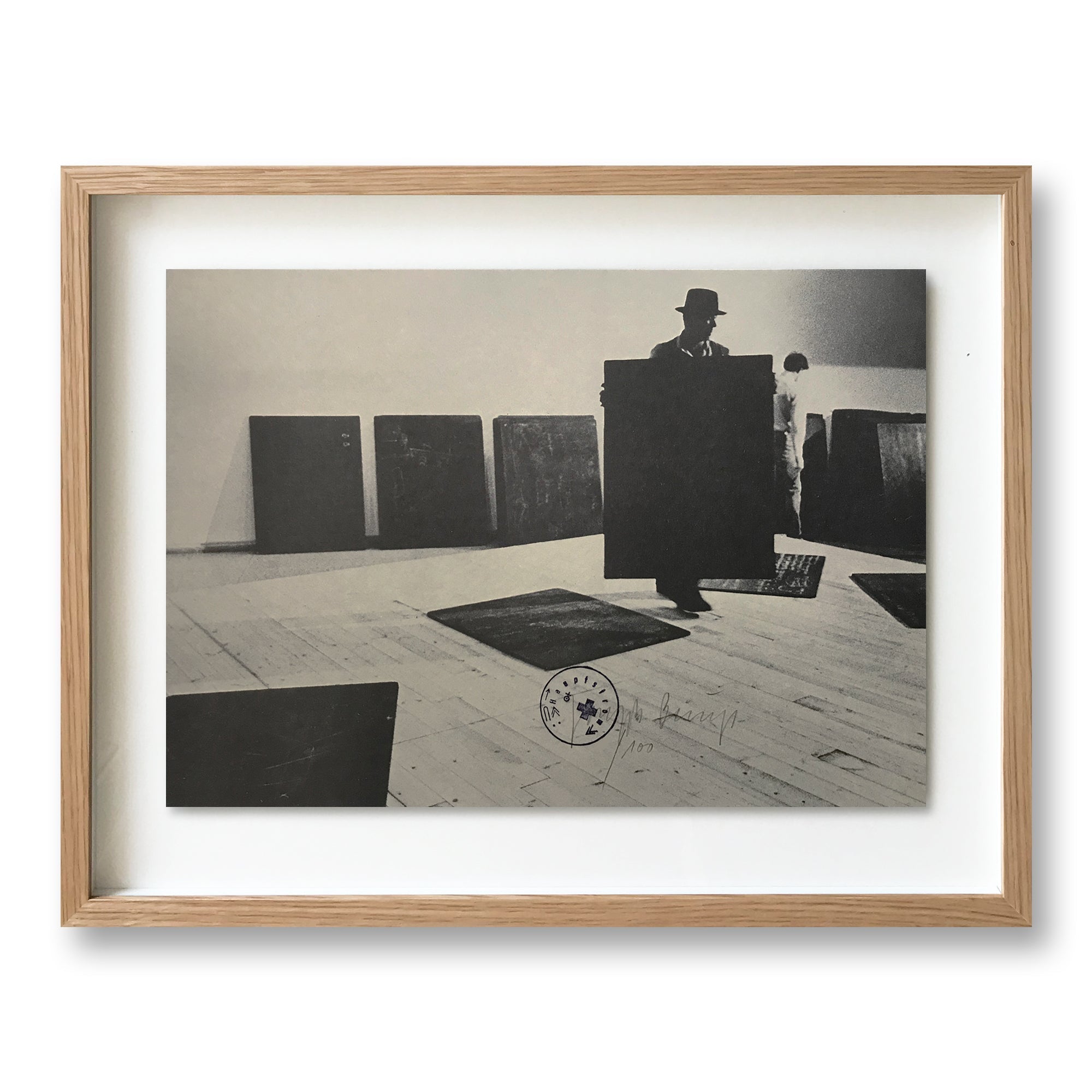

Joseph Beuys (1921–1986) trained as a sculptor at the Kunstakademie Düsseldorf, where he later became a professor — a position he held until his controversial dismissal in 1972 after he challenged the academy's restrictive admissions policy. That conflict between institutional control and open participation was not incidental to his practice; it was central to it.
By the early 1960s Beuys had moved performance — which he called "actions" — to the centre of his work. In How to Explain Pictures to a Dead Hare (1965), his head covered in honey and gold leaf, he murmured explanations to a dead animal while viewers watched from outside the gallery: a staged demonstration of communication's limits. In I Like America and America Likes Me (1974) the Fluxus artist spent several days in a New York gallery with a live coyote, entering and leaving the United States wrapped in felt without ever touching the city directly. These were not spectacles but ritualised encounters, structured around duration, material, and symbolic tension.
That thinking culminated in his concept of "social sculpture" — the proposition that society itself could be shaped as a creative process, with education, ecology, and civic life as legitimate artistic media. Working at the outer edge of conceptual art, Joseph Beuys shared its central premise — that an idea could constitute the artwork — while pushing it further than most of his conceptual contemporaries: not just questioning what art could be, but what society itself could become. His statement that "everyone is an artist" reflected this conviction precisely: not a dismissal of skill, but an assertion that creative capacity is distributed rather than owned by specialists.
Joseph Beuys died in 1986, but his most visible legacy continues to grow: 7000 Oaks, initiated at documenta 7 in 1982, is still expanding, decades after the last tree was planted.
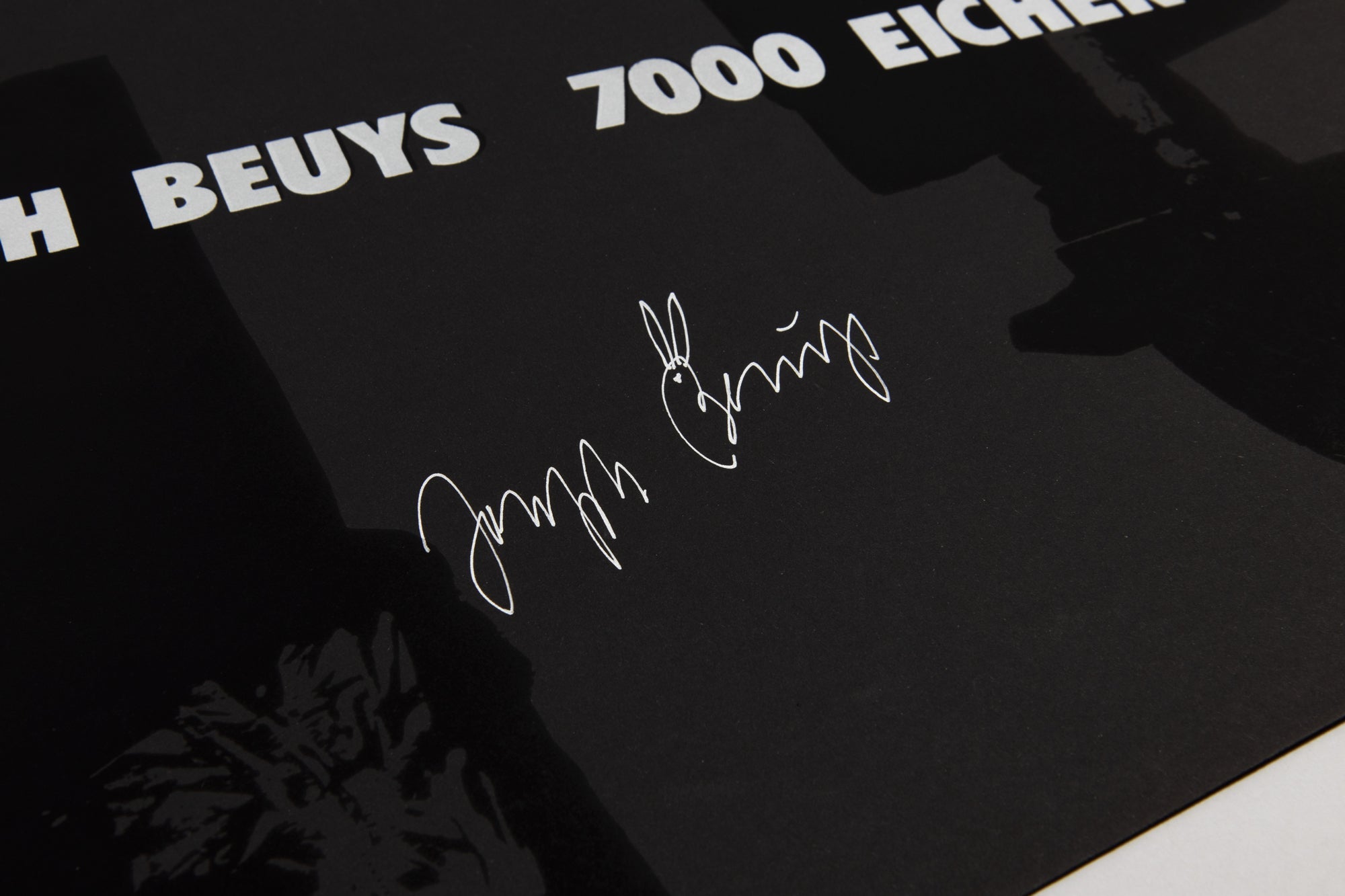
7000 Oaks – City Forestation Instead of City Administration (1982) is Beuys's most enduring intervention. Launched at documenta 7 in Kassel, the project proposed planting 7,000 oak trees across the city, each paired with a basalt column removed only once its tree was planted. Unlike conventional public sculpture, the artwork unfolds over years — growth, negotiation, and civic participation built into its structure. Decades later, the trees remain: living proof that a sculpture can be an ongoing process rather than a finished object.
How to Explain Pictures to a Dead Hare (1965) remains his most cited action. For several hours, Joseph Beuys carried a dead hare through a gallery, his face gilded in honey and gold leaf, murmuring explanations to it while the audience watched from outside, unable to enter. The artwork staged the fragility of understanding itself — a demonstration that explanation, however sincere, cannot guarantee comprehension.
I Like America and America Likes Me (1974) placed the German artist in a New York gallery for several days with a live coyote, having entered the country wrapped in felt without setting foot on American soil directly. Invoking frontier mythology and Indigenous history, the artwork reframed performance as negotiation between species, cultures, and unresolved histories — a tension the piece never fully resolves.
Schlitten (1969) distils his material philosophy into its most literal form: a wooden sled equipped with felt, a torch, and a lump of fat — what Beuys called his "survival materials," referencing the rescue myth at the centre of his own biography. Produced as a standalone limited edition of 50, unsigned but numbered, it was sold at the time for a deliberately modest price: art conceived as emergency equipment, available to a broad public rather than reserved for collectors alone.
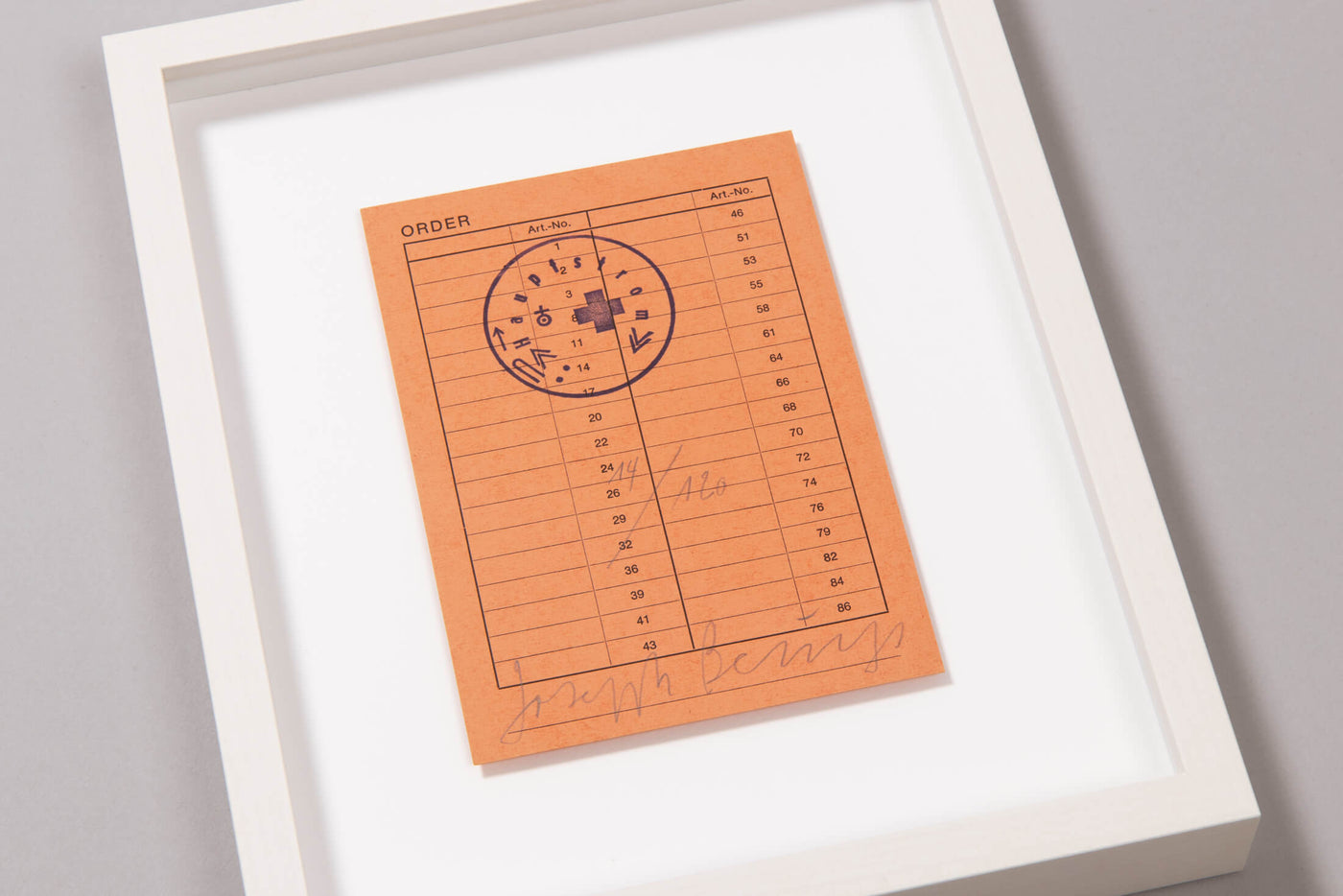
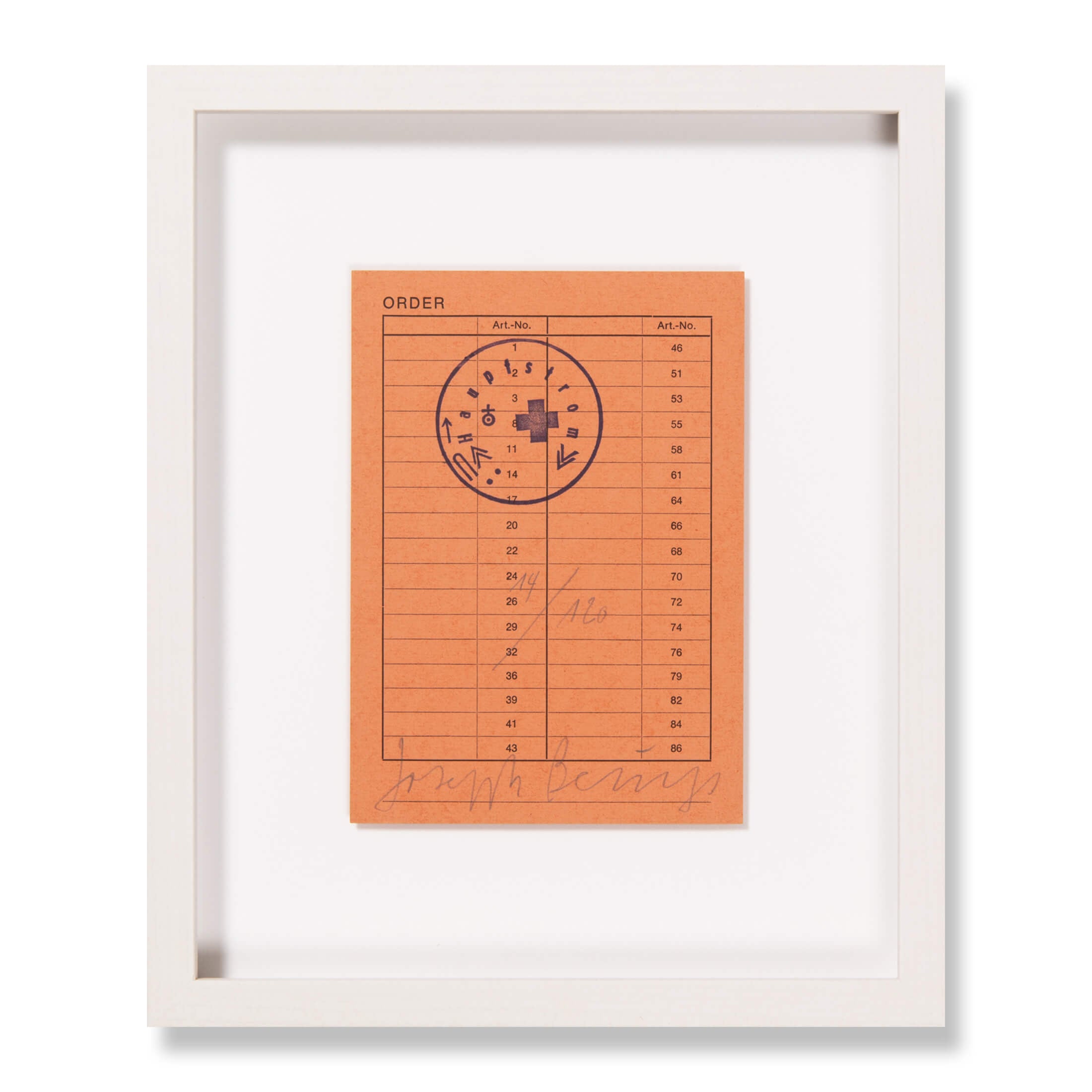
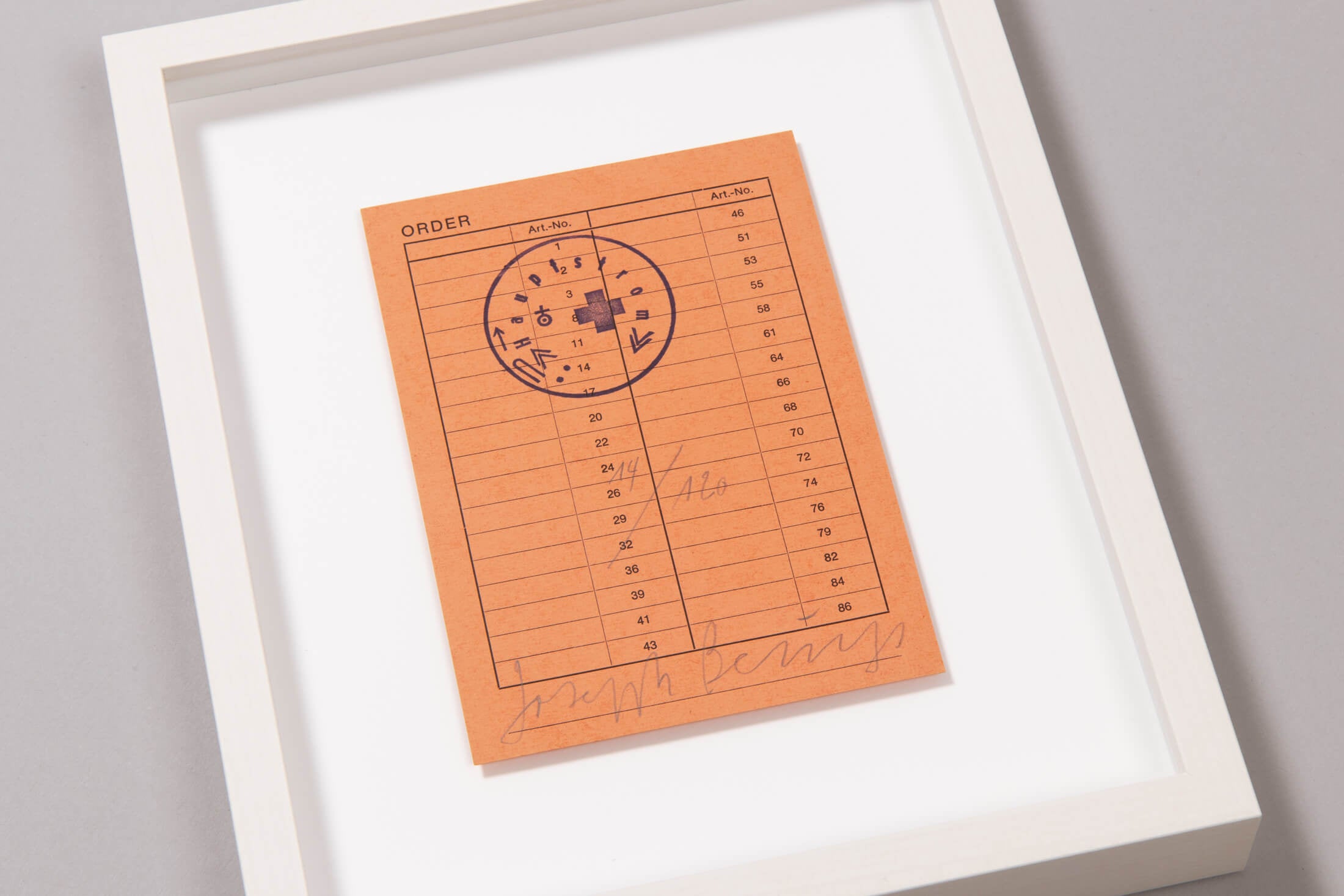
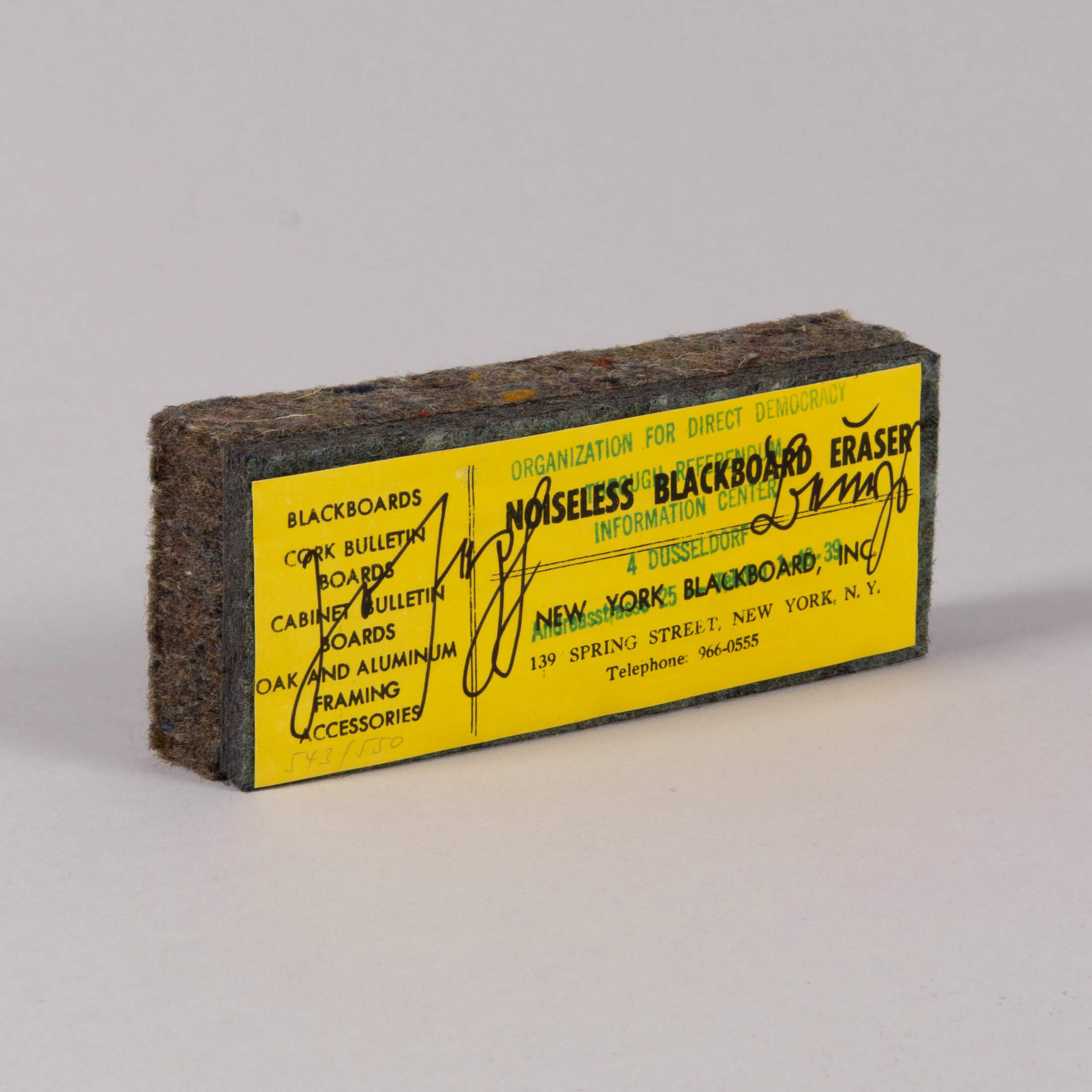
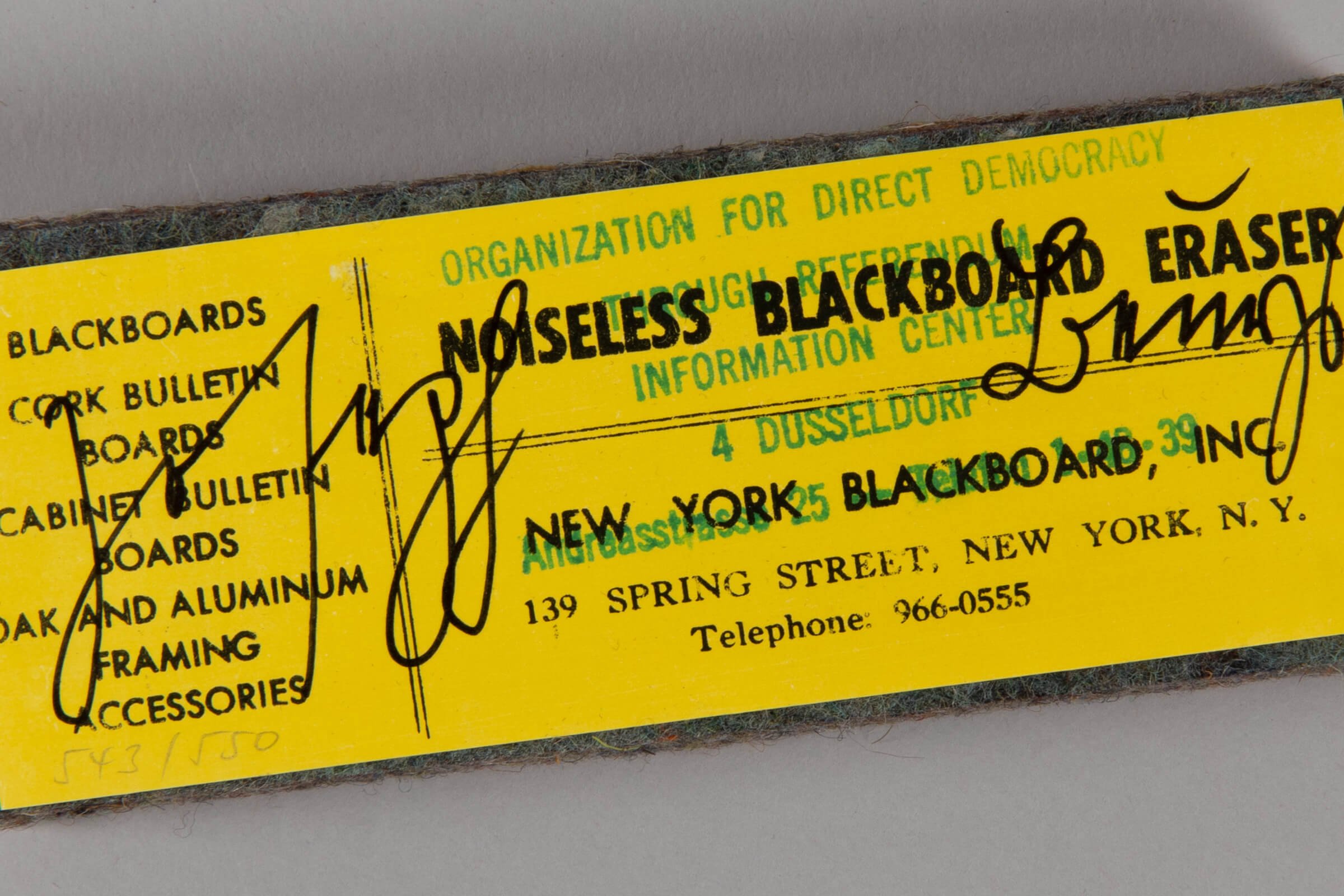
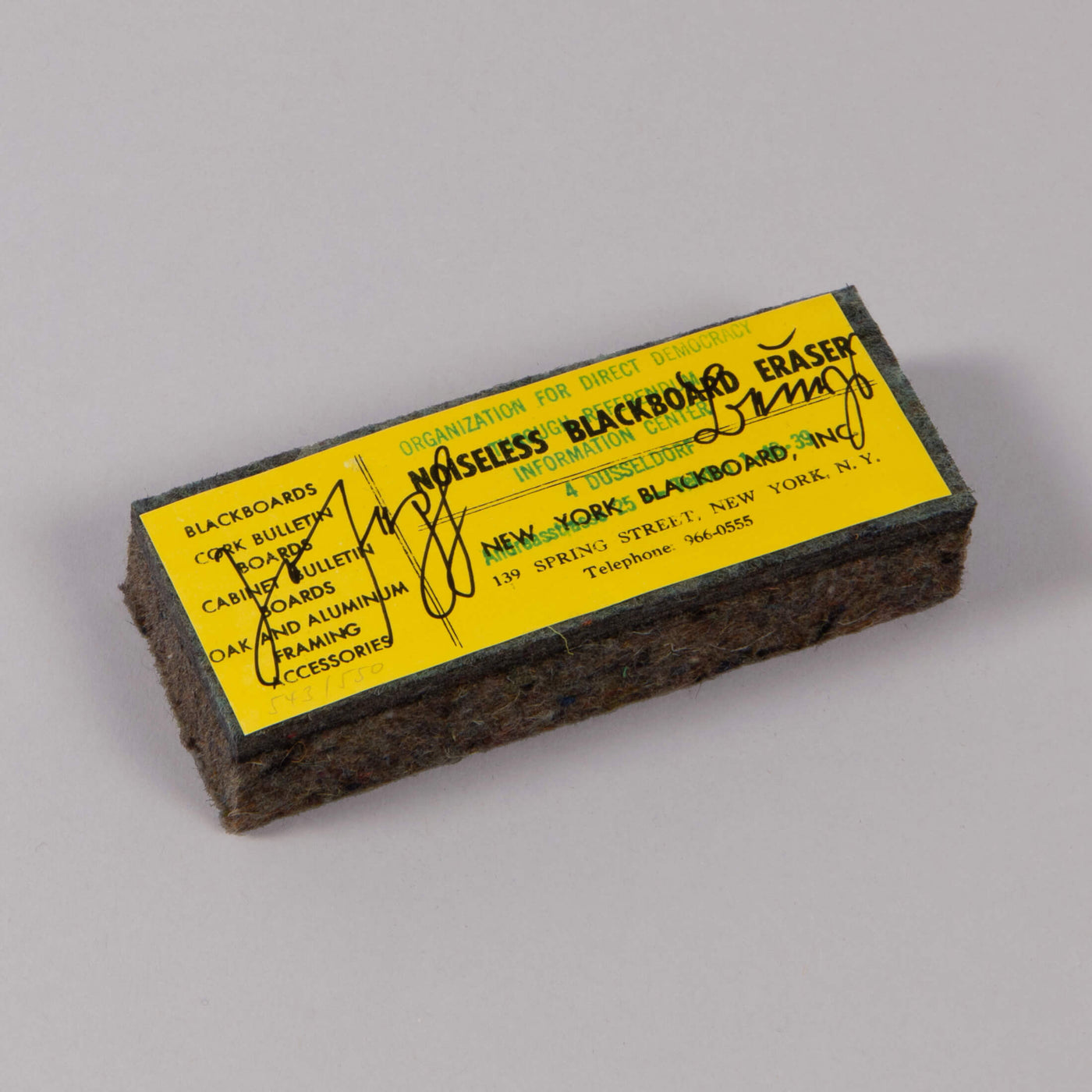
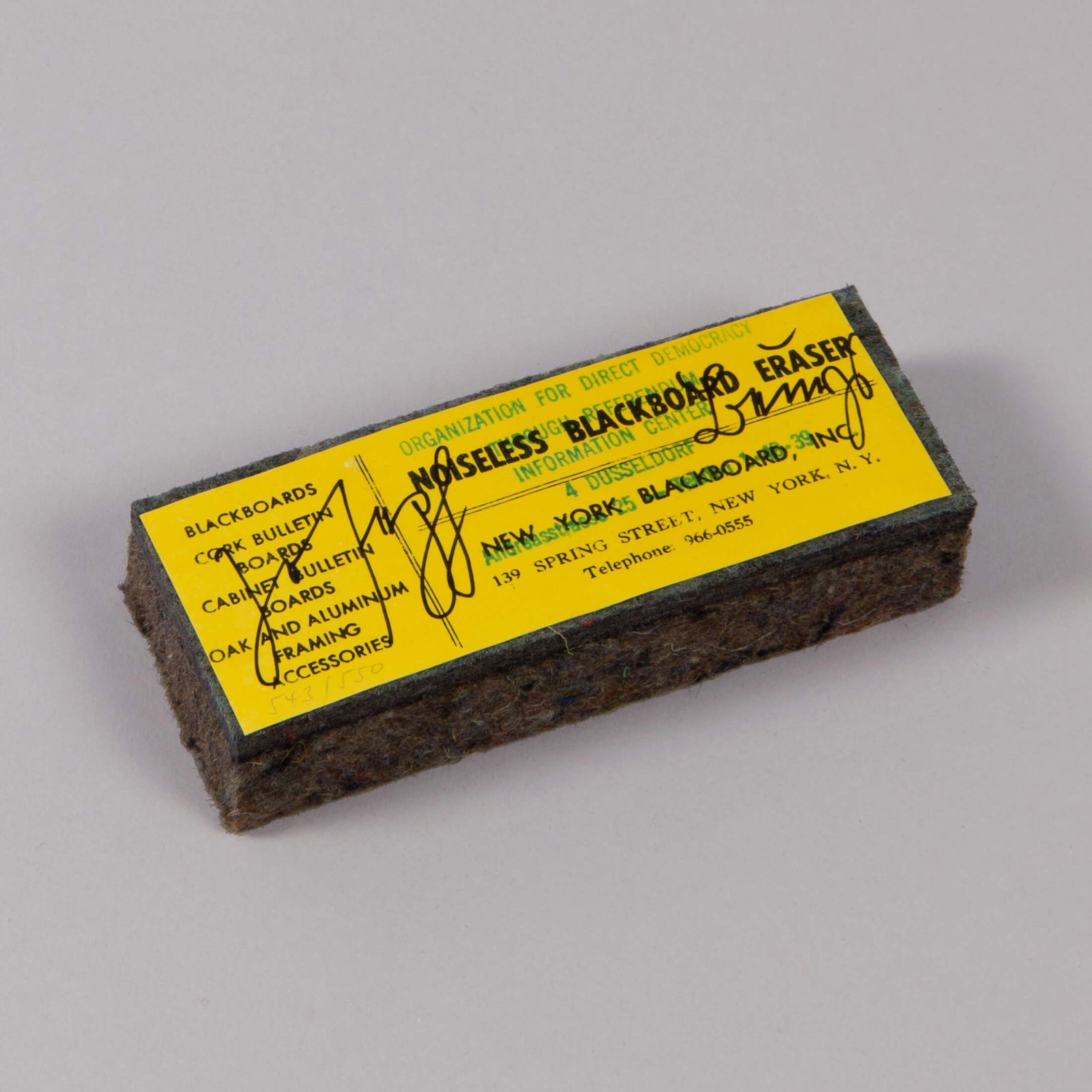
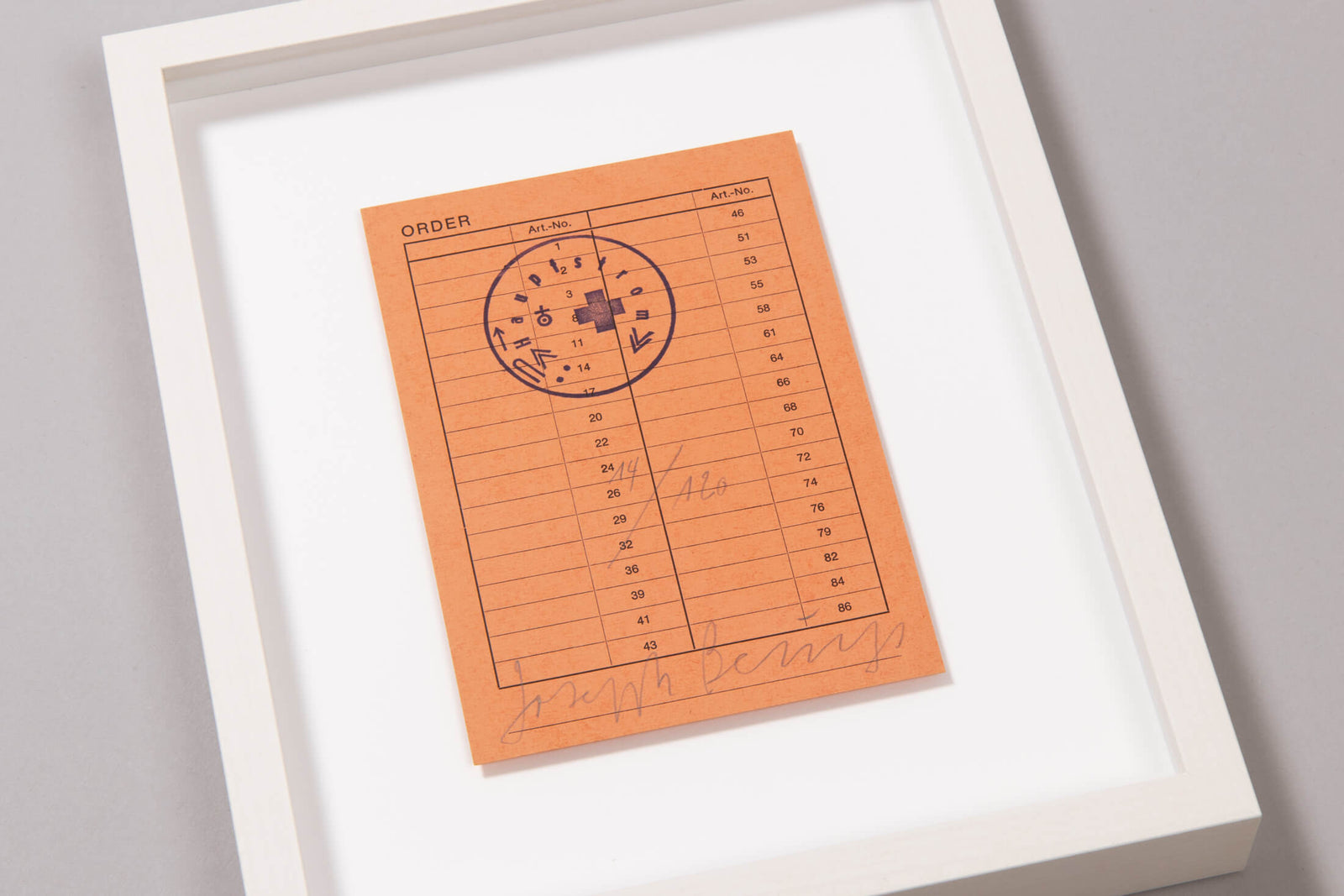
Joseph Beuys treated the multiple not as a secondary product but as a deliberate philosophical instrument. "If you have all my multiples," he said, "then you have me entirely" — positioning editions not as souvenirs of his practice, but as its most complete embodiment. Between 1965 and his death in 1986, the artist produced several hundred fine art multiples, incorporating materials as varied as felt, fat, copper, printed diagrams, and found objects.
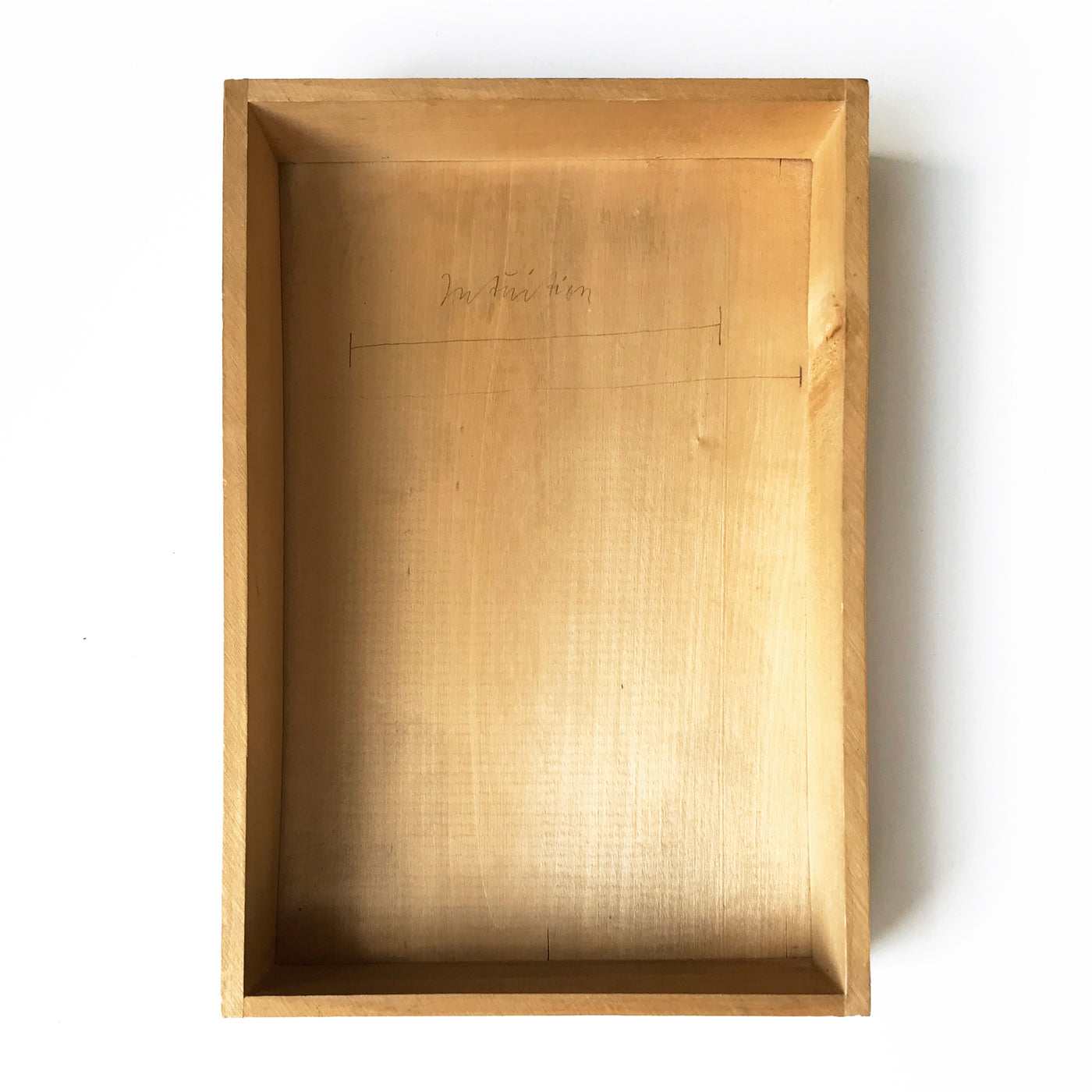
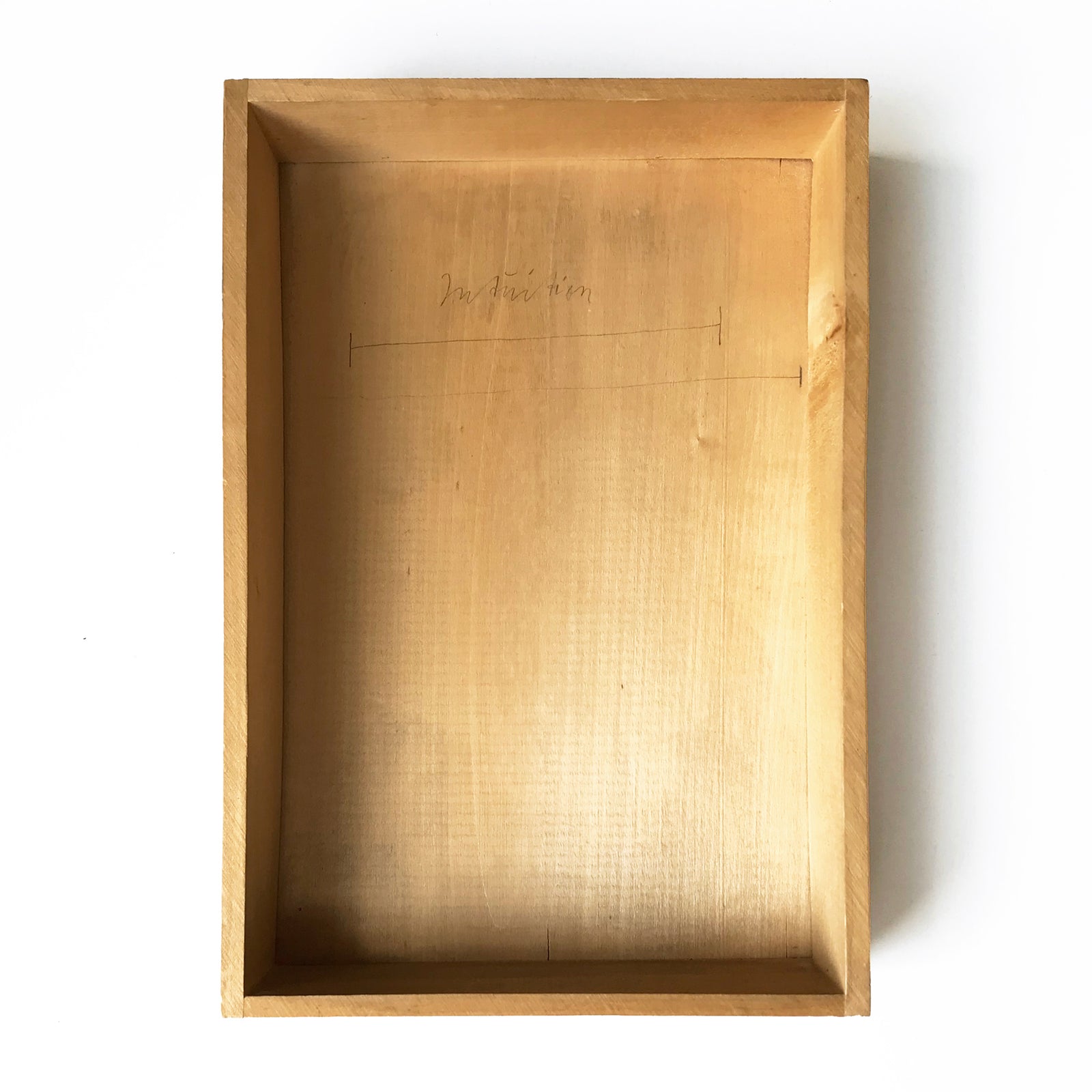
Few artworks state this logic more purely than Intuition (1968): a plain wooden box marked with two lines — the upper one bounded at both ends, standing for the closed limits of rational thought; the lower one breaking open to the right, standing for intuition extending beyond reason. The box itself holds nothing. It functions as a vessel for the viewer's own thinking, incomplete without that participation. Produced in an edition of 12,000 and originally sold for just 8 Deutschmarks through Wolfgang Feelisch's mail-order distribution, the signed artwork embodied Beuys's ambition to break open an elitist art market — a genuine artwork anyone could afford.
Felt Suit (1970) and Capri Batterie (1985) distil the same logic in material form. The Felt Suit — a plain grey suit made entirely of felt, hung as if worn — translates his central material into a wearable form, protection and vulnerability made literal. Capri Batterie, a yellow lightbulb wired to a lemon, condenses an entire ecological argument — sustainable, absurd, and precise — into an object small enough to hold in one hand. None of the three functions as a copy of some more important, singular original; each is a complete philosophical proposition in portable form.
This was not reproducibility for commercial convenience. If social sculpture depends on distributed participation, the artwork itself must resist confinement to a single object or institution — the multiple was the necessary form for ideas built to circulate. For collectors, Joseph Beuys prints and multiples offer direct access to the philosophical core of his practice. Artworks are held in the permanent collections of Tate, the Centre Pompidou, the Guggenheim, and the Museo Reina Sofía.
Joseph Beuys (1921–1986) trained as a sculptor at the Kunstakademie Düsseldorf, where he later became a professor — a position he held until his controversial dismissal in 1972 after he challenged the academy's restrictive admissions policy. That conflict between institutional control and open participation was not incidental to his practice; it was central to it.
By the early 1960s Beuys had moved performance — which he called "actions" — to the centre of his work. In How to Explain Pictures to a Dead Hare (1965), his head covered in honey and gold leaf, he murmured explanations to a dead animal while viewers watched from outside the gallery: a staged demonstration of communication's limits. In I Like America and America Likes Me (1974) the Fluxus artist spent several days in a New York gallery with a live coyote, entering and leaving the United States wrapped in felt without ever touching the city directly. These were not spectacles but ritualised encounters, structured around duration, material, and symbolic tension.
That thinking culminated in his concept of "social sculpture" — the proposition that society itself could be shaped as a creative process, with education, ecology, and civic life as legitimate artistic media. Working at the outer edge of conceptual art, Joseph Beuys shared its central premise — that an idea could constitute the artwork — while pushing it further than most of his conceptual contemporaries: not just questioning what art could be, but what society itself could become. His statement that "everyone is an artist" reflected this conviction precisely: not a dismissal of skill, but an assertion that creative capacity is distributed rather than owned by specialists.
Joseph Beuys died in 1986, but his most visible legacy continues to grow: 7000 Oaks, initiated at documenta 7 in 1982, is still expanding, decades after the last tree was planted.
7000 Oaks – City Forestation Instead of City Administration (1982) is Beuys's most enduring intervention. Launched at documenta 7 in Kassel, the project proposed planting 7,000 oak trees across the city, each paired with a basalt column removed only once its tree was planted. Unlike conventional public sculpture, the artwork unfolds over years — growth, negotiation, and civic participation built into its structure. Decades later, the trees remain: living proof that a sculpture can be an ongoing process rather than a finished object.
How to Explain Pictures to a Dead Hare (1965) remains his most cited action. For several hours, Joseph Beuys carried a dead hare through a gallery, his face gilded in honey and gold leaf, murmuring explanations to it while the audience watched from outside, unable to enter. The artwork staged the fragility of understanding itself — a demonstration that explanation, however sincere, cannot guarantee comprehension.
I Like America and America Likes Me (1974) placed the German artist in a New York gallery for several days with a live coyote, having entered the country wrapped in felt without setting foot on American soil directly. Invoking frontier mythology and Indigenous history, the artwork reframed performance as negotiation between species, cultures, and unresolved histories — a tension the piece never fully resolves.
Schlitten (1969) distils his material philosophy into its most literal form: a wooden sled equipped with felt, a torch, and a lump of fat — what Beuys called his "survival materials," referencing the rescue myth at the centre of his own biography. Produced as a standalone limited edition of 50, unsigned but numbered, it was sold at the time for a deliberately modest price: art conceived as emergency equipment, available to a broad public rather than reserved for collectors alone.
Joseph Beuys treated the multiple not as a secondary product but as a deliberate philosophical instrument. "If you have all my multiples," he said, "then you have me entirely" — positioning editions not as souvenirs of his practice, but as its most complete embodiment. Between 1965 and his death in 1986, the artist produced several hundred fine art multiples, incorporating materials as varied as felt, fat, copper, printed diagrams, and found objects.
Few artworks state this logic more purely than Intuition (1968): a plain wooden box marked with two lines — the upper one bounded at both ends, standing for the closed limits of rational thought; the lower one breaking open to the right, standing for intuition extending beyond reason. The box itself holds nothing. It functions as a vessel for the viewer's own thinking, incomplete without that participation. Produced in an edition of 12,000 and originally sold for just 8 Deutschmarks through Wolfgang Feelisch's mail-order distribution, the signed artwork embodied Beuys's ambition to break open an elitist art market — a genuine artwork anyone could afford.
Felt Suit (1970) and Capri Batterie (1985) distil the same logic in material form. The Felt Suit — a plain grey suit made entirely of felt, hung as if worn — translates his central material into a wearable form, protection and vulnerability made literal. Capri Batterie, a yellow lightbulb wired to a lemon, condenses an entire ecological argument — sustainable, absurd, and precise — into an object small enough to hold in one hand. None of the three functions as a copy of some more important, singular original; each is a complete philosophical proposition in portable form.
This was not reproducibility for commercial convenience. If social sculpture depends on distributed participation, the artwork itself must resist confinement to a single object or institution — the multiple was the necessary form for ideas built to circulate. For collectors, Joseph Beuys prints and multiples offer direct access to the philosophical core of his practice. Artworks are held in the permanent collections of Tate, the Centre Pompidou, the Guggenheim, and the Museo Reina Sofía.
Joseph Beuys: Key Questions
Collecting Joseph Beuys?
Looking for a specific artwork or have a question about an edition? We're happy to advise on availability, pricing, condition, and provenance — and to source artworks beyond our current selection.
What is Joseph Beuys known for?
Joseph Beuys is known for expanding the definition of art through his theory of "social sculpture" — the idea that society itself could be shaped as a creative process. Working across sculpture, performance, drawing, installation, and multiples, he treated artistic thinking as a form of civic and ecological engagement. He remains one of the most influential figures in postwar European art.
What does "social sculpture" mean?
Social sculpture is Joseph Beuys's concept that society can be understood as a sculptural process shaped by collective creativity. Rather than confining art to objects or exhibitions, he argued that education, politics, and environmental action could function as artistic media. His statement "everyone is an artist" reflects this belief in distributed creative capacity rather than specialist authorship.
Why are felt and fat central to Joseph Beuys's art?
Felt and fat became Joseph Beuys's core materials after he cultivated a founding myth around his 1944 plane crash in Crimea, claiming he was rescued and kept warm by Tatar nomads using felt and fat. Whether or not the story is historically accurate, its symbolic function was deliberate: these materials carry associations of warmth, protection, and transformation, forming a sculptural vocabulary built on regeneration rather than permanence.
Did Joseph Beuys invent the multiple?
No — the multiple as an art form predates Joseph Beuys, developed by artists including Daniel Spoerri in the late 1950s. What Beuys contributed was a philosophical framework: rather than treating editions as accessible reproductions of a "real" artwork, he positioned the multiple as the most complete expression of social sculpture — a portable, distributable unit built to put his ideas directly into circulation.
How much do Joseph Beuys artworks sell for?
Joseph Beuys's unique artworks have reached significant prices at auction — his record stands at roughly £850,000 (around €1.1 million), set at Christie's London in 2016 for the chalk-on-blackboard drawing Zeitpunkt: Das Massaker von München. Within his multiples, results can be substantial: Schlitten (1969), a mixed-media sculpture from an edition of 50, achieved around €250,000, while Rückenstütze eines feingliedrigen Menschen aus dem 20. Jahrhundert (1972), from an edition of just 12, reached roughly €370,000 — both far above their estimates. More widely produced editions such as signed prints and multiples remain considerably more accessible, offering a genuine entry point into his practice.


Buy art online
Shop editions with transparent pricing, accurate condition reports, and fast dispatch. Built for international collectors — buying original art made simple and reliable.

Worldwide shipping
Every work ships fully insured and tracked, handled only by trusted international express carriers — DHL Express, FedEx, UPS — and typically dispatched within five days.

Professional packaging
Meticulous packing is our craft. Each artwork is packed in-house to archival standards — multi-layer construction built to ensure it arrives in mint condition, anywhere in the world.

Secure payment
Checkout is powered by Shopify Payments — the same encrypted, PCI-compliant infrastructure trusted by millions of merchants worldwide.