














About Joseph Beuys
Joseph Beuys is widely regarded as one of the most influential artists of the postwar period, known for a radical practice that reshaped the definition of art itself. Rooted in social philosophy, humanism, and anthroposophy, Beuys understood art as a transformative force capable of shaping society. His work consistently challenged conventional boundaries, positioning creativity not as a specialized discipline but as a universal human capacity.
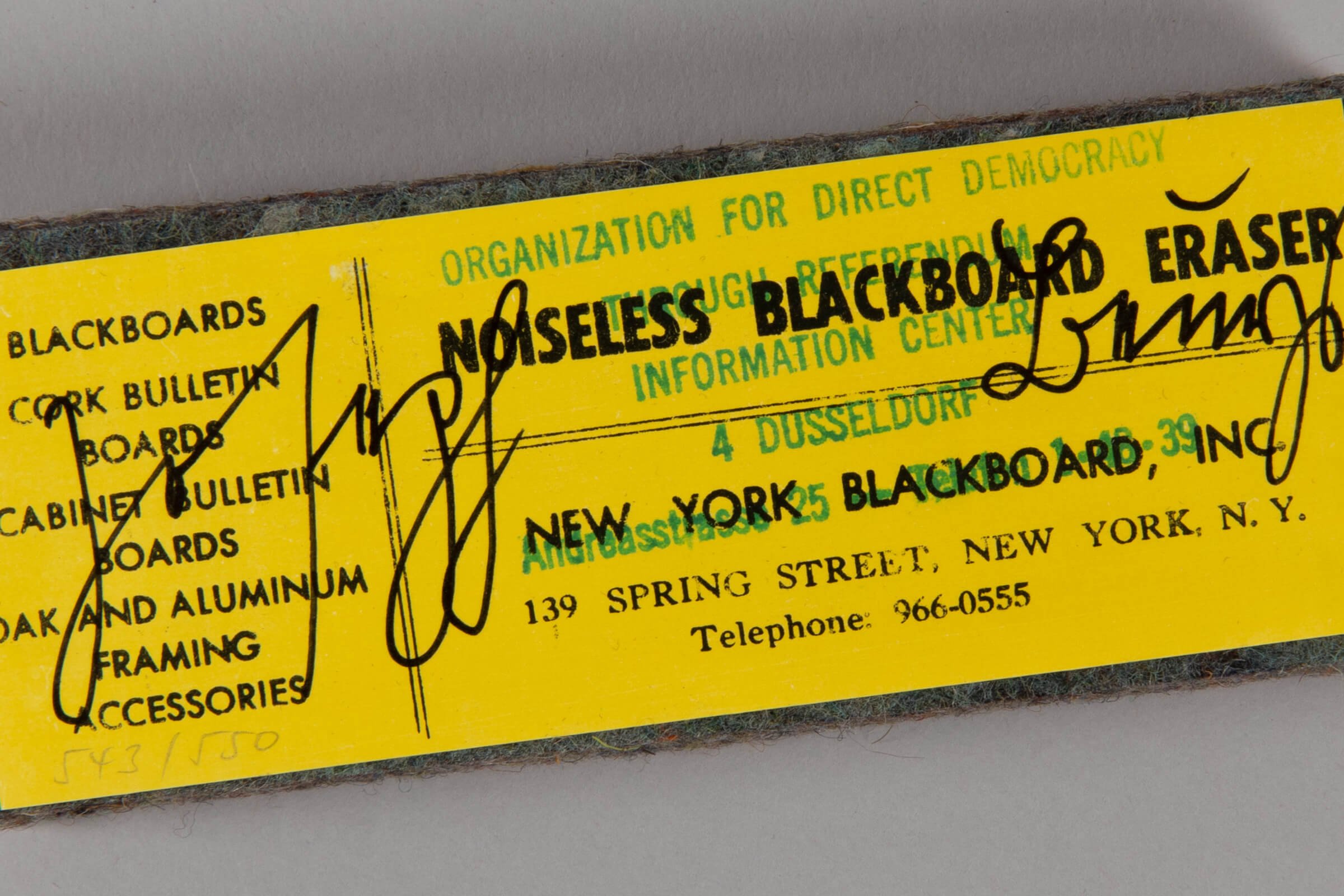
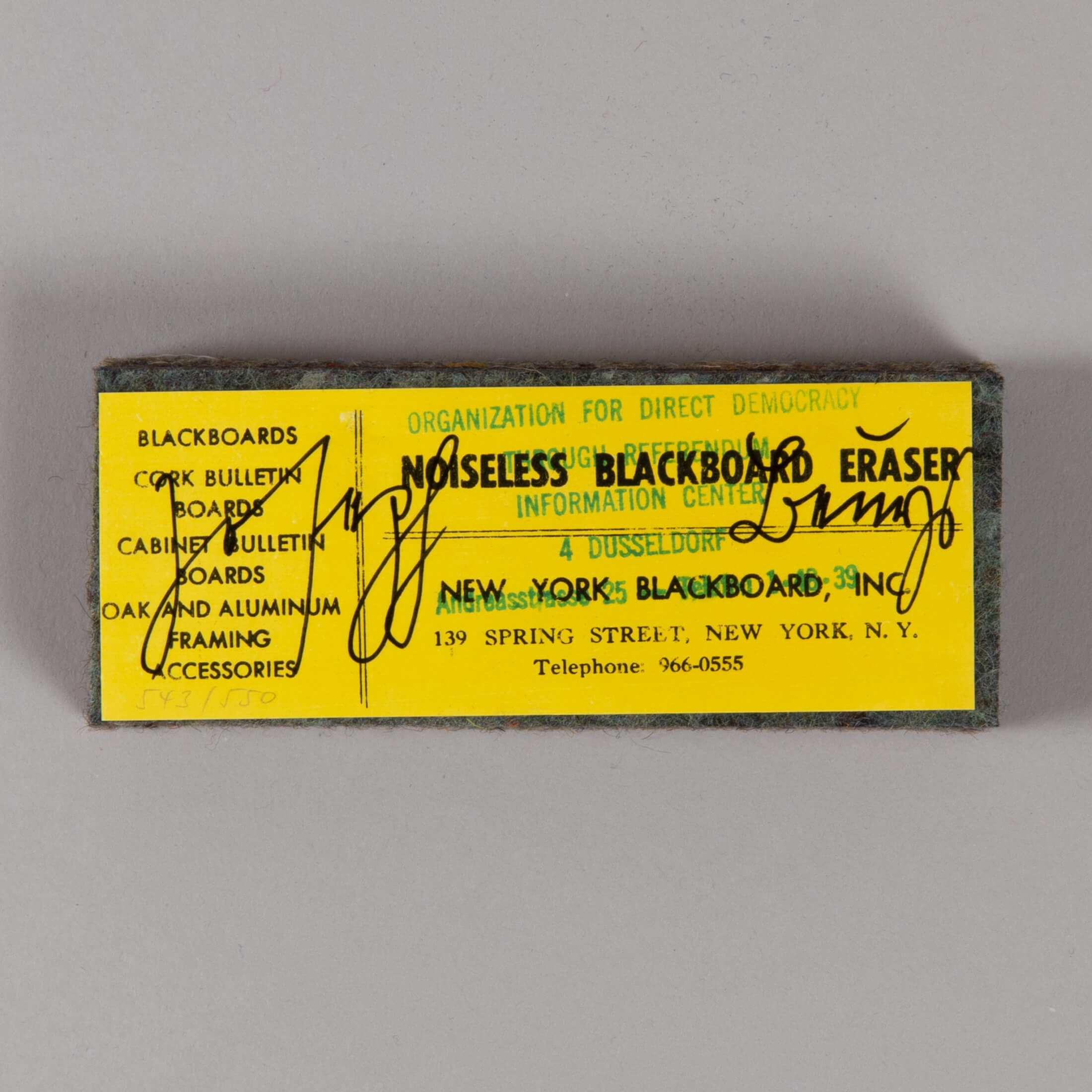
Beuys worked across an expansive range of media, including Fluxus actions, performances, happenings, sculptures, installations, drawings, and editions. Central to his practice was the production of prints and multiples, which he viewed as essential tools for democratizing art and extending its reach beyond museums and galleries. These limited edition works, often incorporating symbolic materials such as felt and animal fat, enabled Beuys to disseminate his ideas widely and reinforce his belief that “everyone is an artist.” Through editions, his artistic and philosophical concepts became accessible, participatory, and socially engaged.
Beuys’ visionary approach blurred the boundaries between art, politics, and everyday life, laying the groundwork for later forms of socially engaged and conceptual art. A landmark retrospective at the Solomon R. Guggenheim Museum in 1979 cemented his international reputation. Since his death in 1986, his work has been exhibited at major institutions worldwide, including the Centre Pompidou, Tate Modern, Museo Reina Sofia, Hamburger Bahnhof, and the National Gallery of Victoria, underscoring his enduring relevance within contemporary art history.


