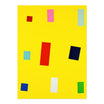
Rupprecht Geiger – Blue-Black and Bluish Red
Taxes included. Shipping calculated at checkout.
Rupprecht Geiger (German, 1908 – 2009)
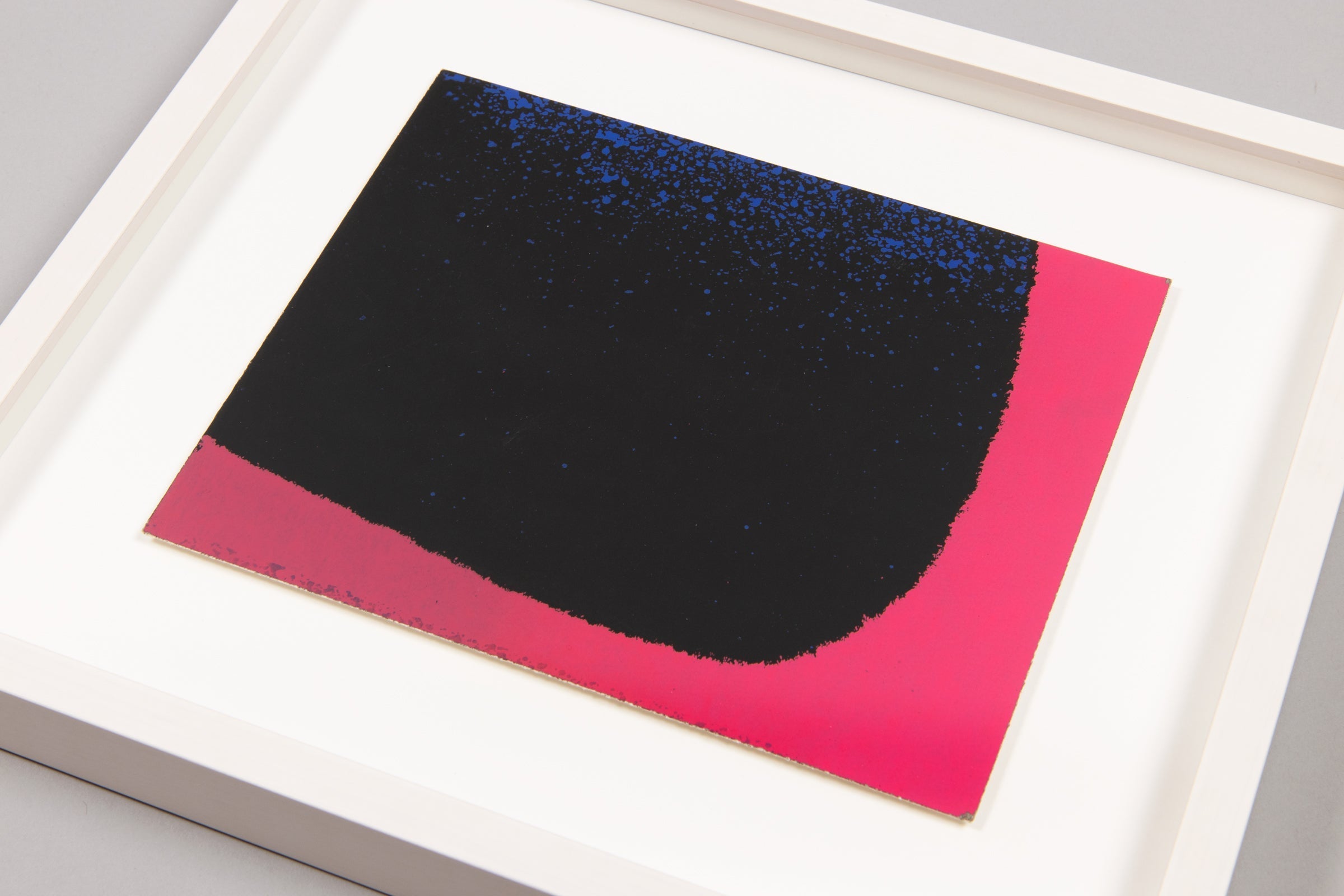
Blue-Black and Bluish Red, 1961
Medium: Screenprint on cardboard
Dimensions: 16.7 x 20.6 cm
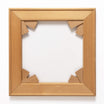
Framed dimensions: 31.4 x 27.5 x 2.9 cm
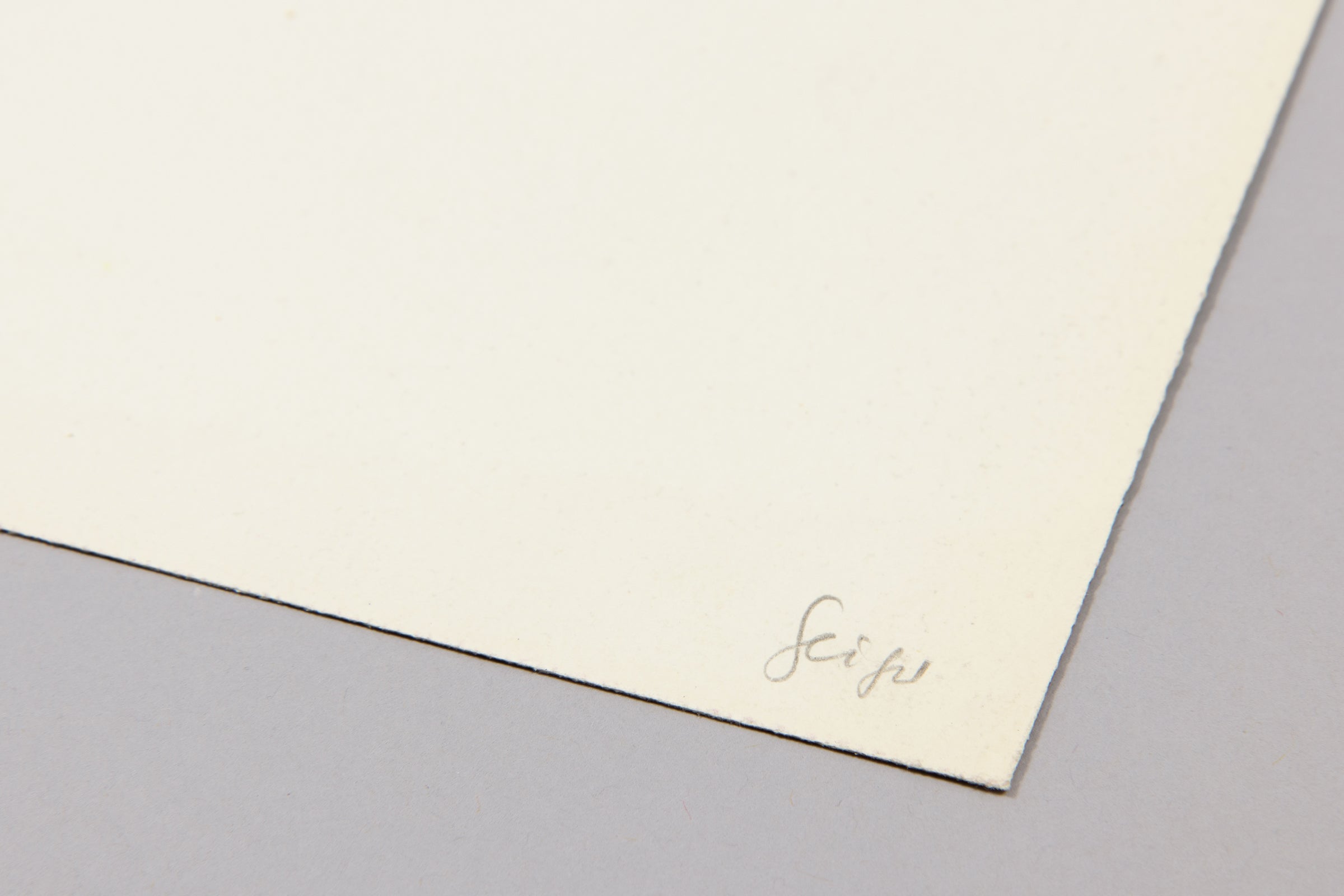
Edition of 50: Hand-signed and numbered
Catalogue raisonné: WVG 41
Condition: Very good (with traces of age)
Artwork details
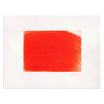
Rupprecht Geiger's Blue-Black and Bluish Red (1961) is an early screenprint on cardboard. Catalogued as WVG 41, the artwork belongs to a small group of closely related prints in which Geiger explored chromatic inversion by reversing the relationship between blue, black, and red.
Here, a dense blue-black form presses against a luminous bluish red ground, creating a powerful tension between depth and radiance. Produced at a pivotal moment in Geiger's early 1960s practice, this abstract print demonstrates his emerging focus on color as an autonomous force. Through minimal means and bold contrast, the artwork exemplifies Geiger's sustained investigation into how subtle shifts in hue and saturation can generate distinct spatial and emotional effects.
Published in 1961 in a limited edition of 50, Blue-Black and Bluish Red is hand-signed and numbered by the artist.
About this artist
Rupprecht Geiger (German, 1908–2009) was a leading figure of postwar abstraction and Color Field painting, internationally recognized for his radiant monochromes and hard-edged geometric artworks. The son of painter Willi Geiger, he moved between architecture, painting, sculpture, and printmaking before dedicating himself fully to the exploration of color as an autonomous force.
Geiger’s abstract artworks are defined by precise geometric forms and an intense chromatic vocabulary, most notably his iconic reds. For Rupprecht Geiger, red was not merely a formal choice but a symbol of vitality, energy, and presence. Across paintings and limited edition prints, he investigated how color alone could generate spatial depth and emotional resonance, positioning his work at the forefront of non-objective art in postwar Germany.
In 1949, together with Willi Baumeister and Fritz Winter, Geiger co-founded the artist group Zen 49 in Munich, which played a decisive role in reestablishing abstract art in Germany after World War II. By the early 1960s, he concentrated exclusively on painting and printmaking, producing a body of artworks and fine art prints that remain central to European Color Field abstraction.
Rupprecht Geiger participated in multiple editions of documenta (2, 3, 4, and 6) and exhibited at the Museum for Non-Objective Painting, later the Guggenheim Museum. Major retrospectives at institutions such as the Neue Nationalgalerie in Berlin and the Lenbachhaus in Munich confirmed his enduring significance within twentieth-century art.

You may also like

Buy art online
Shop art editions online with transparent pricing, accurate condition reports, and fast dispatch. Designed for international collectors, we make buying limited edition prints and artworks simple, secure, and reliable.
Worldwide shipping
We ship art editions worldwide with full insurance and tracking. Handled only by trusted international carriers, each shipment is securely packaged and typically dispatched within 5 days.
Professional packaging
Every artwork is packaged to the highest professional standards. Using solid multi-layer cardboard and protective materials, we ensure your art editions arrive safely and in excellent condition.
Secure payment
Buy with confidence using secure, encrypted payments backed by advanced fraud protection. Every transaction is processed with trusted technology, ensuring a smooth and worry-free checkout for collectors worldwide.