





Artist Insight
Painting After Photography
Marlene Dumas emerged internationally in the late 1980s and early 1990s, precisely when the status of painting was under renewed scrutiny. Photography, mass media, and conceptual strategies had reshaped how images circulated and how truth was constructed. Instead of competing with photography, Dumas used it as her point of departure.
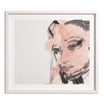
Her source images arrive already charged — criminal mugshots, political figures, erotic fragments, anonymous faces from newspapers. She translates them into paint, not to reproduce them faithfully, but to destabilize their authority. The fluid brushwork, diluted pigment, and staining techniques dissolve the certainty that photography appears to promise. Faces blur. Flesh seeps into ground. Expression becomes indeterminate.
This is the hinge of her practice: the photograph claims to document; the painting reopens the question.
The Body as Contested Image
Central to Marlene Dumas’s work is the human body, yet rarely as portrait in the traditional sense. Her figures appear exposed, vulnerable, psychologically charged. Eyes meet the viewer without resolving into narrative. Mouths hover between speech and silence. Skin becomes terrain rather than surface.
Sexuality, race, violence, motherhood, and mortality recur throughout her practice, not as illustrative themes but as pressures exerted on the body. The paintings do not describe events; they stage confrontations. The viewer is implicated in the act of looking.
By destabilizing conventional representations of beauty and identity, Dumas transforms figuration into a field of emotional and ethical tension. The question is never simply what is depicted, but how and why it is being seen.

South Africa, Europe, and Historical Residue
Marlene Dumas’s biography cannot be separated from the historical conditions of apartheid South Africa, even as her work resists autobiographical reduction. Growing up within a system structured by racial classification and political violence sharpened her awareness of how images categorize bodies and assign value.
Living and working in Europe, she encountered another set of histories — postwar painting, feminist discourse, psychoanalysis. These influences do not manifest as overt citation. They operate as intellectual undercurrents. Her paintings acknowledge that representation is never innocent and that every face carries the weight of social projection.
Rather than illustrating specific political events, Dumas addresses the afterlife of images: how they linger, repeat, and shape collective memory.
Emotion as Method
What distinguishes Marlene Dumas from many of her contemporaries in figurative painting is her refusal of resolution. Her brushwork is economical, often leaving areas incomplete. Color is emotive rather than descriptive — flesh tones veer toward green, violet, or bruise-like blue. The instability of the painted surface mirrors the instability of identity itself.
Emotion in Dumas’s artworks is not sentimental. It is structural. It prevents the viewer from settling into aesthetic comfort. The paintings seem to shift under prolonged attention, refusing to harden into icons.
Within the broader discourse of Figuration After 1980, Dumas occupies a central position. She demonstrates that the return to the figure need not imply nostalgia. Instead, it can become a site of confrontation with the politics of representation.

Drawing and Works on Paper
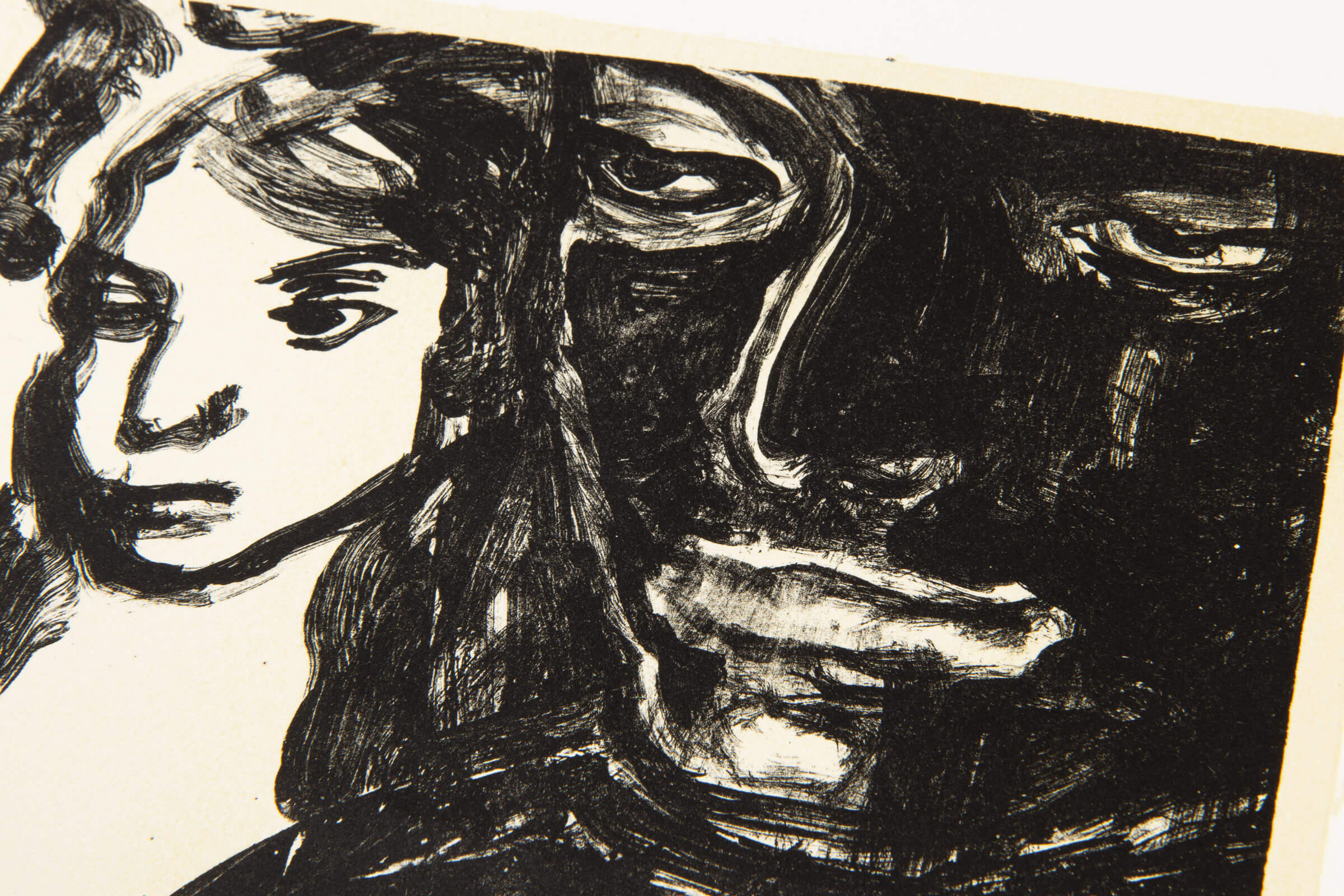
Drawing plays a foundational role in Dumas’s practice. Works on paper often possess a heightened immediacy, where line and wash operate with skeletal clarity. These artworks are not preparatory; they are autonomous investigations of presence and absence.
The fragility of paper reinforces the vulnerability of the depicted subject. In many cases, drawing intensifies the psychological tension found in her paintings, stripping the image to its essential emotional structure.
Editions, Seriality, and Circulation
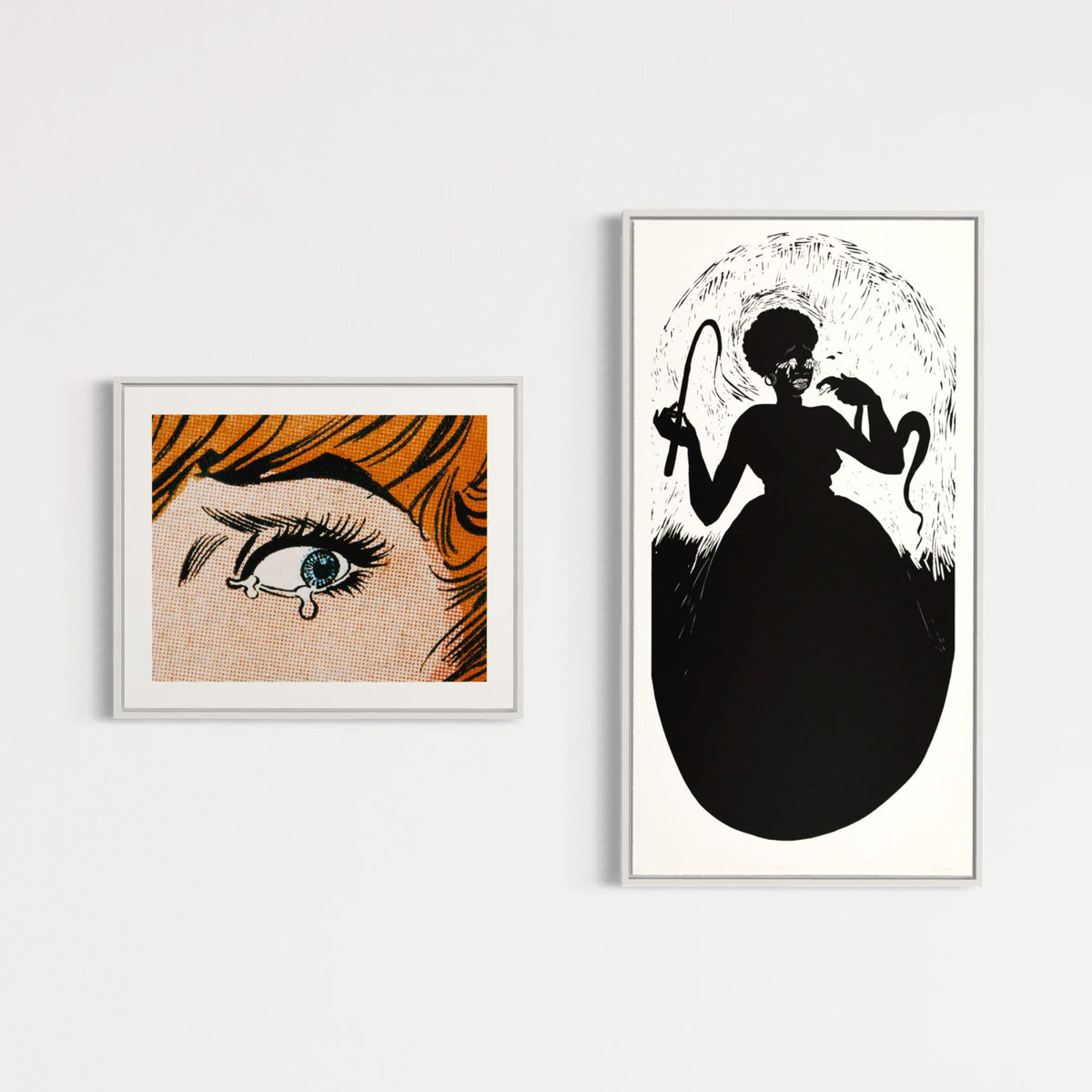
Editioned artworks and prints form an important dimension of Dumas’s output. Seriality introduces repetition with variation, echoing her broader interest in how identity shifts across contexts. Each iteration alters tone, scale, or surface, reinforcing the idea that representation is never singular.
Editions should not be understood as secondary reproductions but as integral components of her practice. They extend the circulation of charged imagery while preserving the painterly tension that defines her work.

Institutional Presence and Critical Standing
Marlene Dumas has been the subject of major retrospective exhibitions at institutions including the Museum of Modern Art, New York; Tate Modern, London; the Centre Pompidou, Paris; and the Stedelijk Museum Amsterdam. These presentations have consistently foregrounded her interrogation of the image as burden — a phrase that encapsulates the weight her paintings carry.
Her artworks are held in leading public collections worldwide and remains central to discussions of contemporary painting, feminist discourse, and the ethics of figuration.
The Legacy of Marlene Dumas
Marlene Dumas’s influence lies not in stylistic imitation but in structural permission. She demonstrated that painting could confront photography without surrendering to it, that emotional intensity could coexist with conceptual rigor, and that the human face remains one of the most politically charged images in contemporary culture.
Her practice continues to shape how artists approach portraiture, identity, and the unstable relationship between image and truth. By insisting that painting remains a space for ethical confrontation, Dumas secured her position as one of the defining figures of contemporary art.
Selected works by Marlene Dumas, including paintings, works on paper, and editions, are available through our collection.
Painting doesn’t freeze time. It circulates and recycles time like a wheel that turns.
Selected questions on the artist’s practice, major artworks, and editions.
Marlene Dumas: Key Questions


