


Art Movement Insight

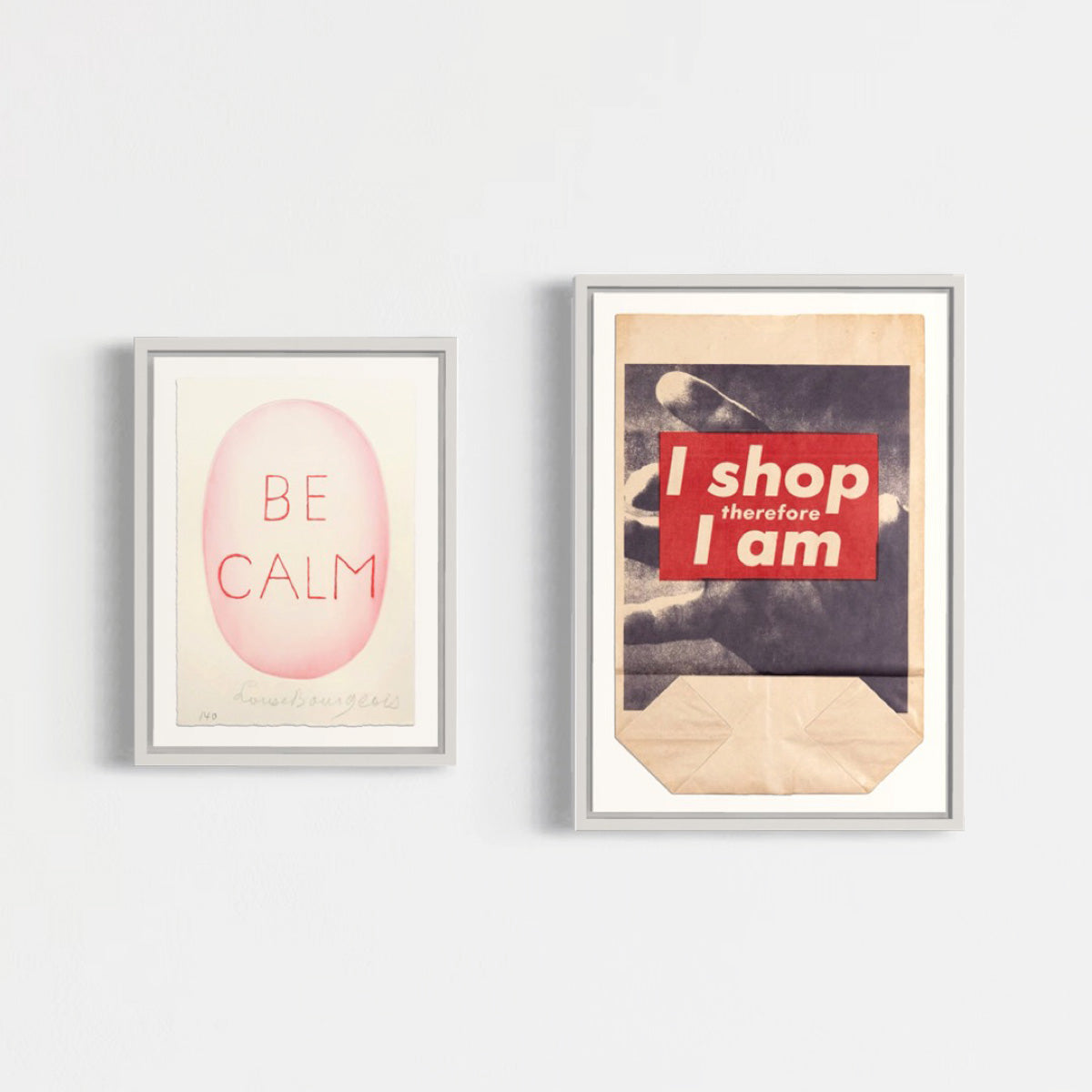
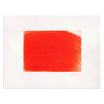
Louise Bourgeois – I Have Been To Hell and Back
The Historical Roots of Feminist Art
The emergence of Feminist Art was inseparable from the political upheavals of the late 1960s. The civil rights movement, anti-war activism, and the women's liberation movement created conditions in which artists began questioning not only what was depicted, but who was permitted to depict it.
A pivotal moment was the 1971 essay by Linda Nochlin, Why Have There Been No Great Women Artists? — a foundational text that exposed how institutional structures, not natural talent, had determined who entered art history. The question was not rhetorical. It was a call to dismantle the conditions that produced the answer.
Artists responded by forming collectives, establishing alternative exhibition spaces, and demanding representation in museums that had historically excluded women. The Los Angeles Woman's Building and the Feminist Studio Workshop became centres for a practice that placed consciousness-raising, collaboration, and lived experience at the heart of artistic production.
Landmark Feminist Artworks
Certain artworks became defining statements of the movement — not because they were decorative, but because they forced viewers to confront what had been made invisible.
Judy Chicago — The Dinner Party (1974–79)
A monumental triangular table honouring 39 women from history through ceramic place settings and embroidered runners. Chicago's work reclaimed domestic craft as high art and made institutional exclusion its explicit subject.
Ana Mendieta — Silueta Series (1973–80) Mendieta inscribed the outline of her body into earth, sand, and grass across natural landscapes in Iowa and Mexico. The works address displacement, violence, and the female body's relationship to land — using absence as both subject and method.
Louise Bourgeois — Maman (1999) A monumental bronze spider standing over nine metres high, combining imagery of protection and threat to examine the psychological complexity of motherhood. Among the most recognised sculptural artworks of the twentieth century, held in major museum collections worldwide.
Barbara Kruger — Your Body Is a Battleground (1989)
Kruger's iconic photomontage combined a split image of a woman's face with declarative text to address reproductive rights and political control over women's bodies. By appropriating the visual language of advertising, she exposed how images shape belief, identity, and authority.
Cindy Sherman — Untitled Film Stills (1977–80)
Sherman's series of staged self-portraits mimicking cinematic conventions dismantled the idea of femininity as natural. By constructing and inhabiting fictional female archetypes, she revealed that gender is produced through visual codes rather than inherent traits.

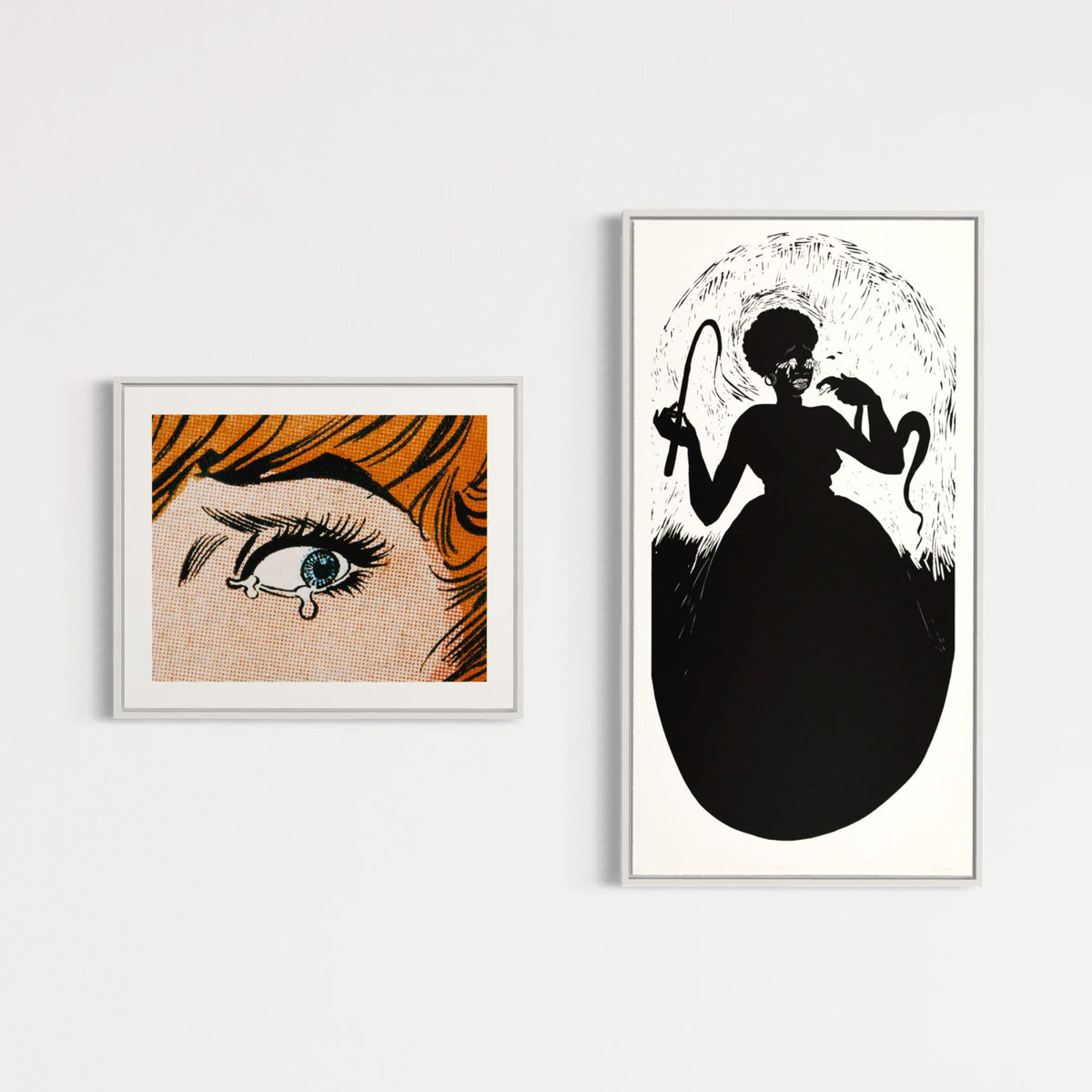
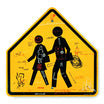
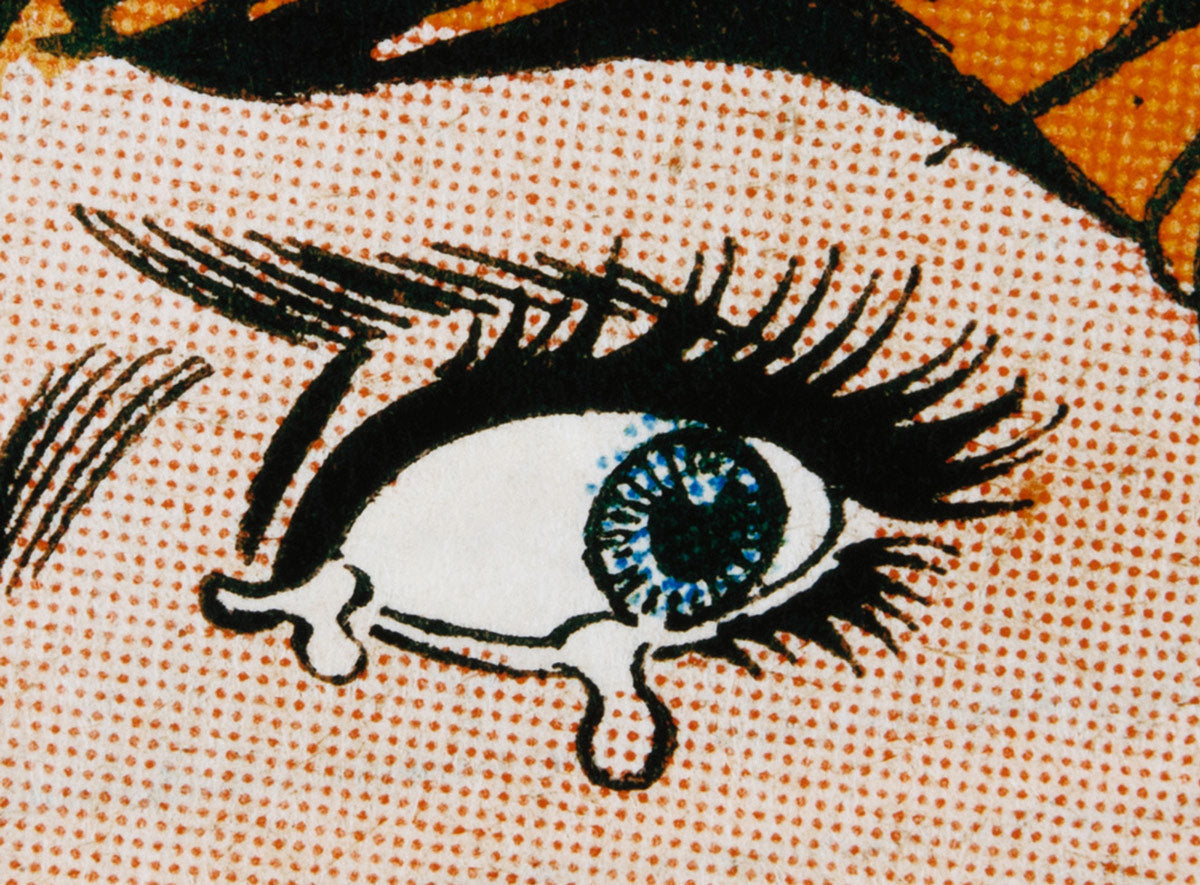
Kara Walker – Boo-Hoo
The Body as Subject and Battleground
Central to Feminist Art is a sustained critique of how bodies — particularly female bodies — are depicted, regulated, and commodified within visual culture. Rather than accepting inherited conventions of representation, Feminist artists placed the body at the centre of inquiry.
These artworks challenge idealised or objectifying representations by foregrounding vulnerability, subjectivity, and agency. The body becomes both subject and site of meaning — addressing sexuality, identity, aging, and power. Rather than offering visual pleasure, many of these artworks invite reflection on the conditions under which bodies are seen and interpreted at all.
Louise Bourgeois occupies a foundational position in this discourse. Her artworks examine sexuality, trauma, family, and memory with psychological intensity — refusing the separation between personal experience and broader social structures. Works such as her Cells series and the Spider sculptures transform intimate psychological states into monumental, universally resonant forms.
Feminist Art and Language: Text as Resistance
Language became one of the primary tools of Feminist artistic practice. Artists recognised that words — in advertising, journalism, law, and medicine — participated in the construction and maintenance of gendered power. They appropriated those systems to expose and disrupt them.
Barbara Kruger's use of declarative language and advertising aesthetics remains among the most direct articulations of this strategy. Her artworks confront viewers with statements that expose systems of authority, consumption, and identity — collapsing the distance between image and ideology.
Jenny Holzer extended this approach into public space. Her Truisms and LED text installations placed confrontational statements within urban environments, transforming architecture, digital displays, and public surfaces into platforms for critical reflection. Where Kruger worked within the logic of the printed image, Holzer inserted language into the spaces of everyday life.
Together, these practices demonstrated that meaning is never neutral — it is produced, circulated, and maintained through the repeated use of familiar forms.

Jenny Holzer – Inflammatory Essays
Photography, Performance, and the Construction of Identity
Photography and performance became central to Feminist Art because they offered tools for examining identity as constructed, mediated, and contingent. These practices challenged the idea of the self as fixed or essential, presenting identity instead as something performed under conditions not of one's own choosing.
Cindy Sherman's staged self-portraiture appropriated and dismantled cultural stereotypes of femininity by inhabiting them with deliberate artifice. Her artworks exposed how femininity is not natural but produced through visual codes — costume, lighting, pose, and context.
Ana Mendieta's body and earth works used landscape as both material and metaphor, addressing displacement, violence, and the female body's relationship to land and memory. Her practice insisted that the body carries historical and political meaning beyond individual experience.
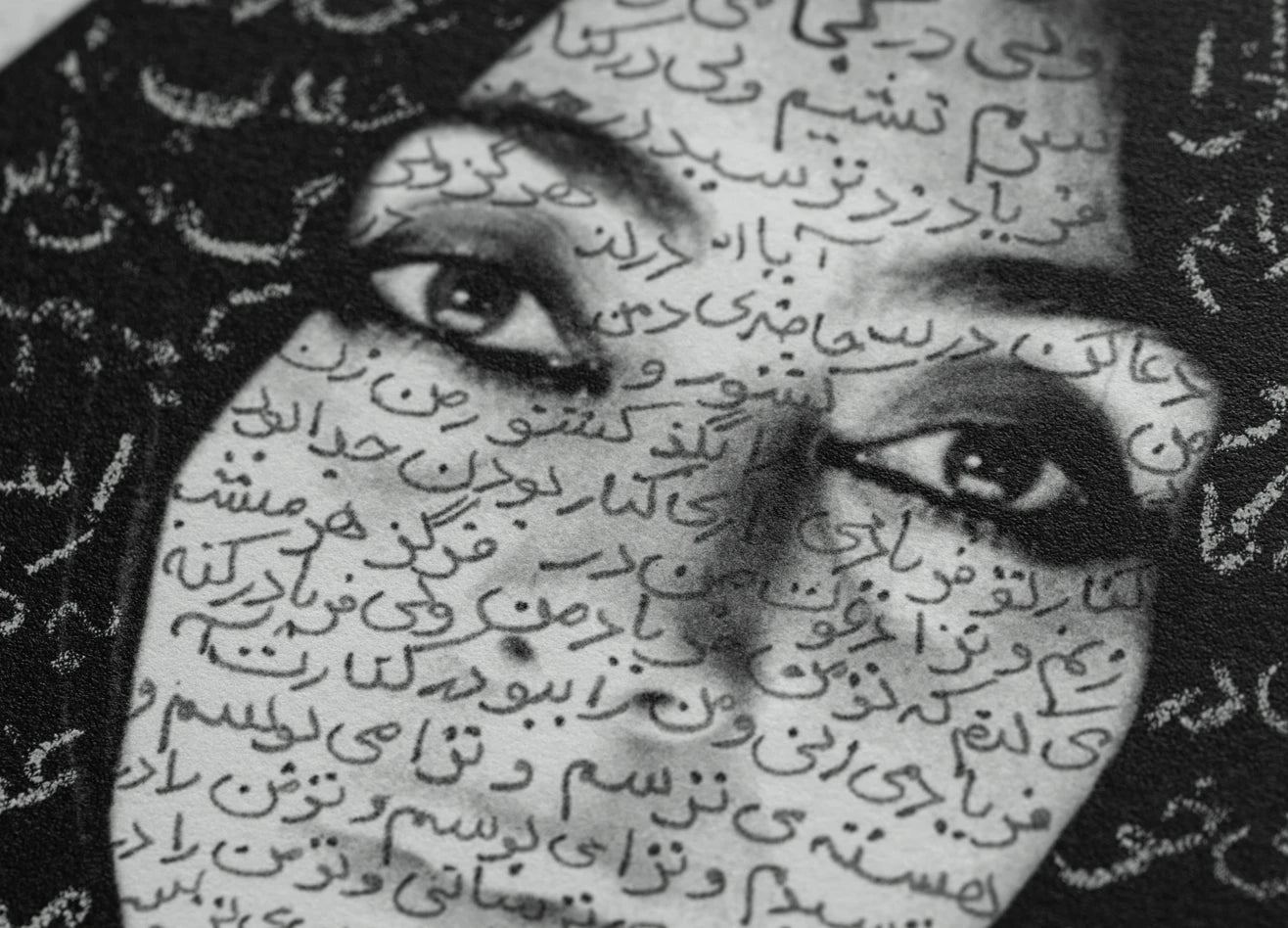
Shirin Neshat's photographic and video works explore the intersection of gender, religion, and political power within Iranian culture. Her artworks give visibility to the conditions under which women's bodies and voices are controlled — and to the persistence of female presence within those conditions.

Cindy Sherman – Untitled 103
Material, Labor, and Artistic Hierarchies
Feminist Art challenged not only subject matter but the hierarchies that determined which materials and methods were considered legitimate. By foregrounding craft, repetition, labor, and everyday materials, artists questioned the assumptions through which artistic value had been constructed — and exposed the gendered nature of those assumptions.
Rosemarie Trockel exemplifies this approach. Her machine-knitted works occupy the threshold between fine art and craft, subverting the distinction through precision and conceptual intent. By working with a medium associated with domestic female labor, Trockel forced the art world to reckon with the ideological frameworks embedded in its own categories.
This emphasis on process over spectacle, and on labor that had historically been rendered invisible, extended the scope of what art could be made from — and who could make it.

Shirin Neshat – Unveiling Series #2
Feminist Art Today: Intersectionality and Expanded Horizons
Contemporary Feminist Art has expanded far beyond its early focus on gender to address race, sexuality, class, disability, and global perspectives. The recognition that gender cannot be understood in isolation from other structures of power has fundamentally reshaped the field.
Kara Walker's silhouette artworks address the interlocking legacies of slavery, racism, and gender violence in American history. Her practice demonstrates that Feminist critique is inseparable from the critique of racial power — that visibility and invisibility are determined by multiple, overlapping systems of exclusion.
Zanele Muholi's photographic and video artworks document the lives of Black LGBTQ+ individuals in South Africa, insisting on visibility as both an ethical and political act. Their work expands Feminist practice into global contexts and into experiences that earlier Feminist movements often failed to include.
Rather than a closed historical movement, Feminist Art remains an evolving field of critical inquiry — shaped by new social contexts and continuing to ask the same foundational questions: who is represented, and on whose terms.

Barbara Kruger – I Shop Therefore I Am
Feminist Art and Contemporary Collecting
Feminist Art occupies a central position within major museum collections, biennials, and institutional programs devoted to postwar and contemporary practice. The reappraisal of women artists across the twentieth century has brought significant critical and market recognition to artworks that were once marginalised or overlooked.
Editioned artworks — prints, photographs, and multiples — have played a particular role in this reappraisal, enabling artworks by influential Feminist artists to reach broader audiences and enter private collections at accessible price points.
Collecting Feminist Art is not only an aesthetic decision. It is a contribution to the ongoing process of making visible what was excluded — and to the expanded understanding of art history that Feminist practice made possible.
Selected artworks can be explored in our Women Artists collection →
Your body is a battleground.
Selected questions on this topic, its key figures, and its editions.
Feminist Art: Body, Language, and the Politics of Visibility: Key Questions


