







Dan Flavin (1933–1996, New York, United States) was an American artist whose work fundamentally redefined sculpture through the use of commercially available fluorescent light. From the early 1960s onward, Flavin worked almost exclusively with industrial light fixtures, transforming architectural space through color, illumination, and serial structure.
Associated with Minimalism, Flavin rejected traditional sculptural materials in favor of standardized components. His work is held in major public collections and remains central to discussions around perception, materiality, and the expanded definition of sculpture.
Artistic Practice
Dan Flavin’s artistic practice is defined by the systematic arrangement of fluorescent light fixtures. By restricting his materials to commercially produced tubes and fixtures, Flavin emphasized repetition, structure, and spatial interaction over expressive gesture.
His works are conceived as installations rather than discrete objects. Each configuration responds directly to the architectural conditions of the exhibition space, incorporating walls, corners, corridors, and ceilings as active elements of the work.
The reliance on predefined systems aligns Flavin’s practice with conceptual and minimalist strategies, while the perceptual variability of light introduces continual change within fixed structures.
Key Themes and Motifs
Central to Flavin’s work are themes of seriality, repetition, and the relationship between object and environment. The repeated use of standardized forms resists notions of originality tied to the artist’s hand.
Color operates as both material and spatial agent. Light interacts with surrounding surfaces, producing shifting chromatic effects that alter the viewer’s perception of space.
Many works are accompanied by dedication titles, referencing artists, patrons, or historical figures. These titles introduce a subtle conceptual and relational dimension within otherwise austere formal systems.
Historical and Cultural Context
Flavin’s work emerged in the early 1960s alongside broader developments in Minimalism and postwar American art. His rejection of traditional sculptural media aligned with contemporaries who sought to eliminate personal expression and emphasize objective form.
The use of industrial materials reflected conditions of mass production and standardization characteristic of the period. By adopting fluorescent light, Flavin blurred distinctions between art object and manufactured product.
His work contributed to a redefinition of sculpture as an experience shaped by space, perception, and context rather than by objecthood alone.
Installation and Spatial Experience
Installation is fundamental to Flavin’s work. Each piece is designed in relation to its architectural setting, making perception dependent on movement, proximity, and duration.
Light dissolves conventional boundaries between object and environment, enveloping the viewer and transforming spatial awareness. No single vantage point defines the work, reinforcing its experiential nature.
This emphasis on embodied perception situates Flavin’s practice within a lineage of artists concerned with phenomenology and the viewer’s physical relationship to art.
Editions and Works on Paper
In addition to light installations, Flavin produced drawings and editioned works that document and extend his practice. These works often function as diagrams or proposals, outlining spatial arrangements and structural logic.
Editions emphasize planning, measurement, and serial order rather than visual representation. They provide insight into the conceptual framework underlying the installations.
Within the broader context of his work, works on paper underscore the primacy of system and idea over physical permanence.
Market and Circulation Context
Dan Flavin’s work circulates within a firmly established institutional and market framework. His sustained presence in museum collections and major exhibitions has contributed to the long-term recognition of his practice.
While large-scale installations are often site-specific, drawings and editioned works have played a role in extending the circulation of his ideas across public and private collections.
Within the contemporary art ecosystem, Flavin’s work is regarded as foundational to the development of installation and light-based practices.
Institutional Exhibitions and Collections
Flavin’s work has been exhibited extensively in museums and institutions worldwide, including major retrospective presentations that foreground the architectural and experiential dimensions of his practice.
Critical reception has focused on his contribution to Minimalism, his expansion of sculptural language, and his lasting influence on subsequent generations of artists.
Position within Contemporary Art
Within contemporary art history, Dan Flavin occupies a pivotal position as an artist who expanded sculpture beyond objecthood into spatial experience. His disciplined use of industrial materials established a model for working within strict formal limitations.
By transforming ordinary light fixtures into immersive environments, Flavin’s practice continues to inform artistic approaches to space, perception, and material economy.
Editorial Note
This editorial page provides a structured overview of Dan Flavin’s artistic practice, thematic concerns, institutional context, and market circulation, with particular attention to his use of light as sculptural material.
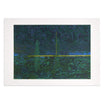
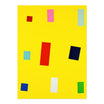
Selected works related to Dan Flavin are available through our collection.

The Art of Printmaking
From the precise lines of woodcuts to the velvety depth of lithographs. Discover a curated selection of editioned works on paper that celebrate the unique texture and heritage of traditional print media.
The Photographic Image
Explore contemporary photography through the lens of precision and scale. Our collection features exceptional photo editions that investigate the boundaries of representation and spatial order.
The Sculptural Multiple
Art beyond the pedestal. Discover three-dimensional objects designed to circulate ideas in space. These works bridge the gap between sculpture and the everyday, making radical art accessible.


