




Art Movement Insight
The Shock of the Familiar
What made Pop Art genuinely radical was not its subject matter but its proposition. The movement did not claim that soup cans and comic strips were beautiful in a traditional sense, or that celebrity culture deserved celebration. It claimed something more unsettling: that these images were never neutral. That the Coca-Cola bottle, the detergent box, the movie star's face — all of it was already structured by desire, repetition, and ideology. Pop Art did not create that structure. It made it visible.
This is why the work still carries a charge. Richard Hamilton's collages, Warhol's serial portraits, Roy Lichtenstein's monumental comic panels, Claes Oldenburg's soft sculptures — none of it simply depicts modern life. It exposes how modern life is shaped by images, and how thoroughly those images had already colonised the space where meaning used to be made.
The movement's genius was to return the familiar to its audience in slightly altered form — displaced from its commercial context, placed within the space of art — so that what had seemed ordinary suddenly appeared strange. Not because it had changed. Because its cultural machinery had been exposed.

Britain and America: Two Different Distances
Pop Art developed almost simultaneously on both sides of the Atlantic, but it arrived from different positions and carried different temperatures.
In Britain, artists such as Richard Hamilton and Eduardo Paolozzi encountered American consumer culture from a distance — as something aspirational, imported, and slightly overwhelming. Their work engaged with it through collage and critical juxtaposition, reflecting on the seductive power of a visual world that was not entirely their own.
In the United States, detachment was harder to maintain. By the early 1960s, American Pop artists were working from inside a media-saturated society rather than observing it from afar. Warhol embraced mechanical repetition and celebrity iconography with an affect so flat it became its own form of critique — or celebration, depending on where you stood. Lichtenstein translated comic-book language into monumental painting. Rosenquist brought advertising montage to an almost architectural scale. Oldenburg remade everyday objects in vinyl and canvas until they became absurd.
What united all of them was a shared refusal: the refusal to pretend that contemporary life could be separated from the visual systems of consumption and media. Pop Art did not treat this as contamination. It treated it as reality.

Repetition, Reproduction, and the New Image Economy
If Pop Art has a single formal strategy, it is repetition. Images appear not once but again and again, often with minimal variation, mirroring the logic of industrial production and mass circulation.
Andy Warhol's serial Marilyns and repeated Brillo boxes are the clearest examples. What matters is not only the subject but the fact of repetition itself. Each image appears identical, yet small shifts in colour, registration, or emphasis make sameness feel unstable — uncanny, even. The image you thought you recognised starts to look back at you differently.
This shift had consequences that extended far beyond Pop Art itself. The artwork was no longer understood solely as a singular object expressing an inner vision. It could now operate like a reproduced image within a larger economy of circulation. Pop Art changed not only what art looked like, but what it meant for an image to exist in public life.

Image, Language, and Appropriation
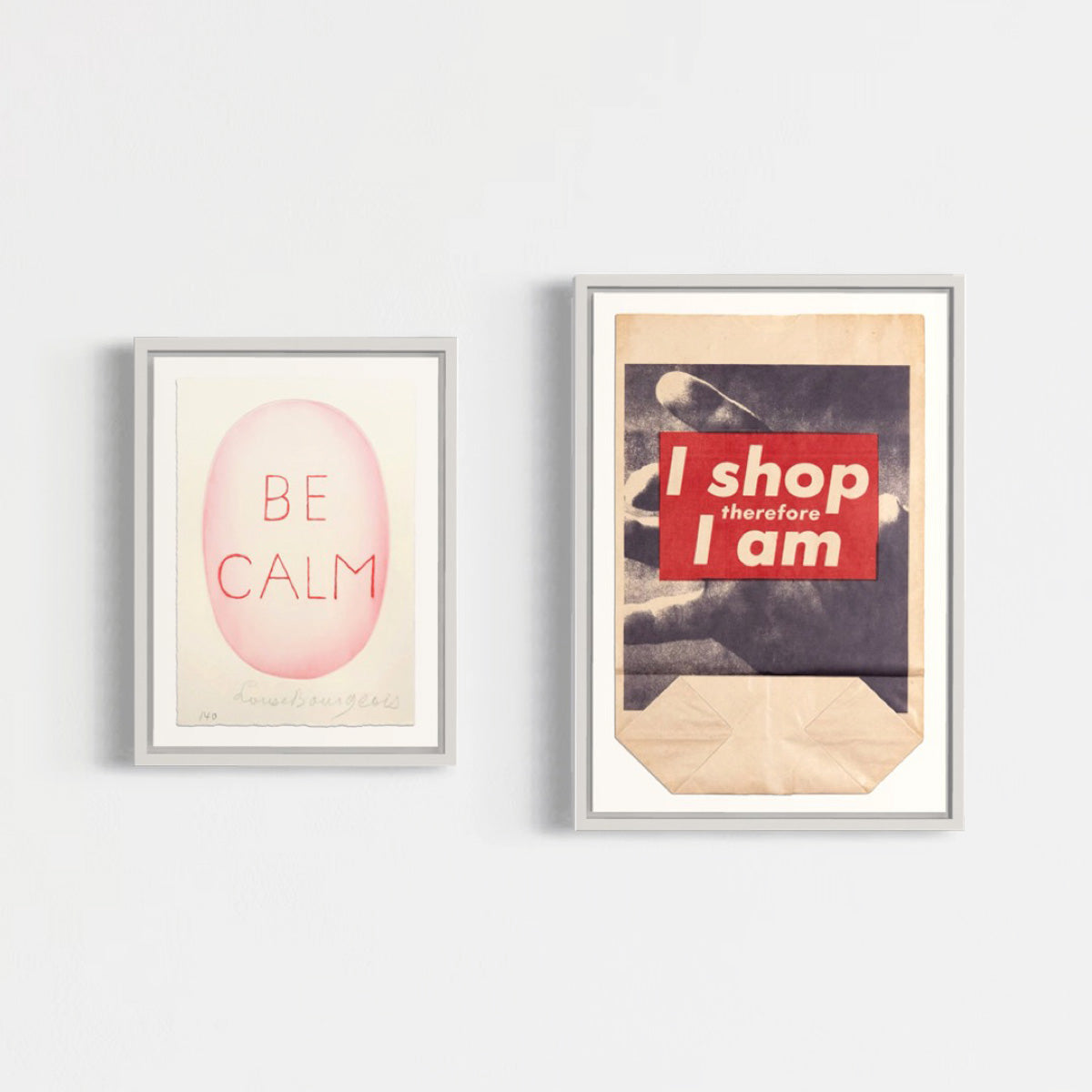
Pop Art is most readily associated with consumer objects and celebrity imagery, but its deeper achievement was structural: it exposed how images already functioned within systems of desire, persuasion, and value. Appropriation — taking existing visual material and displacing it into a new context — was not simply borrowing. It was a method of making those systems legible.
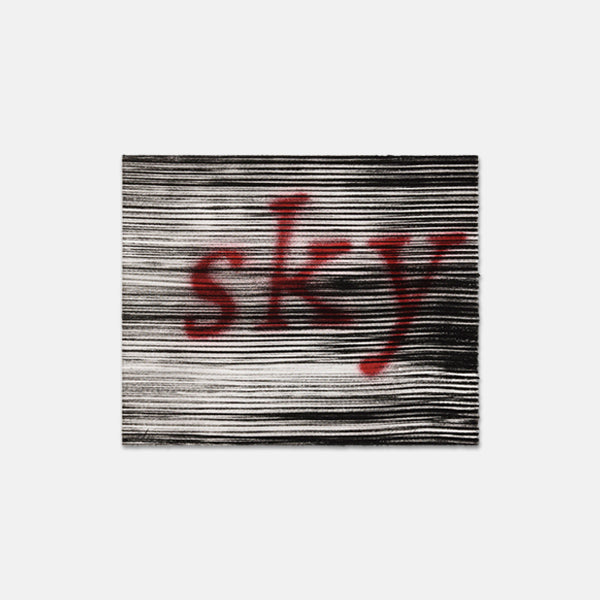
Ed Ruscha occupies a pivotal position in this story. His use of words, signage, gas stations, and the visual culture of Los Angeles places him at the threshold between Pop Art and conceptual art. In Ruscha's work, language does not accompany the image. It becomes the image. That shift helped open the territory that text-based art would later occupy, and showed how Pop Art's engagement with visual culture could lead toward something more structurally analytical without losing its sensory presence.
What Pop Art opened was not just a new iconography. It was a new understanding of visual culture as something constructed, circulated, and endlessly re-authored.

Painting After Expression
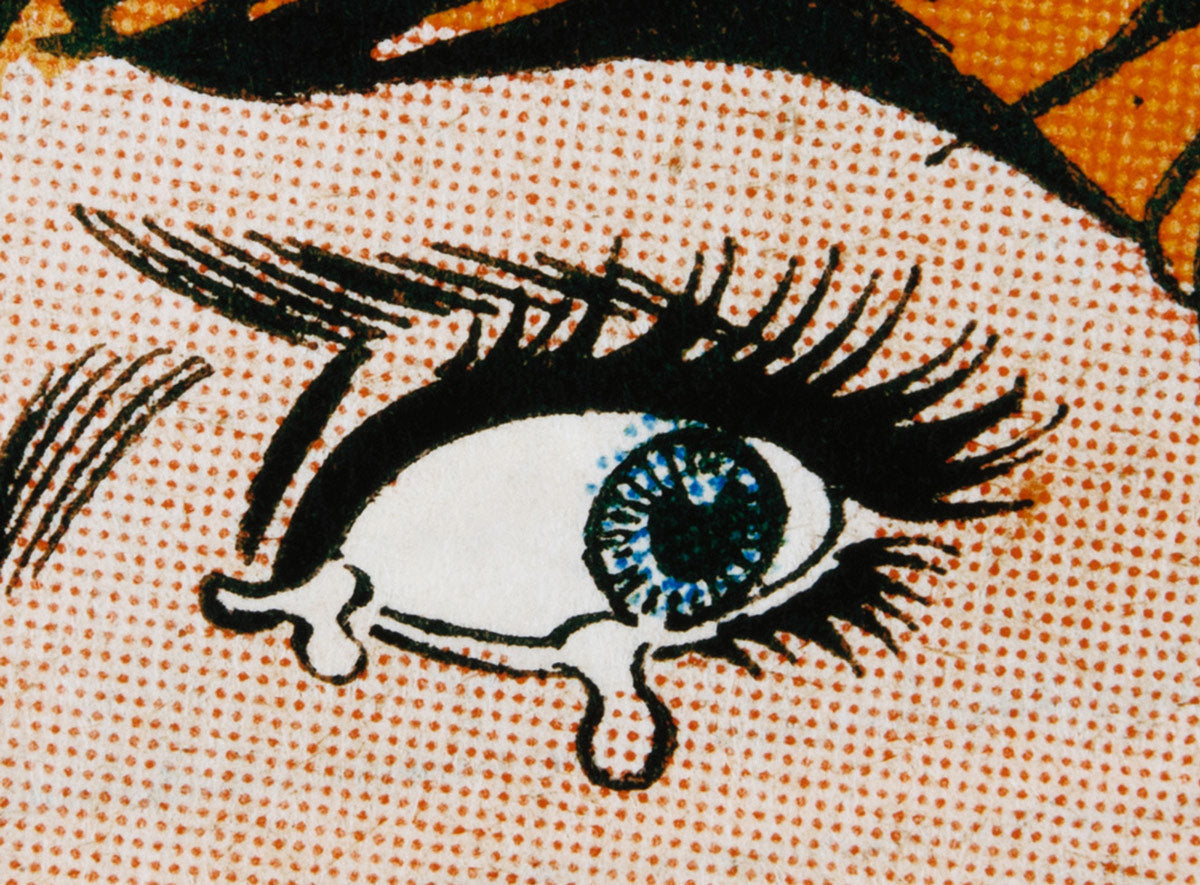
Pop Art's emergence marked a turning point in painting. Where Abstract Expressionism had insisted on gesture, inner intensity, and painterly depth, Pop turned toward flatness, clarity, and a frank acknowledgment of painting's relationship to photography, printing, and mechanical reproduction.
This was not a retreat. It was a different kind of precision. Flat colour, crisp edges, enlarged forms, and commercial visual rhythms allowed artists to examine the surface of modern life with a sharpness that expressive brushwork could not achieve. Painting remained central, but it was no longer treated as a singular or heroic medium. It became one form among others within a larger field of images — and that loosening of authority proved foundational to the conceptual practices that followed.

Leading Contemporary Pop Artists
Pop Art did not end in the 1960s. Its strategies — repetition, appropriation, branding, and the transformation of cultural symbols — continue to drive some of the most significant practices in contemporary art today.
Takashi Murakami Murakami is the artist who most completely extended Pop Art into a global, post-digital field. Through his Superflat theory, he merges fine art, consumer design, anime, and luxury branding into a practice that operates simultaneously as cultural commentary and commercial phenomenon. He showed that Pop's engagement with image culture was not an American story. It was a universal one.
Damien Hirst Hirst's spot paintings, pharmaceutical motifs, and highly recognisable serial imagery operate within a culture shaped by commodification and reproduction. His work reflects Pop Art's logic of repetition and branding while remaining tied to broader conceptual concerns around mortality, value, and spectacle.
Jeff Koons Koons intensifies Pop Art's relationship to consumer culture by transforming banal and kitsch objects into highly polished, industrially produced sculptures. His surfaces are seductive and impersonal at once — examining desire and value through an aesthetic that makes discomfort feel like pleasure.
Tom Sachs The strongest case for inclusion on purely contemporary grounds. His bricolage approach to consumer culture, brand worship, and American mythology is more intellectually alive right now than Shrigley or Hirst.
KAWS Working across collectible culture, sculpture, painting, and global merchandising, KAWS reflects the full contemporary extension of Pop Art. His practice is inseparable from the circuits of mass production and image repetition that Pop first made visible — and he has extended those circuits into territory Warhol could only have imagined.

Pop Art and Contemporary Practice
The continued relevance of Pop Art lies in the fact that the world it first diagnosed has only intensified. We now inhabit a culture more saturated by images, branding, celebrity, and digital circulation than anything the first Pop artists encountered.
Contemporary artists continue to draw on Pop Art's methods because its central questions remain unresolved. How do images shape attention? How is value attached to repetition? What happens when art and commerce no longer appear fully separate? How does an image circulate differently once it becomes iconic?
Pop Art was the first movement to ask those questions with full seriousness. It has not yet received a final answer.

Pop Art's Legacy
Pop Art transformed the terms of modern art by collapsing distinctions that had once seemed secure: high and low, original and reproduced, art and commodity, seriousness and banality. But its most lasting contribution was not aesthetic. It was analytical.
It showed that images do not simply represent reality. They organise it. And in a culture more saturated by images than anything the first Pop artists encountered, that insight has lost none of its force. If anything, it has become more urgent.
Selected works by artists associated with Pop Art are available in our collection.
Making money is art and working is art and good business is the best art.
Selected questions on the artist’s practice, major artworks, and editions.
Pop Art: The Art of Consumer Culture: Key Questions


