



Fred Sandback

Collect signed Fred Sandback prints and editions.
Known for sculptures made from taut coloured yarn that define planes without mass, Fred Sandback treated sculpture as drawing in space — reducing form to line and transforming perception of volume and void. His practice represents one of the most rigorous investigations of Minimalism and spatial experience in postwar American art. These Fred Sandback prints and editions translate this approach to line, space, and perception into collectible form.
Available Prints & Editions
1 product
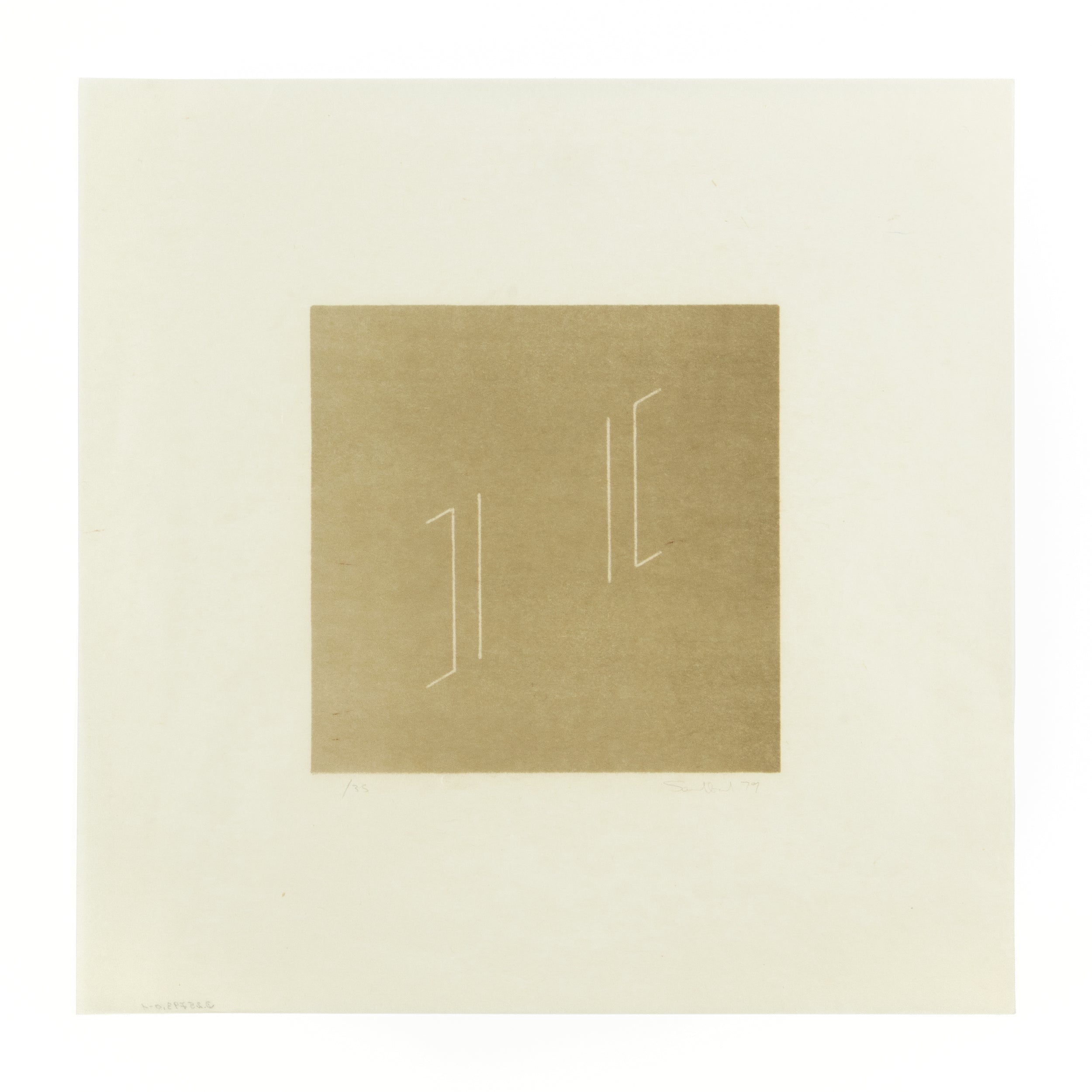
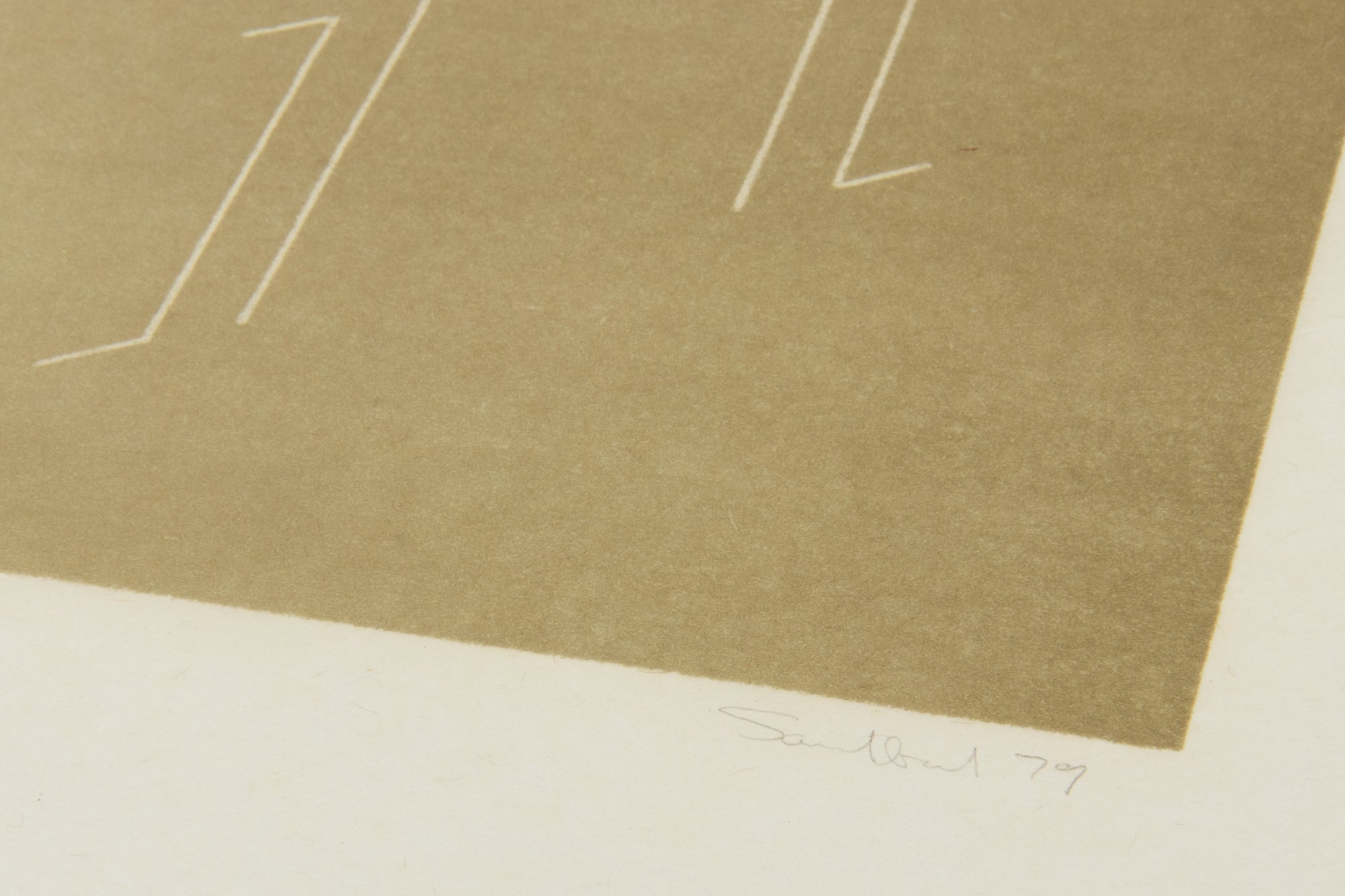

Fred Sandback (1943–2003) was an American sculptor and one of the most important figures in Minimalist art, celebrated for his radical approach to sculpture that redefined spatial perception through the use of simple materials. Working primarily with acrylic yarn, elastic cord, and metal wire, Sandback created linear sculptures that demarcated space without enclosing it, transforming architectural environments into fields of visual and phenomenological experience.
Sandback's artworks are characterized by their elegant simplicity and conceptual rigor. By stretching taut lines of yarn or wire across gallery spaces, he created sculptures that existed as much in the viewer's perception as in physical reality. These minimal interventions invited viewers to become aware of their own movement through space, the architecture surrounding them, and the act of seeing itself. His practice challenged traditional notions of sculpture as solid mass, proposing instead that sculpture could be defined by implied planes and volumes.
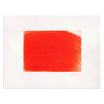
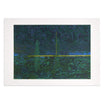
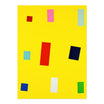
Printmaking played an important role in Sandback’s practice. Fred Sandback prints and limited editions translate his spatial investigations into two-dimensional formats, using line drawings and geometric compositions to capture the essence of his three-dimensional installations. Many Fred Sandback prints reinterpret his minimalist line drawings and spatial diagrams, conveying the same sense of spatial awareness and precision that defines his sculptural works.
Throughout his career, Sandback remained committed to exploring the relationship between line, space, and perception. His artworks continue to influence contemporary sculpture and installation art, securing his legacy as one of the most significant Minimalist artists whose sculptures and prints redefined the possibilities of spatial art in the late 20th century.

Fred Sandback's exhibition history reflects his central position within Minimalist sculpture. He gained early recognition through participation in major group exhibitions in the late 1960s and early 1970s, establishing his reputation alongside other pioneering Minimalist artists. His artworks were featured in documenta 5 in Kassel (1972) and documenta 6 (1977), affirming his international significance.
Major retrospectives have been staged at leading institutions worldwide, including the Dia Art Foundation in New York, which maintains a permanent installation of his work. Additional landmark exhibitions include shows at the Kunstmuseum Winterthur in Switzerland, the Museum of Contemporary Art in Los Angeles, and the Staatliche Kunsthalle Baden-Baden in Germany, each affirming his influence on contemporary sculpture and spatial practice.
More recent presentations include Fred Sandback: Sculpture 1966–1986 at the Kunstmuseum Liechtenstein (2005) and a major retrospective at the Chinati Foundation in Marfa, Texas. His artworks—including Fred Sandback prints and limited editions—are held in major international collections, including the Museum of Modern Art in New York, the Solomon R. Guggenheim Museum, and the Tate Modern in London.
These exhibitions and institutional holdings confirm Sandback's enduring legacy as an artist who redefined sculpture through the dematerialization of form, creating artworks that exist at the intersection of line, space, and perception.
Fred Sandback (1943–2003) was an American sculptor and one of the most important figures in Minimalist art, celebrated for his radical approach to sculpture that redefined spatial perception through the use of simple materials. Working primarily with acrylic yarn, elastic cord, and metal wire, Sandback created linear sculptures that demarcated space without enclosing it, transforming architectural environments into fields of visual and phenomenological experience.
Sandback's artworks are characterized by their elegant simplicity and conceptual rigor. By stretching taut lines of yarn or wire across gallery spaces, he created sculptures that existed as much in the viewer's perception as in physical reality. These minimal interventions invited viewers to become aware of their own movement through space, the architecture surrounding them, and the act of seeing itself. His practice challenged traditional notions of sculpture as solid mass, proposing instead that sculpture could be defined by implied planes and volumes.
Printmaking played an important role in Sandback’s practice. Fred Sandback prints and limited editions translate his spatial investigations into two-dimensional formats, using line drawings and geometric compositions to capture the essence of his three-dimensional installations. Many Fred Sandback prints reinterpret his minimalist line drawings and spatial diagrams, conveying the same sense of spatial awareness and precision that defines his sculptural works.
Throughout his career, Sandback remained committed to exploring the relationship between line, space, and perception. His artworks continue to influence contemporary sculpture and installation art, securing his legacy as one of the most significant Minimalist artists whose sculptures and prints redefined the possibilities of spatial art in the late 20th century.
Fred Sandback's exhibition history reflects his central position within Minimalist sculpture. He gained early recognition through participation in major group exhibitions in the late 1960s and early 1970s, establishing his reputation alongside other pioneering Minimalist artists. His artworks were featured in documenta 5 in Kassel (1972) and documenta 6 (1977), affirming his international significance.
Major retrospectives have been staged at leading institutions worldwide, including the Dia Art Foundation in New York, which maintains a permanent installation of his work. Additional landmark exhibitions include shows at the Kunstmuseum Winterthur in Switzerland, the Museum of Contemporary Art in Los Angeles, and the Staatliche Kunsthalle Baden-Baden in Germany, each affirming his influence on contemporary sculpture and spatial practice.
More recent presentations include Fred Sandback: Sculpture 1966–1986 at the Kunstmuseum Liechtenstein (2005) and a major retrospective at the Chinati Foundation in Marfa, Texas. His artworks—including Fred Sandback prints and limited editions—are held in major international collections, including the Museum of Modern Art in New York, the Solomon R. Guggenheim Museum, and the Tate Modern in London.
These exhibitions and institutional holdings confirm Sandback's enduring legacy as an artist who redefined sculpture through the dematerialization of form, creating artworks that exist at the intersection of line, space, and perception.


Buy art online
Shop editions with transparent pricing, accurate condition reports, and fast dispatch. Built for international collectors — buying original art made simple and reliable.

Worldwide shipping
Every work ships fully insured and tracked, handled only by trusted international express carriers — DHL Express, FedEx, UPS — and typically dispatched within five days.

Professional packaging
Meticulous packing is our craft. Each artwork is packed in-house to archival standards — multi-layer construction built to ensure it arrives in mint condition, anywhere in the world.

Secure payment
Checkout is powered by Shopify Payments — the same encrypted, PCI-compliant infrastructure trusted by millions of merchants worldwide.