Ellsworth Kelly

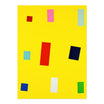
Ellsworth Kelly built an entire career on a radical act of subtraction — stripping away everything except shape, colour, and edge. A shadow on a stairwell, the curve of a leaf, the gap between two buildings: these were not motifs to depict but forms to extract, translated into something entirely self-sufficient. "I don't want to paint pictures that illustrate ideas," he said. "I want to create something that is itself an object." The prints and editions here hold that same discipline, at a different scale.
Browse signed Ellsworth Kelly prints and editions now.
Available Prints & Editions
3 products
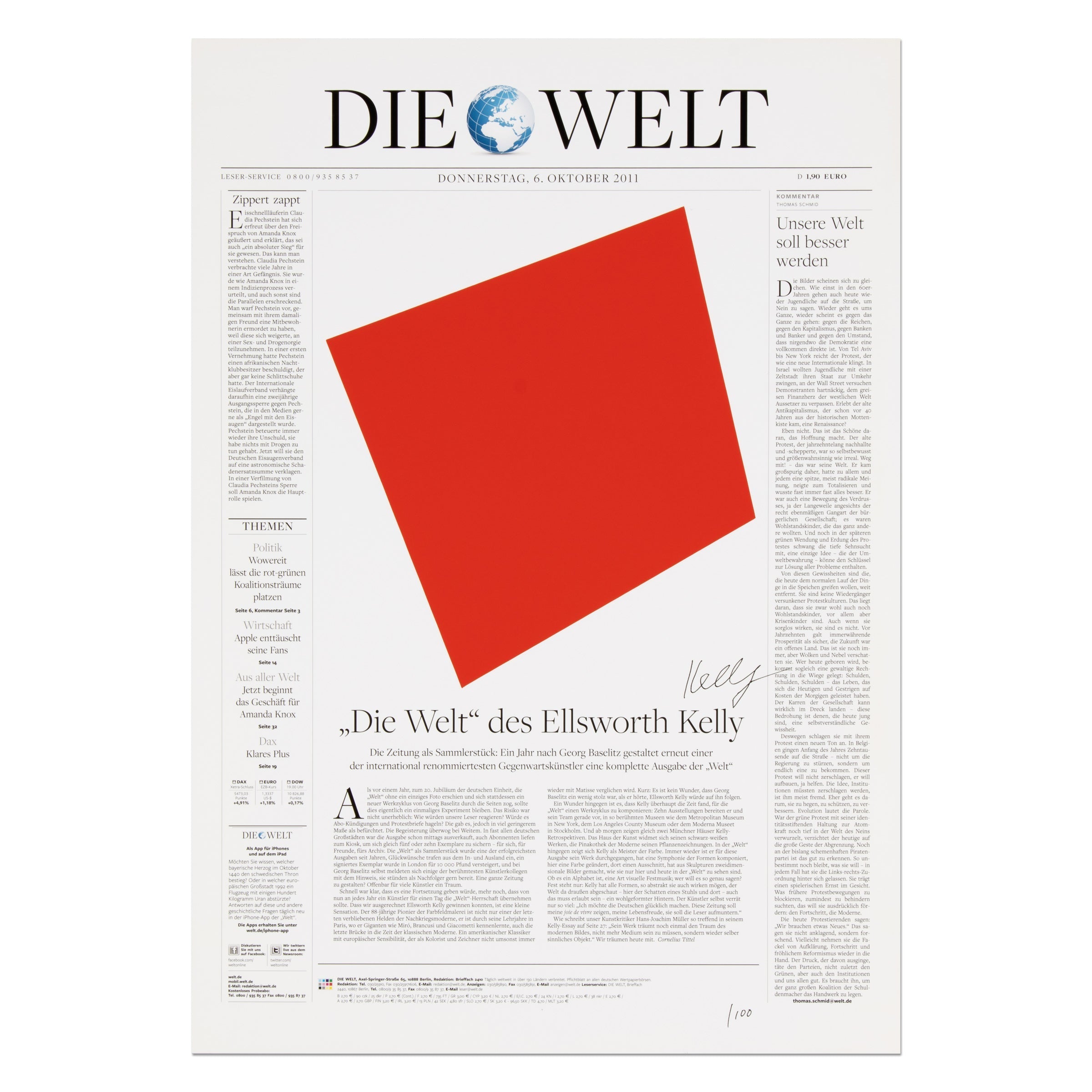
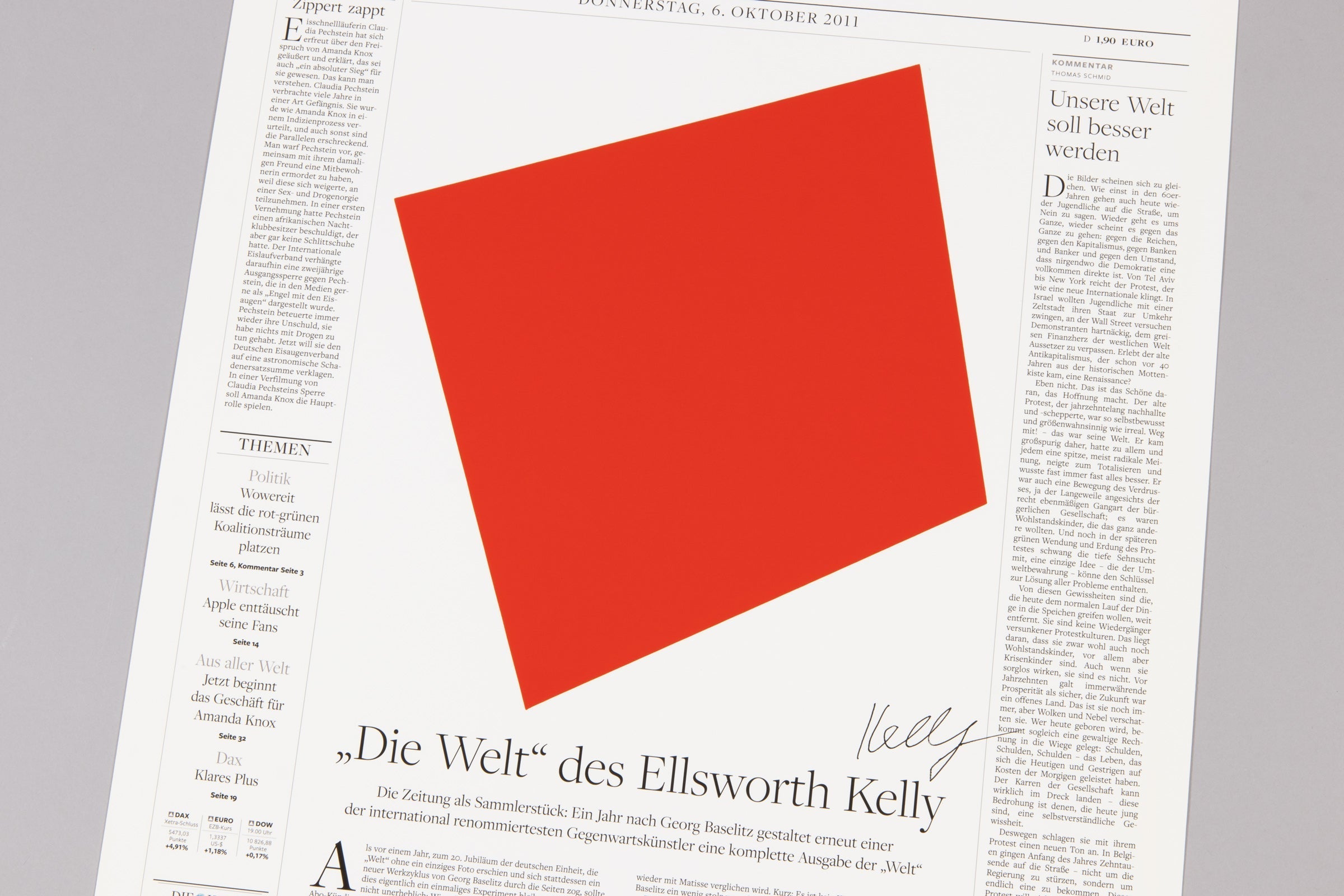
Ellsworth Kelly (1923–2015) served during the Second World War in the Ghost Army, a secret unit of soldiers and artists tasked with building deceptive camouflage and inflatable decoy tanks — an early, unlikely education in how shape and shadow could convince the eye of something untrue. He arrived in Paris in 1948 and spent six formative years there, immersing himself in Monet's late panels, Romanesque architecture, and the European avant-garde. But his most decisive influences were not theoretical. They were perceptual.
Kelly developed a method of pure looking: a shadow cast across a stairwell, the curve of a plant leaf, the negative space between architectural elements. He did not reproduce these fragments as motifs. He extracted their contours and translated them into autonomous forms, dissolving representation into structure. When he returned to the United States in the mid-1950s, this restraint stood in sharp contrast to the psychological drama of Abstract Expressionism then dominating American painting.
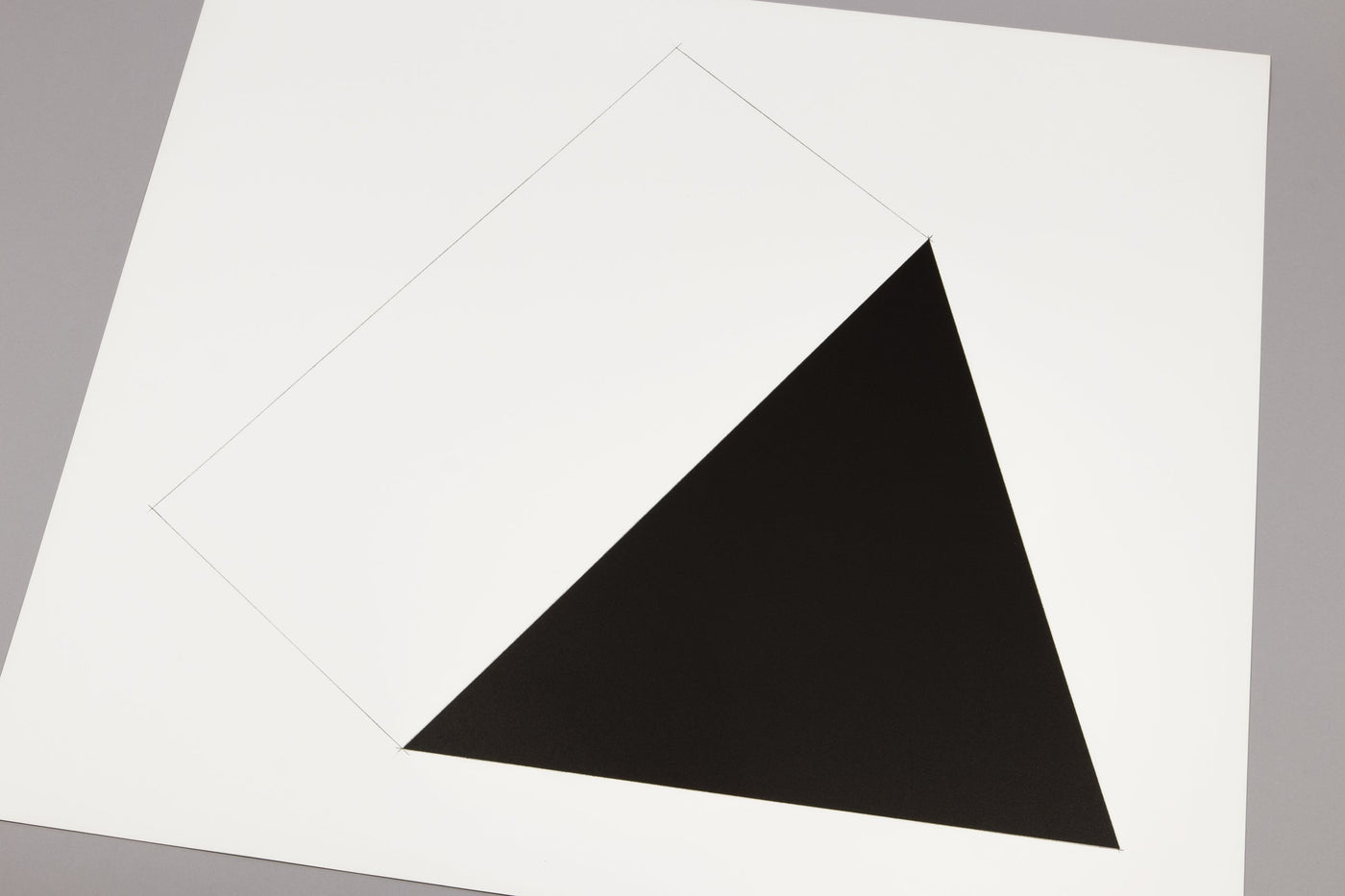
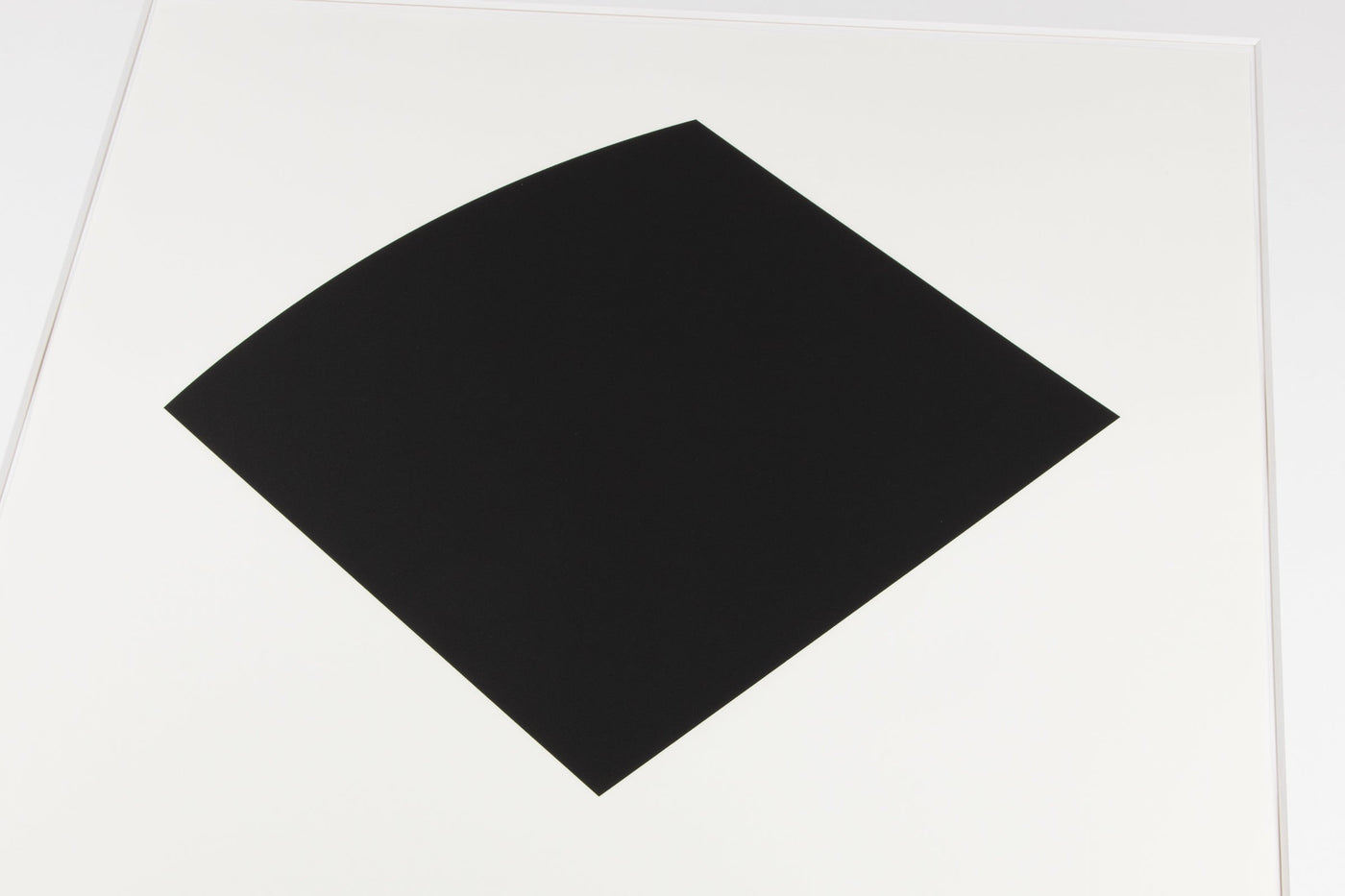
By the late 1950s, Kelly had introduced the shaped canvas — paintings whose outer edge follows the internal logic of the composition rather than the traditional rectangle. The artwork ceased to function as a window onto something and asserted itself instead as an object occupying real space, placing him at the intersection of geometric painting and sculpture. Colour, in his hands, was never symbolic or expressive — it operated as pure structure, defining shape and activating the relationship between forms through sustained, embodied looking.
Institutional recognition followed early and never let up. The Whitney made the first museum purchase of his work in 1957; Tate soon followed with the first UK acquisition of a Kelly painting. MoMA gave him his first retrospective in 1973, and the Guggenheim's 1996 survey travelled to Tate and Munich. Public commissions followed, including the Berlin Panels for the Bundestag and a memorial for the US Holocaust Memorial Museum. In 2023, New York's mayor declared May 31 "Ellsworth Kelly Day," marked jointly by MoMA, the Whitney, and the Met.

Colors for a Large Wall (1951), held at MoMA, is Kelly's earliest major statement: a grid of 64 panels in seemingly random colours, their arrangement determined not by compositional instinct but by chance, drawing directly on his Paris-era fascination with Jean Arp's aleatory methods. It announced, at the very start of his career, a lifelong suspicion of the artist's personal "taste" as the source of a painting's authority.
Red Blue Green (1963) exemplifies Kelly's hard-edge balance at its most exacting — a composition that consistently defies the eye's instinct to separate figure from ground, refusing to let any single colour settle into the role of "background."
Sculpture for a Large Wall (1957), Kelly's first sculpture and now installed in MoMA's atrium, comprises 104 anodised aluminium panels that tilt and catch light differently across the work's length — conceived originally for Philadelphia's Transportation Building.
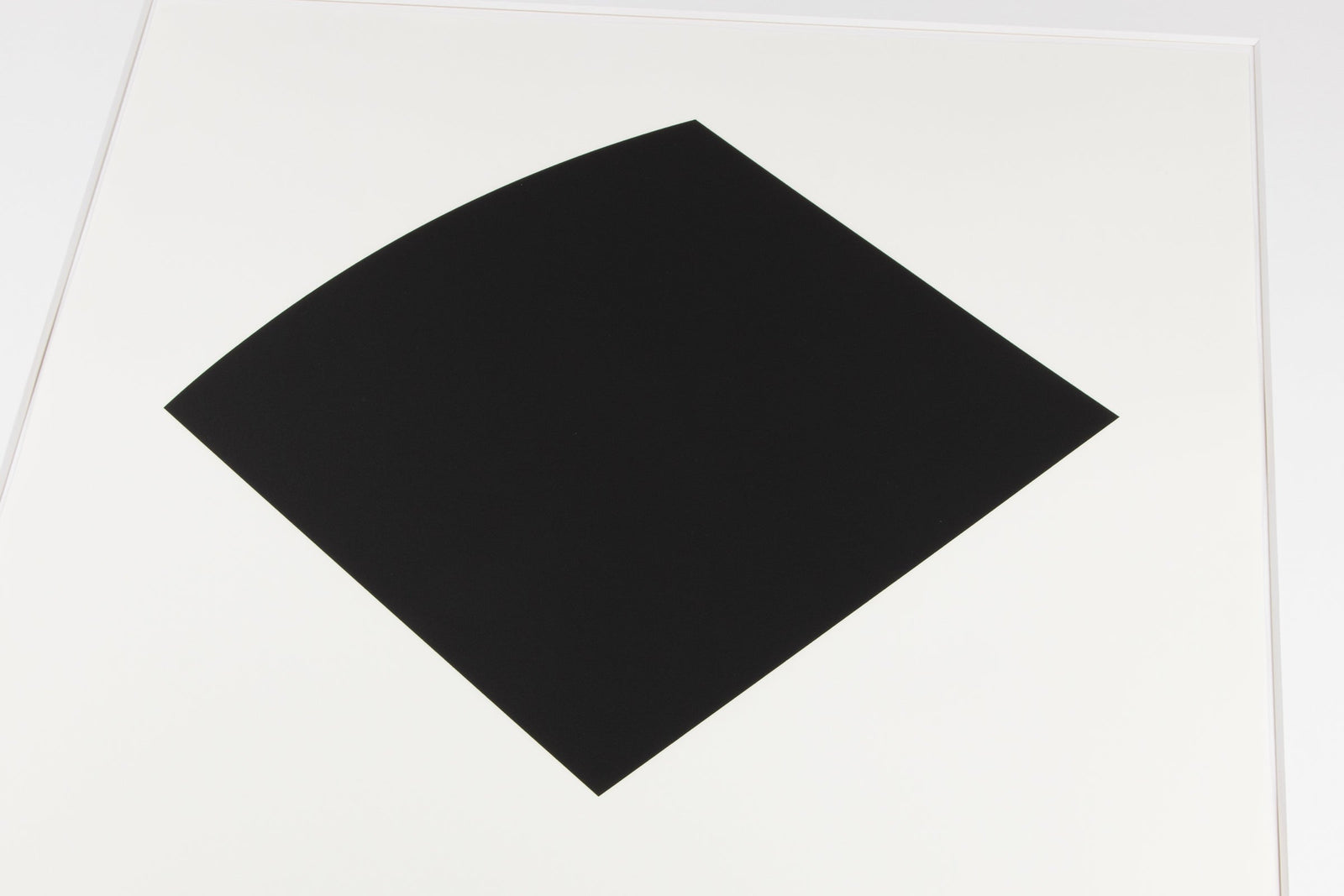
Red Curve VII (1982) stands as Kelly's auction record, selling for $9.8 million at Christie's New York in 2019 — a monumental red panel whose sweeping arc exemplifies his mature ambition: colour and shape fused so completely that the canvas becomes a coloured object rather than a support for an image.

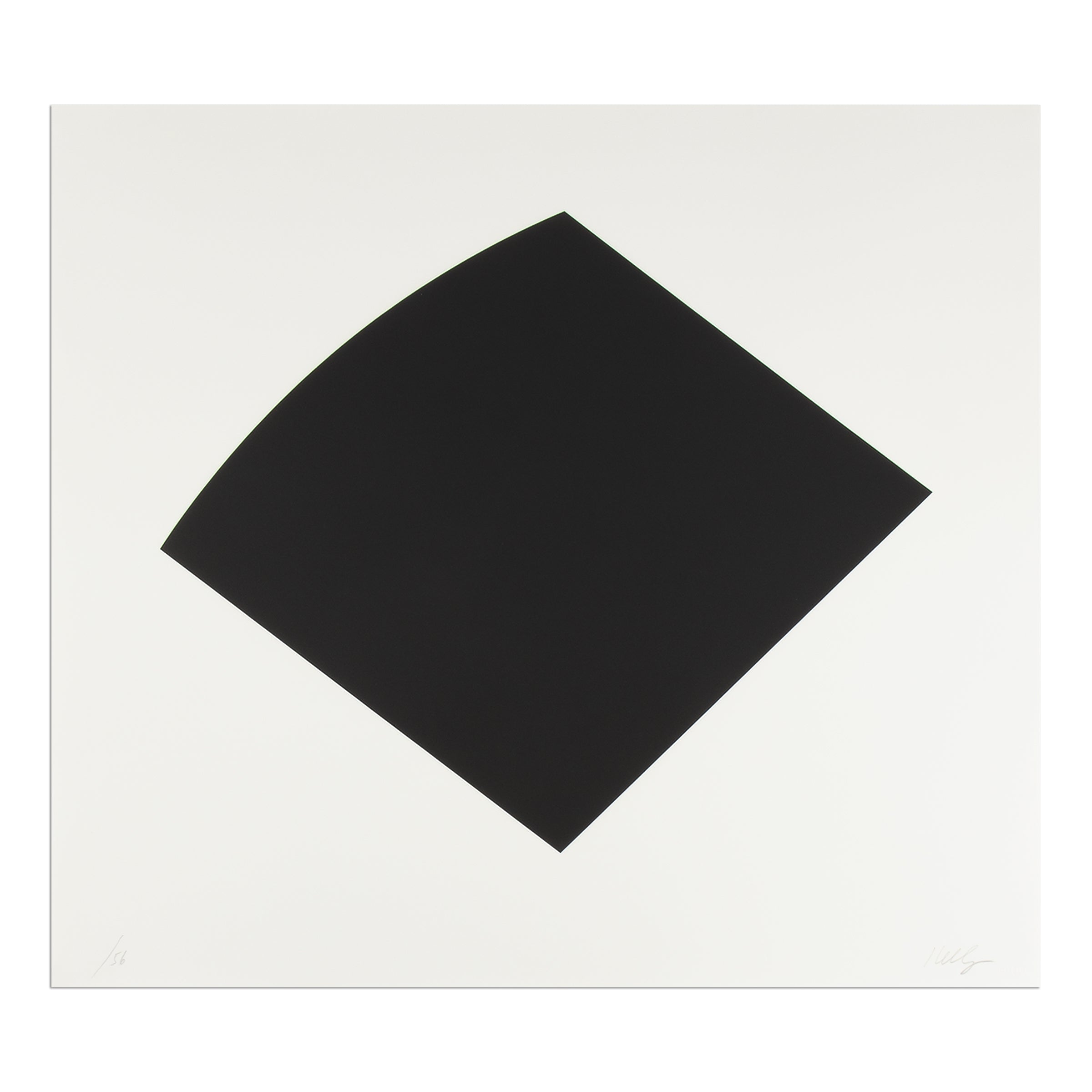
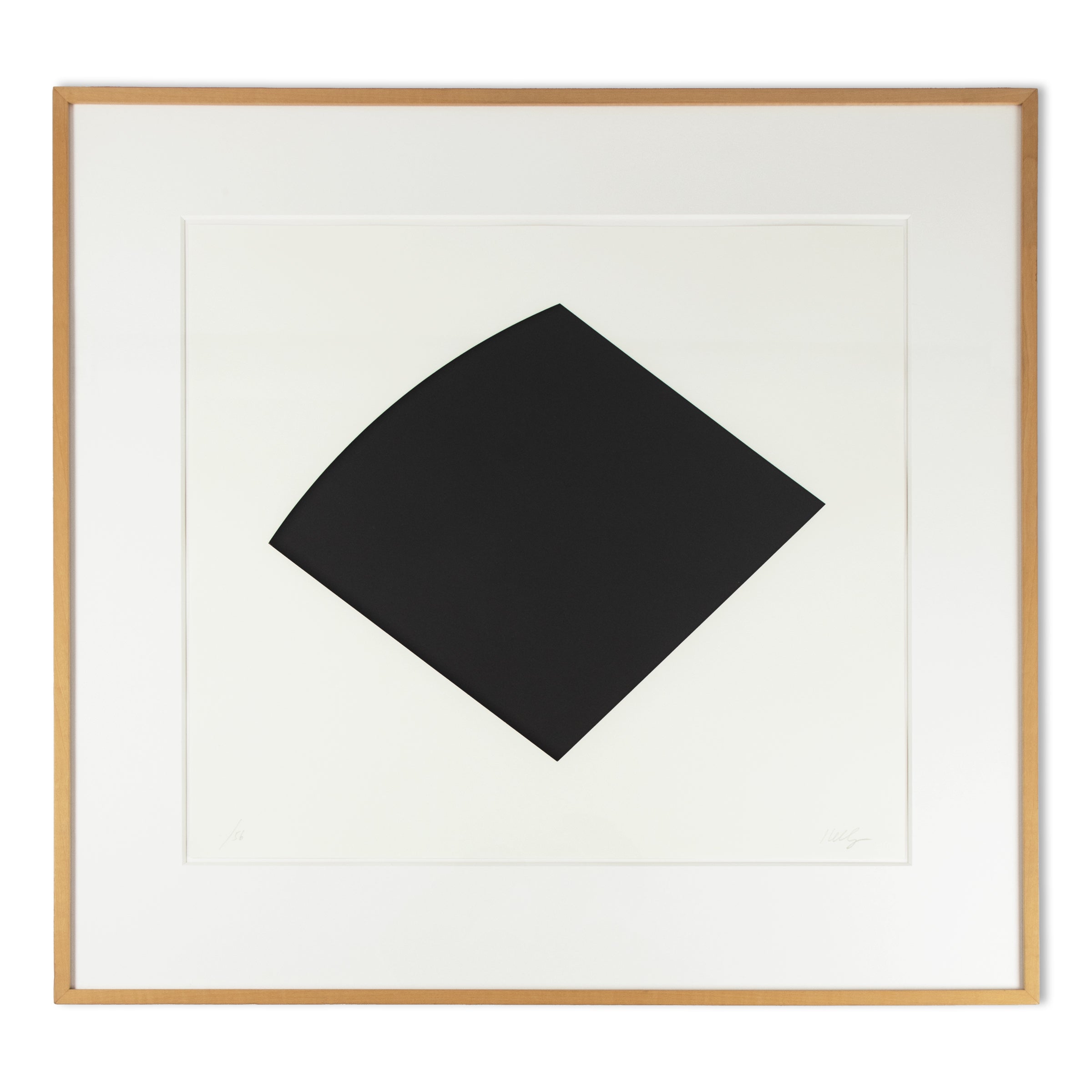
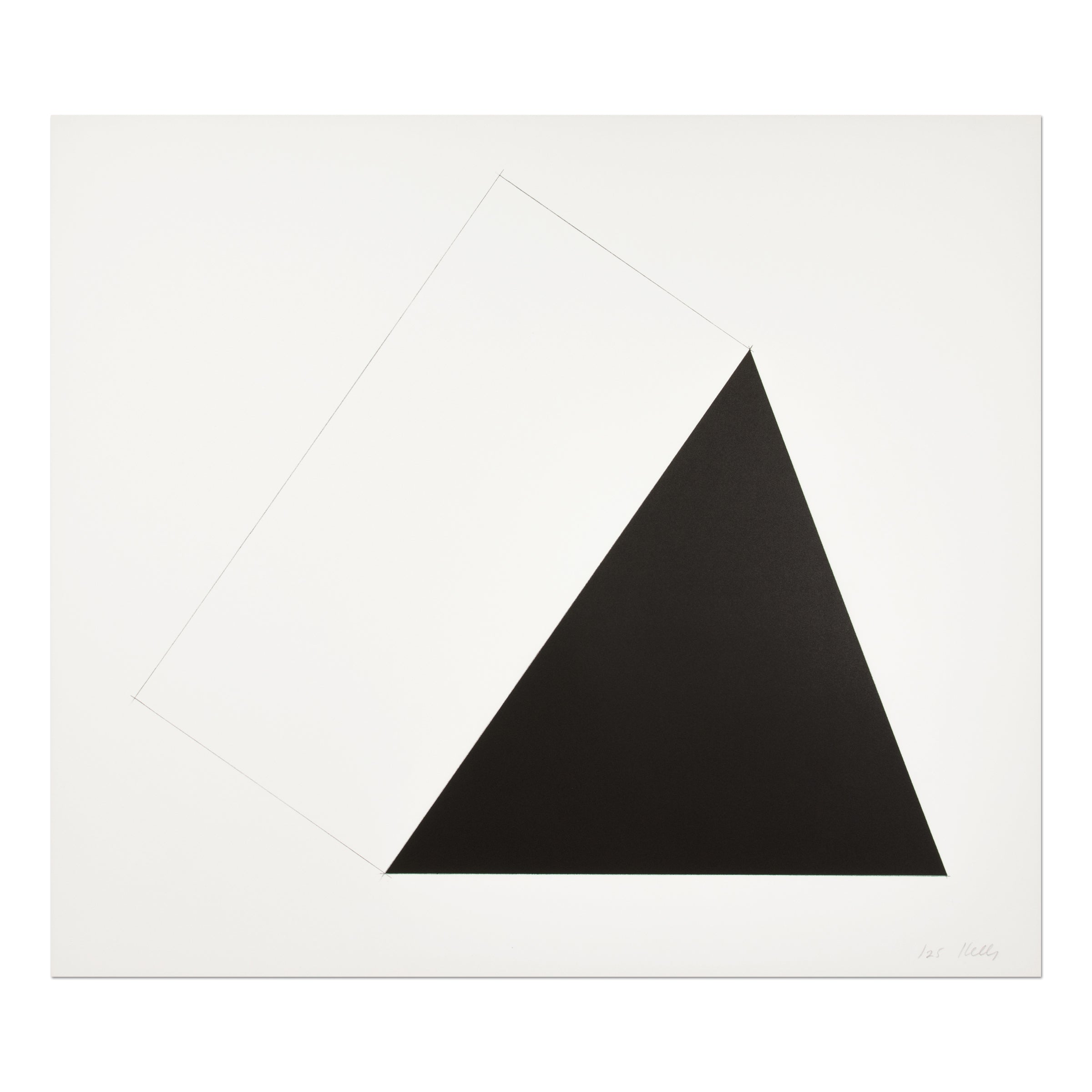
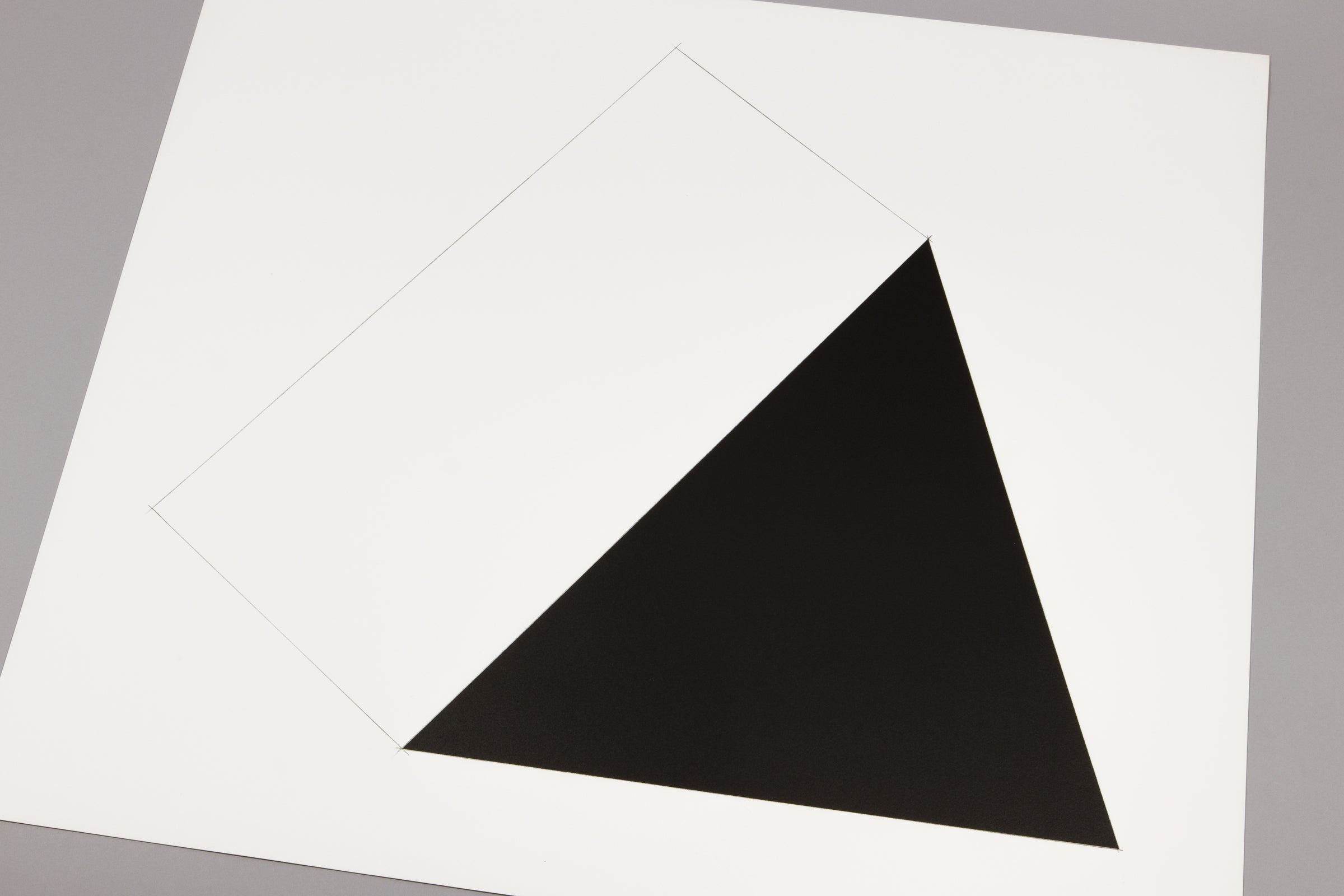
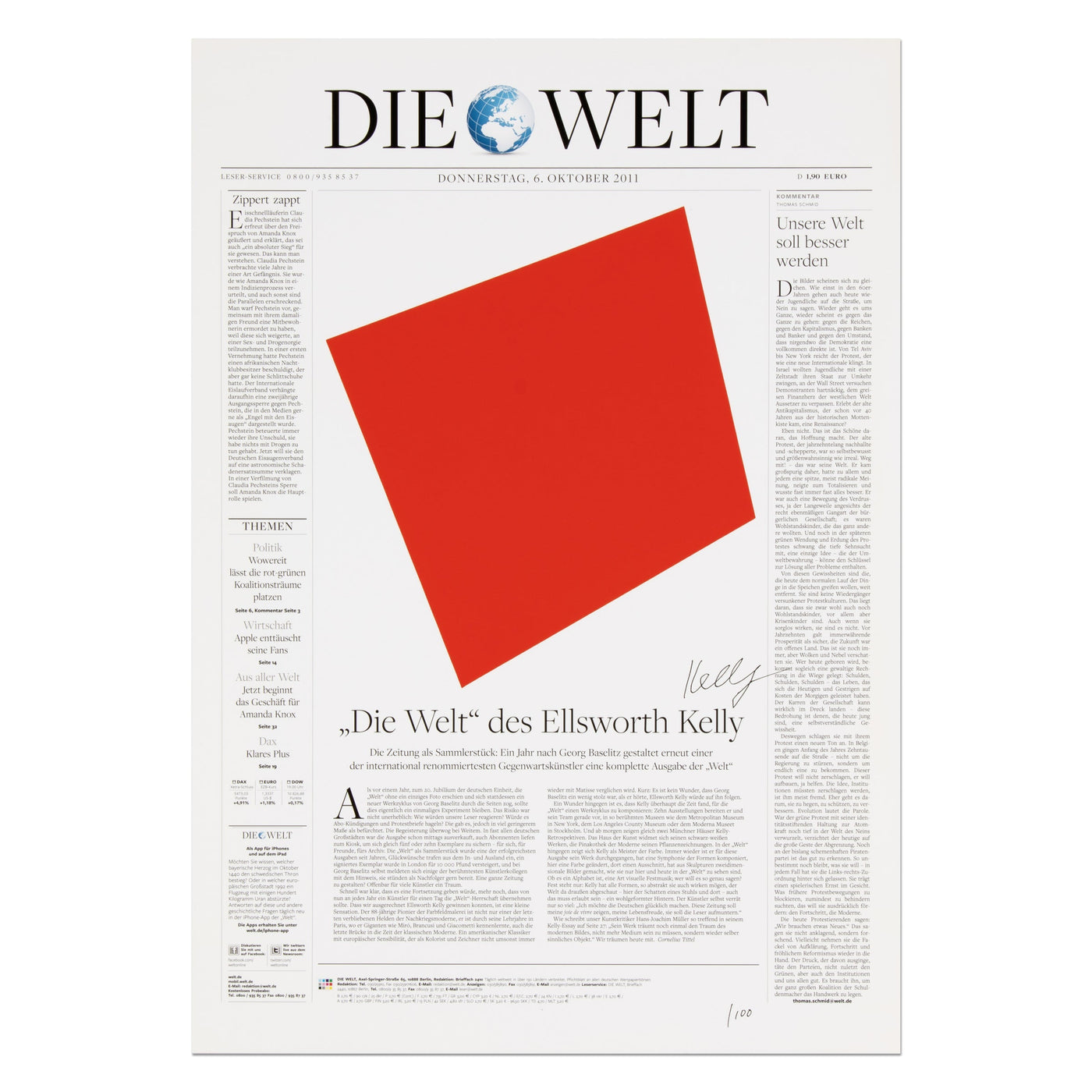
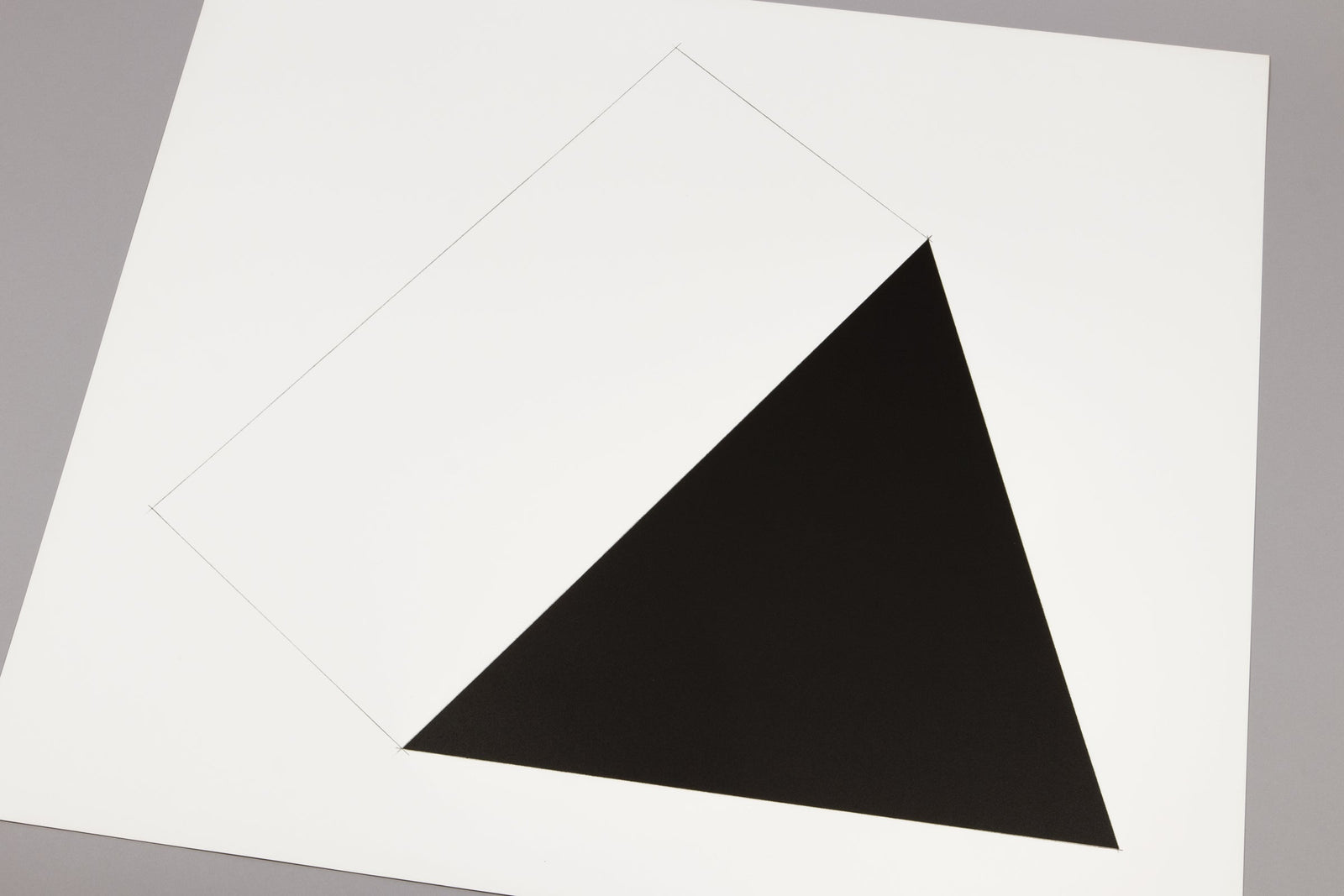
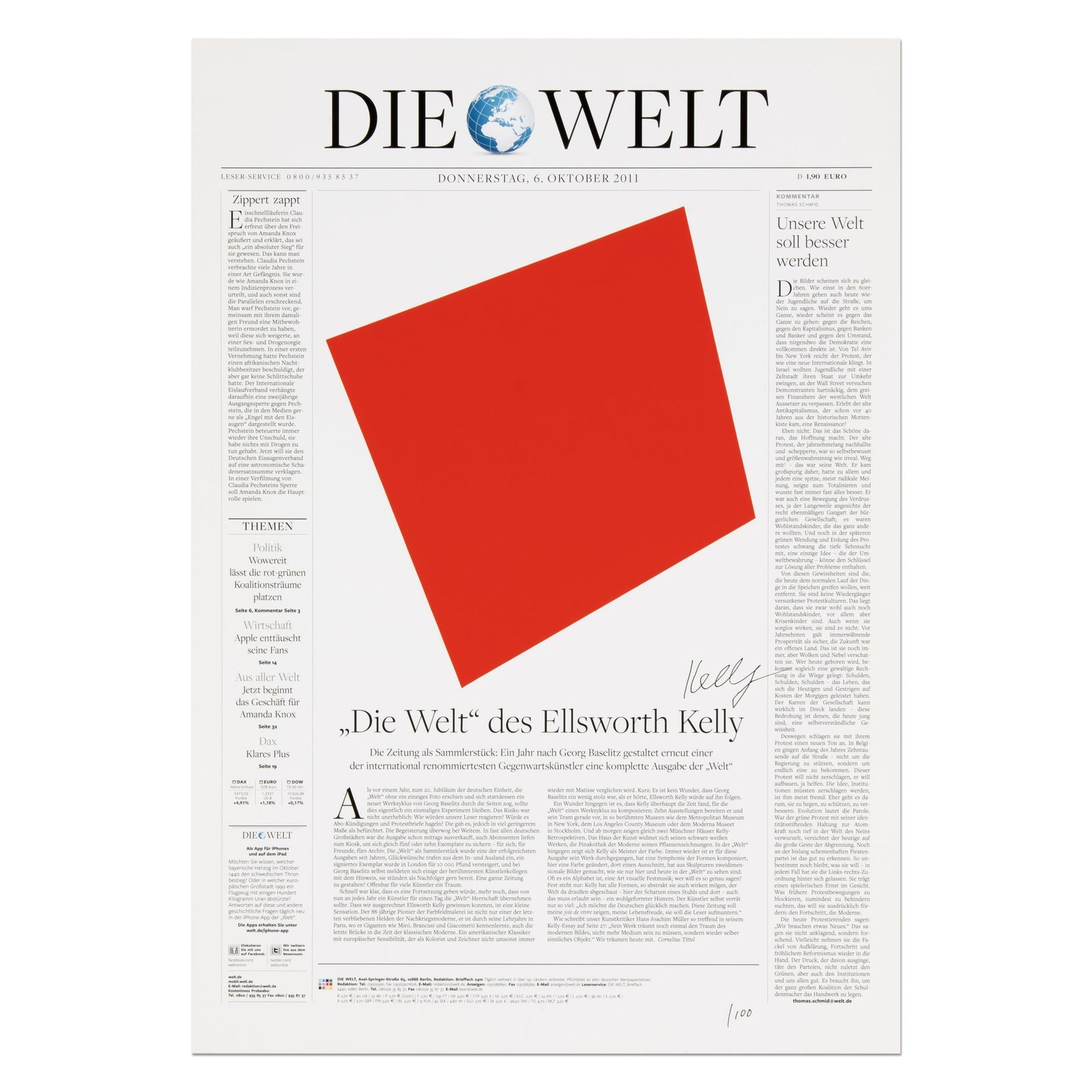
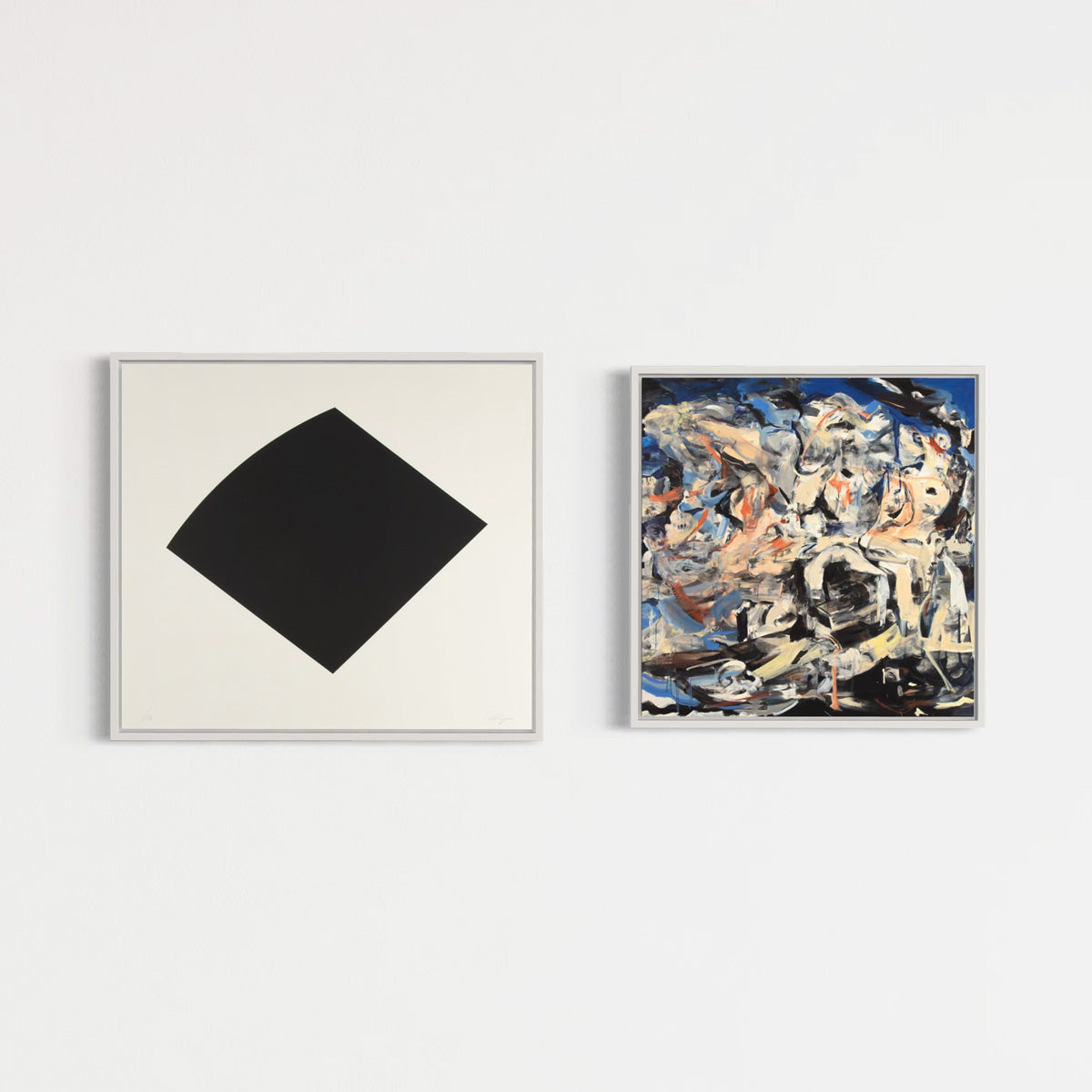
For Ellsworth Kelly, drawing and printmaking were never secondary to painting but parallel investigations conducted in a different register. His lithographs, screenprints, and relief prints extend the same structural concerns as his shaped canvases — flat, unmodulated colour fields, precise contours, and an economy of means that leaves nothing to chance or gesture. Entire editions were built around variations of line and colour relationship, tracking the same perceptual questions his paintings pursued.
Kelly's print market rewards depth of research: editions from the 1960s and 1970s, when he first began working intensively with master print workshops, tend to command the strongest results. The suite Romanesque Series (also known as Third Curve Series, 1973–76), a set of 24 lithographs, holds his auction record for an edition at £49,963, achieved at Christie's New York in 2014, while individual sheets such as Blue Curve (State II) (1988) have reached £47,447 at Sotheby's — nearly double their high estimate.
For collectors, Kelly's limited edition prints offer direct access to the same rigour that defines his paintings, at a considerably more accessible scale. Works are held in the permanent collections of MoMA, Tate, and the Centre Pompidou.
Ellsworth Kelly (1923–2015) served during the Second World War in the Ghost Army, a secret unit of soldiers and artists tasked with building deceptive camouflage and inflatable decoy tanks — an early, unlikely education in how shape and shadow could convince the eye of something untrue. He arrived in Paris in 1948 and spent six formative years there, immersing himself in Monet's late panels, Romanesque architecture, and the European avant-garde. But his most decisive influences were not theoretical. They were perceptual.
Kelly developed a method of pure looking: a shadow cast across a stairwell, the curve of a plant leaf, the negative space between architectural elements. He did not reproduce these fragments as motifs. He extracted their contours and translated them into autonomous forms, dissolving representation into structure. When he returned to the United States in the mid-1950s, this restraint stood in sharp contrast to the psychological drama of Abstract Expressionism then dominating American painting.
By the late 1950s, Kelly had introduced the shaped canvas — paintings whose outer edge follows the internal logic of the composition rather than the traditional rectangle. The artwork ceased to function as a window onto something and asserted itself instead as an object occupying real space, placing him at the intersection of geometric painting and sculpture. Colour, in his hands, was never symbolic or expressive — it operated as pure structure, defining shape and activating the relationship between forms through sustained, embodied looking.
Institutional recognition followed early and never let up. The Whitney made the first museum purchase of his work in 1957; Tate soon followed with the first UK acquisition of a Kelly painting. MoMA gave him his first retrospective in 1973, and the Guggenheim's 1996 survey travelled to Tate and Munich. Public commissions followed, including the Berlin Panels for the Bundestag and a memorial for the US Holocaust Memorial Museum. In 2023, New York's mayor declared May 31 "Ellsworth Kelly Day," marked jointly by MoMA, the Whitney, and the Met.
Colors for a Large Wall (1951), held at MoMA, is Kelly's earliest major statement: a grid of 64 panels in seemingly random colours, their arrangement determined not by compositional instinct but by chance, drawing directly on his Paris-era fascination with Jean Arp's aleatory methods. It announced, at the very start of his career, a lifelong suspicion of the artist's personal "taste" as the source of a painting's authority.
Red Blue Green (1963) exemplifies Kelly's hard-edge balance at its most exacting — a composition that consistently defies the eye's instinct to separate figure from ground, refusing to let any single colour settle into the role of "background."
Sculpture for a Large Wall (1957), Kelly's first sculpture and now installed in MoMA's atrium, comprises 104 anodised aluminium panels that tilt and catch light differently across the work's length — conceived originally for Philadelphia's Transportation Building.
Red Curve VII (1982) stands as Kelly's auction record, selling for $9.8 million at Christie's New York in 2019 — a monumental red panel whose sweeping arc exemplifies his mature ambition: colour and shape fused so completely that the canvas becomes a coloured object rather than a support for an image.
For Ellsworth Kelly, drawing and printmaking were never secondary to painting but parallel investigations conducted in a different register. His lithographs, screenprints, and relief prints extend the same structural concerns as his shaped canvases — flat, unmodulated colour fields, precise contours, and an economy of means that leaves nothing to chance or gesture. Entire editions were built around variations of line and colour relationship, tracking the same perceptual questions his paintings pursued.
Kelly's print market rewards depth of research: editions from the 1960s and 1970s, when he first began working intensively with master print workshops, tend to command the strongest results. The suite Romanesque Series (also known as Third Curve Series, 1973–76), a set of 24 lithographs, holds his auction record for an edition at £49,963, achieved at Christie's New York in 2014, while individual sheets such as Blue Curve (State II) (1988) have reached £47,447 at Sotheby's — nearly double their high estimate.
For collectors, Kelly's limited edition prints offer direct access to the same rigour that defines his paintings, at a considerably more accessible scale. Works are held in the permanent collections of MoMA, Tate, and the Centre Pompidou.


Ellsworth Kelly: Key Questions
Collecting Ellsworth Kelly?
Looking for a specific artwork or have a question about an edition? We're happy to advise on availability, pricing, condition, and provenance — and to source artworks beyond our current selection.
What is Ellsworth Kelly known for?
Ellsworth Kelly is known for his role in postwar American abstraction and for developing a rigorous visual language built on reduction, colour, and form. His shaped canvas paintings eliminated expressive gesture in favour of clarity and perceptual immediacy, and across painting, sculpture, drawing, and prints, he redefined abstraction as a direct encounter between artwork and viewer.
What is a shaped canvas in Ellsworth Kelly's work?
A shaped canvas is a painting whose outer edge follows the internal logic of its composition rather than the traditional rectangle. Kelly's shaped canvases integrate colour, contour, and support into a single unified form — transforming the painting from a window-like surface into an object occupying real space.
Was Ellsworth Kelly a Minimalist?
Kelly is often associated with Minimalism and Hard-Edge painting, yet his practice remains distinct. Where Minimalist artists often emphasised industrial fabrication and serial logic, Kelly's paintings and sculptures originated in direct observation of the world — sharing Minimalism's clarity and restraint while preserving a perceptual sensitivity rooted in looking rather than pure system.
What was Ellsworth Kelly's involvement in the "Ghost Army"?
During the Second World War, Kelly served in the 23rd Headquarters Special Troops, popularly known as the "Ghost Army" — a unit of artists and designers who used their technical drafting skills to build inflatable rubber tanks, fake trucks, and deceptive camouflage designed to mislead enemy reconnaissance. The experience trained his eye rigorously in visual deception, shadow, and spatial relationships, long before he applied those same questions to painting.
How much do Ellsworth Kelly works sell for?
Kelly's unique paintings have reached extraordinary prices — his record stands at $9.8 million, set at Christie's New York in 2019 for Red Curve VII (1982). Within editions specifically, the 24-print suite Romanesque Series (1973–76) holds his auction record for a print at £49,963, achieved at Christie's in 2014, while individual signed lithographs and screenprints more typically trade between £2,000 and £20,000.

Buy art online
Shop editions with transparent pricing, accurate condition reports, and fast dispatch. Built for international collectors — buying original art made simple and reliable.
Worldwide shipping
Every work ships fully insured and tracked, handled only by trusted international express carriers — DHL Express, FedEx, UPS — and typically dispatched within five days.
Professional packaging
Meticulous packing is our craft. Each artwork is packed in-house to archival standards — multi-layer construction built to ensure it arrives in mint condition, anywhere in the world.
Secure payment
Checkout is powered by Shopify Payments — the same encrypted, PCI-compliant infrastructure trusted by millions of merchants worldwide.