

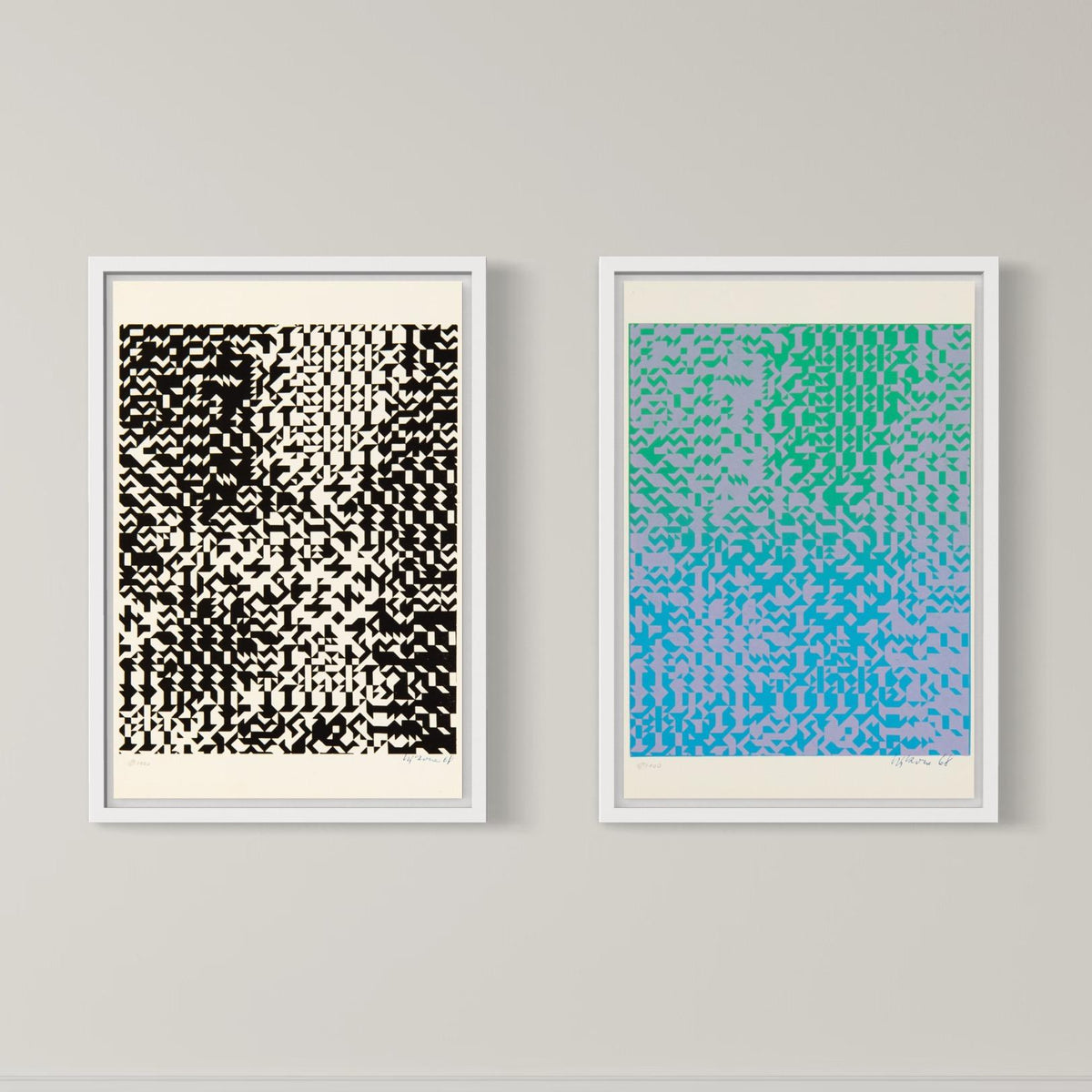
Zdeněk Sýkora – Untitled (Folgende Folge aus dem Tschechischem)
Taxes included. Shipping calculated at checkout.
Zdeněk Sýkora (Czech, 1920–2011)
Title: Untitled (from Folgende Folge aus dem Tschechischem), 1969
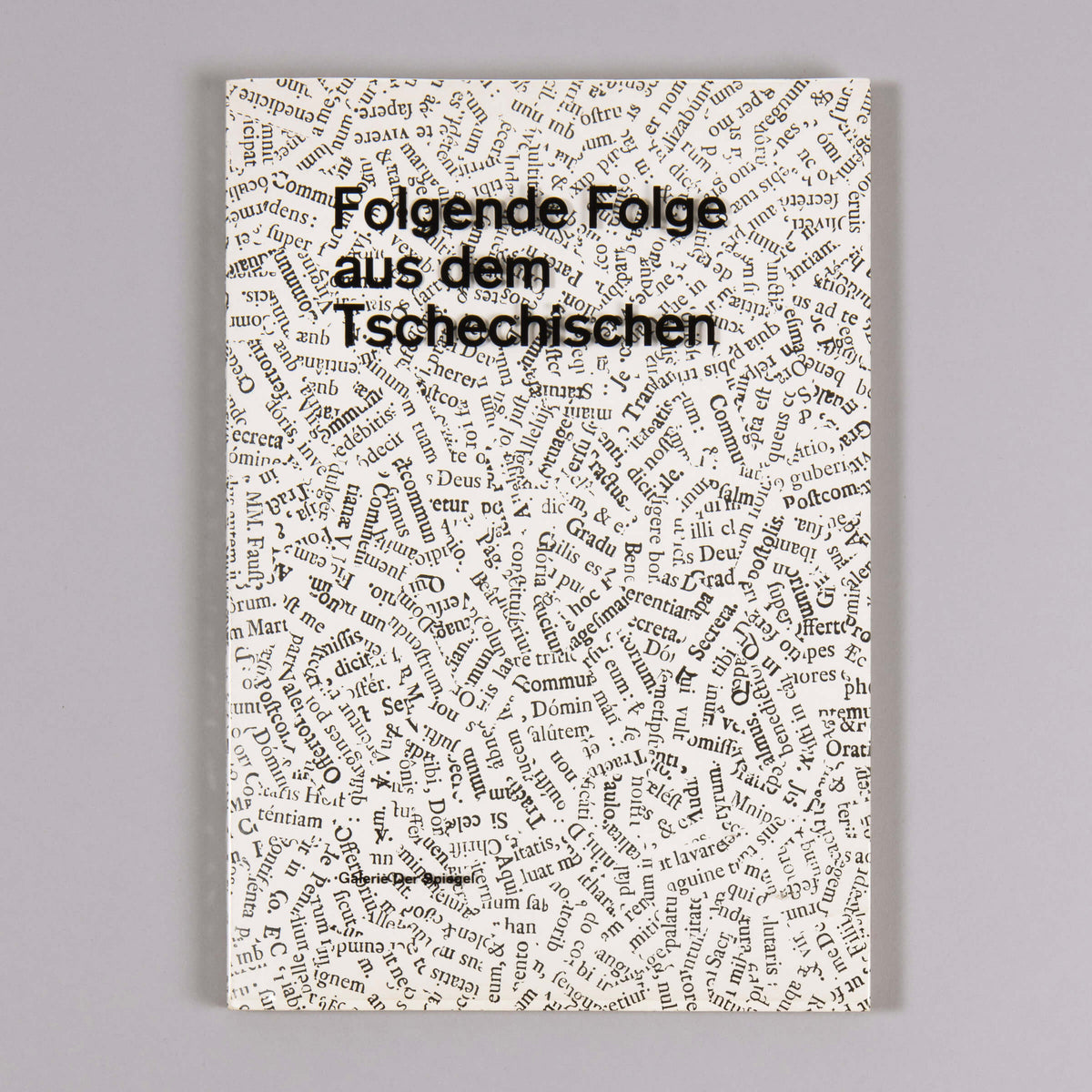
Medium: 2 screenprints on paper (including catalogue)
Dimensions: 31.4 x 21 cm (12 2/5 x 8 3/10 in)
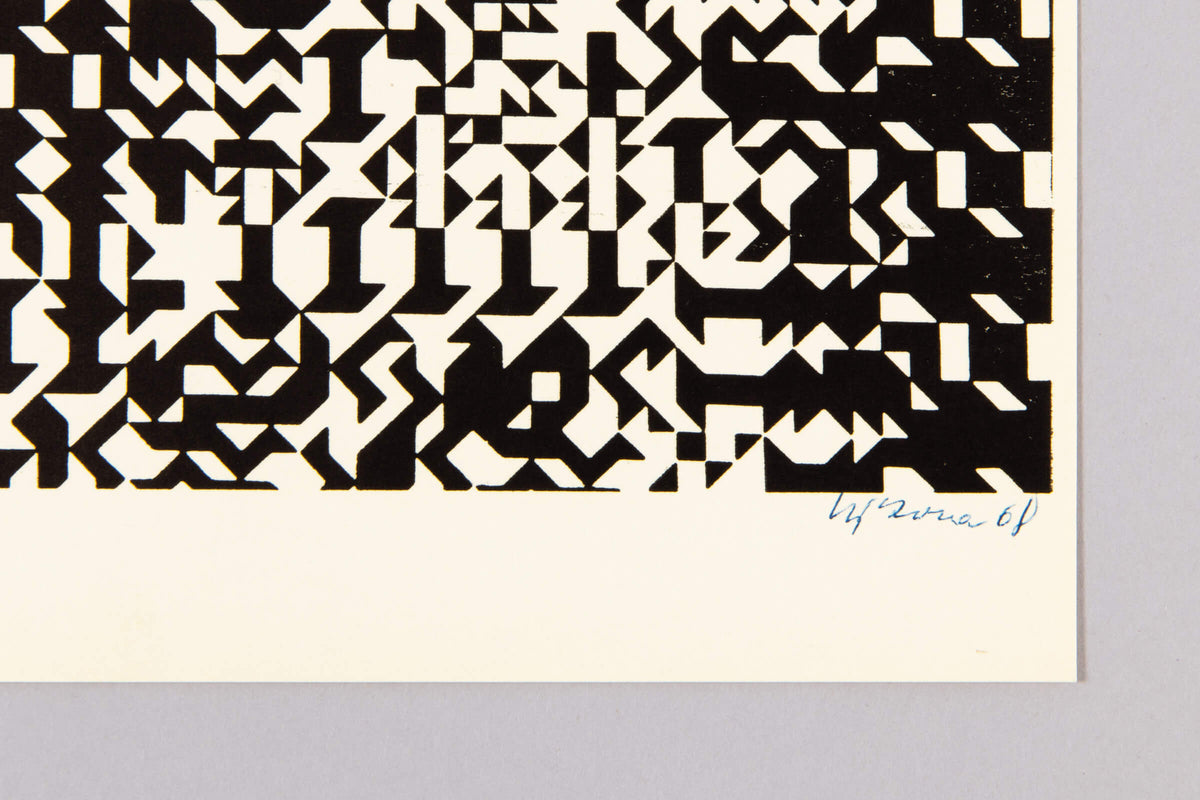
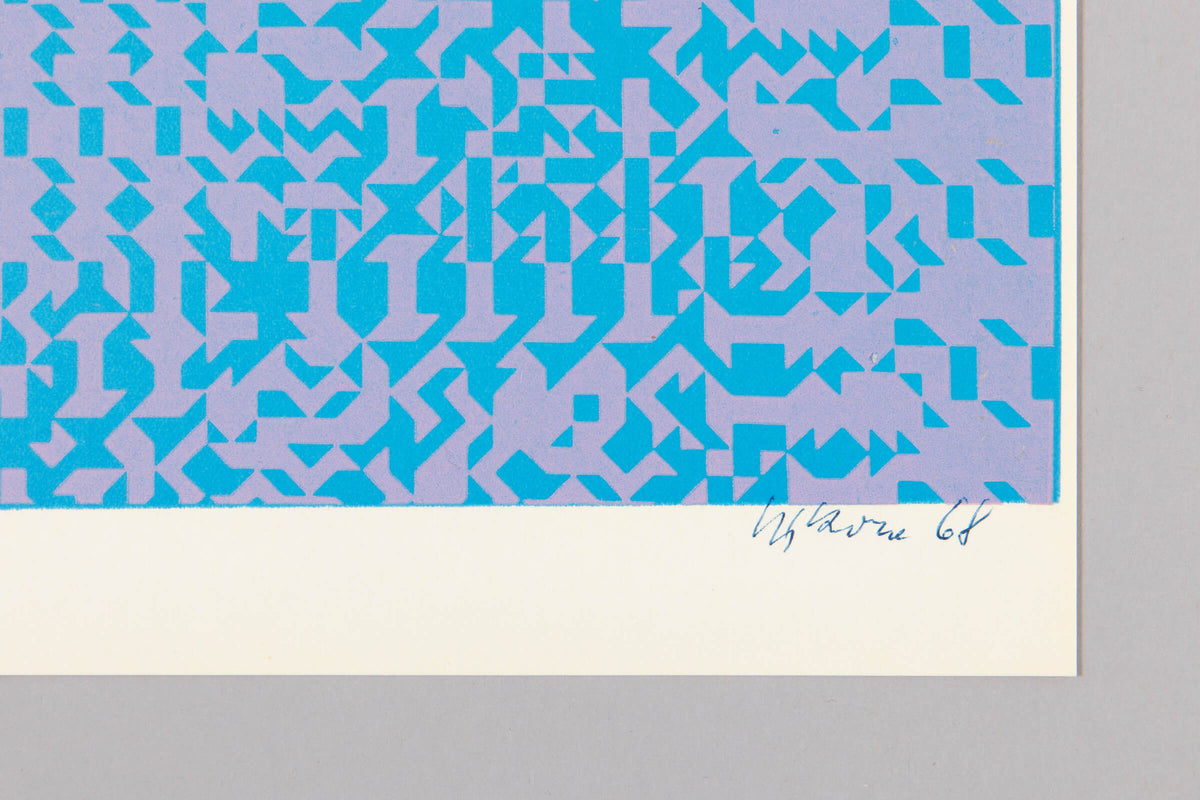
Edition of 100: Hand-signed and numbered
Condition: Excellent (sold unframed)
Artwork details
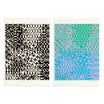
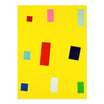
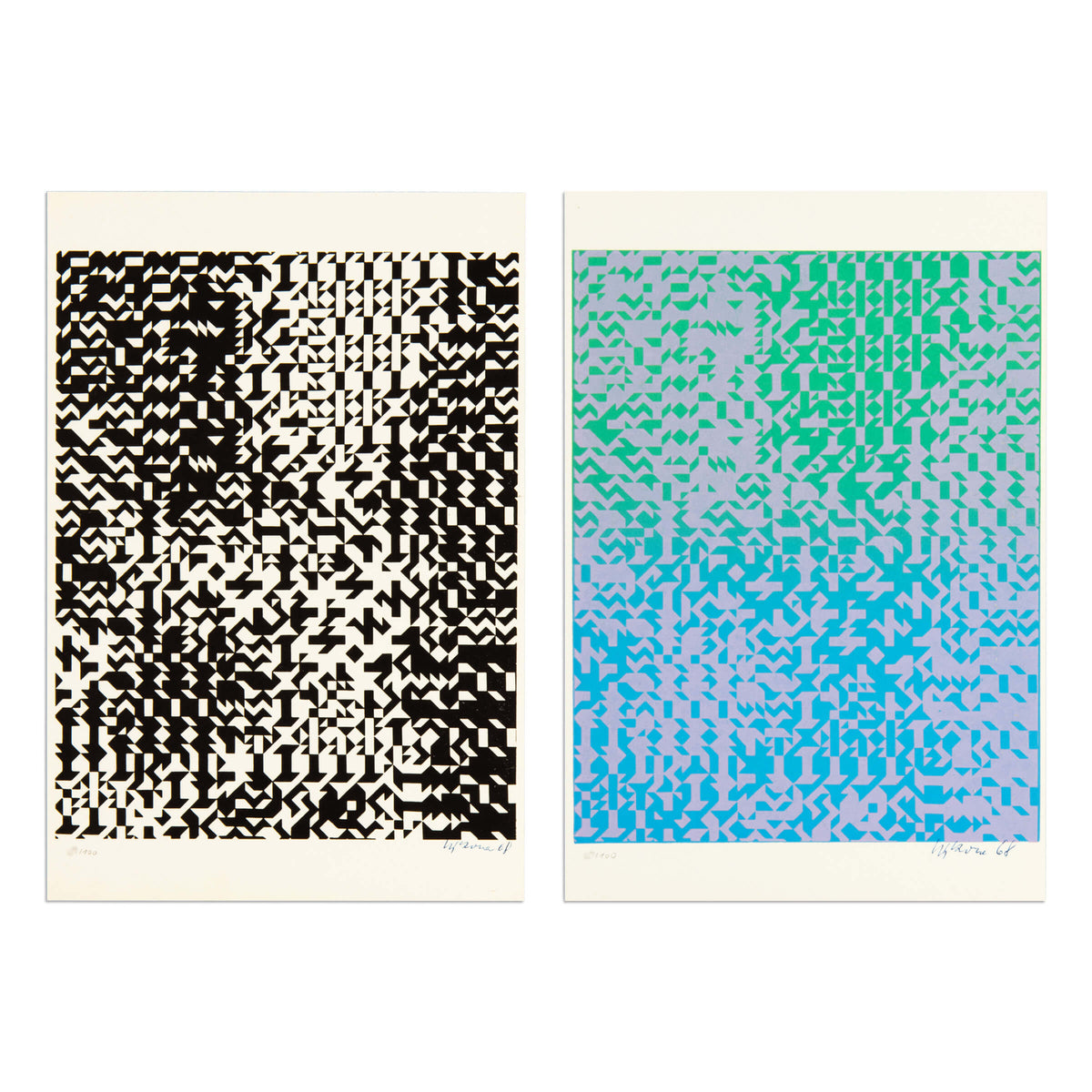
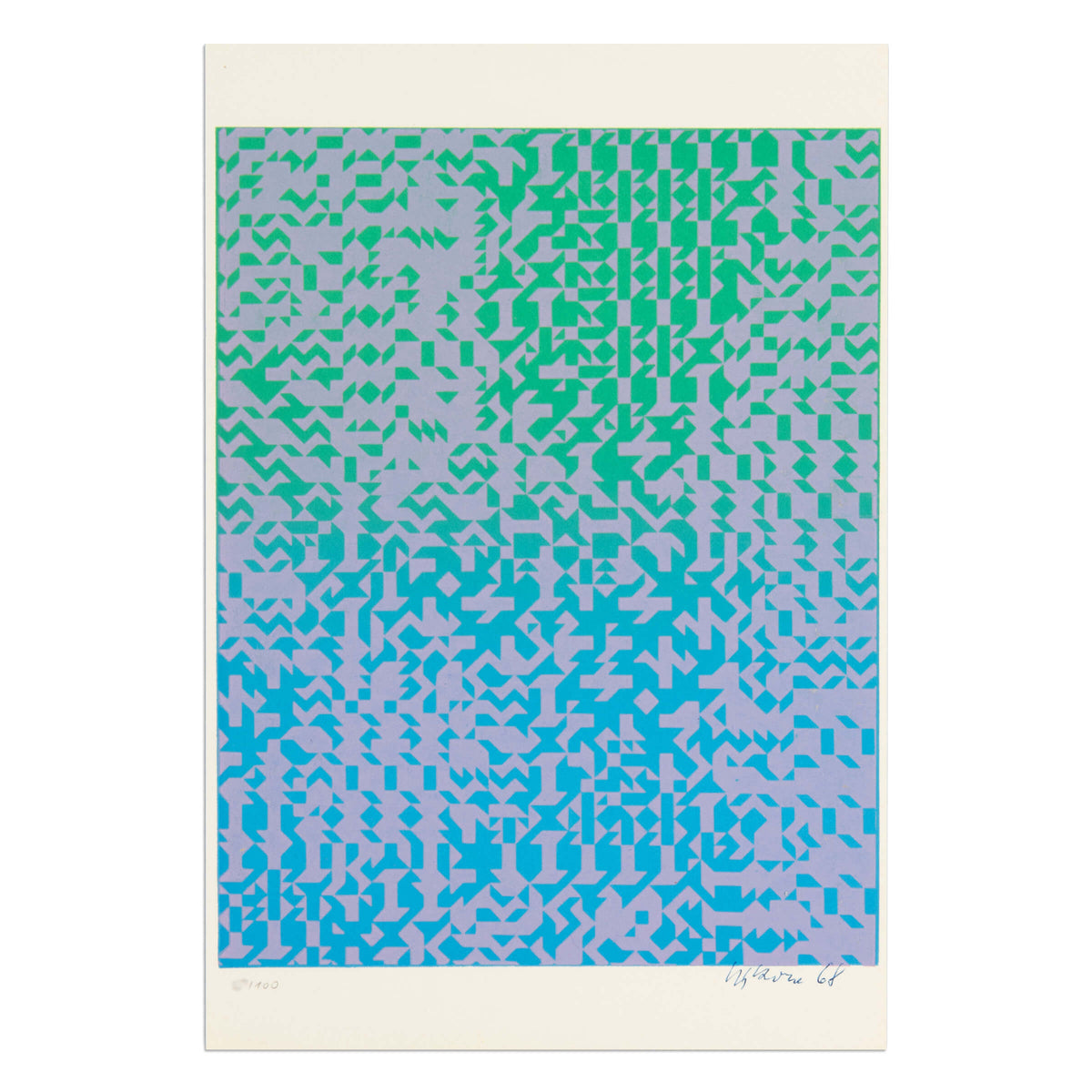
Untitled (from Folgende Folge aus dem Tschechischem) (1969) is a set of two hand-signed and numbered limited edition screenprints on paper by Zdeněk Sýkora, from an edition of 100.
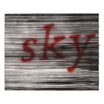
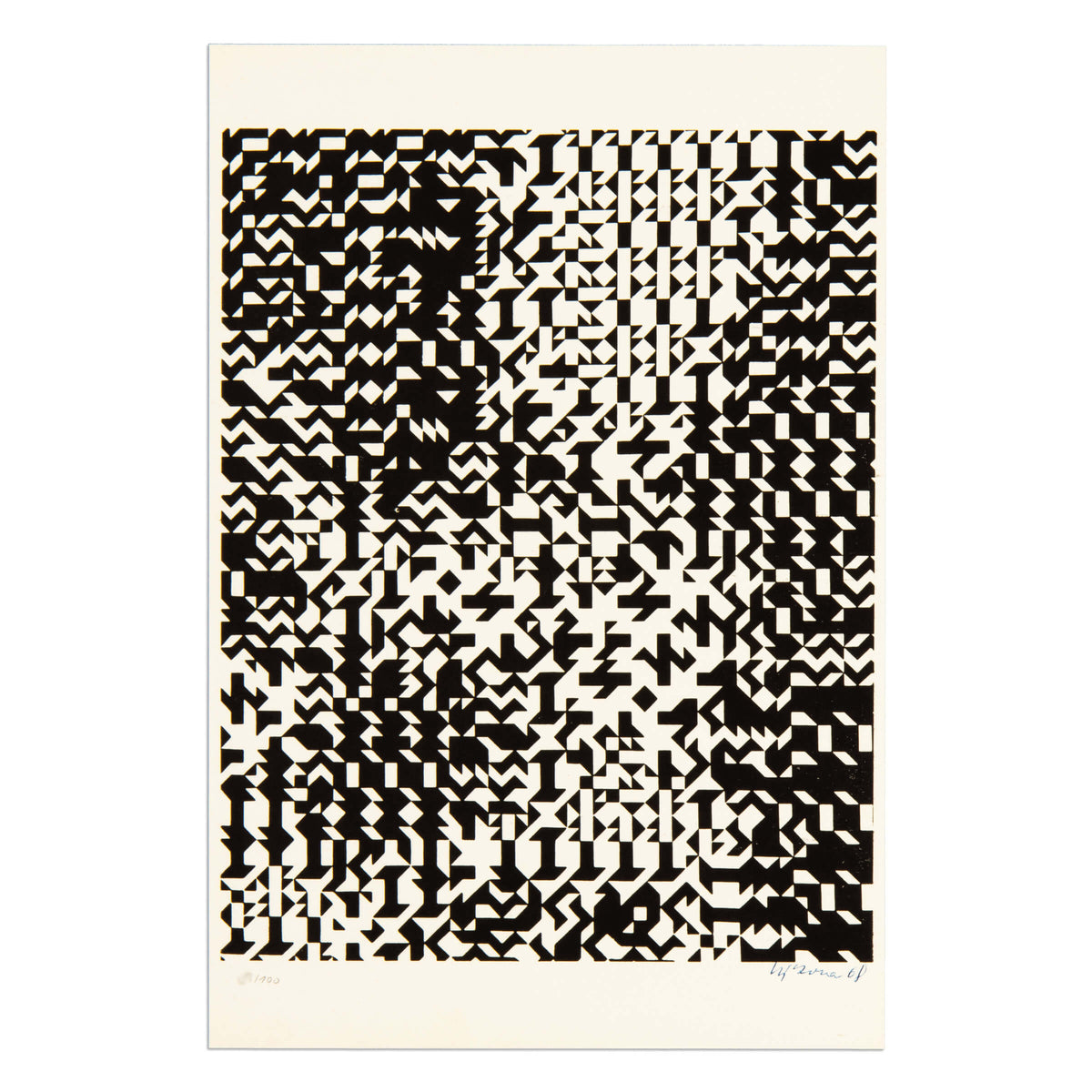
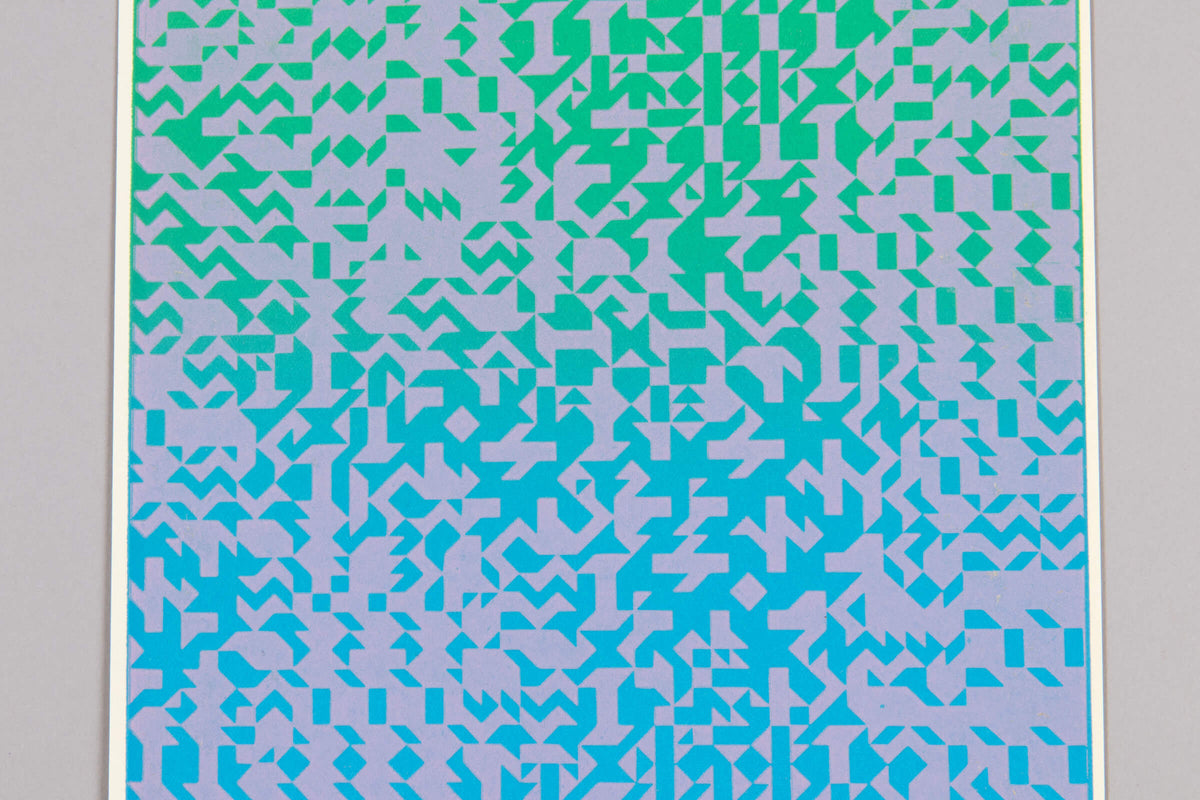
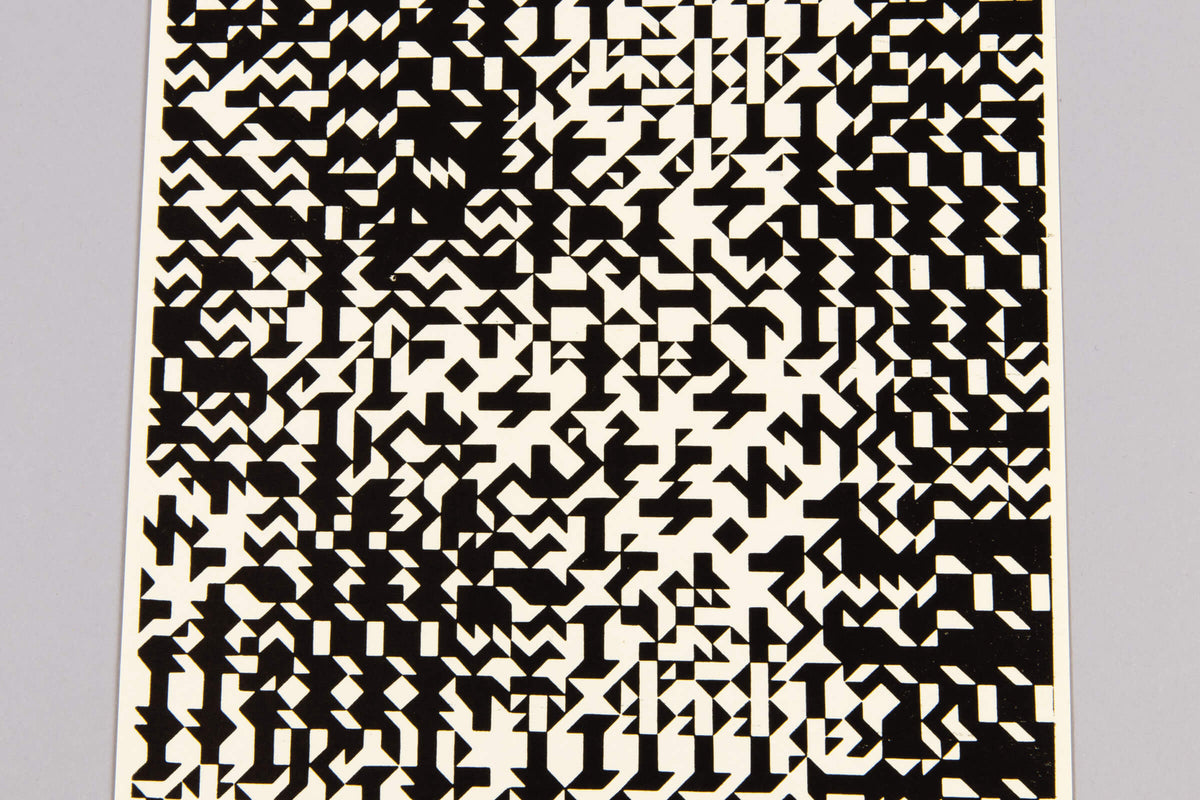
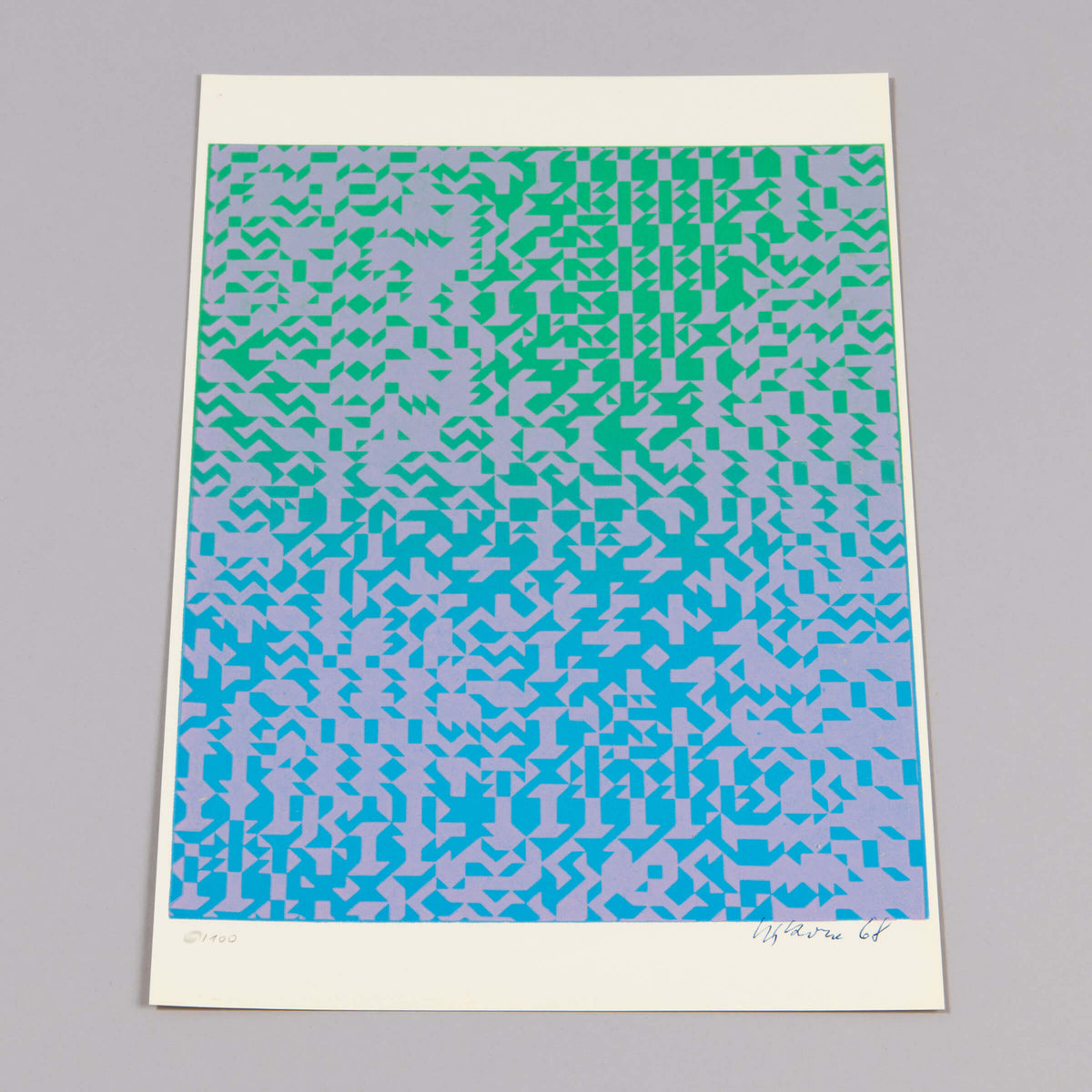
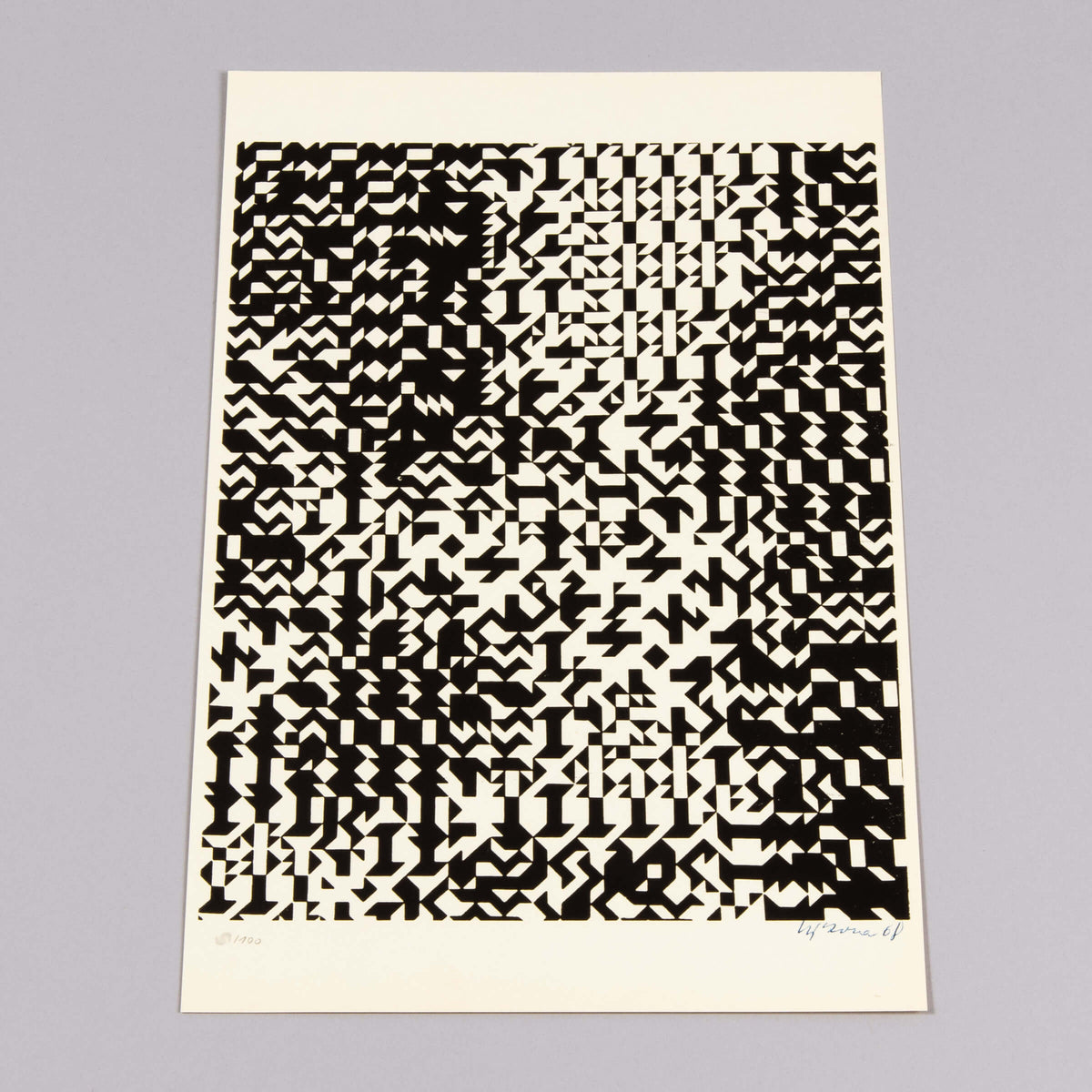
Both sheets show the same composition. The first sets small black triangles, squares and diagonal fragments against white in a dense, irregular field that runs from edge to edge. The second repeats the pattern in colour. The forms are green at the top and shift to blue below, on a pale lilac ground. Because the pattern is the same, the pair reads as one structure seen twice, in two very different tones.
Zdeněk Sýkora (1920–2011) is regarded as one of the first artists in Czechoslovakia to use a computer in his work. From the mid-1960s he worked with mathematicians on computer-assisted compositions, and he used the computer to generate numbers that determined the forms, lengths, widths and colours of his paintings. His early structure pictures from the 1960s were black-and-white geometric compositions built from a grid.
About this artist
Zdeněk Sýkora (1920–2011) was a Czech artist and painter, a pioneer of computer-assisted art and of geometric abstraction. He was born in Louny, studied art education and descriptive geometry at Charles University in Prague from 1945 to 1947, and taught there from 1947 until 1980, from 1966 as associate professor. His early paintings were Surrealist and Cubist, followed by open-air landscapes, and his first solo exhibition took place in Prague in 1952. A visit to the Matisse collection at the Hermitage Museum in 1959 changed his work. He reduced shape and colour, and from 1960 geometric forms became the basis of his abstract paintings.
In 1962–63 Zdeněk Sýkora made his first Structures, pictures built from elements placed in a grid. In 1963 he joined the Křižovatka (Crossroads) group around Jiří Kolář. In 1964, after several years of collaboration with the mathematician Jaroslav Blažek, he created the first computer-assisted structures. They were meant to exhaust all possible combinations of the positions of a given set of elements according to selected rules. From 1967 to 1969 he applied the structures in architecture, including a ceramic wall in Prague and the glass tiles of the Letná Tunnel ventilation shafts. The structural period ended in 1972–73, and he then developed line paintings based on randomness. In them the number of lines, their starting points, widths, lengths, colours and intersections are all decided by random numbers.
Zdeněk Sýkora exhibited at documenta 4 in Kassel in 1968 and at the first Biennale of Constructivist Art in Nuremberg in 1969. His first retrospective took place at the Václav Špála Gallery in Prague in 1970, and his first retrospective abroad at the Josef Albers Museum in Bottrop in 1986. In 1995 two large retrospectives followed, at the Prague City Gallery and the Wilhelm-Hack-Museum in Ludwigshafen. His line painting Lines No. 24 (The Last Judgement, 1984) was purchased by the Centre Pompidou in Paris in 2005. His artworks are also held in the Stedelijk Museum in Amsterdam, the mumok in Vienna and the National Gallery in Berlin. In 2003 the French Minister of Culture made him Chevalier de l’Ordre des Arts et des Lettres, and in 2005 he received the Herbert-Boeckl Prize in Salzburg.
The prints and screenprints of Zdeněk Sýkora follow the same systems as his paintings and bring his structures and lines onto paper as limited editions. A series of exhibitions of his prints took place in the Czech Republic in 2008. He worked with his wife Lenka Sýkorová from 1985 and lived in Louny until his death in 2011. Today Zdeněk Sýkora is regarded as one of the central figures of constructive and computer-based art in Central Europe.
You may also like


Buy art online
Shop editions with transparent pricing, accurate condition reports, and fast dispatch. Built for international collectors — buying original art made simple and reliable.

Worldwide shipping
Every work ships fully insured and tracked, handled only by trusted international express carriers — DHL Express, FedEx, UPS — and typically dispatched within five days.

Professional packaging
Meticulous packing is our craft. Each artwork is packed in-house to archival standards — multi-layer construction built to ensure it arrives in mint condition, anywhere in the world.

Secure payment
Checkout is powered by Shopify Payments — the same encrypted, PCI-compliant infrastructure trusted by millions of merchants worldwide.