




About Wolfgang Tillmans
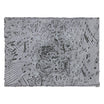
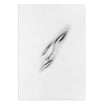
Wolfgang Tillmans (b. 1968, Remscheid) is one of the most influential photographers of his generation — an artist who has spent four decades expanding what photography can be, mean, and do. Emerging in the 1990s with candid images of youth culture, LGBTQ communities, and club scenes, he has since developed one of the most wide-ranging practices in contemporary art: portraits, still lifes, large-scale abstractions, and works made directly with photographic chemicals and photocopiers, bypassing the camera entirely.
What unites this diversity is a consistent commitment to photography as a form of thinking — about light, materiality, desire, politics, and the act of looking itself. In a world saturated with images, Tillmans has always asked what it means to make another one. As he has put it: "Really, my day-to-day life in the studio … is about taking care of a quarter century's worth of work and how it functions and operates in the outside world."
In 2000, Tillmans was awarded the Turner Prize — the first photographer and the first non-British artist to receive it. His work has been the subject of major solo exhibitions at Tate Britain, MoCA Chicago, the Serpentine Galleries, Kunsthalle Zürich, and the Moderna Museet, Stockholm, among others. His limited edition prints and photo editions are held in prominent public and private collections worldwide, and remain among the most sought-after works in the contemporary photography market.


