


About Richard Tuttle
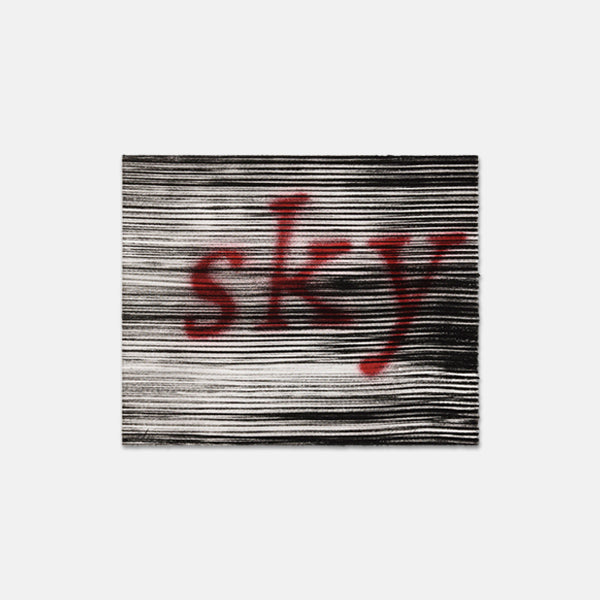
Richard Tuttle (born 1941 in Rahway, New Jersey) is an influential American artist widely associated with Post-Minimalism and Conceptual Art. Working across sculpture, drawing, painting, collage, artist's books, and limited edition prints, Tuttle has consistently challenged conventional definitions of medium and genre within contemporary art.
Although many of his works take three-dimensional form, Tuttle has often described his practice as fundamentally rooted in drawing. For him, drawing is not simply a technique but a way of understanding perception and the self. His artworks explore subtle relationships between line, volume, color, scale, and texture, privileging nuance over monumentality. In contrast to the industrial precision of Minimalism, Tuttle embraces fragility, irregularity, and the handmade, foregrounding sensitivity and poetic restraint.
Language, poetry, and calligraphy have long informed his visual vocabulary. His compositions often appear modest or understated, yet they invite sustained contemplation, suggesting what Richard Tuttle has described as the "possibility of the invisible" within visual experience. Through minimal gestures and delicate materials, he creates works that oscillate between presence and absence, materiality and thought.
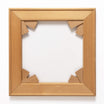
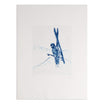
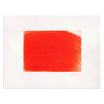
Tuttle is also an accomplished printmaker. His limited edition prints and artist's books extend his broader investigations into perception and form, emphasizing tactility, subtle color shifts, and the expressive potential of small-scale abstraction. Each fine art print reflects his meticulous attention to material and process, reinforcing his longstanding engagement with drawing as both concept and practice.
Richard Tuttle's work has been the subject of major solo exhibitions at institutions including the Whitney Museum of American Art, the Metropolitan Museum of Art, Tate Modern, the Whitechapel Gallery, the San Francisco Museum of Modern Art, and the Dallas Museum of Art. His enduring influence lies in his quiet but radical redefinition of what contemporary art can be.


