


Artist Insight
Intimacy and the Present Tense
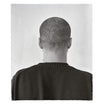
Wolfgang Tillmans first gained recognition for photographs of friends, nightlife, and everyday environments that felt both direct and composed. These early artworks capture moments of proximity without theatrical staging. Bodies appear unguarded; gestures unfold without emphasis. Yet beneath this apparent informality lies a rigorous sensitivity to color, framing, and surface.
What distinguishes these images is their refusal of hierarchy. The personal and the ordinary are granted the same weight as historically sanctioned subjects. Tillmans treats intimacy not as confession but as structure: a way of organizing perception around trust, vulnerability, and shared presence. In doing so, he shifted contemporary photography away from spectacle and toward attentiveness.
Installation Art and Photographic Display
Central to Wolfgang Tillmans's practice is his transformation of exhibition-making into a primary medium. Photographs are installed in constellations rather than symmetrical sequences. Small prints may be taped directly to the wall; large images float unframed; clusters of varying scale generate rhythm and tension.
The exhibition becomes an essay. The wall becomes a page.
This editorial logic foregrounds adjacency and sequence as meaning-producing devices. No image stands alone. Meaning emerges relationally, through proximity and contrast. By disrupting conventional museum display, Tillmans reveals how institutions stabilize interpretation — and how subtle changes in placement can redirect it.

Abstract Photography and the Material of Light
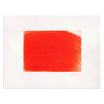
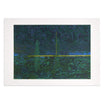
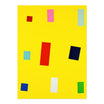
Parallel to his observational photography, Wolfgang Tillmans developed abstract works produced through direct engagement with light-sensitive paper. These images abandon depiction in favor of color fields, gradients, and subtle tonal shifts. They insist on photography's physical foundations: chemistry, surface, luminosity.
Abstraction does not mark a departure from his practice; it clarifies it. By oscillating between representation and non-representation, Tillmans demonstrates that photography is not bound to subject matter. It is a medium defined by perception. The abstract artworks function as structural counterpoints within installations, balancing documentary presence with optical intensity.
Photography, Politics and Public Perception
Over time, Wolfgang Tillmans's work has increasingly addressed questions of democracy, freedom of movement, and media literacy. Without adopting overt didacticism, he examines how images participate in the formation of public belief. Documentary fragments coexist with abstraction, intimacy with geopolitical reference.
The result is not a programmatic statement but an invitation to sustained attention. Tillmans slows the viewer's gaze. He introduces hesitation into habitual looking. Photography becomes a civic tool — a medium through which complexity is preserved rather than simplified.

Paper, Printing, and Publishing in Tillmans' Art
Paper is central to Wolfgang Tillmans's art. He treats photographic prints, folded works, inkjet prints, photocopy prints, magazines, and artist's books not as neutral supports but as material events. Prints are often taped or pinned directly to the wall, their edges exposed, their surfaces responsive to light and gravity. The sheet remains visible as object. The photograph is not separated from its physical condition.
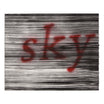
His engagement with unconventional printing processes — from digital inkjet systems to early experiments with photocopiers and folded light-sensitive paper — foregrounds contingency. Streaks, tonal shifts, creases, and mechanical irregularities are not corrected but integrated. Chance becomes collaborator. The print records its own production.
This material logic reshapes the role of editions within his practice. For some artists, editions reproduce a primary artwork. For Tillmans, the edition is often the primary form. Variations in scale, paper, finish, and mounting are structural decisions rather than secondary adaptations. Circulation through limited edition prints, magazines, and artist's books extends the artwork's field rather than diminishing it.
Publishing is therefore not ancillary. His artist's books function as portable exhibitions, structured through sequencing and adjacency. Images interact across pages as they do across walls, reinforcing his conviction that photographs gain meaning through placement and distribution. In Tillmans's practice, printmaking is not reproduction. It is method. Paper is not support. It is structure.
The Influence of Wolfgang Tillmans on Contemporary Art
Wolfgang Tillmans redefined what contemporary photography could be. He expanded it into installation, abstraction, publishing, and civic discourse without abandoning its intimate origins. His influence is visible in how younger artists treat images as sequences and systems rather than isolated statements.
By bridging private experience and public structure, Tillmans repositioned photography as both record and framework — a medium capable of holding the present in its complexity. His artwork endures because it refuses closure. It remains attentive, provisional, and structurally alert.
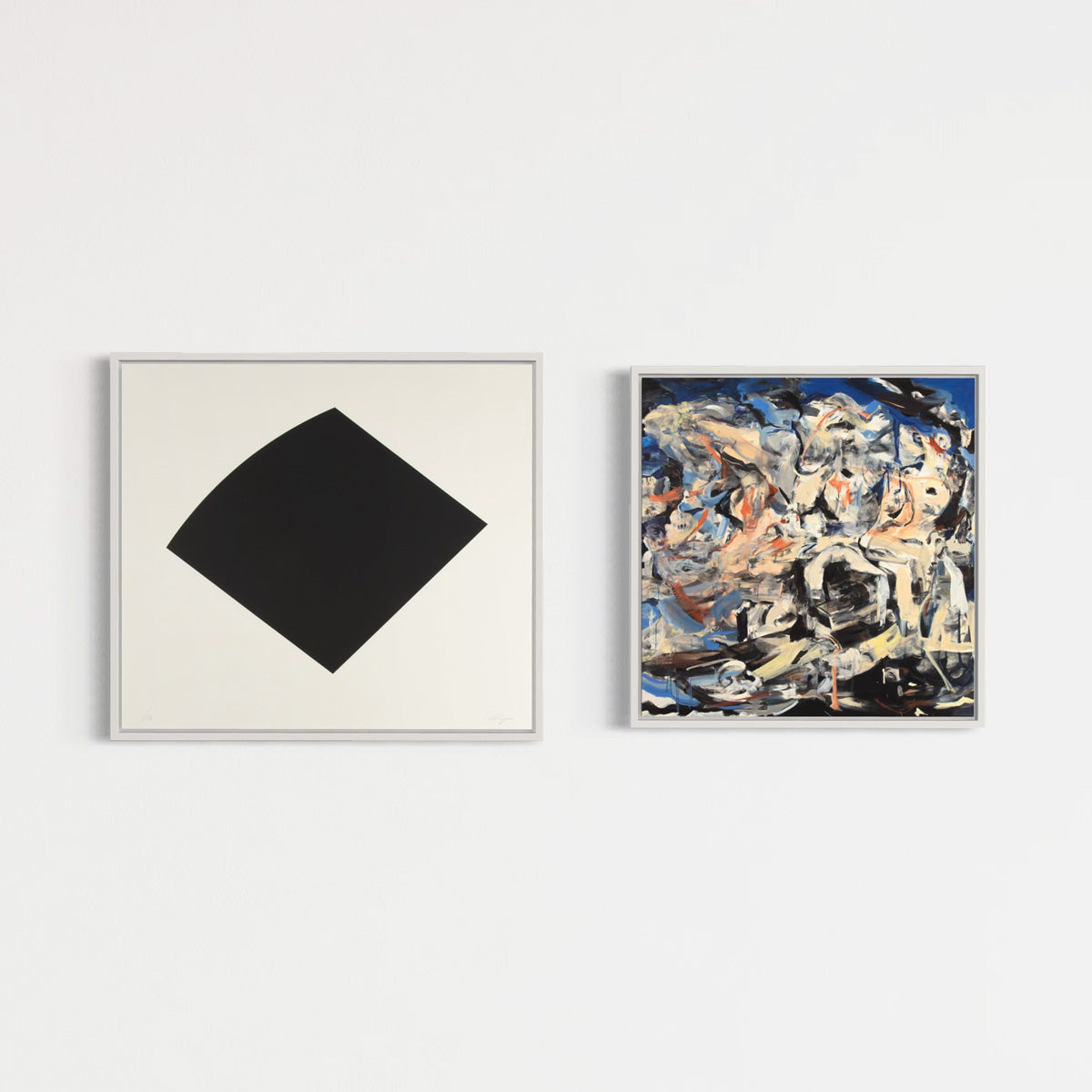
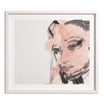
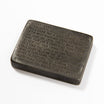
Selected Wolfgang Tillmans artworks, including photographs and editions, are available through our collection.
The true authenticity of photographs for me is that they usually manipulate and lie about what is in front of the camera, but never lie about the intentions behind the camera.
Selected questions on the artist’s practice, major artworks, and editions.
Wolfgang Tillmans: Key Questions


