





Sol LeWitt (1928–2007) was an American artist whose work played a foundational role in the development of Conceptual and Minimal art. Working across drawing, wall drawing, sculpture, printmaking, and writing, LeWitt established a practice in which the idea or system governing a work takes precedence over its physical execution.
Emerging in the 1960s, LeWitt’s work has been exhibited extensively at museums and institutions worldwide and is held in major public collections. His practice is widely discussed in relation to authorship, instruction-based art, and the dematerialization of the art object.
Artistic Practice
LeWitt’s practice is defined by the primacy of concept over execution. Works are generated through written instructions or predefined systems, which may be carried out by others according to the artist’s specifications. In this framework, the artist’s role is to design the idea, while the realization of the work is secondary and variable.
This approach applies across media. Wall drawings are executed directly on architectural surfaces, sculptures are constructed from modular units, and works on paper follow systematic compositional rules. Variation is not eliminated but structured, allowing each realization to differ while remaining conceptually consistent.
By separating conception from execution, LeWitt fundamentally challenged traditional notions of artistic authorship and originality.
Key Themes and Motifs
Central to LeWitt’s work are themes of order, logic, seriality, and permutation. Grids, geometric forms, and repeated structures recur throughout his practice, functioning as frameworks rather than expressive symbols.
LeWitt’s use of systems foregrounds process over outcome. Rather than producing singular images, his work generates families of related forms, emphasizing relationships, sequences, and potential variation.
Color, when employed, operates within predefined parameters, reinforcing the rule-based nature of the work rather than introducing subjective expression.
Historical and Cultural Context
LeWitt’s work emerged during a period of significant reevaluation of artistic practice in the postwar United States. His writing and artwork developed alongside Minimalism and Conceptual art, contributing decisively to the shift away from expressive authorship toward intellectual and procedural approaches.
His influential essays, particularly those articulating the principles of Conceptual art, positioned the idea as the central artistic act. This framework aligned his practice with broader debates about the role of language, systems, and logic in art-making during the late twentieth century.
LeWitt’s work reflects a broader cultural movement toward rational structures and analytical thinking, while also exposing the limits and paradoxes inherent in such systems.
Drawing, Wall Drawings, and Architectural Space
Wall drawings occupy a central position within LeWitt’s practice. Conceived as instructions rather than fixed images, these works are realized directly on walls and are often temporary, existing only for the duration of an exhibition.
This emphasis on architectural context underscores the relationship between artwork and site. Each installation responds to spatial conditions while remaining faithful to the underlying concept, reinforcing the distinction between idea and material form.
Works on paper and drawings function both as autonomous works and as related investigations into system-based composition, extending the logic of wall drawings into portable formats.
Editions and Works on Paper
Editions and works on paper play an important role in LeWitt’s practice, particularly as vehicles for serial exploration. Prints and drawings often follow strict compositional rules, allowing systematic variation within clearly defined constraints.
These works are integral to LeWitt’s artistic output rather than secondary reproductions. They articulate core conceptual concerns while enabling broader circulation of his ideas across institutional and private contexts.
Through editions, LeWitt’s systems-based approach becomes accessible without diminishing the conceptual integrity of the work.
Market and Circulation Context
LeWitt’s work circulates within a firmly established institutional and market framework. His sustained presence in museum collections and exhibitions has contributed to the long-term stability and recognition of his practice.
Editions and works on paper have played a key role in this circulation, allowing LeWitt’s conceptual strategies to enter diverse collections while maintaining alignment with the principles governing his work.
Within the contemporary art ecosystem, his work is often understood as foundational, shaping both historical narratives and ongoing artistic practice.
Institutional Exhibitions and Collections
LeWitt’s work has been the subject of numerous retrospective and survey exhibitions at major museums and institutions worldwide. Institutional presentations frequently emphasize the instructional nature of his practice and the relationship between concept, execution, and space.
Critical discourse surrounding LeWitt has consistently highlighted his influence on Conceptual art, his redefinition of authorship, and his contribution to system-based artistic production. His work remains central to discussions of contemporary art’s intellectual foundations.
Position within Contemporary Art
Within contemporary art, Sol LeWitt occupies a foundational position as an artist who decisively shifted attention from the art object to the governing idea. His practice established a model in which systems, rules, and instructions function as primary artistic materials.
By prioritizing concept over execution, LeWitt’s work continues to inform artistic approaches across media, influencing generations of artists engaged with process, structure, and the limits of authorship.
Editorial Note
This editorial page provides a structured overview of Sol LeWitt’s artistic practice, thematic concerns, institutional context, and market circulation, with particular attention to his system-based approach and instruction-driven works.
Selected works by Sol LeWitt are available through our collection.

The Art of Printmaking
From the precise lines of woodcuts to the velvety depth of lithographs. Discover a curated selection of editioned works on paper that celebrate the unique texture and heritage of traditional print media.
The Photographic Image
Explore contemporary photography through the lens of precision and scale. Our collection features exceptional photo editions that investigate the boundaries of representation and spatial order.
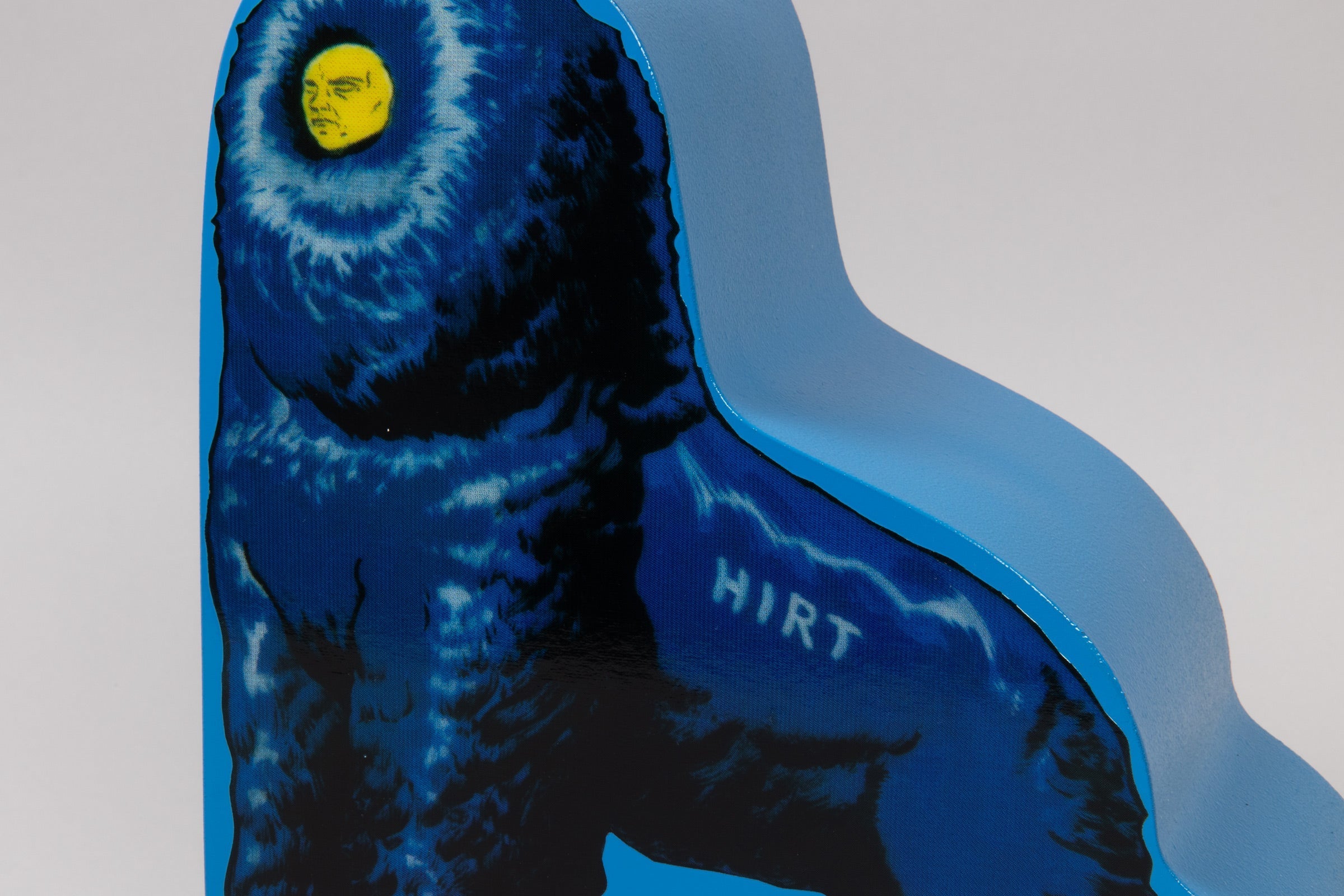
The Sculptural Multiple
Art beyond the pedestal. Discover three-dimensional objects designed to circulate ideas in space. These works bridge the gap between sculpture and the everyday, making radical art accessible.


