








Artist Insight
Freeze and the Emergence of the Young British Artists
Damien Hirst's emergence onto the international stage began with a single exhibition. In 1988, while still a student at Goldsmiths College in London, he organized Freeze, a group exhibition staged in a disused Docklands building. The show brought together a generation of artists who would soon become known as the Young British Artists.
What made Freeze significant was not only the works themselves but the structure of the exhibition. Instead of waiting for institutional validation, the artists organized their own exhibition and constructed their own visibility. This strategy reshaped the relationship between artists, galleries, collectors, and media.
Hirst quickly became the most visible figure within this generation. His contemporaries included artists such as Tracey Emin, whose autobiographical installations transformed personal narrative into artistic material, and Chris Ofili, whose richly layered paintings explored cultural identity and symbolism. Together, these artists defined a moment in which British contemporary art gained unprecedented international attention.

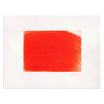
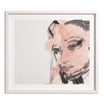
Damien Hirst – The Beautiful Paintings
The Shark and the Problem of Death
One of the most iconic works of contemporary art is Damien Hirst's The Physical Impossibility of Death in the Mind of Someone Living (1991). The sculpture presents a large tiger shark suspended in a glass vitrine filled with formaldehyde.
Encountered in the gallery, the animal appears frozen in motion, hovering between life and preservation. The work confronts viewers with a paradox: death can be understood intellectually, but it cannot be experienced while alive. By presenting the preserved shark directly to the viewer, Hirst transforms that philosophical impossibility into a physical encounter.
This work established a visual language that would define much of Hirst's early career. Animals preserved within vitrines—sharks, cows, sheep—appear within structures that resemble scientific displays or museum cabinets. These installations borrow the authority of medical and scientific institutions while simultaneously revealing the cultural frameworks through which knowledge is organized and believed.
Seriality and the Logic of Systems
Alongside his monumental installations, Hirst developed one of the most recognizable painting practices in contemporary art. The Spot Paintings consist of evenly spaced colored circles arranged within grid structures.
At first glance these paintings appear almost mechanical in their precision. Yet their conceptual logic lies in repetition. Each painting belongs to a larger system that could theoretically continue indefinitely. Individual canvases are less important than the rules that generate them.
This approach reflects the influence of Conceptual Art, where artists such as Sol LeWitt treated the artwork as a system or instruction rather than a singular expressive object. In Hirst's practice, execution is frequently delegated to assistants, reinforcing the idea that authorship resides in the concept itself.
Painting becomes a structure rather than a gesture.

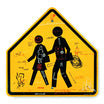
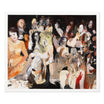
Damien Hirst – Savoy
Butterflies, Beauty and Mortality
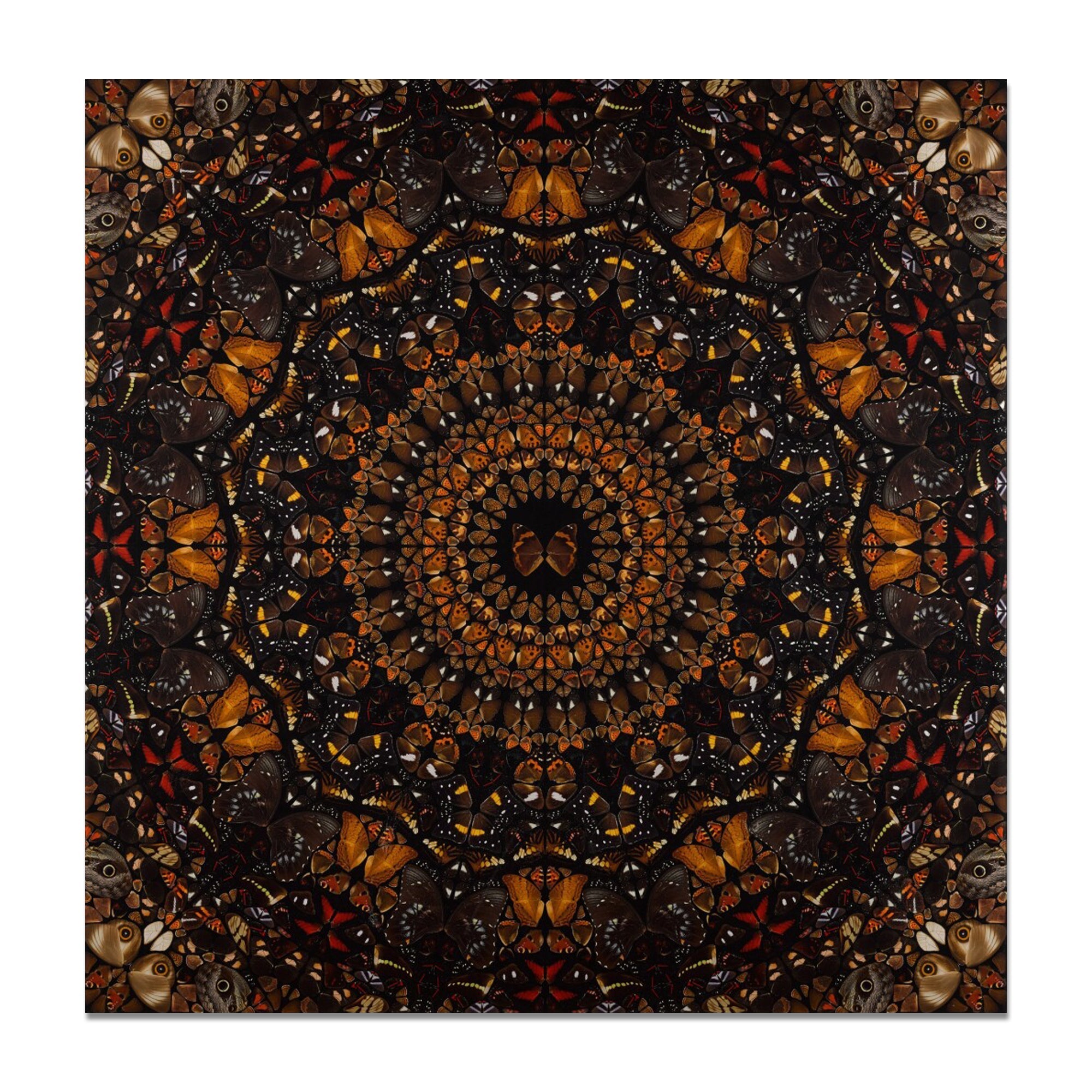
Among the most visually striking works in Hirst's career are his butterfly paintings. These compositions incorporate real butterfly wings arranged into symmetrical patterns that evoke stained-glass windows and sacred iconography.
The visual effect is radiant. Colors shimmer across the surface, producing images that appear both scientific and spiritual. Yet the material itself carries an unavoidable implication: the butterflies must die for the artwork to exist.
Each butterfly composition therefore embodies a paradox between beauty and mortality. The works celebrate life while simultaneously revealing its fragility. Through symmetry and repetition, Hirst transforms delicate natural forms into symbolic structures that echo religious imagery while remaining grounded in biological reality.
The butterfly motif remains among the most recognizable elements within Hirst's practice.

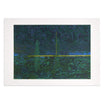
Damien Hirst – Suiko (H10-4)
The Skull and the Value of Belief
If the shark confronts death through biology, For the Love of God (2007) explores mortality through symbolism and spectacle. The iconic sculpture presents a platinum cast of a human skull covered with over eight thousand diamonds.
The work draws upon the long artistic tradition of the memento mori, images intended to remind viewers of life's brevity. Yet Hirst's version transforms this historical motif into a spectacle of luxury.
The sculpture becomes both relic and commodity. It asks whether belief—whether religious, cultural, or economic—can transform death into something desirable or transcendent.
By combining the symbolism of mortality with the visual language of extreme wealth, Hirst exposes the systems through which value itself is constructed.

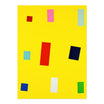
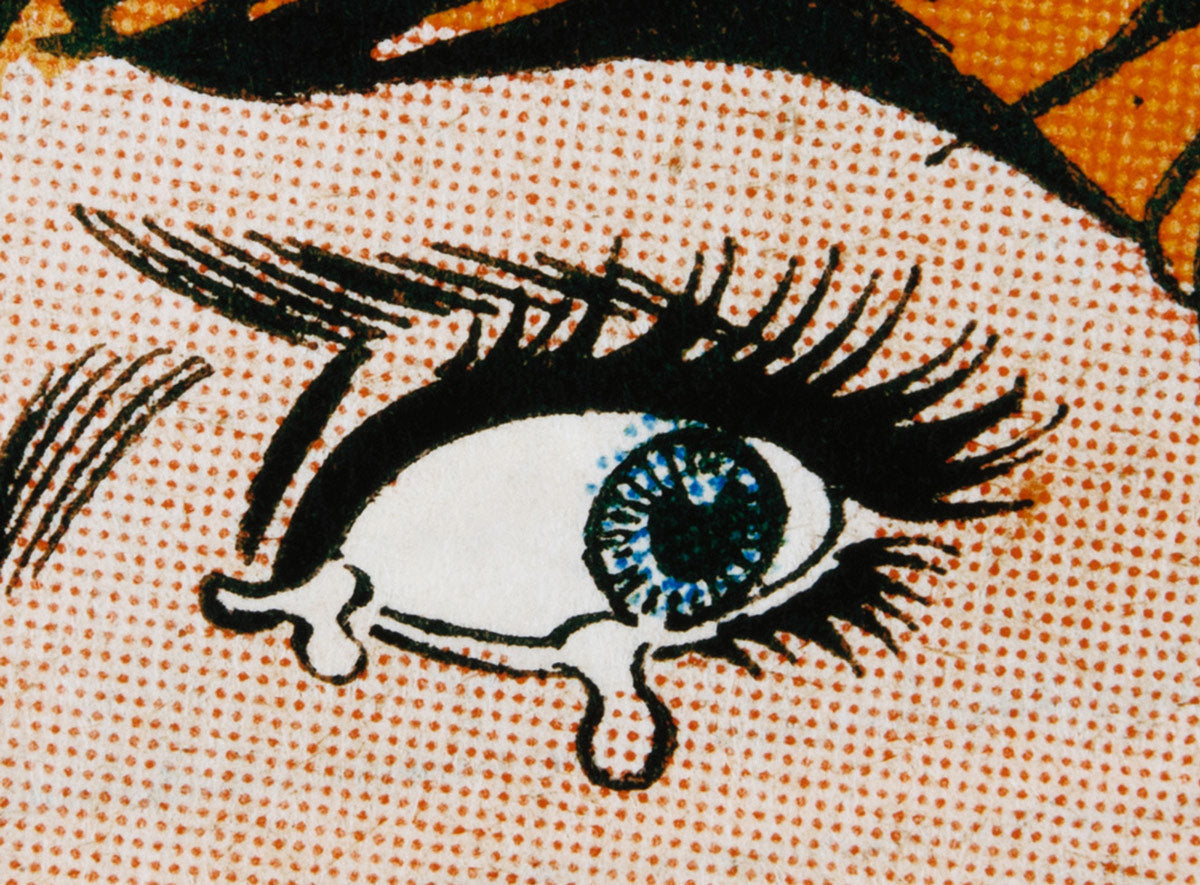
Damien Hirst – All the children's songs (The Currency)
Damien Hirst and the Global Art Market
Few contemporary artists have engaged as openly with the structures of the contemporary art market as Damien Hirst. In 2008 he staged the auction Beautiful Inside My Head Forever, selling new works directly through Sotheby's rather than through traditional galleries. The event generated over £100 million and demonstrated how contemporary art had become intertwined with global finance and media attention.
Rather than existing outside the artwork, these systems of circulation become part of Hirst's practice. Exhibitions, collectors, auctions, and media narratives all contribute to how art acquires visibility and meaning.
In this sense, Hirst's work reflects broader transformations within contemporary culture, where images circulate rapidly through global networks of institutions, markets, and digital platforms.

Damien Hirst – Loyalty (The Virtues, H9-7)
Damien Hirst's Legacy and Influence
Damien Hirst's influence extends far beyond the generation of the Young British Artists. His practice reshaped how contemporary art engages with spectacle, authorship, and the economics of cultural production.
By combining the conceptual strategies of Conceptual Art with the bold visibility associated with Pop Art, Hirst demonstrated that intellectual inquiry and mass cultural impact are not mutually exclusive. His work expanded the scale at which contemporary artists could operate within global media and market systems.
Today, many artists working with installation, biological materials, large-scale studio production, and conceptual systems operate within frameworks that Hirst helped normalize. His work remains a central reference point in discussions of art, value, belief, and the circulation of images in contemporary culture.
His work remains a central reference point in discussions of art, value, belief, and the circulation of images in contemporary culture.
The idea becomes a machine that makes the art.


