Otis Kwame Kye Quaicoe

As a boy in Accra, Otis Kwame Kye Quaicoe learned that the hand-painted movie posters outside the cinema were made by commissioned artists — he tracked them down, and some gave him lessons. Decades later, after meeting an American woman online, eloping, and moving to Portland in 2017, he painted in his kitchen while working shifts at FedEx. Within three years he had his first solo show; within four months of his auction debut, a single painting sold for $250,000. Works held in major museum collections worldwide.

Browse signed Otis Kwame Kye Quaicoe prints and editions now.


Available Prints & Editions

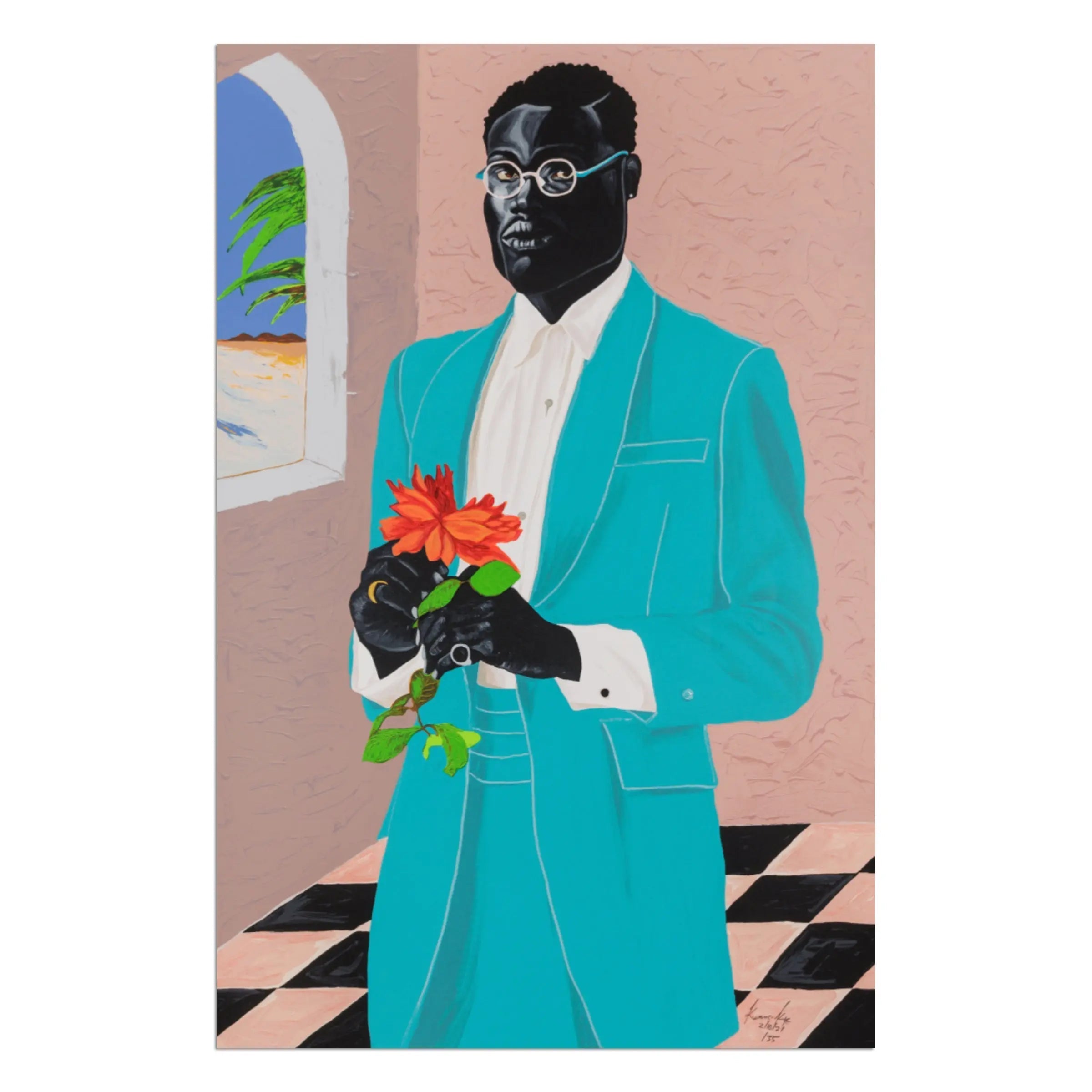
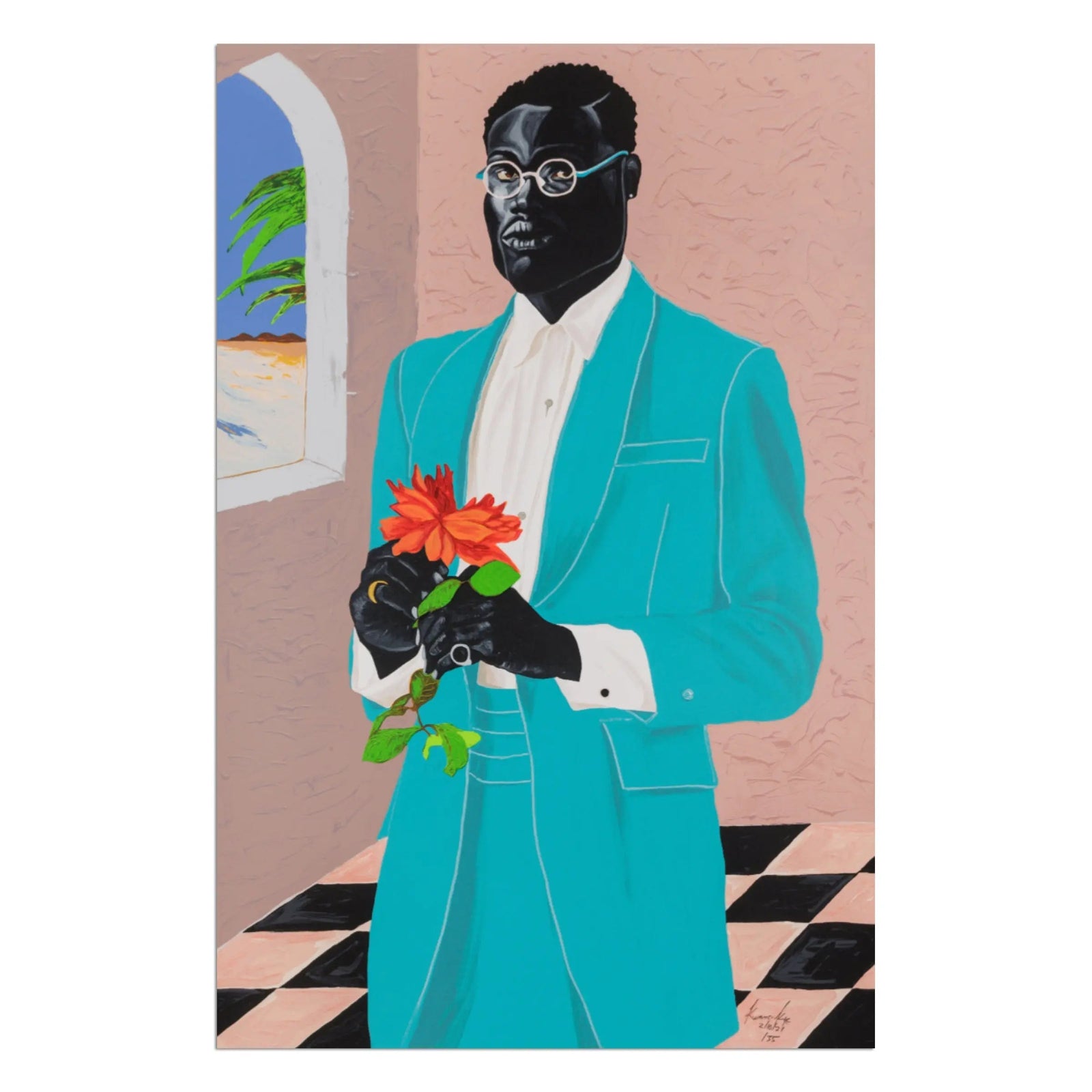
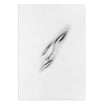
Otis Kwame Kye Quaicoe - View of Yoei William

Otis Kwame Kye Quaicoe Biography
Otis Kwame Kye Quaicoe (born 1988 in Accra, Ghana) discovered painting through the city's cinema culture — hand-painted posters advertising Western films outside local theatres, made by commissioned artists whom he sought out and learned from directly. He was especially drawn to Westerns, fantasising about cowboy boots and the way the characters spoke, long before he understood any of it as a subject he might one day paint himself. He studied formally at the Ghanatta College of Art and Design in Accra, where he met fellow student Amoako Boafo — a friendship that would prove decisive.

In 2017, after meeting an American woman, Jessica, online and eloping, Quaicoe moved to her hometown of Portland, Oregon — supporting himself with a job at FedEx while painting in his kitchen. Boafo, already establishing his own career, encouraged him to stay in the US and bought some of his early work. In late 2019, Boafo invited him to a Los Angeles residency that led directly to Black Like Me, Quaicoe's first US solo show in early 2020. His entry into the secondary market that same year was unusually dramatic: Shade of Black (2018) sold for $250,000 against a $30,000 high estimate within months, and Girl in White Dress (2018) more than doubled its own estimate shortly after — results that let him leave FedEx behind entirely.

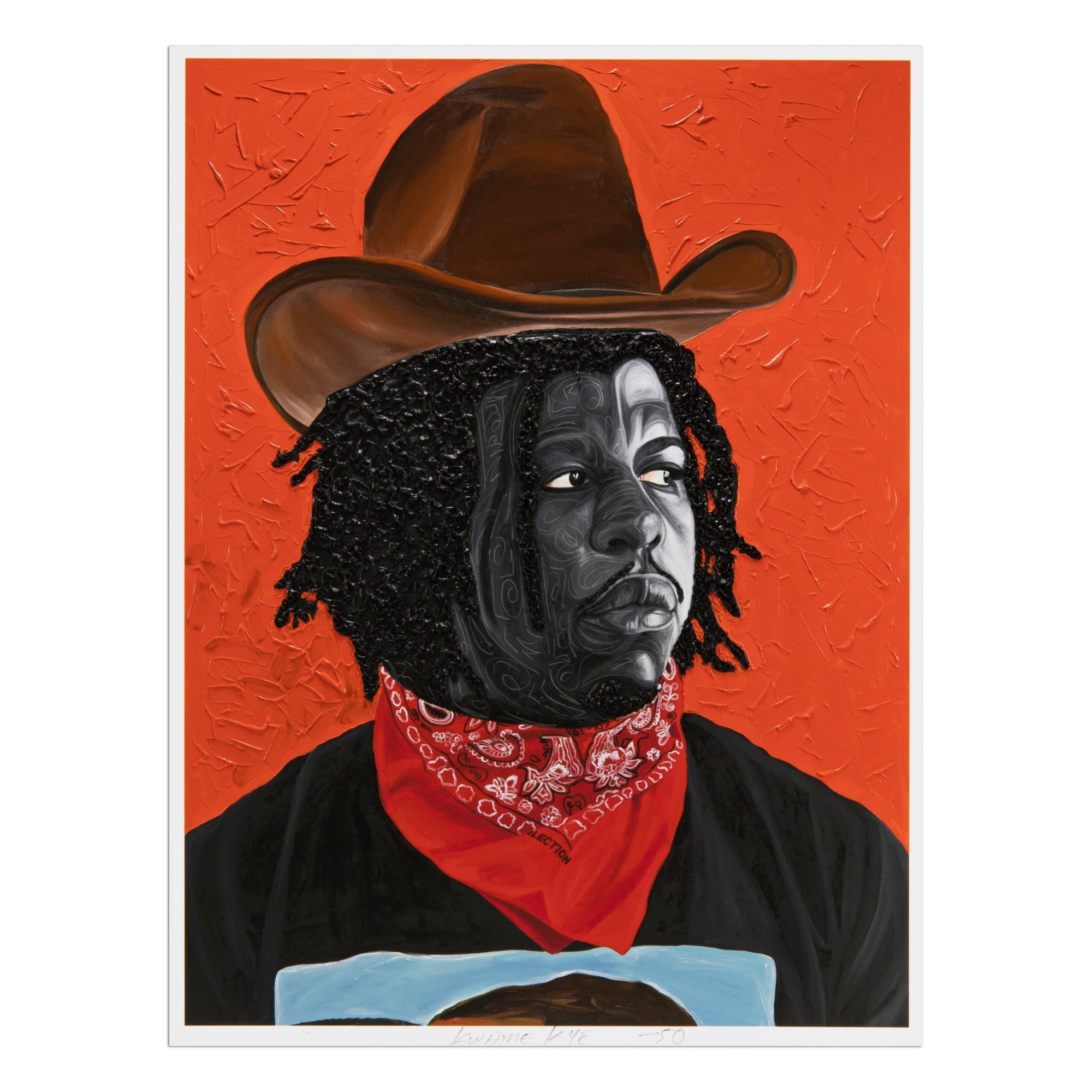
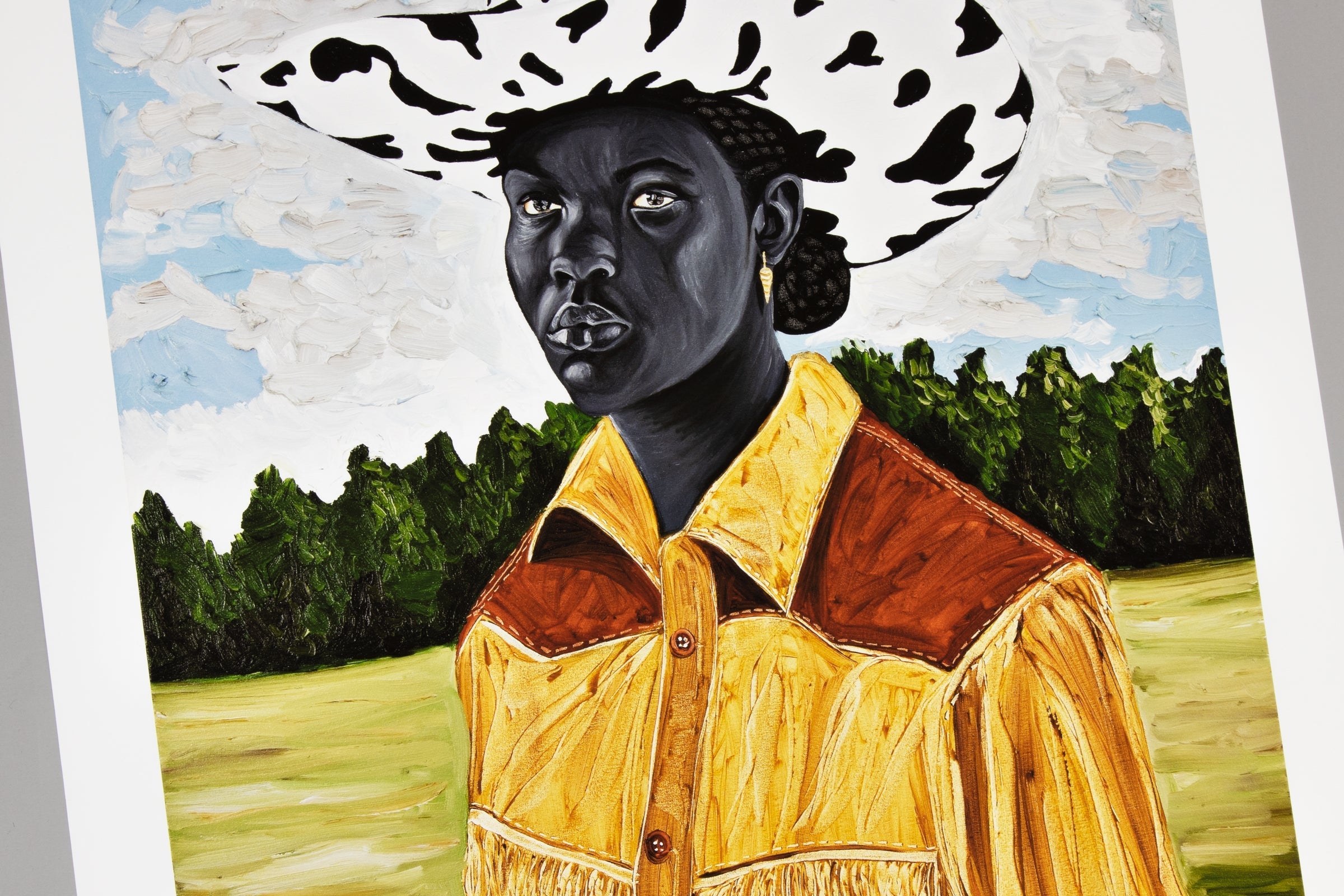
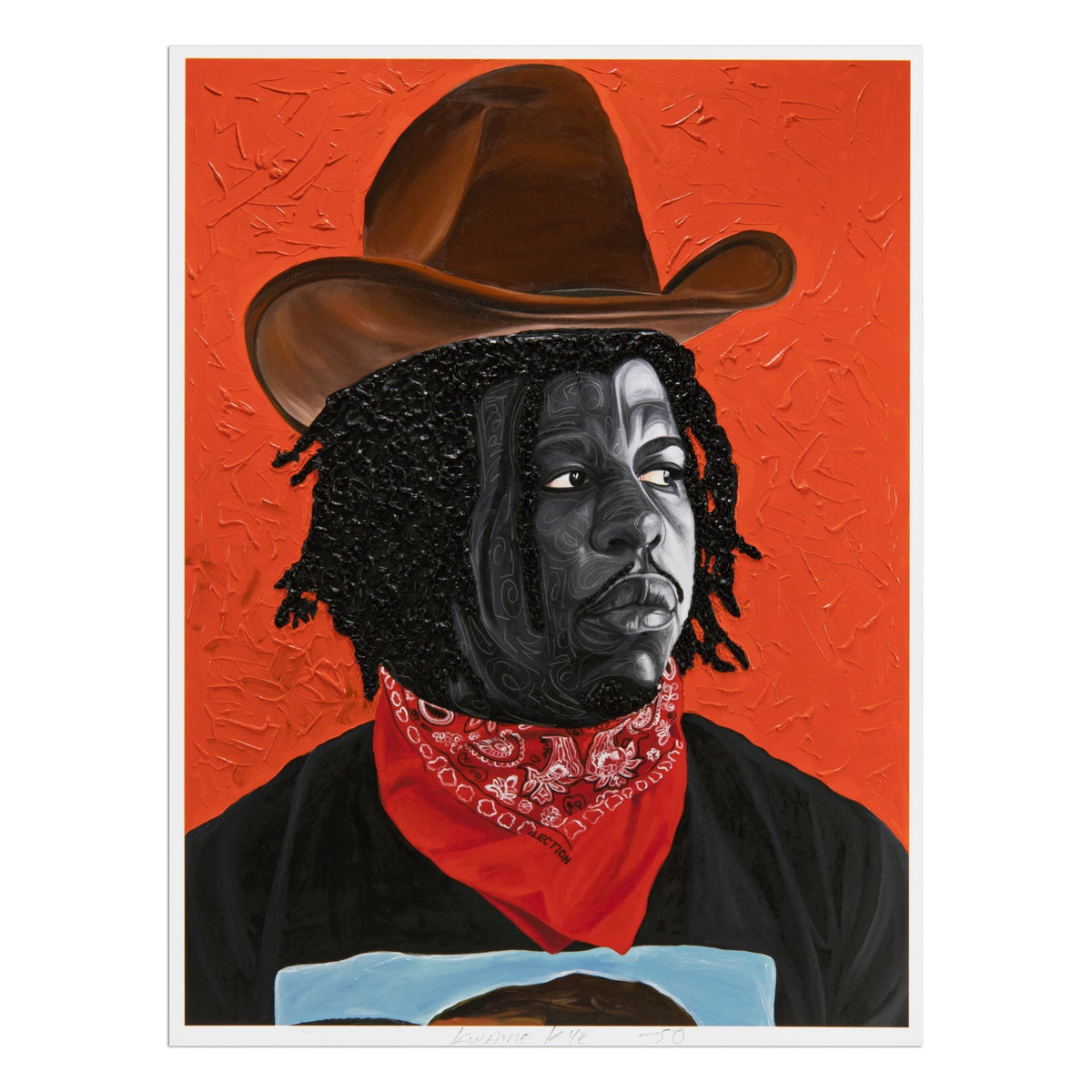
Black Rodeo, his most significant body of work, began that same year, catalysed by the Black Lives Matter movement and the murder of George Floyd. The response introduced Quaicoe to a contemporary Black cowboy community he hadn't known existed, including the Compton Cowboys. BLACK RODEO: Cowboys of the 21st Century opened at Almine Rech Brussels in 2022, his European solo debut, extending the series into sculpture for the first time. His signature technique — velvety grayscale skin rendered against vivid, near-monochromatic colour fields — has remained consistent across subsequent work, including a recent series addressing boxing.

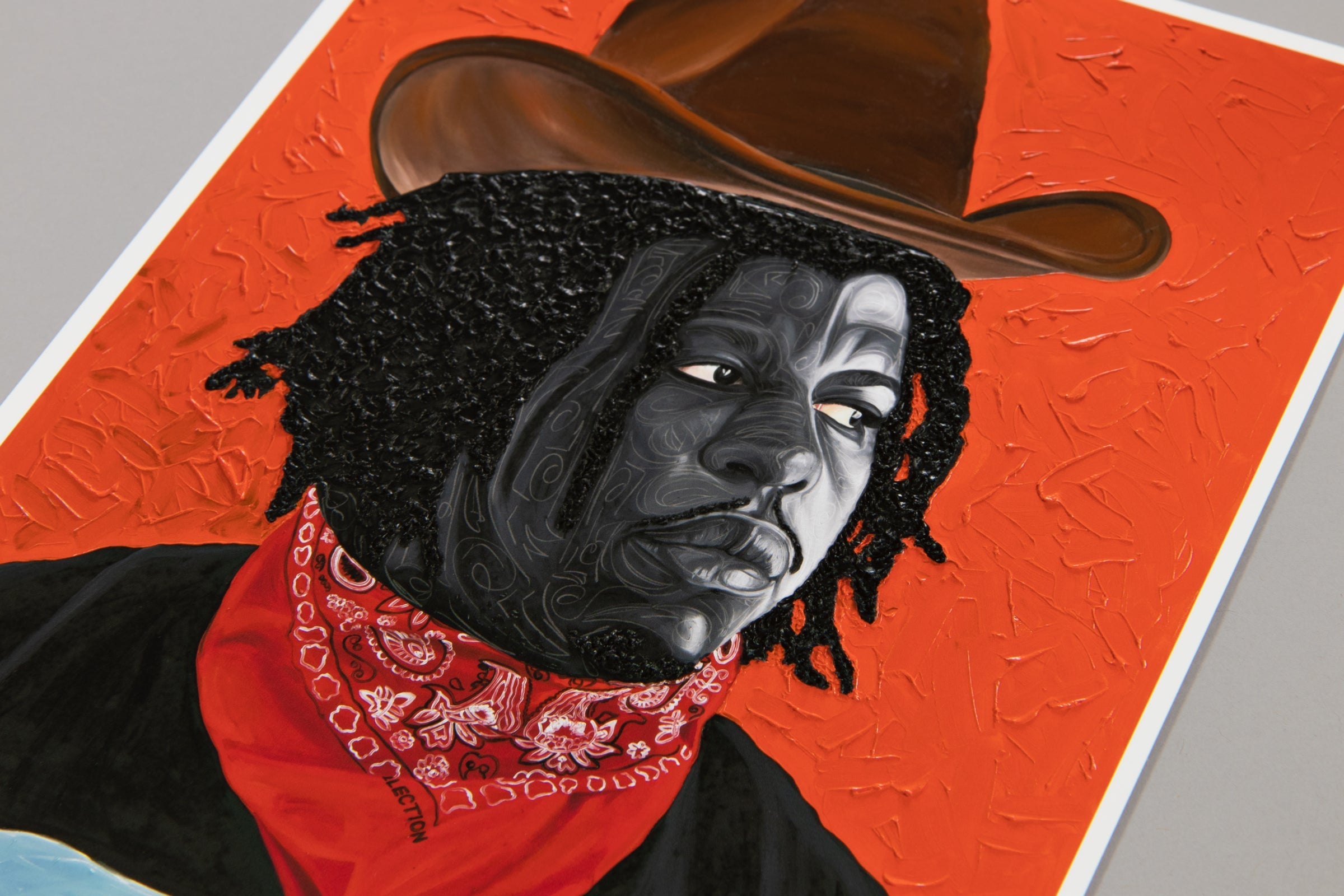
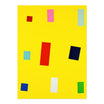
Otis Kwame Kye Quaicoe - Jon Gray (Black Rodeo)

Why does Otis Kwame Kye Quaicoe matter?
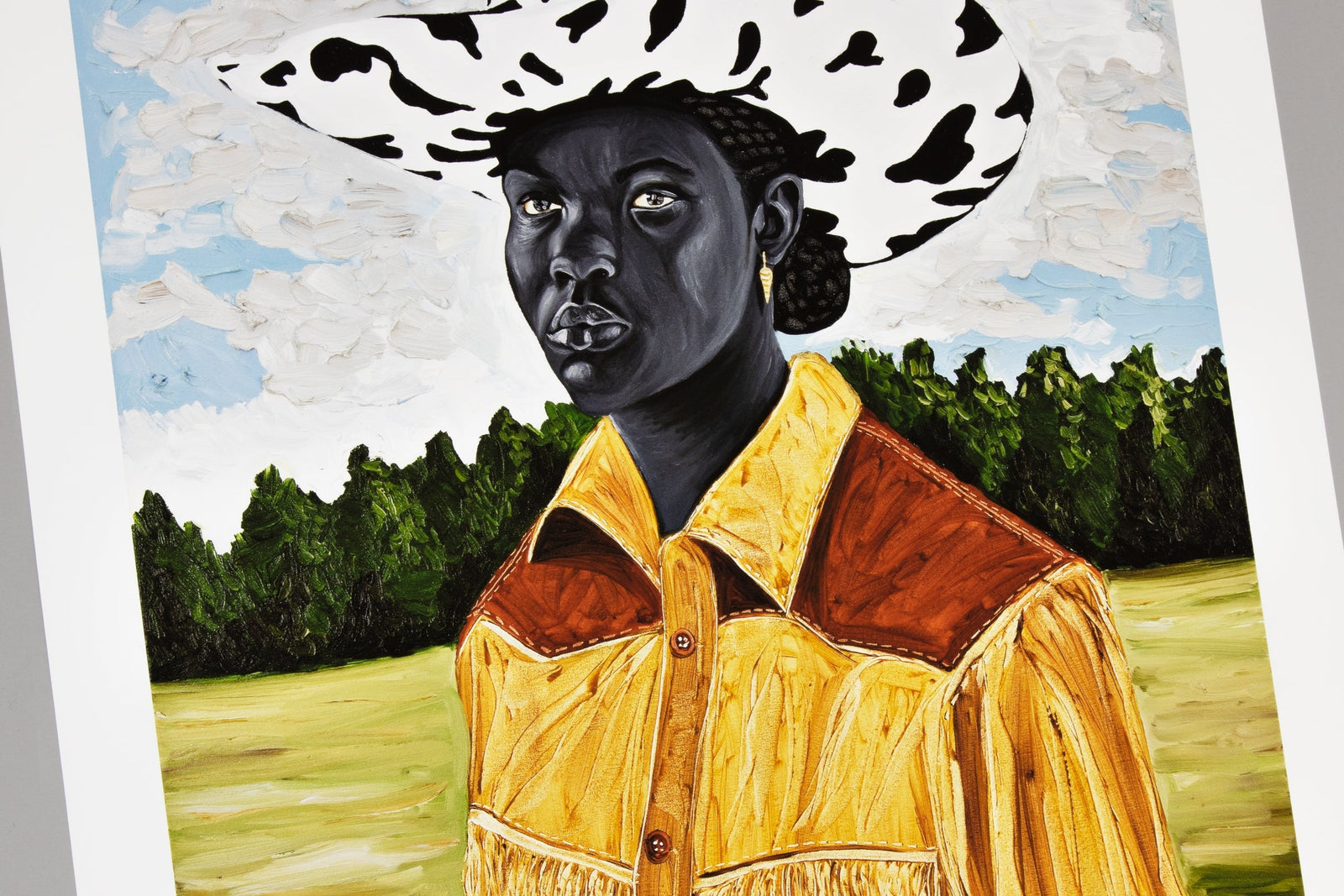
Quaicoe occupies a genuinely distinctive position within contemporary Black figuration, and he has said so himself with unusual clarity: in Ghana, his early work concerned politics and childhood, not race — "because we were all Black," as he has put it, the category simply wasn't as visible a daily fact of life. Race only became his central subject after he moved to Portland in 2017 and encountered, for the first time, what it meant to be seen and categorised as Black in America. That delayed, outsider's arrival at the subject is precisely what gives Black Rodeo its particular force: Quaicoe wasn't correcting a gap he had lived inside his whole life, but one he discovered with the shock of genuine unfamiliarity — cowboys had been a childhood fantasy borrowed from Hollywood, and finding a real, historically erased Black cowboy community became, in his words, the moment fantasy turned into reality.

That discovery produced something more than representation. Black Rodeo restores a specific, historically documented population — rodeo riders, ranch hands, working cowboys — to an iconography built almost entirely around their absence, an act of correction closer to political art than to simple visibility. The project's 2022 extension into sculpture at Almine Rech Brussels suggests a body of work still actively expanding its own methods, not settling into a repeatable formula.

Quaicoe belongs to a generation now widely described as the Accra School — himself, Amoako Boafo, and Kwesi Botchway among its most visible figures — Ghanaian painters who trained together, still call each other close friends, and have collectively reshaped how international museums and collectors engage with contemporary West African portraiture. Boafo brought Quaicoe along early, buying his work and opening the door to his first American show; by most accounts, Quaicoe has since begun extending the same support to a younger cohort of his own, continuing a chain of mentorship that runs directly through the movement's short but consequential history.

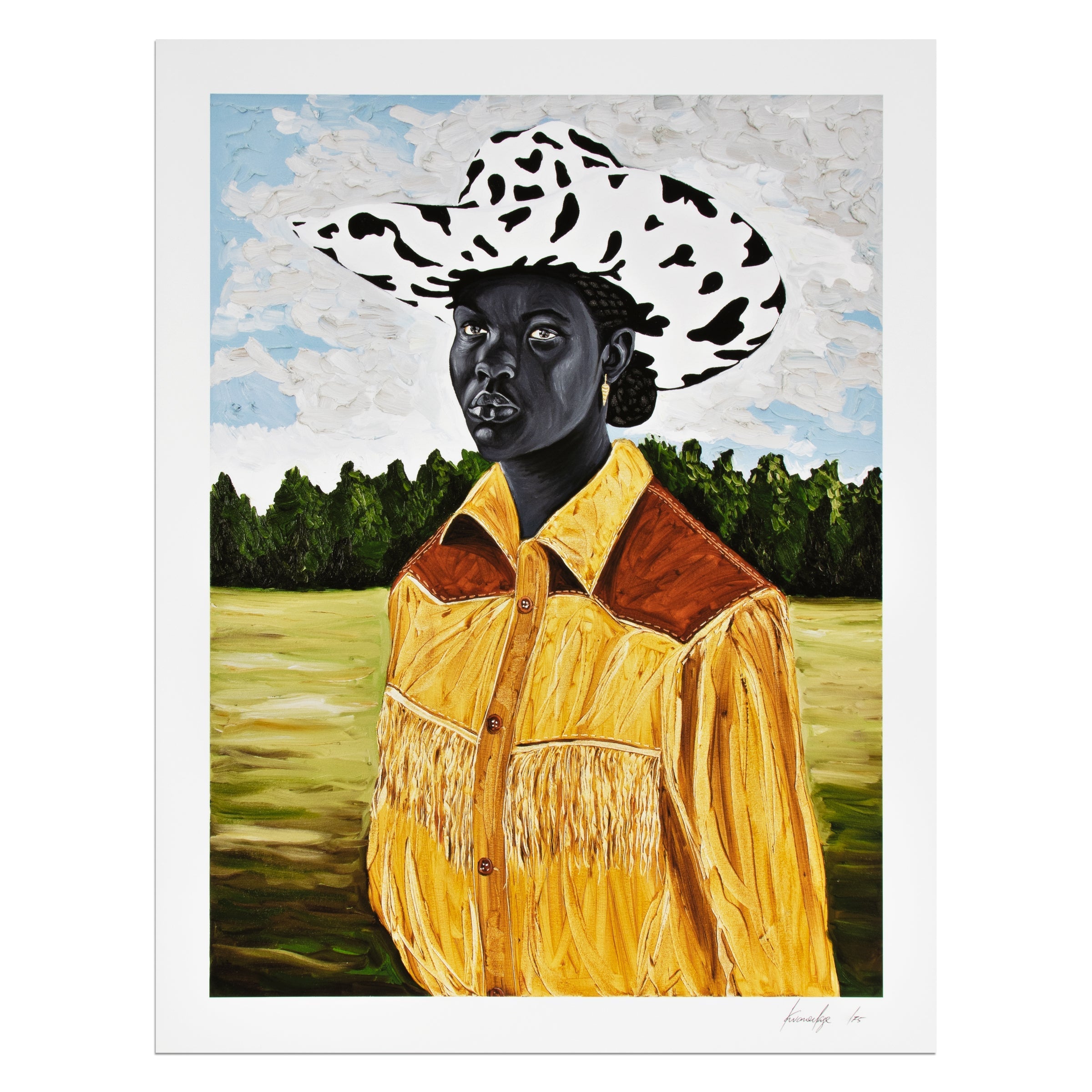
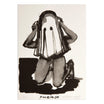
Otis Kwame Quaicoe, Rancher

Otis Kwame Kye Quaicoe Prints & Editions

Quaicoe's editions extend his Black Rodeo project directly into print — Rancher and Jon Gray, both archival pigment prints published by Almine Rech Editions in editions of 75 and 50 respectively, translate individual portraits from the series into signed, numbered form. A special Black Rodeo edition, combining the exhibition catalogue with a dedicated print in a run of 50, accompanied the Brussels show itself.

His limited edition prints have shown genuinely growing secondary-market demand, with individual results for Rancher ranging considerably depending on condition, provenance, and auction timing — a pattern consistent with a painter whose unique works have themselves moved unusually quickly from studio obscurity to six-figure auction results.

For collectors, Quaicoe's editions offer accessible entry into a practice built on correcting historical erasure through figurative portraiture. Works are held in major museum collections including the Rubell Museum, the Portland Art Museum, and the Museo Picasso Málaga.

Otis Kwame Kye Quaicoe: Key Questions

Collecting Otis Kwame Kye Quaicoe?

Looking for a specific artwork or have a question about an edition? We're happy to advise on availability, pricing, condition, and provenance — and to source artworks beyond our current selection.

Contact us

Prints, Photographs & Multiples

View our full collection of

Prints, Photographs & Multiples

Explore editions