

André Butzer

André Butzer paints figures that a critic once described as "Disney characters painted by Munch" — cartoonish, biomorphic, and charged with a darkness their bright colours never quite hide. Working in a style he calls "Science Fiction Expressionism," he fuses European painterly tradition with American consumer imagery, building an invented universe of recurring characters that carry the contradictions of twentieth-century history. These prints and editions translate that universe into etching, linocut, and screenprint — the same figures, tested in a different material.

Browse signed André Butzer prints and editions now.

Available Prints & Editions

8 products
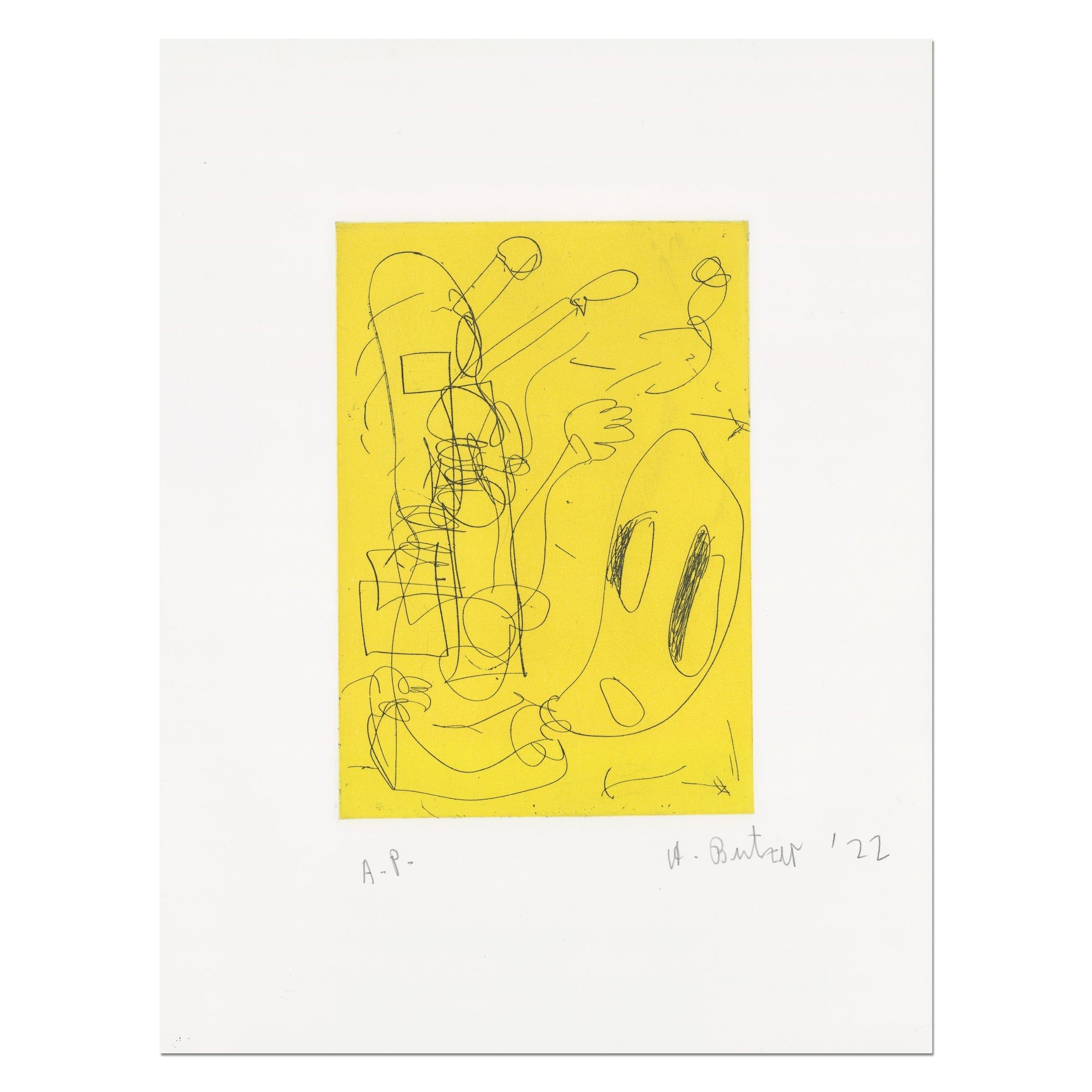
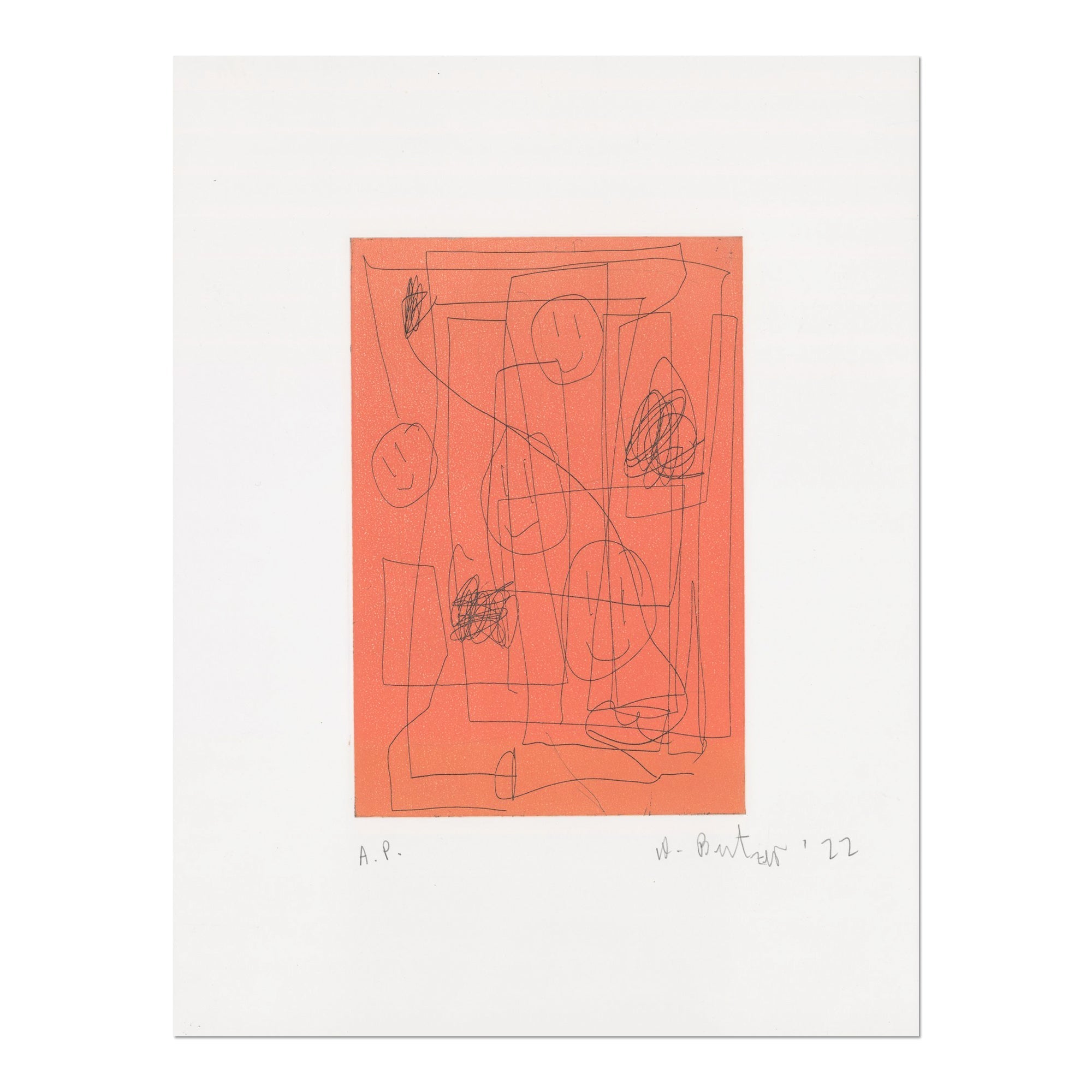
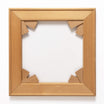
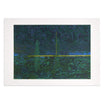
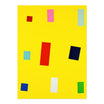
André Butzer - Untitled (Yellow)
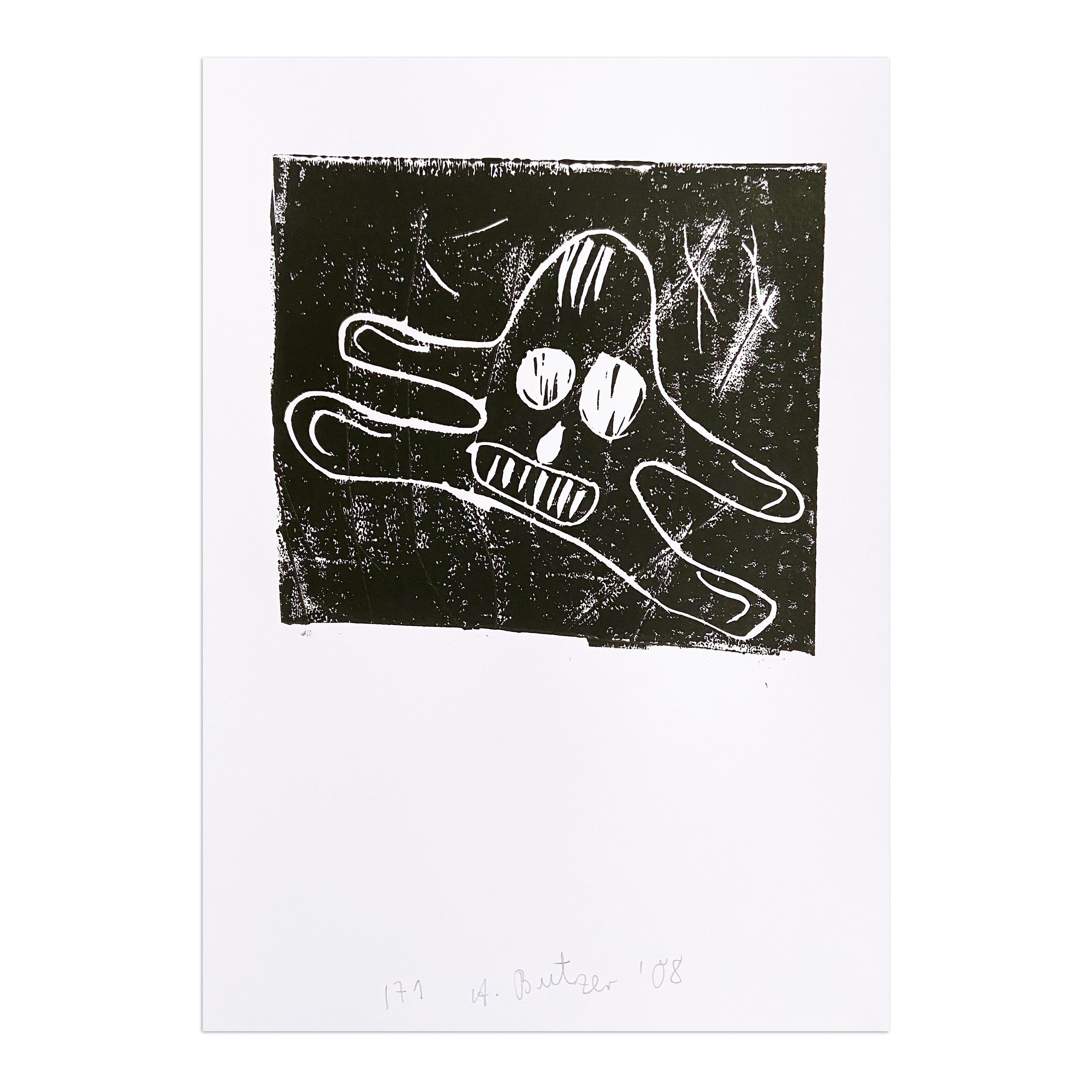
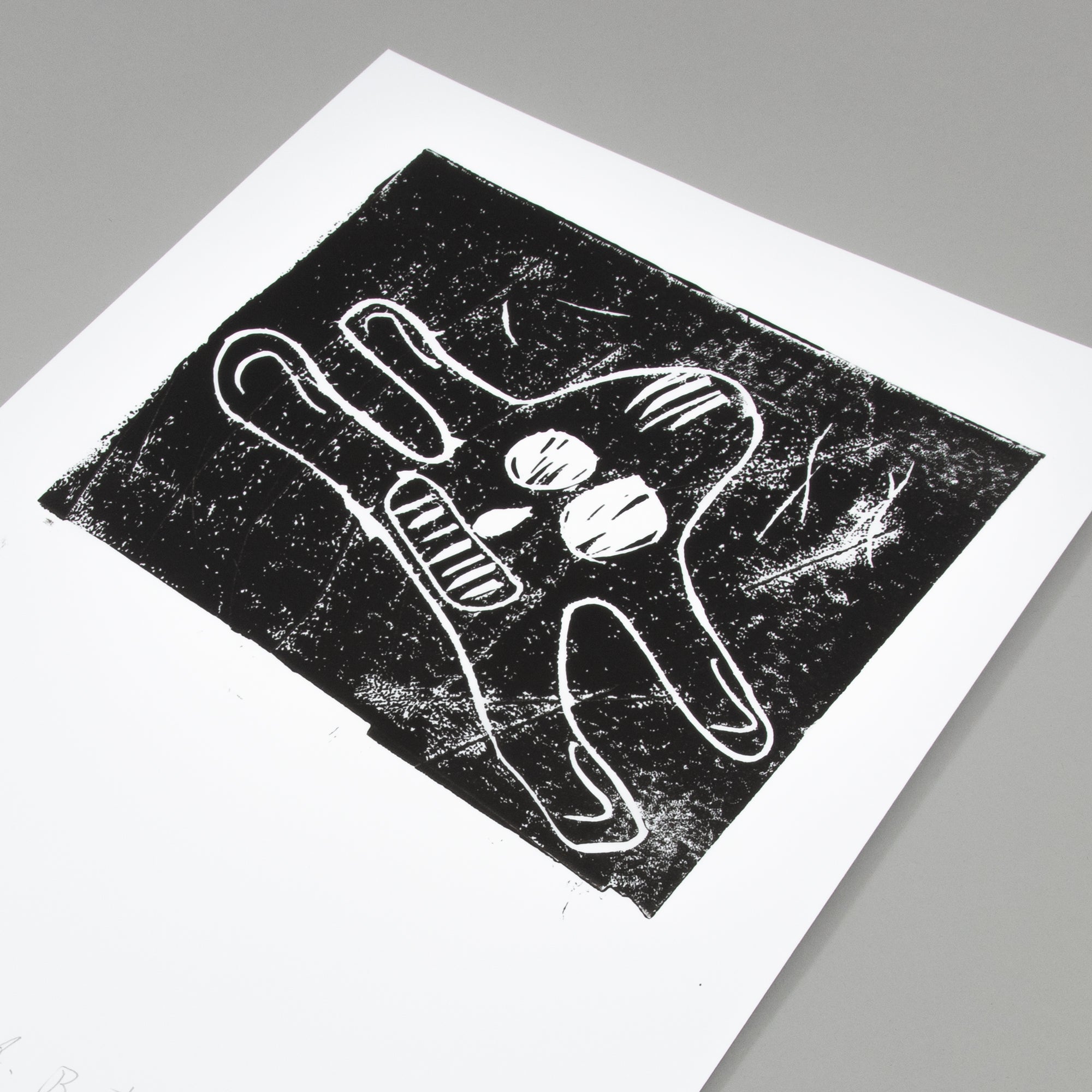
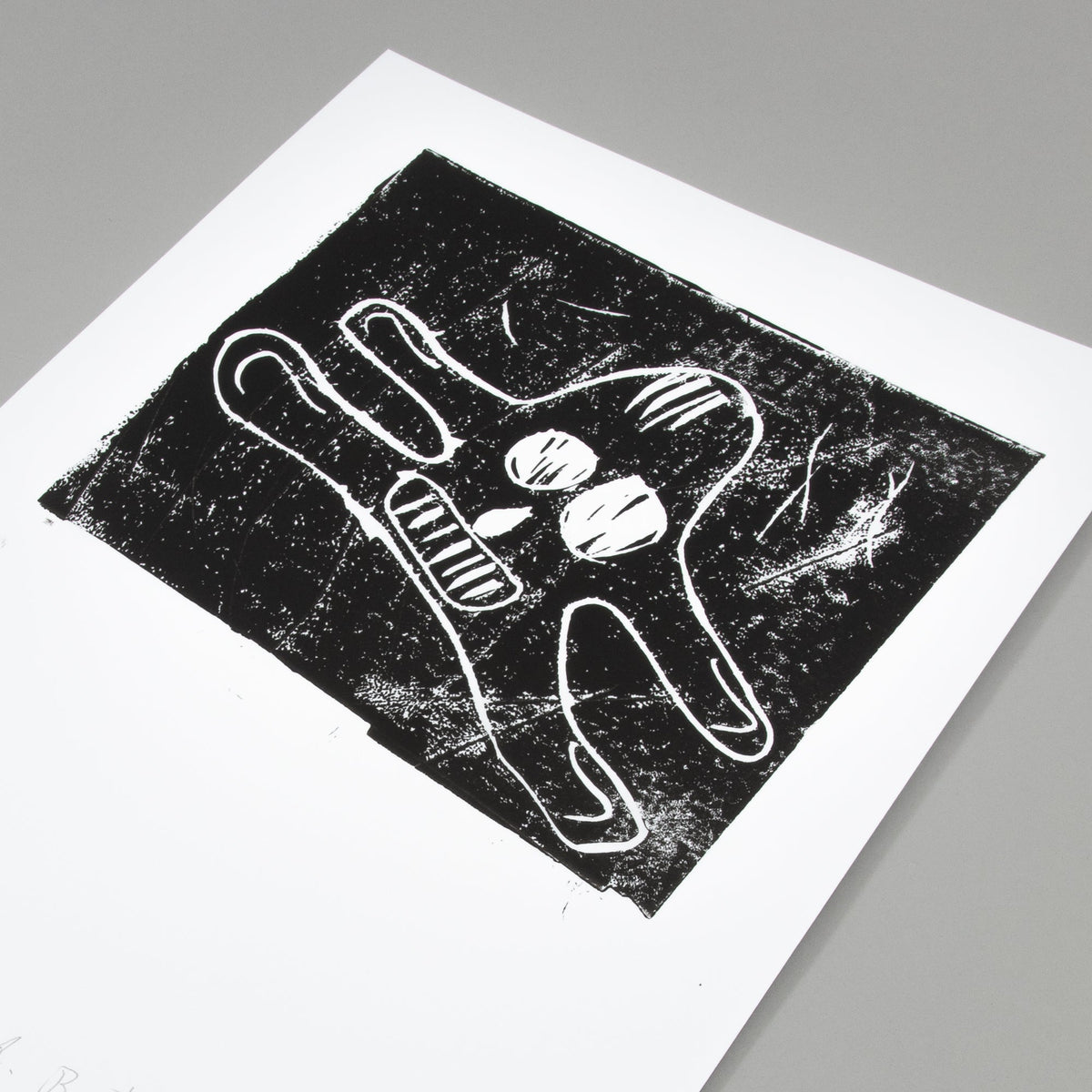
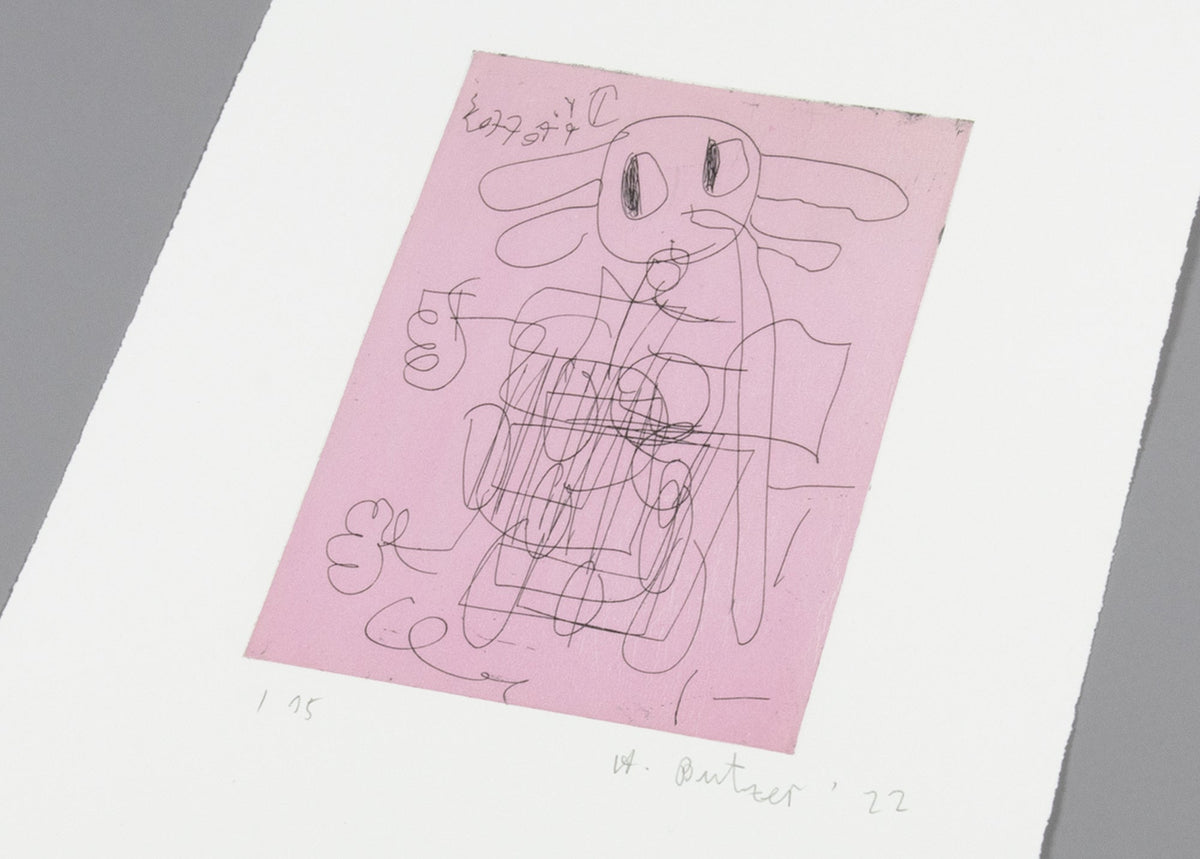
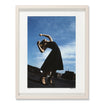
André Butzer - Untitled (Wanderer)André Butzer - Untitled (Wanderer)
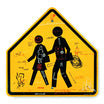
André Butzer - Untitled (Smileys)
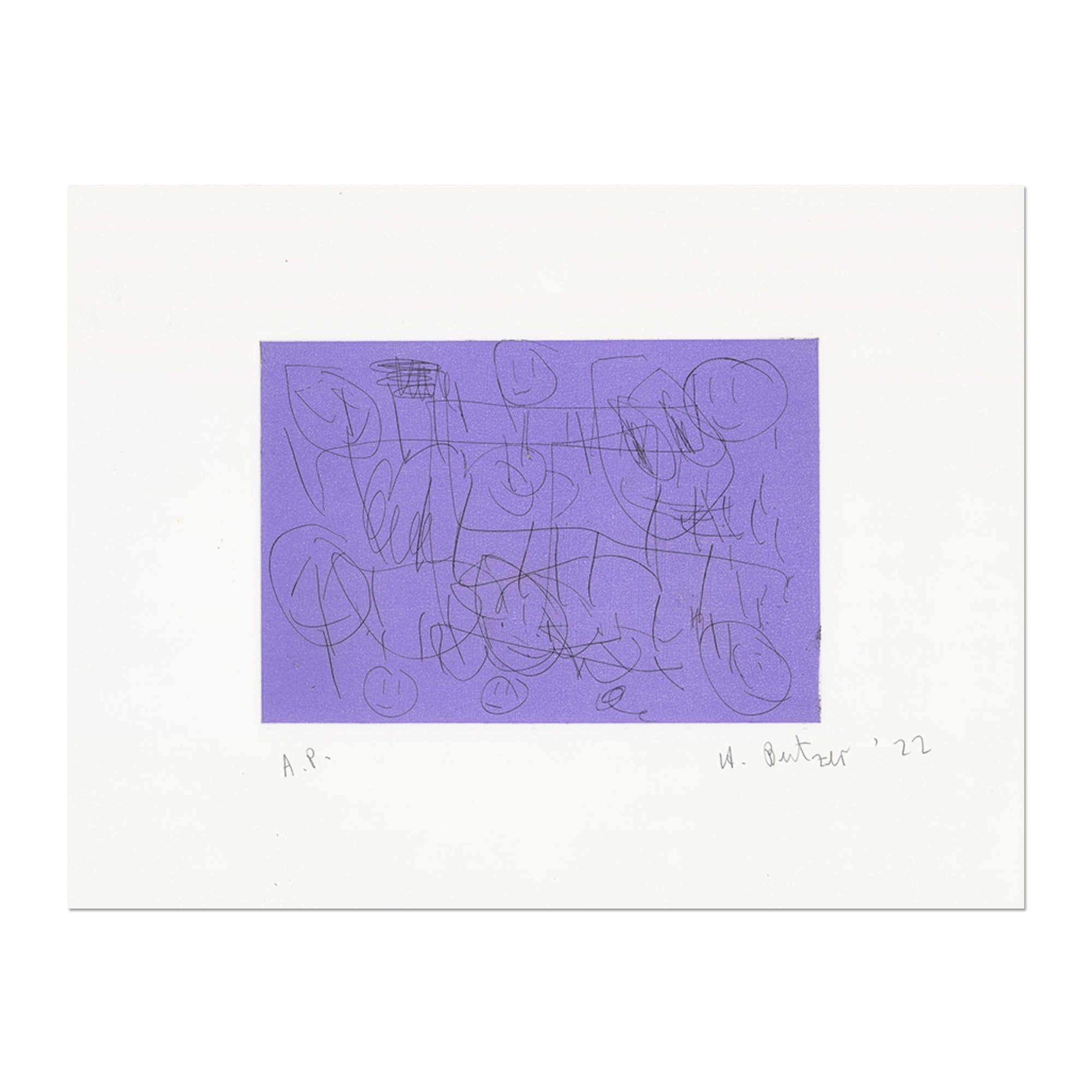
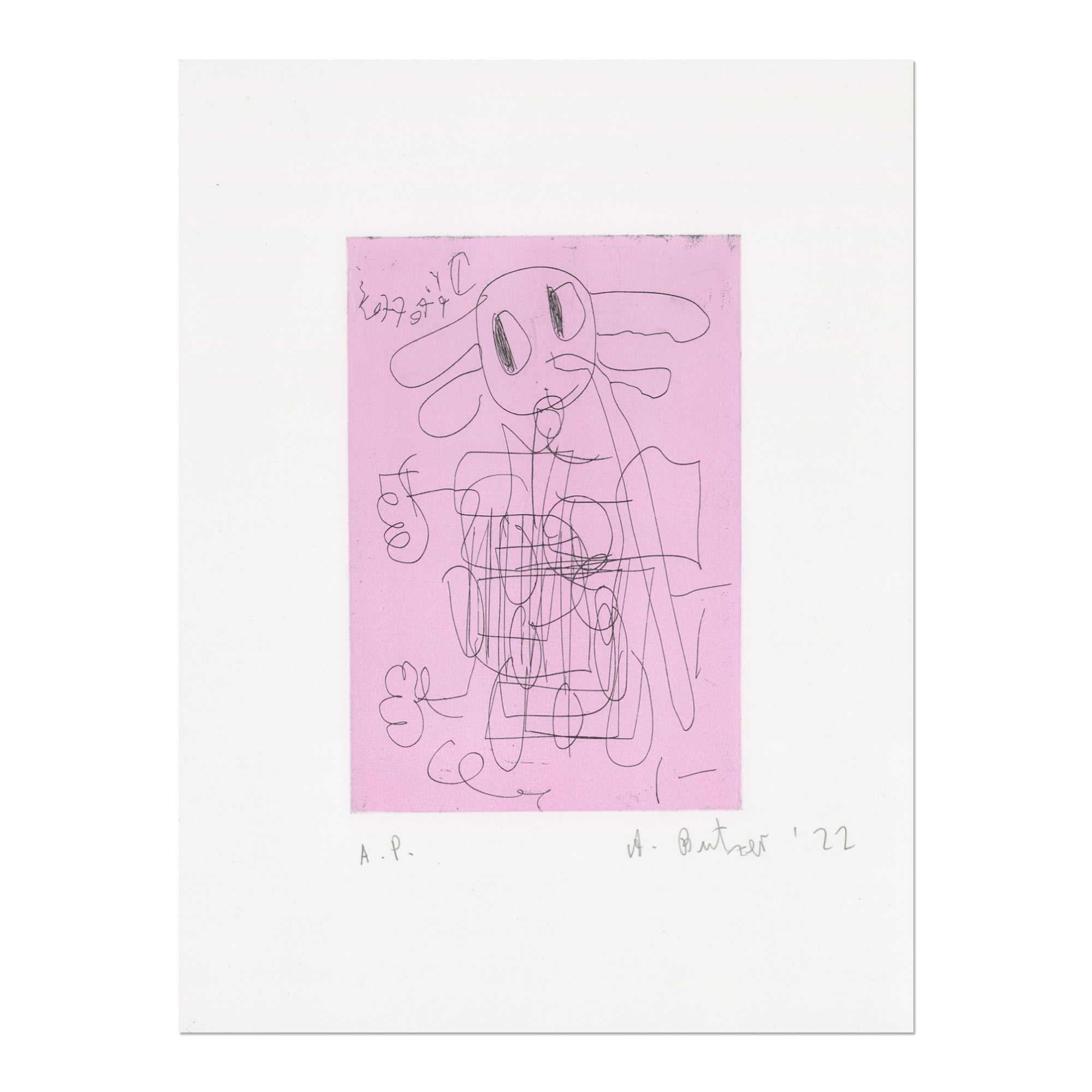
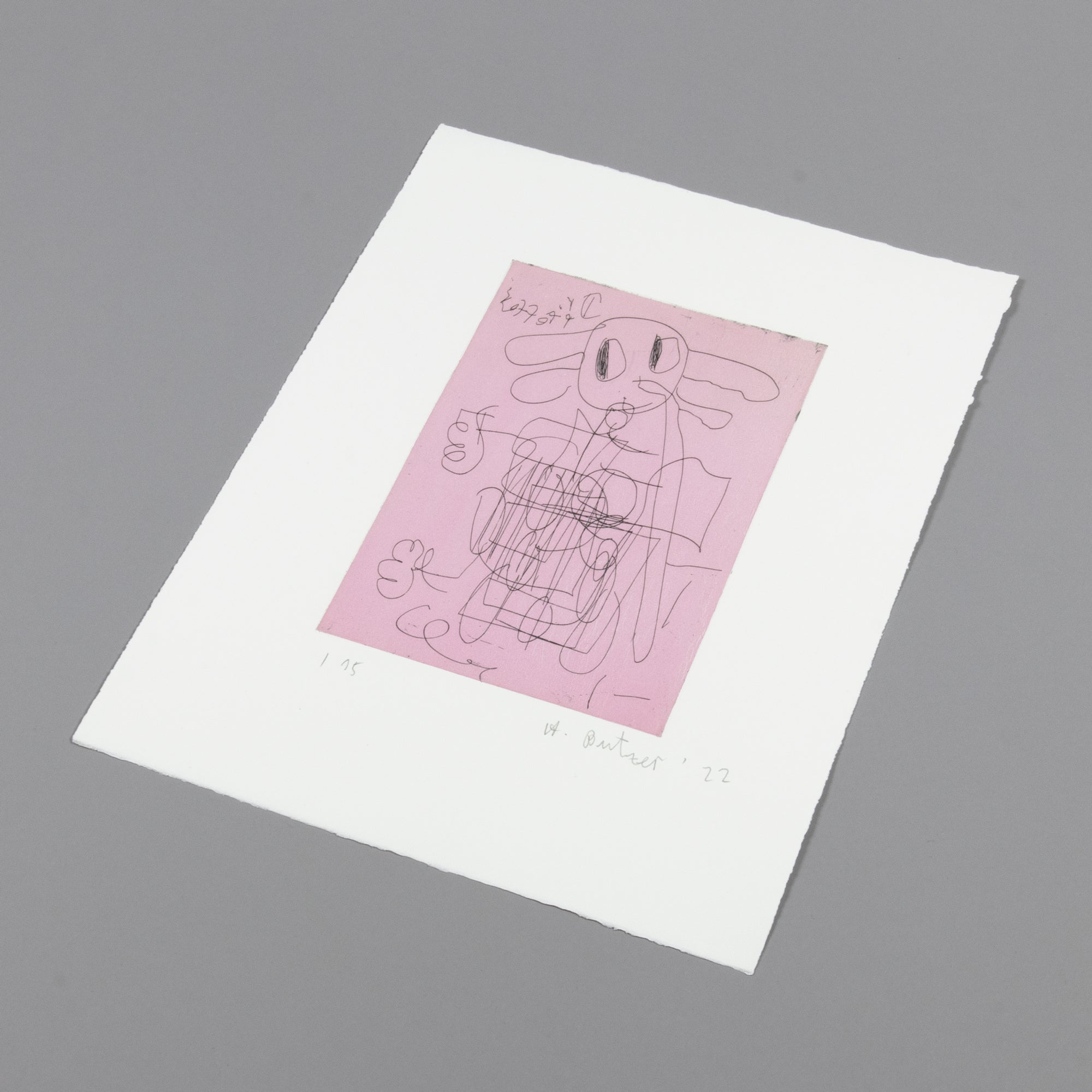
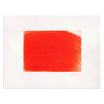
André Butzer - Untitled (Purple)
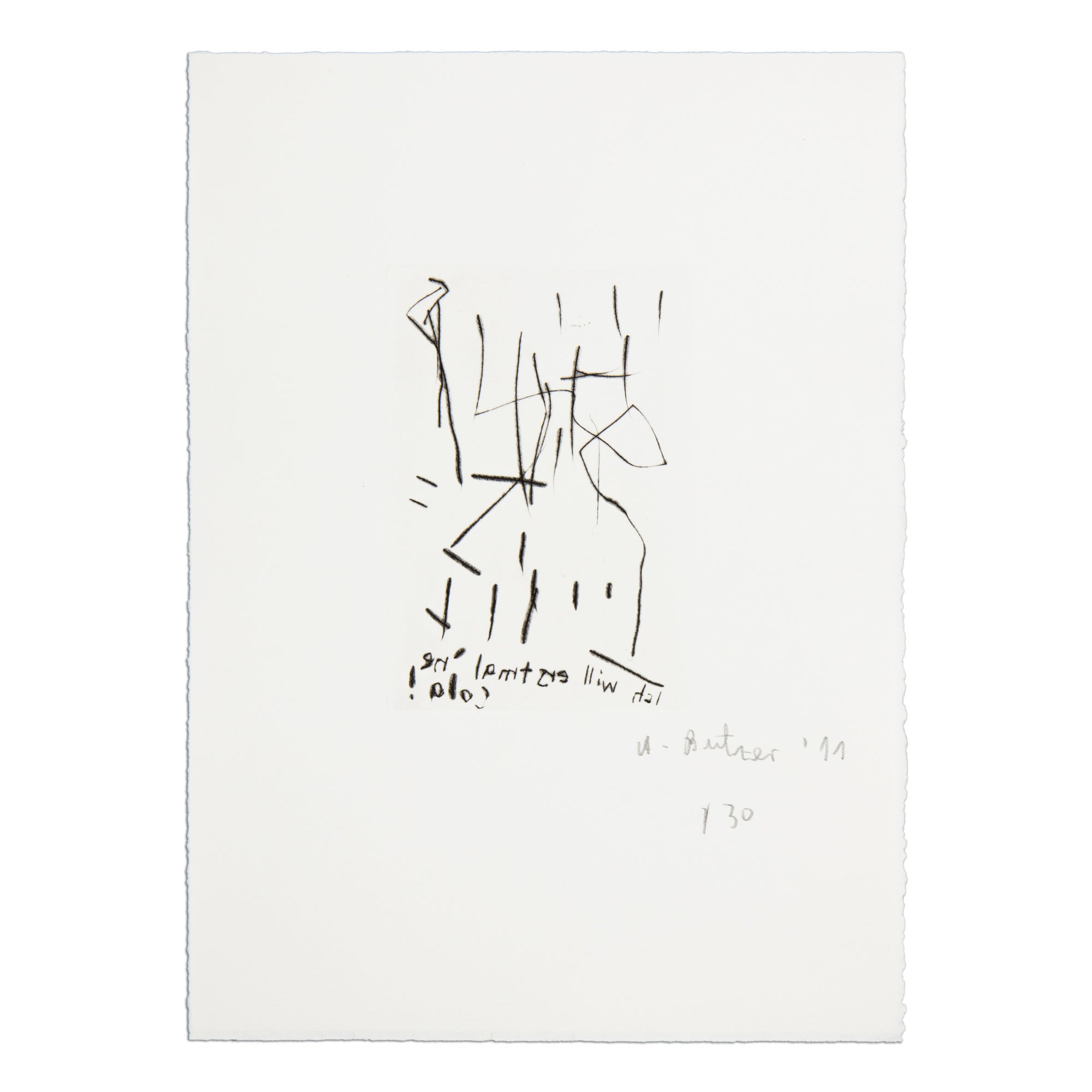
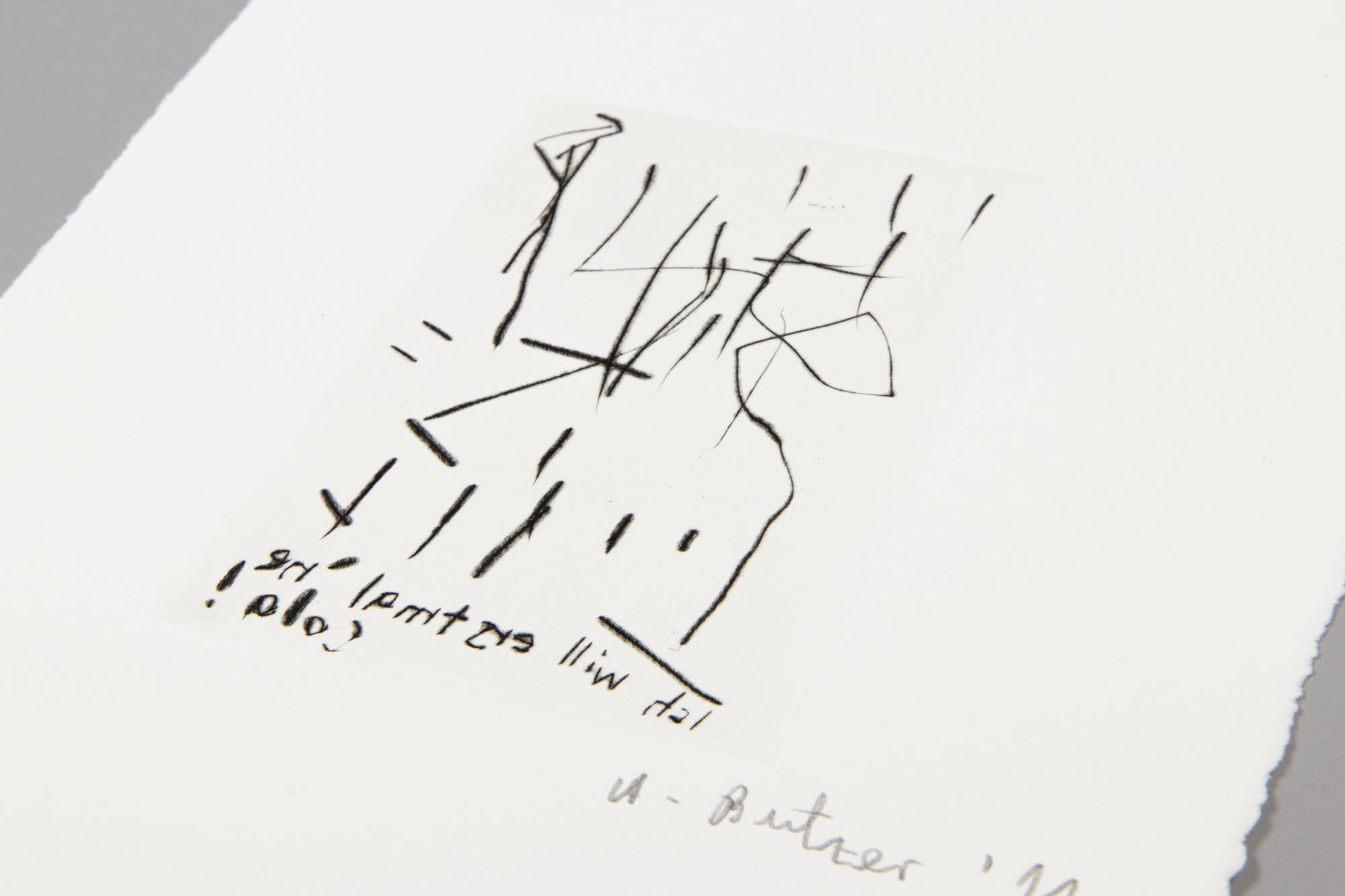
André Butzer - Untitled (Ich will erstmal 'ne Cola!)André Butzer - Untitled (Ich will erstmal 'ne Cola!)
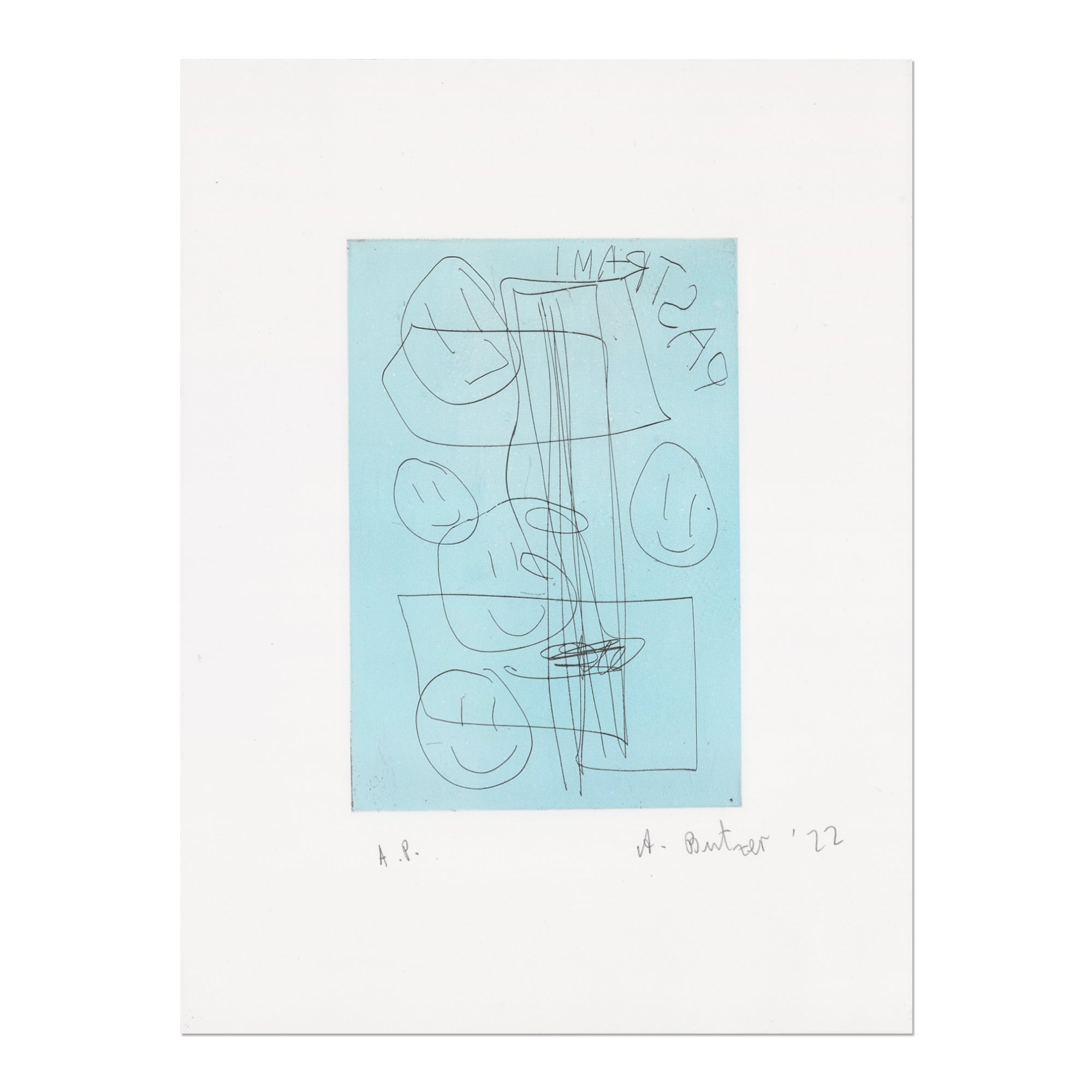
André Butzer - Pastrami
André Butzer – Pastrami Sale price€2.700,00
Sold out
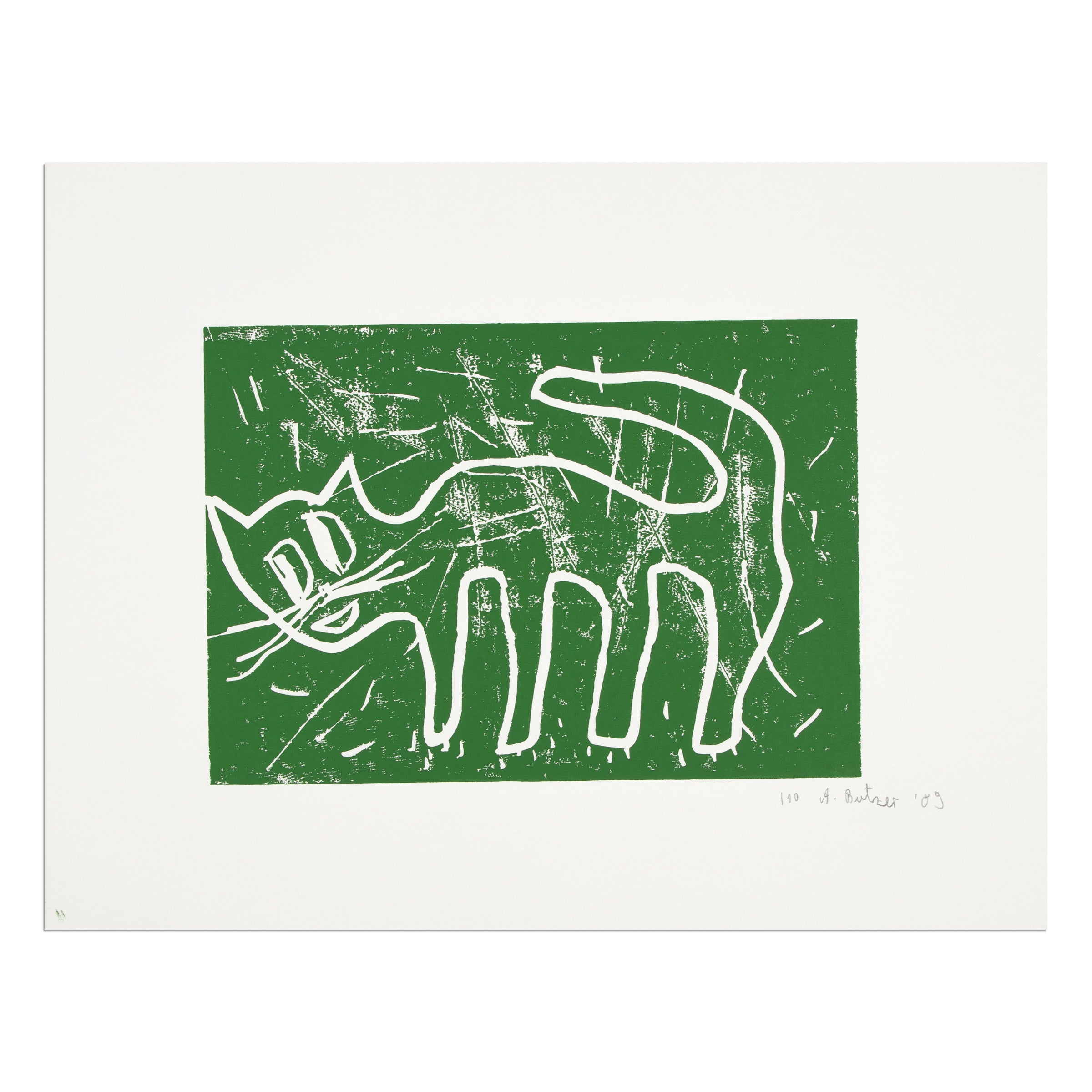
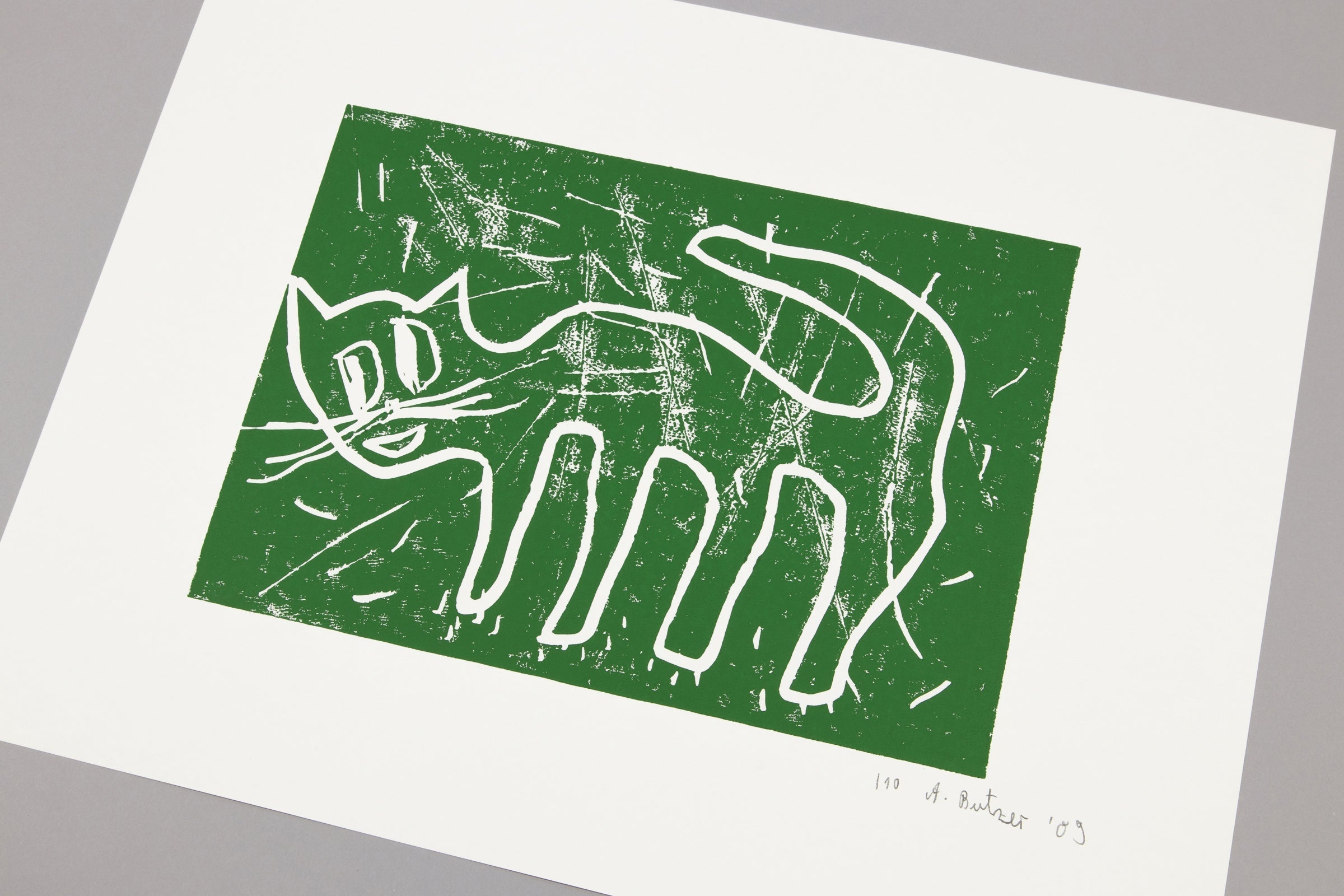
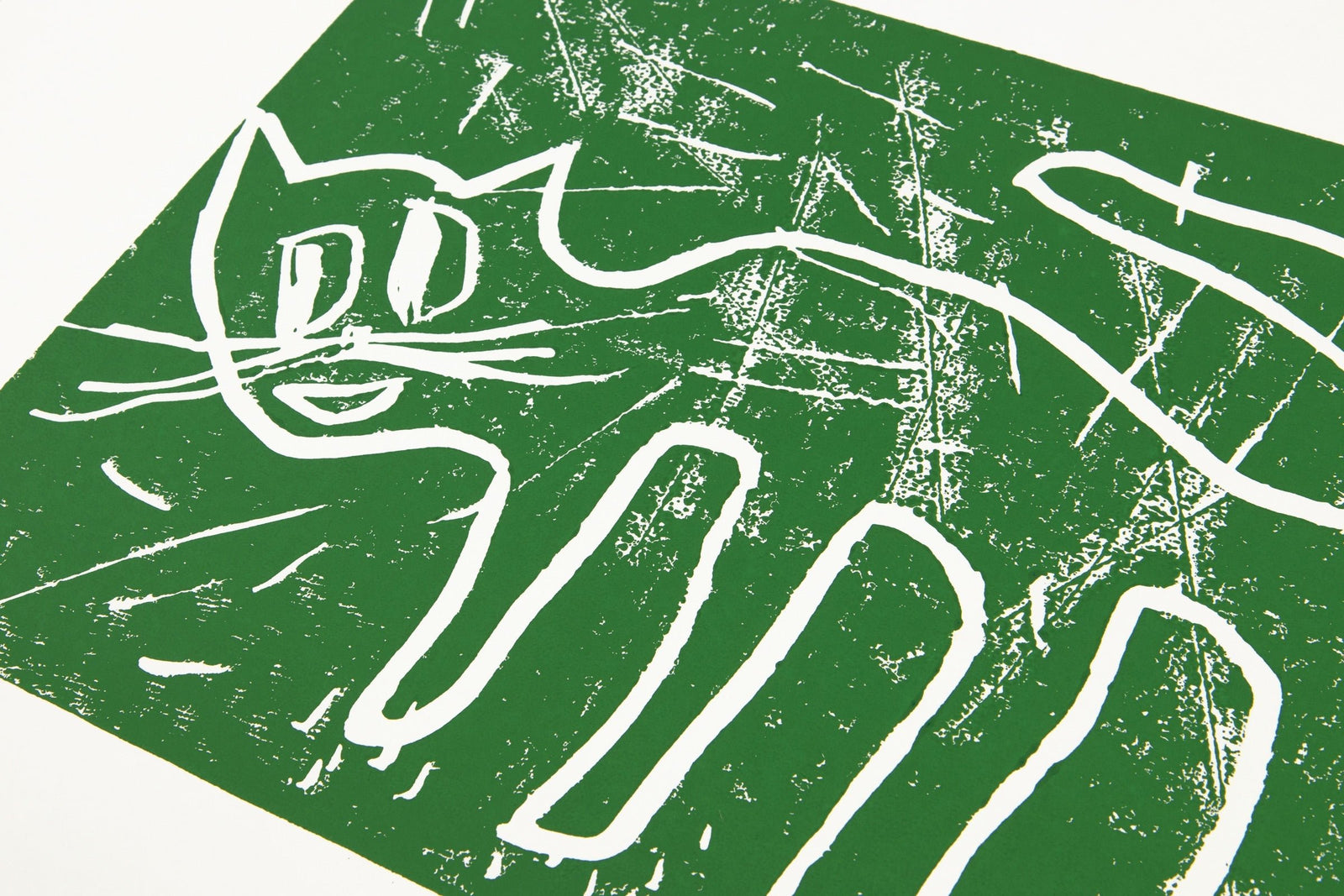
André Butzer - KatzeAndré Butzer - Katze
André Butzer – Katze Sale price€2.800,00
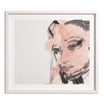
André Butzer - Dr. PfefferAndré Butzer - Dr. Pfeffer
André Butzer – Dr. Pfeffer Sale price€2.700,00
01

André Butzer Biography

André Butzer (born 1973 in Stuttgart) briefly studied at the Merz Academy before enrolling at the Hochschule für bildende Künste in Hamburg, where his colourful, comic-inflected figures displeased his teacher Franz Erhard Walther enough that he failed a key examination after two semesters. What looked like a setback became formative: from 1996 to 2000 Butzer was part of Akademie Isotrop, an independent Hamburg artist collective, before founding the Institut für SDI-Traumforschung with sculptor Björn Dahlem in 2001 — a self-organised infrastructure built outside the academy that shaped his entire generation.

His mature style, which he named "Science Fiction Expressionism," draws simultaneously on Cézanne, Munch, Matisse, and Henry Ford's industrial America, and on Walt Disney's cartoon universe. The art historian Guillermo Solana described the result precisely: Butzer's figures look "like Disney figures painted by Munch." Recurring characters — the childlike Friedens-Siemens, gazing at both an industrial past and a utopian future; the Wanderer, homeless witness to man-made devastation — populate paintings that move between saturated, almost naïve colour and stark, reductive grey, a colour Butzer has called "the multiple potentiation of all colours."

In a characteristically self-aware gesture, Butzer titled a 2011 exhibition at the Kestnergesellschaft in Hanover Der wahrscheinlich beste abstrakte Maler der Welt — "probably the best abstract painter in the world." The joke carries a real claim: across three decades, his black-and-white abstractions have investigated the limits of painting with the same seriousness as his figurative work. He now lives and works in Rangsdorf, in a studio built on the site of a disused 1930s aircraft factory.

André Butzer
02

Famous André Butzer Artworks

Chips und Pepsi und Medizin (Das Glück) holds Butzer's auction record, selling for $554,671 at Phillips London in 2021 — a title that folds consumer culture, medicine, and the word "happiness" into a single, characteristically loaded phrase.

The Friedens-Siemens series, begun in the early 2000s, introduced Butzer's most recognisable figure: a childlike form suspended between innocence and historical catastrophe, its wide eyes taking in both ruin and utopia at once. The character recurs across paintings, prints, and the artist's own writing, functioning as something close to a personal mythology.

Der wahrscheinlich beste abstrakte Maler der Welt (2011), the Kestnergesellschaft exhibition and its accompanying body of work, marked Butzer's fullest turn toward radical abstraction — austere, near-monochrome canvases that strip away the cartoon figuration of his earlier work while pursuing the same question: what painting can still do after modernism's exhaustion.

André Butzer - Katze
03

André Butzer Prints & Editions

Printmaking has run alongside Butzer's painting since early in his career, extending the same figures and colour logic into etching, linocut, and screenprint. His editions are not simplified versions of the paintings — the resistance of the plate or block reshapes his gestural mark-making into something more graphic, more exposed. Works such as Untitled (Wanderer) and Dr. Pfeffer carry his recurring characters into the print medium with the same emotional intensity that defines his canvases.

His prints have circulated through galleries and print studios across Berlin, Munich, and beyond, and now sit in the collections of institutions including the Pinakothek der Moderne, Munich. Prices vary considerably by format and rarity, generally ranging from the low thousands for signed editions to significantly more for rare or early prints — a considerably more accessible route into a practice whose paintings now sell into six figures.

For collectors, Butzer's editions offer direct access to an artist whose personal mythology — grey as the sum of all colour, figures that watch history rather than escape it — has made him one of the most distinctive painters of his generation.

01

André Butzer Biography

André Butzer (born 1973 in Stuttgart) briefly studied at the Merz Academy before enrolling at the Hochschule für bildende Künste in Hamburg, where his colourful, comic-inflected figures displeased his teacher Franz Erhard Walther enough that he failed a key examination after two semesters. What looked like a setback became formative: from 1996 to 2000 Butzer was part of Akademie Isotrop, an independent Hamburg artist collective, before founding the Institut für SDI-Traumforschung with sculptor Björn Dahlem in 2001 — a self-organised infrastructure built outside the academy that shaped his entire generation.

His mature style, which he named "Science Fiction Expressionism," draws simultaneously on Cézanne, Munch, Matisse, and Henry Ford's industrial America, and on Walt Disney's cartoon universe. The art historian Guillermo Solana described the result precisely: Butzer's figures look "like Disney figures painted by Munch." Recurring characters — the childlike Friedens-Siemens, gazing at both an industrial past and a utopian future; the Wanderer, homeless witness to man-made devastation — populate paintings that move between saturated, almost naïve colour and stark, reductive grey, a colour Butzer has called "the multiple potentiation of all colours."

In a characteristically self-aware gesture, Butzer titled a 2011 exhibition at the Kestnergesellschaft in Hanover Der wahrscheinlich beste abstrakte Maler der Welt — "probably the best abstract painter in the world." The joke carries a real claim: across three decades, his black-and-white abstractions have investigated the limits of painting with the same seriousness as his figurative work. He now lives and works in Rangsdorf, in a studio built on the site of a disused 1930s aircraft factory.

02

Famous André Butzer Artworks

Chips und Pepsi und Medizin (Das Glück) holds Butzer's auction record, selling for $554,671 at Phillips London in 2021 — a title that folds consumer culture, medicine, and the word "happiness" into a single, characteristically loaded phrase.

The Friedens-Siemens series, begun in the early 2000s, introduced Butzer's most recognisable figure: a childlike form suspended between innocence and historical catastrophe, its wide eyes taking in both ruin and utopia at once. The character recurs across paintings, prints, and the artist's own writing, functioning as something close to a personal mythology.

Der wahrscheinlich beste abstrakte Maler der Welt (2011), the Kestnergesellschaft exhibition and its accompanying body of work, marked Butzer's fullest turn toward radical abstraction — austere, near-monochrome canvases that strip away the cartoon figuration of his earlier work while pursuing the same question: what painting can still do after modernism's exhaustion.

03

André Butzer Prints & Editions

Printmaking has run alongside Butzer's painting since early in his career, extending the same figures and colour logic into etching, linocut, and screenprint. His editions are not simplified versions of the paintings — the resistance of the plate or block reshapes his gestural mark-making into something more graphic, more exposed. Works such as Untitled (Wanderer) and Dr. Pfeffer carry his recurring characters into the print medium with the same emotional intensity that defines his canvases.

His prints have circulated through galleries and print studios across Berlin, Munich, and beyond, and now sit in the collections of institutions including the Pinakothek der Moderne, Munich. Prices vary considerably by format and rarity, generally ranging from the low thousands for signed editions to significantly more for rare or early prints — a considerably more accessible route into a practice whose paintings now sell into six figures.

For collectors, Butzer's editions offer direct access to an artist whose personal mythology — grey as the sum of all colour, figures that watch history rather than escape it — has made him one of the most distinctive painters of his generation.

André ButzerAndré Butzer - Katze

André Butzer: Key Questions

Collecting André Butzer?

Looking for a specific artwork or have a question about an edition? We're happy to advise on availability, pricing, condition, and provenance — and to source artworks beyond our current selection.

Contact us

Prints, Photographs & Multiples

View our full collection of

Prints, Photographs & Multiples

Explore editions