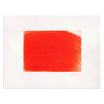
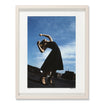
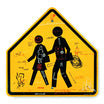
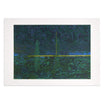
Wade Guyton (born 1972, Hammond, Indiana) is a leading figure in contemporary abstract art, known for redefining how artworks are produced in the digital age. Rather than using traditional brushes or printing plates, Guyton works with inkjet printers, scanners, and basic computer programs, transforming everyday office technology into tools for creating large-scale paintings and limited edition prints.
His practice centers on the deliberate misuse of these machines. Guyton feeds linen, canvas, or sheets of paper through inkjet printers multiple times, often exceeding their technical limits. The resulting artworks feature recurring motifs such as Xs, Us, stripes, and flame forms, digitally composed and then printed in layers. Mechanical glitches, toner inconsistencies, and registration shifts become integral to the final image, introducing accident and material unpredictability into otherwise minimalist compositions.
Through this process, Wade Guyton’s artworks blur the boundary between painting and print, authorship and automation. His abstract prints and canvases foreground the tension between digital precision and physical imperfection, positioning contemporary art as a site where human intention and machine execution converge. Widely exhibited internationally, Guyton’s work has become central to conversations around technology, reproduction, and abstraction in contemporary art.