Barbara Kruger

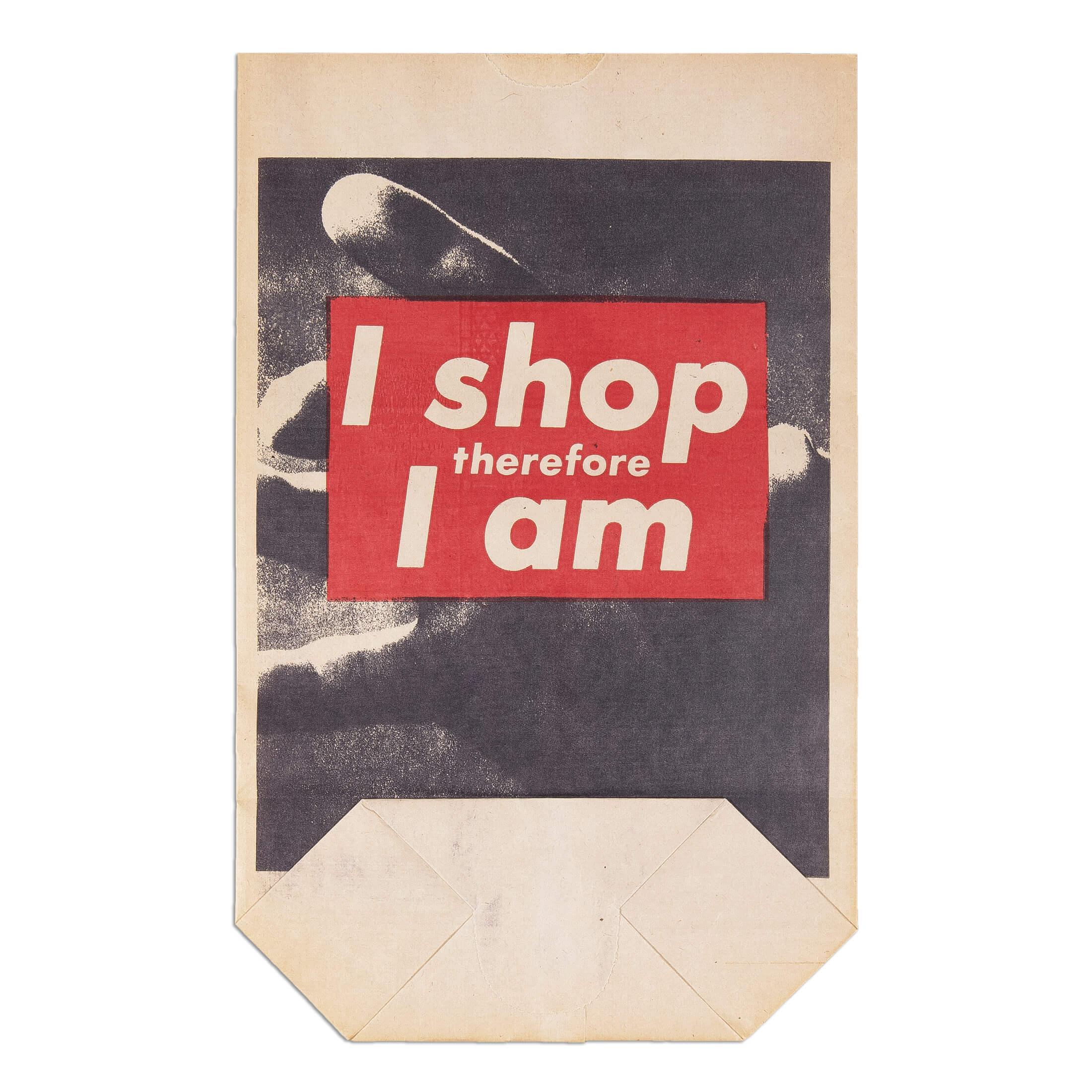
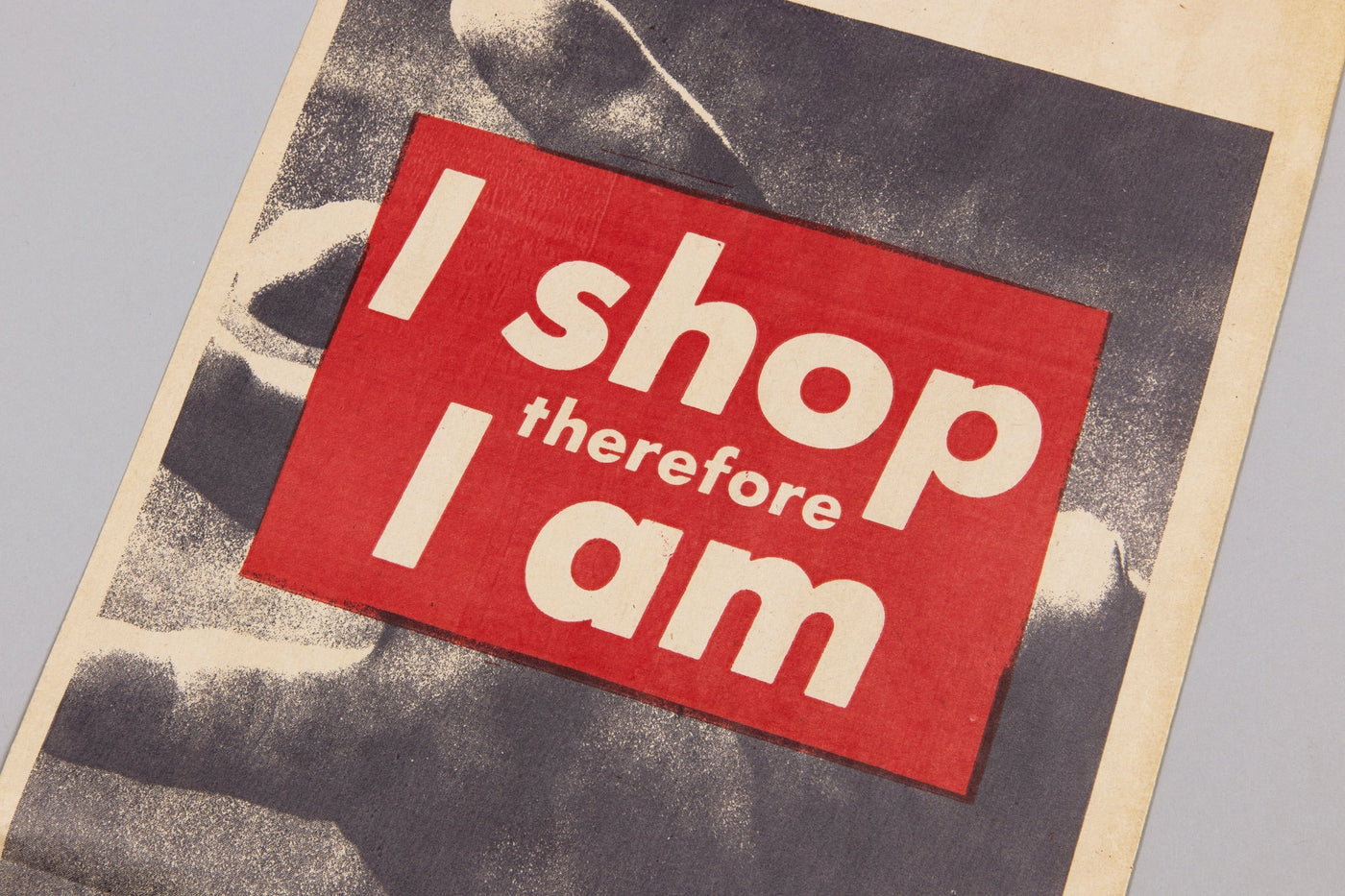
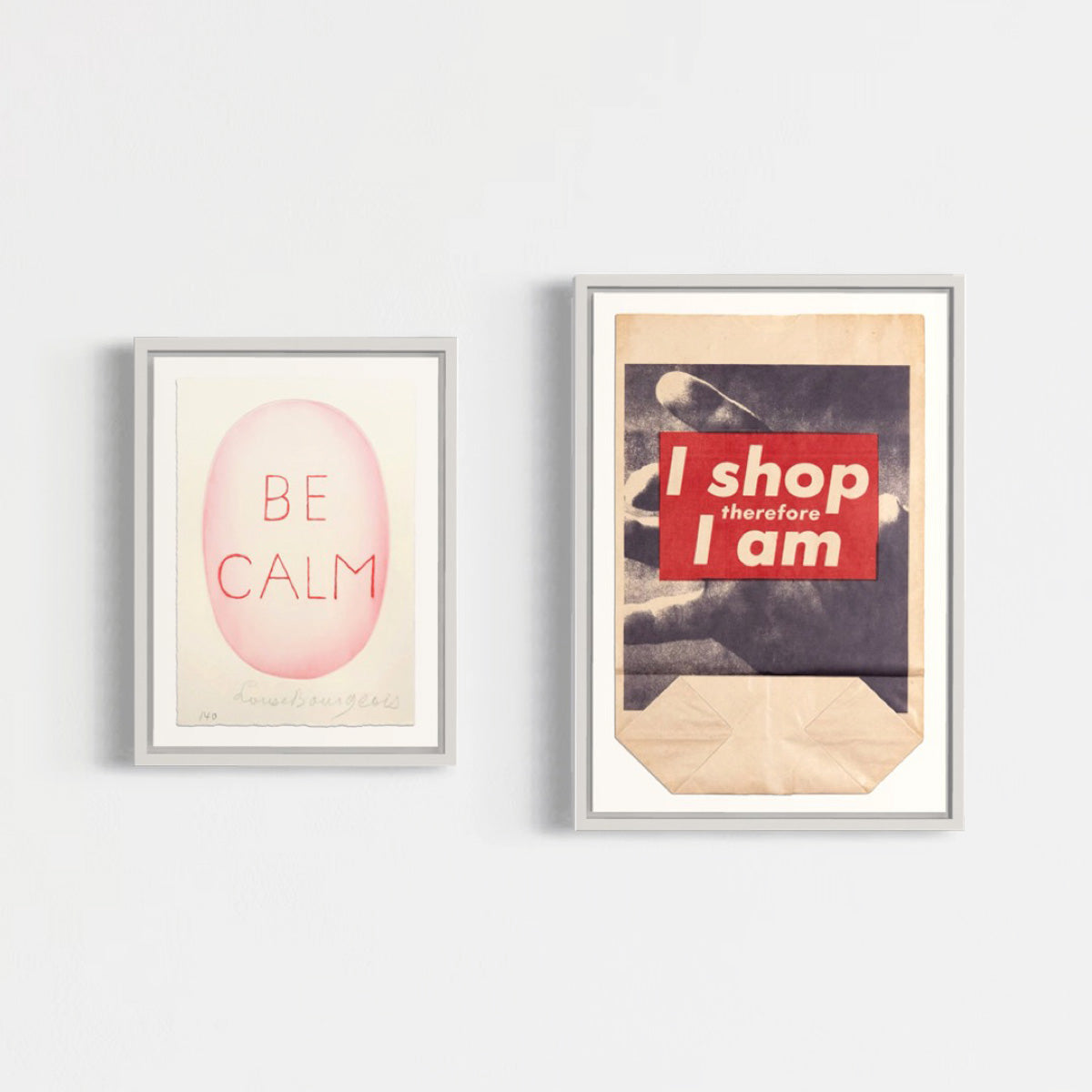
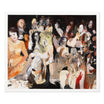
Barbara Kruger - I Shop Therefore I Am

Barbara Kruger took the visual grammar of advertising and turned it against the ideologies advertising normally serves. Working from the late 1970s, she made language the medium: "Your body is a battleground," "I shop therefore I am," each phrase addressing the viewer directly through pronouns that implicate rather than describe. Her editions carry the same confrontational force as her building-scale installations — precise, immediate, impossible to read passively. Works held at MoMA, Tate, and the Centre Pompidou.

Browse signed Barbara Kruger prints and editions now.

Available Prints & Editions

01

Barbara Kruger Biography

Barbara Kruger (born 1945 in Newark, New Jersey) did not enter art by rejecting media culture — she entered it by mastering it. Before becoming a central figure in conceptual and text-based art, she worked in editorial design at Condé Nast, including as head designer at Mademoiselle. There she learned how authority is composed: how typography commands attention, how cropping directs desire, how a single word positions the reader within an invisible hierarchy.

Her mature practice emerges directly from that apprenticeship inside persuasion. Rather than abandoning the visual language of advertising, Kruger appropriated its strategies and turned them against their ideological foundations — bold Futura or Helvetica Ultra Condensed text, cropped black-and-white photography, the arresting red frame. What looks like graphic clarity is in fact a structural intervention: her work makes visible how images speak, and on whose behalf.

Though frequently grouped with the Pictures Generation, Kruger exceeds that framework. Her work does not merely quote media imagery; it interrogates the linguistic structures that authorize it. Across billboards, bus shelters, museum installations, and editions, her art operates simultaneously as image and argument — and has done so with intensifying relevance for more than four decades.

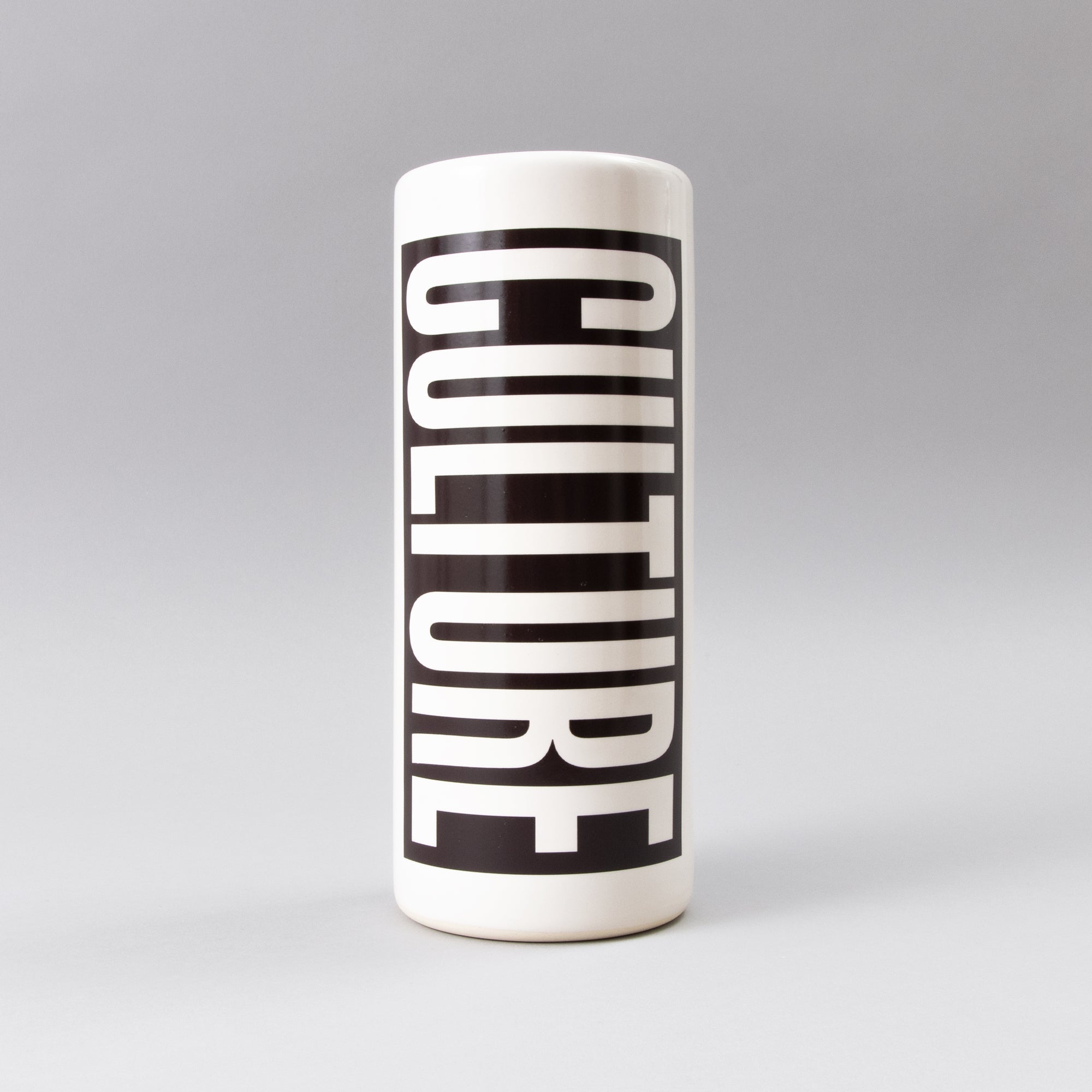
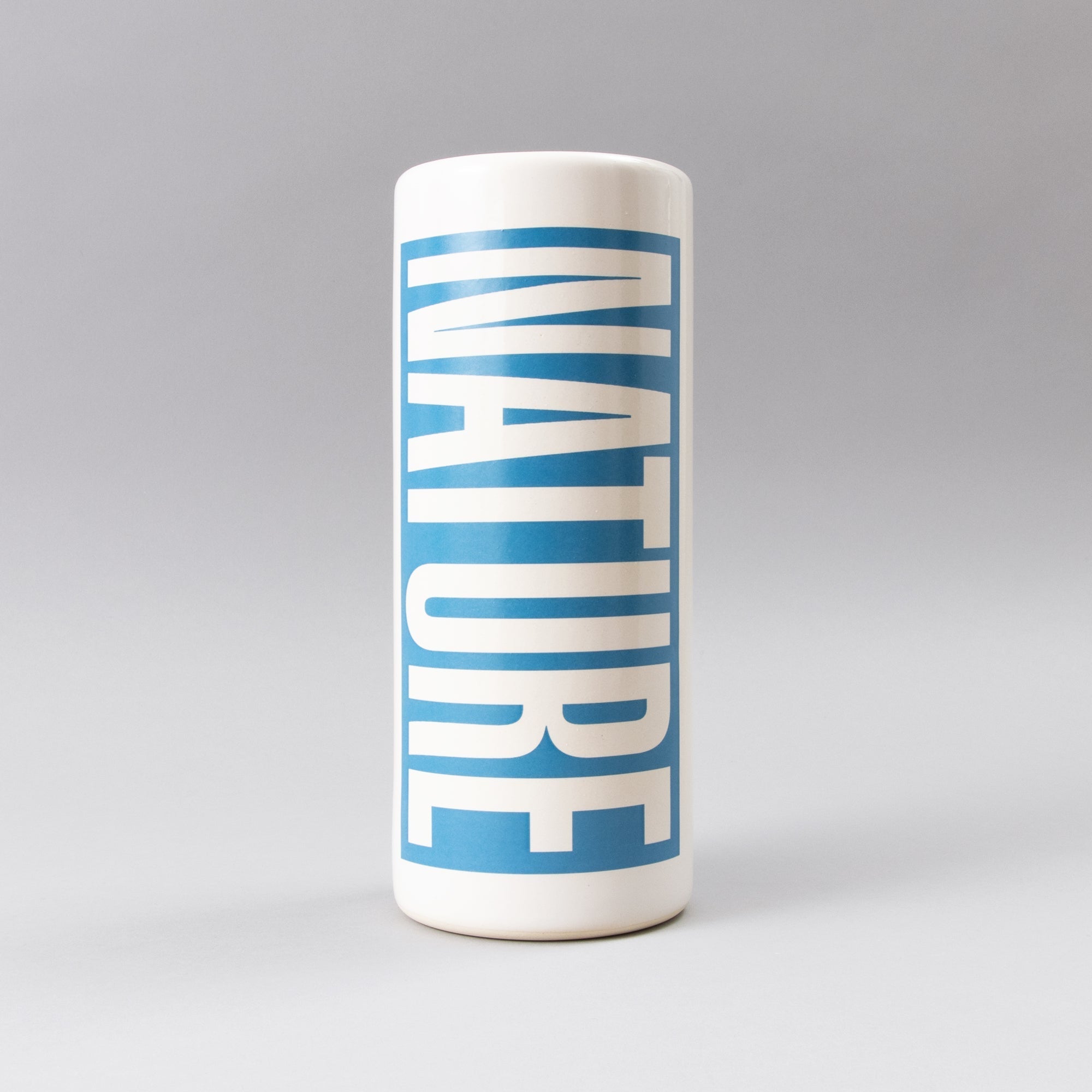
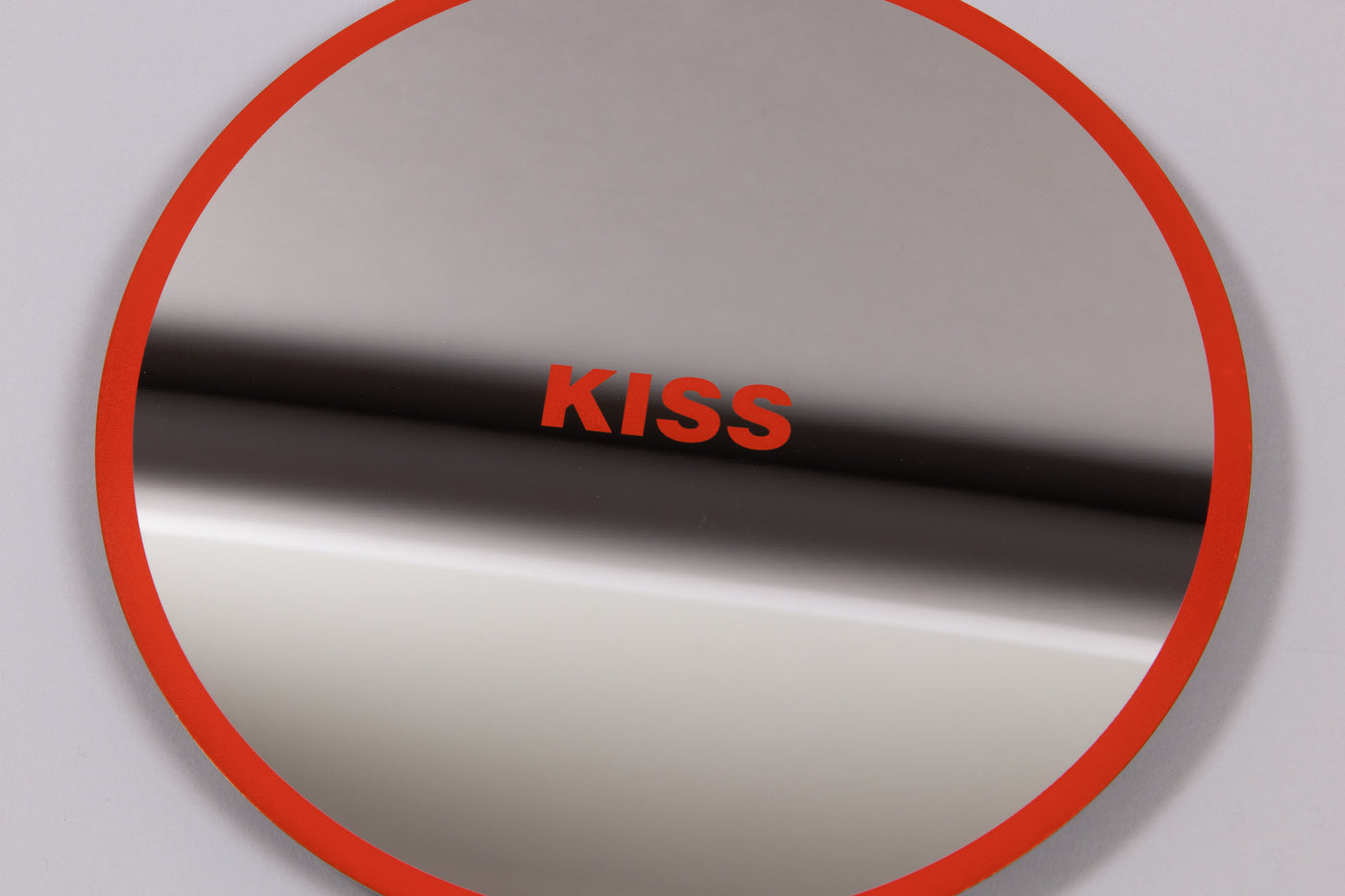
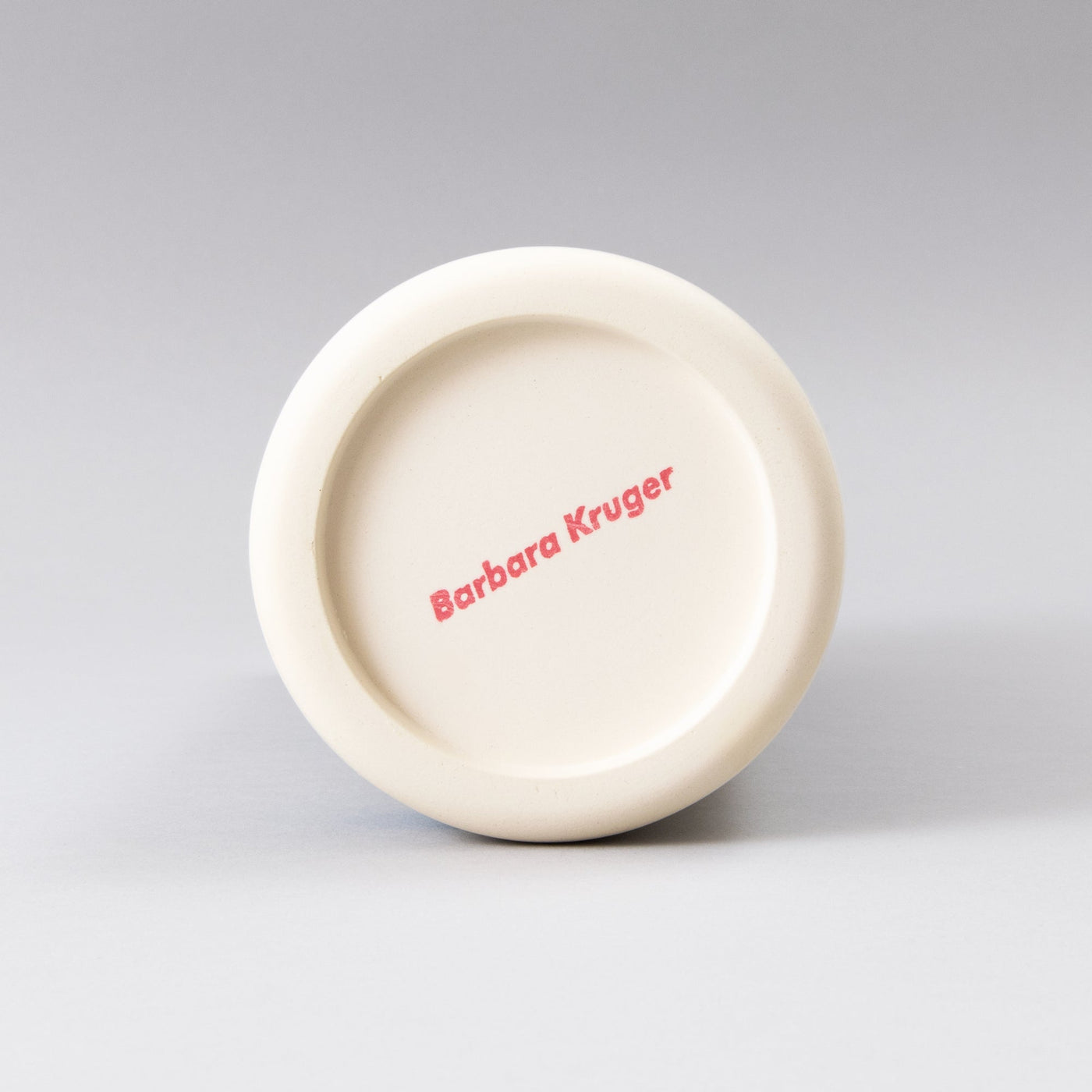
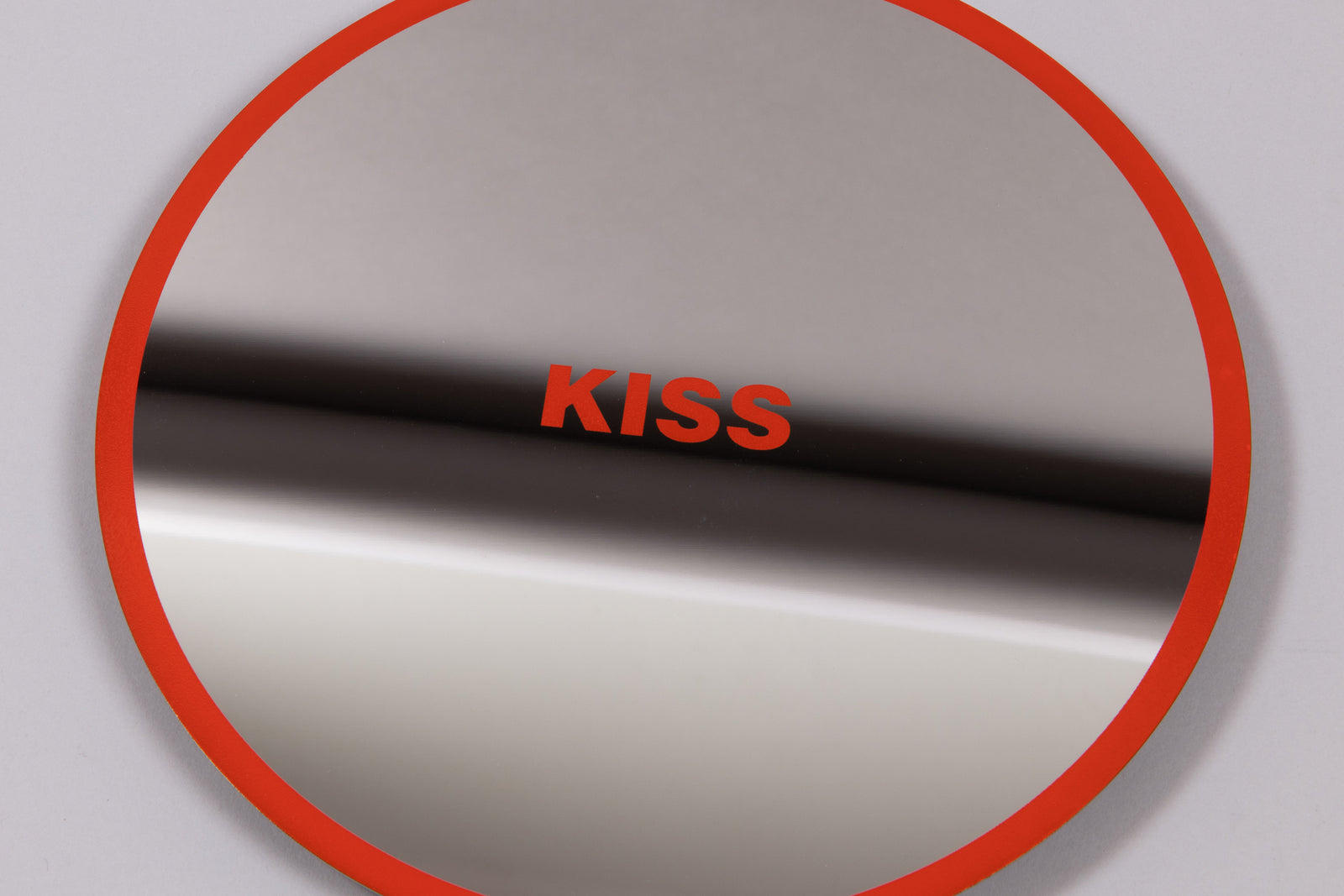
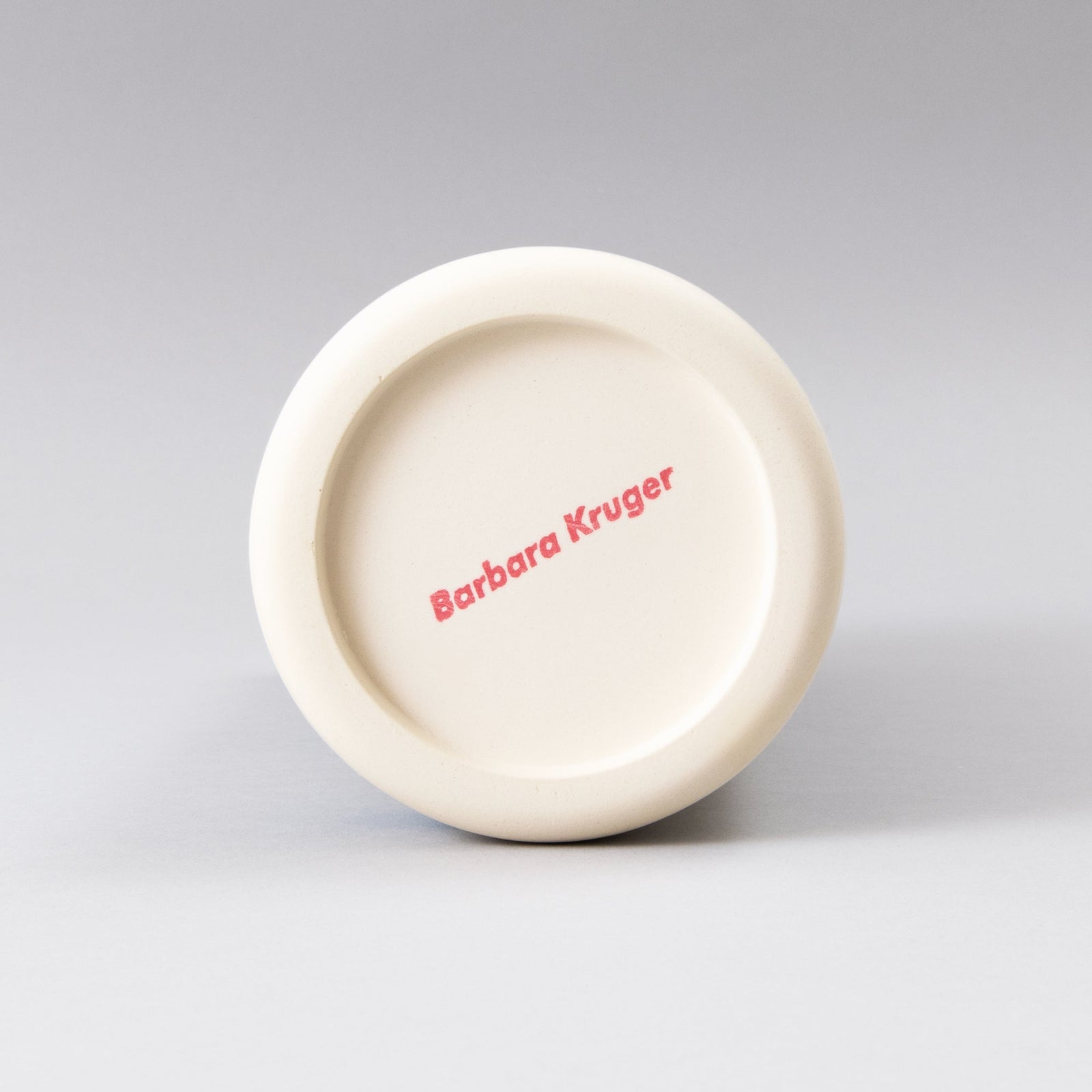
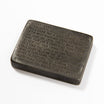
Barbara Kruger - Culture Nature Vase
02

Famous Barbara Kruger Artworks

Kruger's most radical move was deceptively simple: she made pronouns into weapons. "I," "you," "we," and "they" do not function as neutral placeholders in her work — they assign positions within systems of power, implicating the viewer rather than inviting detached interpretation.

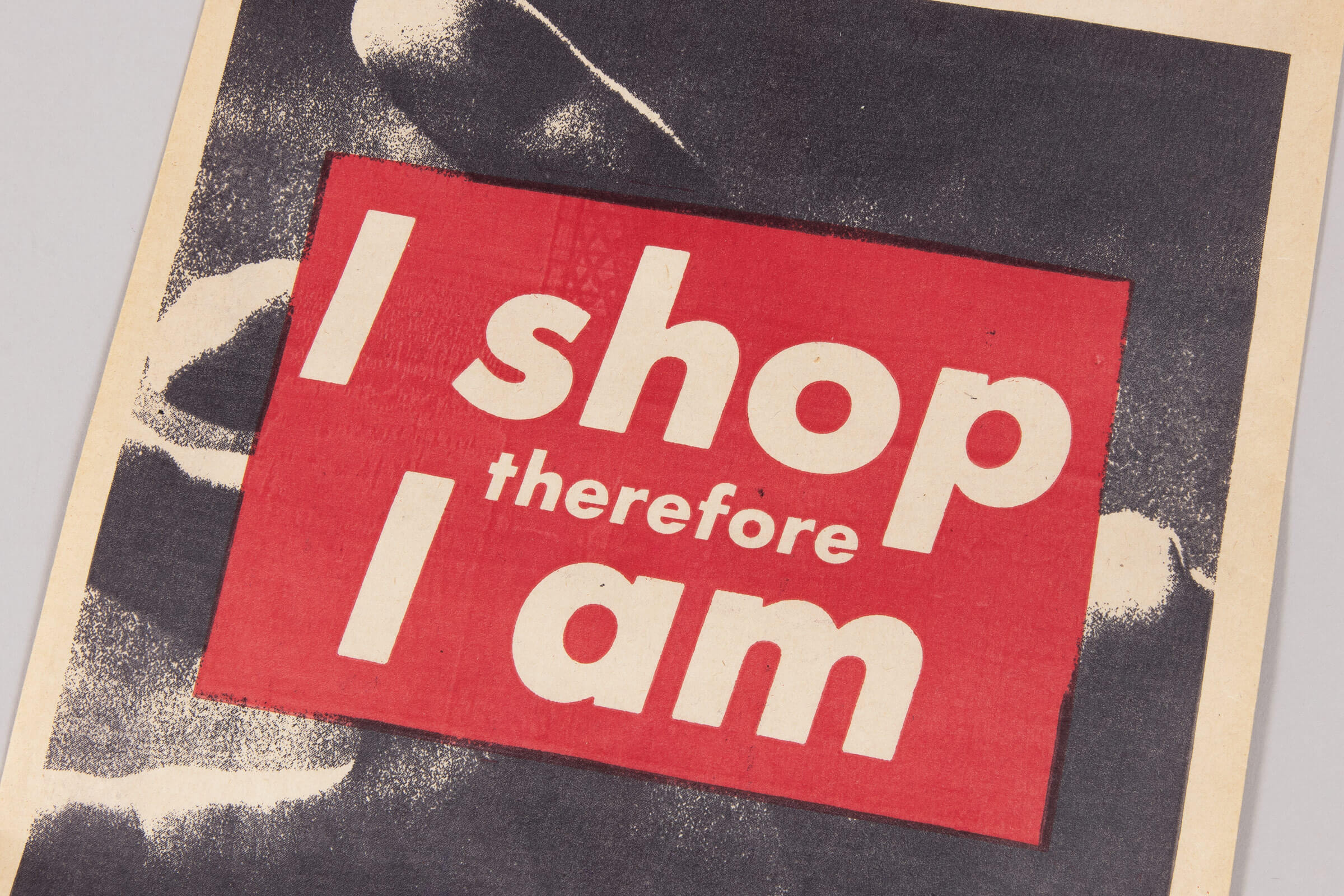
Untitled (I shop therefore I am) (1987) rewrites Descartes' "I think therefore I am" for the age of consumer capitalism — replacing thought, the foundation of selfhood, with shopping. The phrase adopts the confidence of philosophical truth while revealing how thoroughly consumption has colonised identity. It does not mock belief; it exposes how belief is manufactured through repetition, brevity, and typographic authority — which is precisely why it survived its own translation into the 9,000-edition shopping bag it critiques.

Untitled (Your body is a battleground) (1989), created for the Women's March on Washington in support of reproductive rights, condenses political polarisation into a single split image. The face divides into positive and negative exposure; the body becomes contested terrain — legislated, surveilled, fought over. Its durability comes from lucidity: it names a condition rather than illustrating an opinion.

Together these works define Kruger's method — the collapse of distinction between image and argument, between aesthetic form and ideological structure.

Barbara Kruger - I Shop Therefore I Am
03

Barbara Kruger Prints & Editions

Reproducibility is intrinsic to Kruger's method, not incidental to it. Her chosen formats — posters, billboards, prints, public installations — embrace circulation as both subject and medium. The power of the image lies in its ability to travel, and the edition is the purest expression of that logic.

Her prints and editions are therefore not secondary to her practice but integral to it. From early photomontage prints to large-scale text works, they extend the logic of circulation while retaining the conceptual rigour of the original installations. There is a deliberate tension here: Kruger's work inhabits the same circuits of exchange it critiques, and it remains lucid about that embeddedness rather than pretending to stand outside it.

For collectors, her editions offer direct access to one of the most consequential bodies of work in postwar art — strictly limited, and held in the permanent collections of MoMA, Tate, and the Centre Pompidou.

01

Barbara Kruger Biography

Barbara Kruger (born 1945 in Newark, New Jersey) did not enter art by rejecting media culture — she entered it by mastering it. Before becoming a central figure in conceptual and text-based art, she worked in editorial design at Condé Nast, including as head designer at Mademoiselle. There she learned how authority is composed: how typography commands attention, how cropping directs desire, how a single word positions the reader within an invisible hierarchy.

Her mature practice emerges directly from that apprenticeship inside persuasion. Rather than abandoning the visual language of advertising, Kruger appropriated its strategies and turned them against their ideological foundations — bold Futura or Helvetica Ultra Condensed text, cropped black-and-white photography, the arresting red frame. What looks like graphic clarity is in fact a structural intervention: her work makes visible how images speak, and on whose behalf.

Though frequently grouped with the Pictures Generation, Kruger exceeds that framework. Her work does not merely quote media imagery; it interrogates the linguistic structures that authorize it. Across billboards, bus shelters, museum installations, and editions, her art operates simultaneously as image and argument — and has done so with intensifying relevance for more than four decades.

02

Famous Barbara Kruger Artworks

Kruger's most radical move was deceptively simple: she made pronouns into weapons. "I," "you," "we," and "they" do not function as neutral placeholders in her work — they assign positions within systems of power, implicating the viewer rather than inviting detached interpretation.

Untitled (I shop therefore I am) (1987) rewrites Descartes' "I think therefore I am" for the age of consumer capitalism — replacing thought, the foundation of selfhood, with shopping. The phrase adopts the confidence of philosophical truth while revealing how thoroughly consumption has colonised identity. It does not mock belief; it exposes how belief is manufactured through repetition, brevity, and typographic authority — which is precisely why it survived its own translation into the 9,000-edition shopping bag it critiques.

Untitled (Your body is a battleground) (1989), created for the Women's March on Washington in support of reproductive rights, condenses political polarisation into a single split image. The face divides into positive and negative exposure; the body becomes contested terrain — legislated, surveilled, fought over. Its durability comes from lucidity: it names a condition rather than illustrating an opinion.

Together these works define Kruger's method — the collapse of distinction between image and argument, between aesthetic form and ideological structure.

03

Barbara Kruger Prints & Editions

Reproducibility is intrinsic to Kruger's method, not incidental to it. Her chosen formats — posters, billboards, prints, public installations — embrace circulation as both subject and medium. The power of the image lies in its ability to travel, and the edition is the purest expression of that logic.

Her prints and editions are therefore not secondary to her practice but integral to it. From early photomontage prints to large-scale text works, they extend the logic of circulation while retaining the conceptual rigour of the original installations. There is a deliberate tension here: Kruger's work inhabits the same circuits of exchange it critiques, and it remains lucid about that embeddedness rather than pretending to stand outside it.

For collectors, her editions offer direct access to one of the most consequential bodies of work in postwar art — strictly limited, and held in the permanent collections of MoMA, Tate, and the Centre Pompidou.

Barbara Kruger - Culture Nature VaseBarbara Kruger - I Shop Therefore I Am

Barbara Kruger: Key Questions

Collecting Barbara Kruger?

Looking for a specific artwork or have a question about an edition? We're happy to advise on availability, pricing, condition, and provenance — and to source artworks beyond our current selection.

Contact us

Prints, Photographs & Multiples

View our full collection of

Prints, Photographs & Multiples

Explore editions