

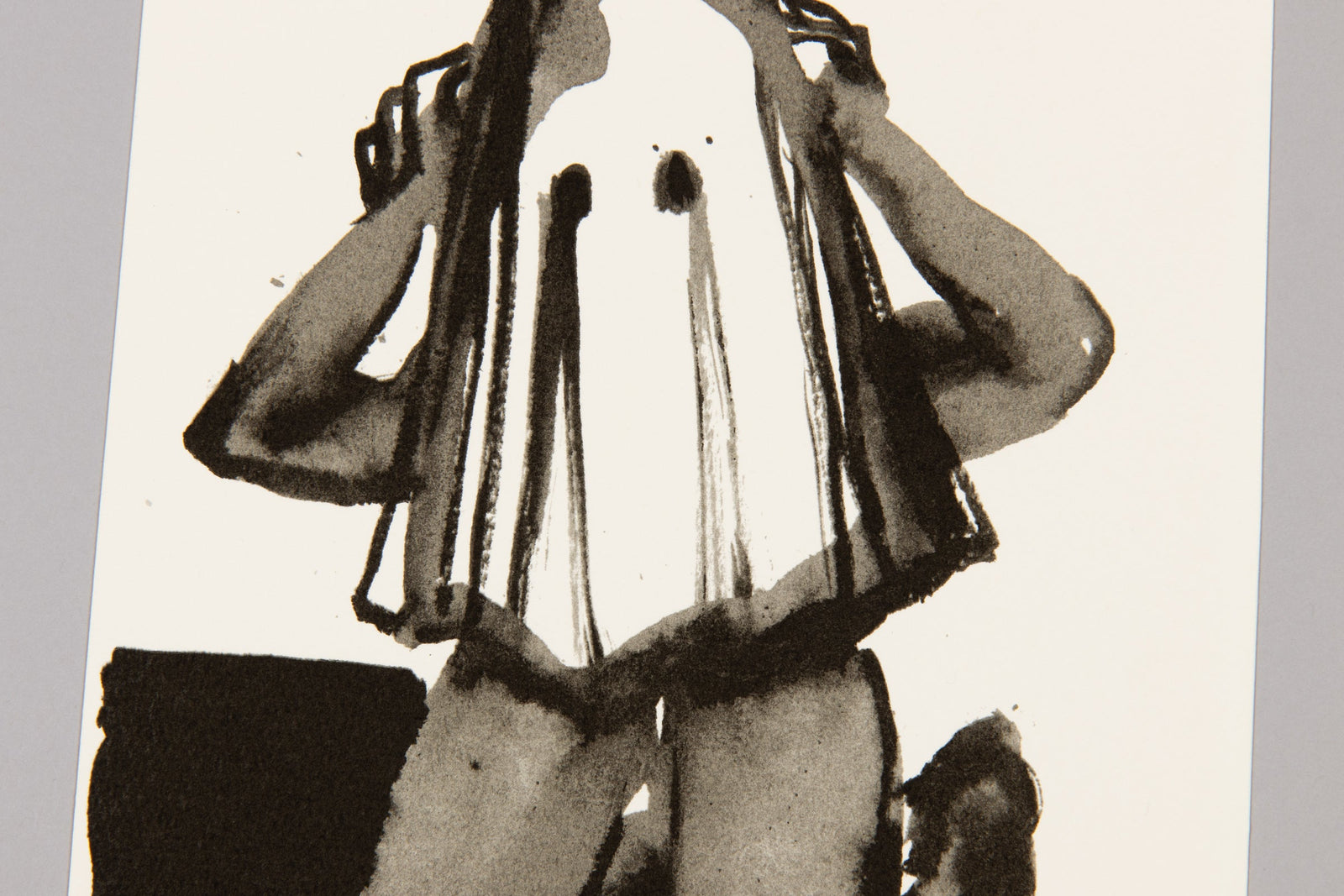
Marlene Dumas

Marlene Dumas paints from photographs — newspaper images, pornography, family snapshots — and turns them into something photography can never be: slow, morally uncomfortable, impossible to look away from. Born in Cape Town in 1953, she moved to Amsterdam in 1976 and built a practice at the intersection of desire, race, and mortality. Her work entered MoMA, Tate, and the Stedelijk not because it was difficult, but because it was necessary. The prints carry the same psychological charge — the same collapsed distance between painter and subject, the same refusal of resolution.
Browse signed Marlene Dumas prints and editions now.
Available Prints & Editions
2 products

Marlene Dumas (born 1953 in Cape Town) grew up on her family's vineyard in Kuils River during the height of apartheid — an upbringing that sharpened, permanently, her sense of how images classify and control bodies. She studied fine art at the University of Cape Town before relocating to the Netherlands in 1976, completing further studies at the Ateliers '63 in Haarlem and later reading psychology at the University of Amsterdam. She has lived and worked in Amsterdam ever since.
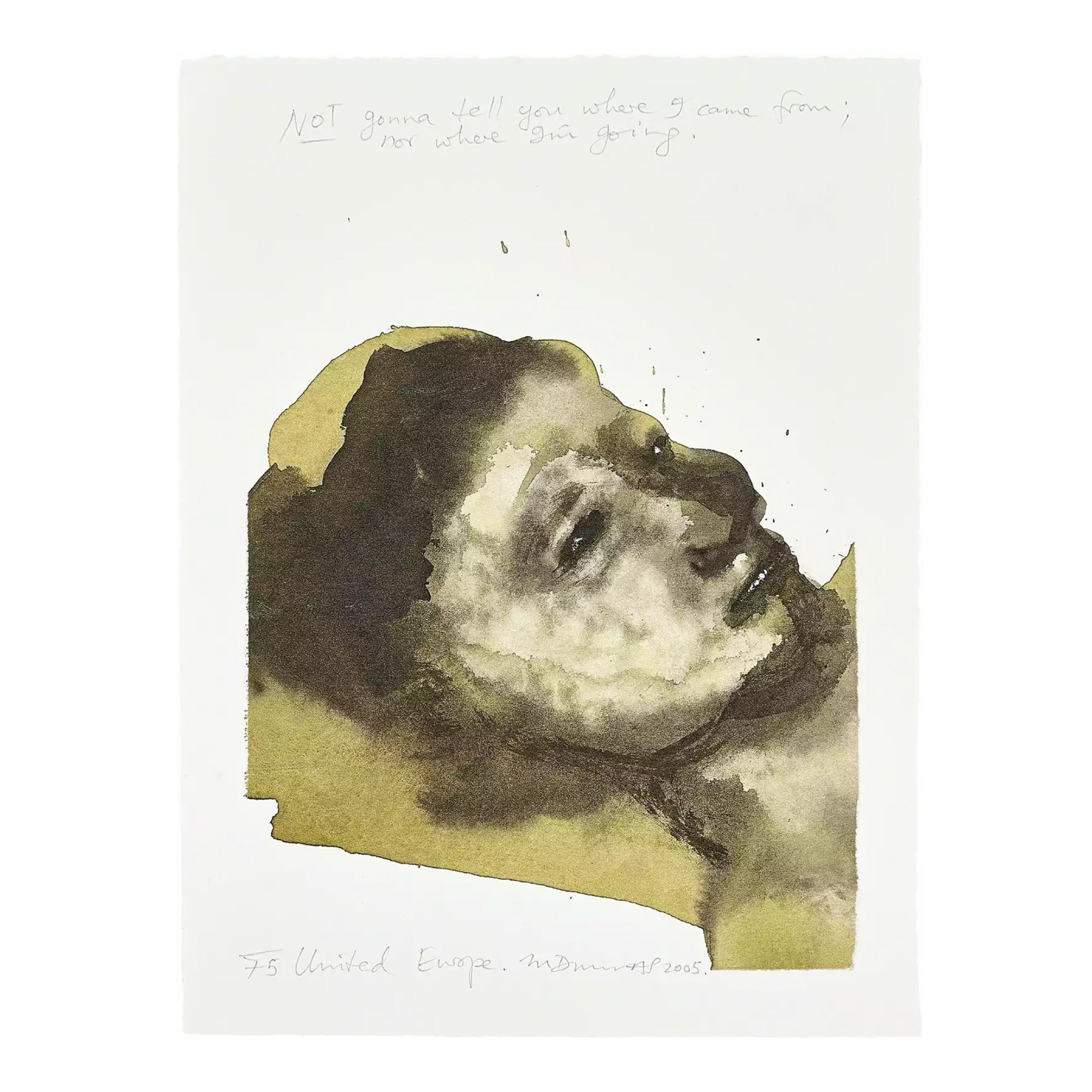
Dumas does not paint from life. She works exclusively from photographs — press images, pornography, Polaroids of friends and lovers, art-historical reproductions, newspaper clippings — sources already saturated with meaning before she ever touches a brush. Using thinned oil on canvas or ink on paper, applied wet-on-wet so that pigment bleeds and stains rather than sits, she dissolves the photograph's claim to documentary certainty. Faces blur. Flesh drifts toward green, violet, or bruise-blue. The resulting figures are never portraits of specific people, even when the source is identifiable — they function instead as sites where race, sexuality, violence, and vulnerability are staged for the viewer to confront.
This method places her at the centre of what critics have called painting after photography: rather than retreating from photography's authority in the late twentieth century, Dumas used it as raw material, reopening questions the photograph pretends to have already settled. As she has put it herself, "painting doesn't freeze time — it circulates and recycles time like a wheel that turns."
In 2004, Dumas became one of the first living women artists to see a work sell for over $1 million at auction. Two decades later, in May 2025, her 1997 painting Miss January set a new auction record for a living woman artist entirely, selling for $23.4 million at Christie's New York — confirmation of a market position built patiently over four decades, largely outside the speculative cycles that have driven many of her contemporaries.

The Teacher (1987), drawn from a South African class photograph, confronts the racial segregation of apartheid-era schooling with a directness rare even within Dumas's own body of work. It sold for close to $3 million at Christie's London in 2005, an early marker of the painting's historical weight.
The Painter (1994) depicts Dumas's daughter Helena at four years old, her hands and face smeared with paint — child as artist, artist as child, the roles of maker and subject collapsing into each other. Painted from a photograph rather than from life, as almost all of Dumas's work is, it stands as one of her most quoted meditations on what painting itself actually does.
Stern (2004), a posthumous portrait of Ulrike Meinhof of the Red Army Faction, was shown alongside two other portraits of politically violent women — a triptych confronting how death, gender, and radical politics intersect in the historical record.
Miss January (1997), Dumas's current auction record at $23.4 million, exemplifies her recurring engagement with the female body as contested image — desire and vulnerability rendered inseparable, exactly the tension her critics and admirers alike return to again and again.

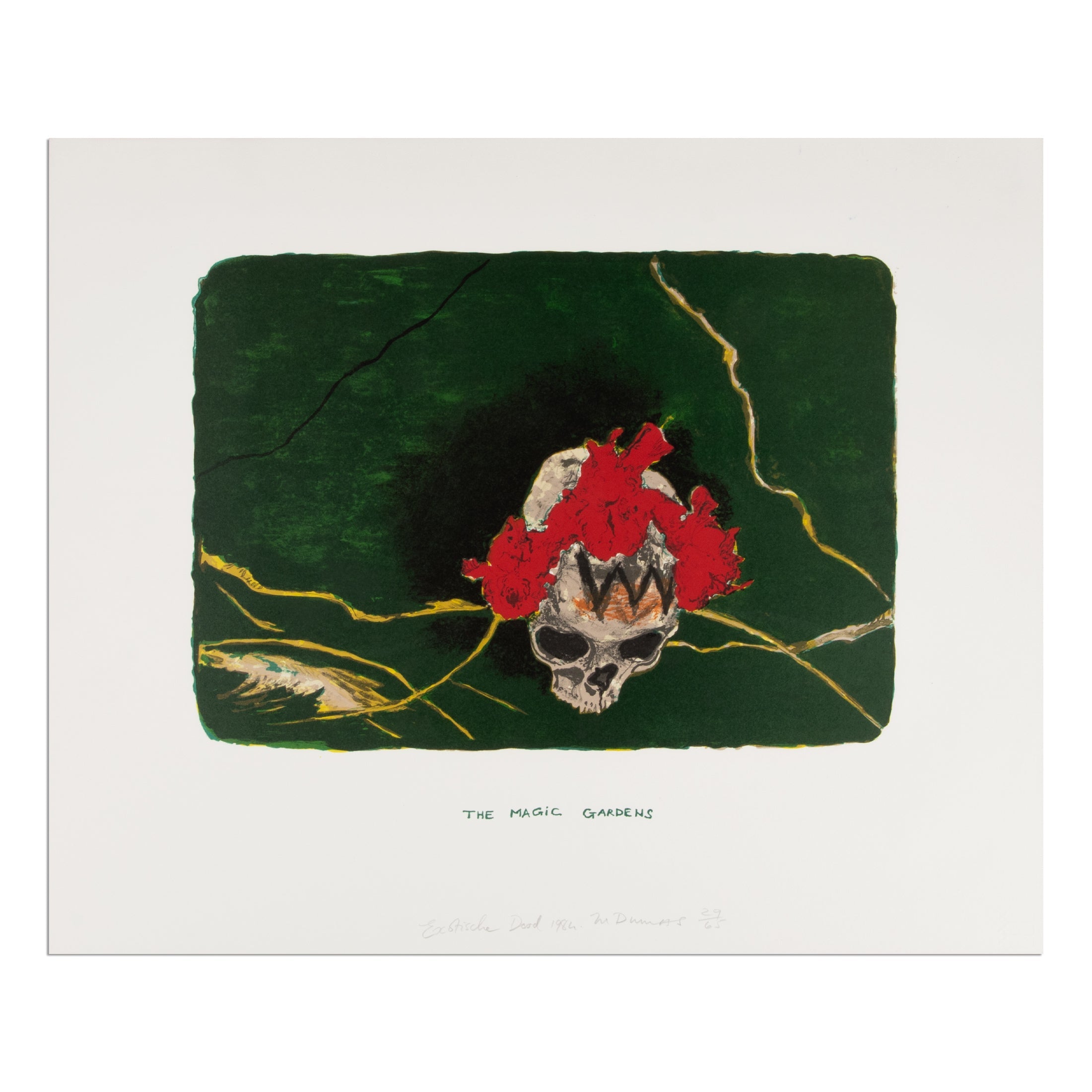
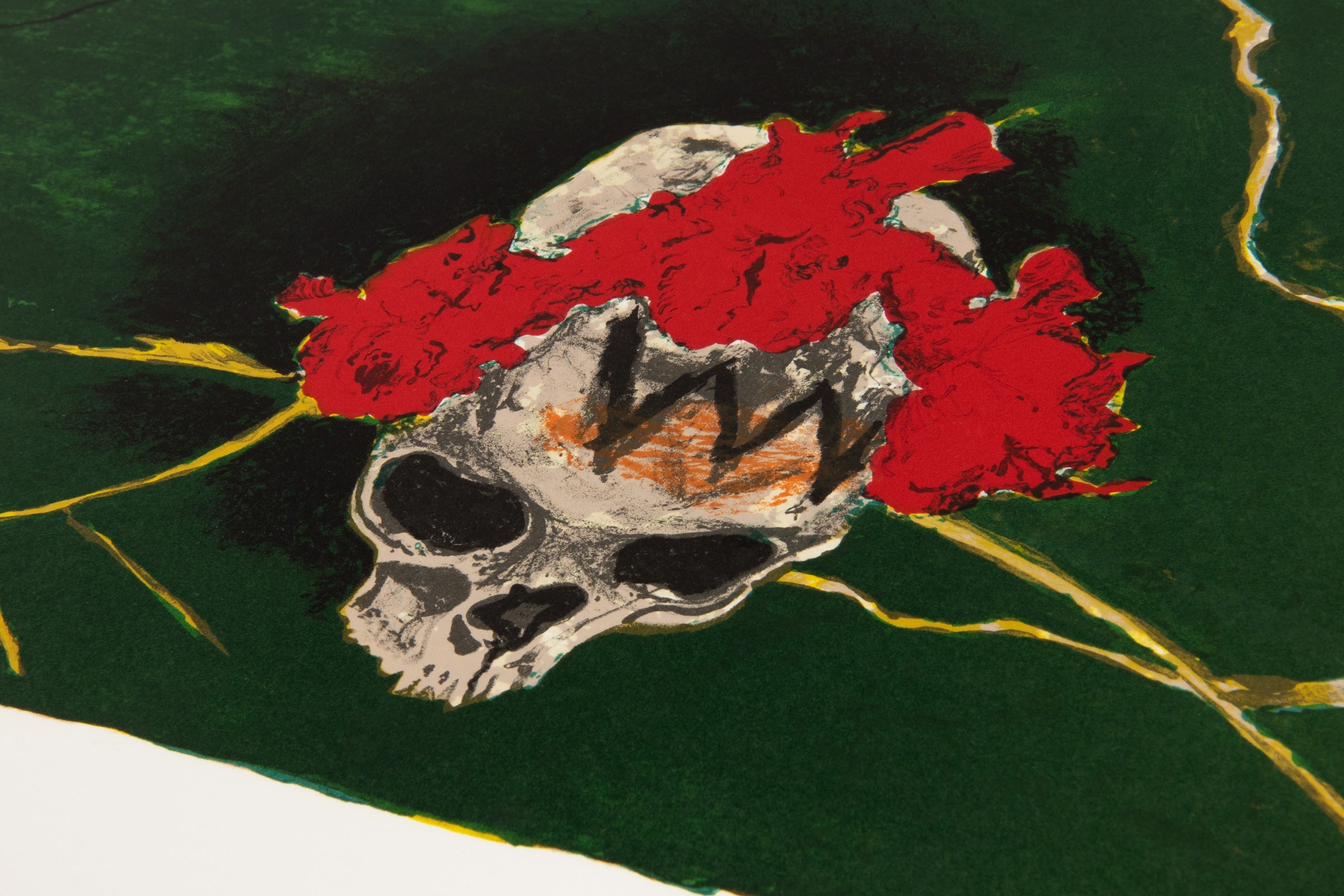
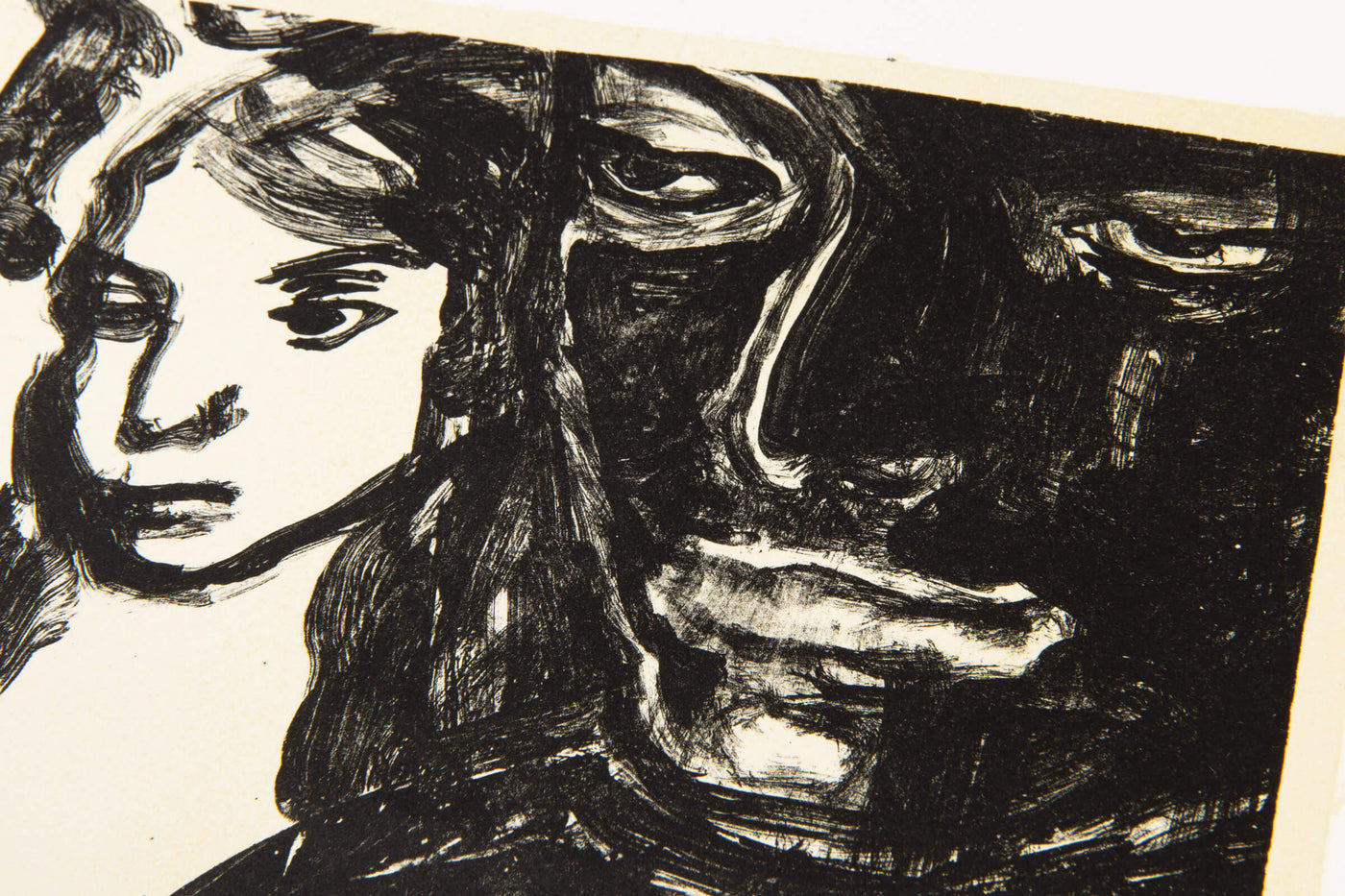
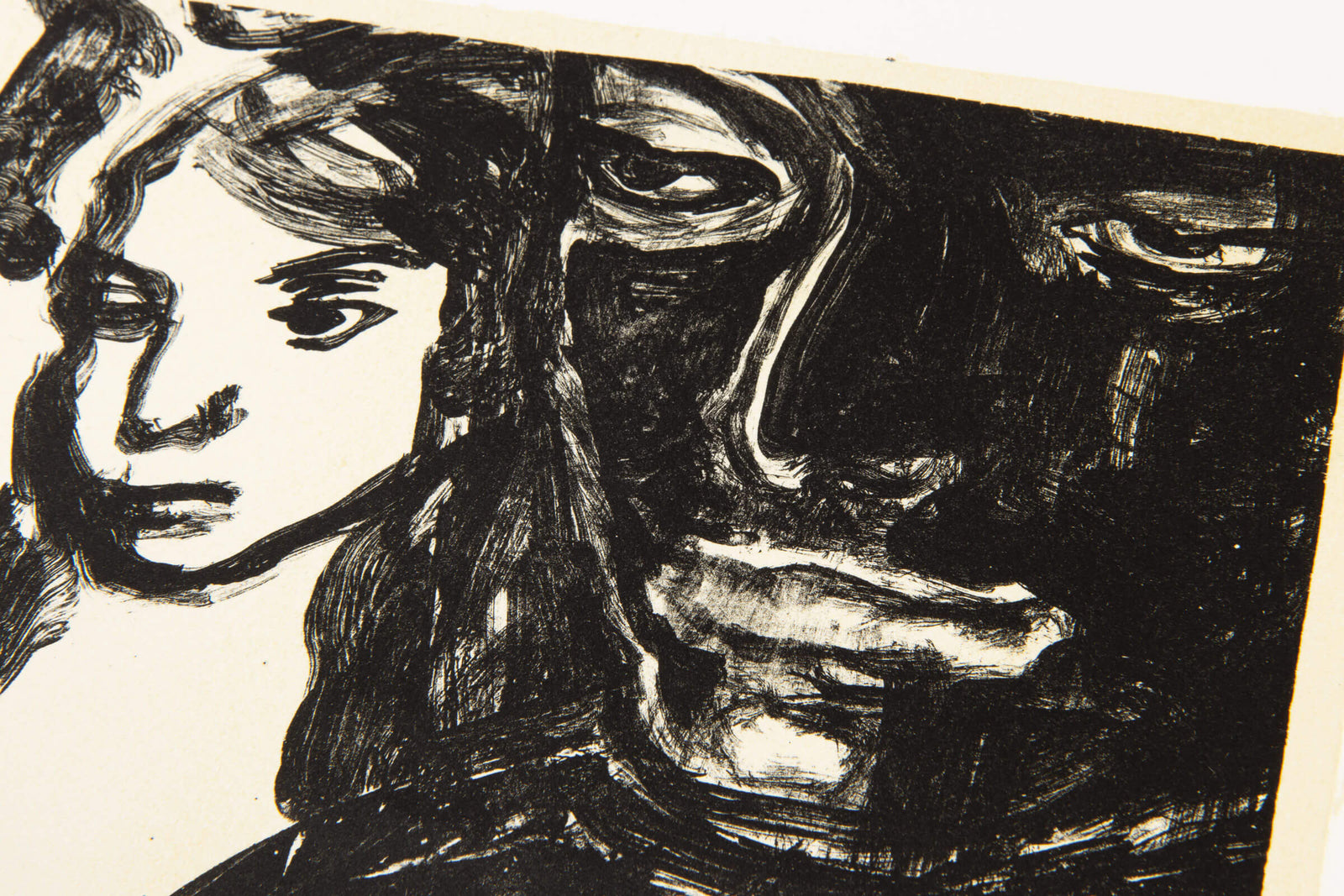
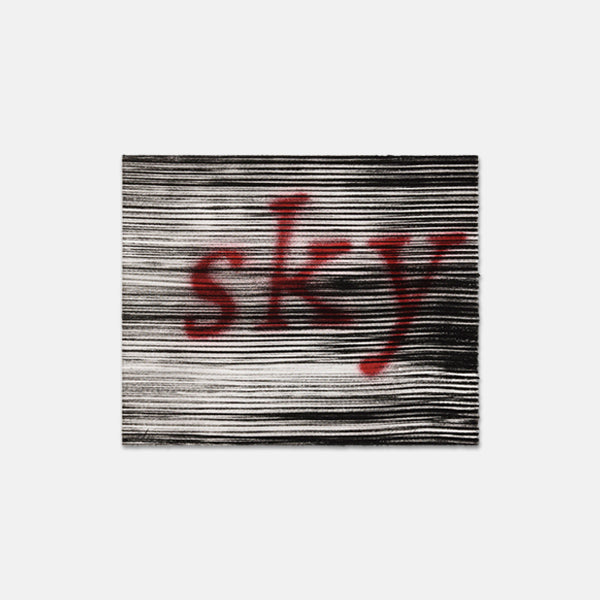
Editions are not a secondary output in Dumas's practice but a genuine extension of its central concern: how images circulate, repeat, and accumulate meaning through repetition. She has worked across lithography, screenprint, and digital print since the 1980s, producing editions as small as seven and as large as 250 through publishers including the Hamburg print institution Griffelkunst — several, notably, released without a fixed edition size, printed instead to standing subscription.
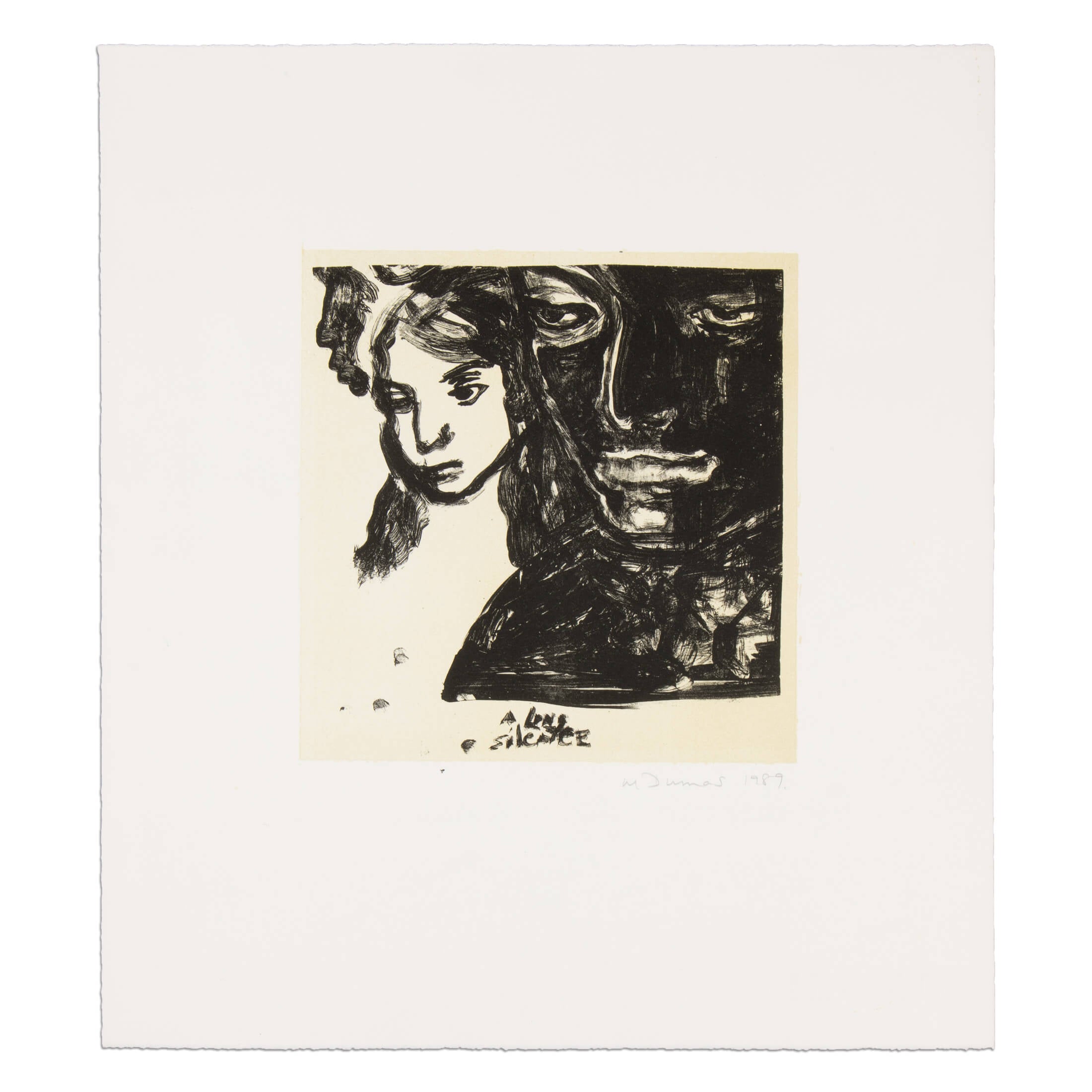
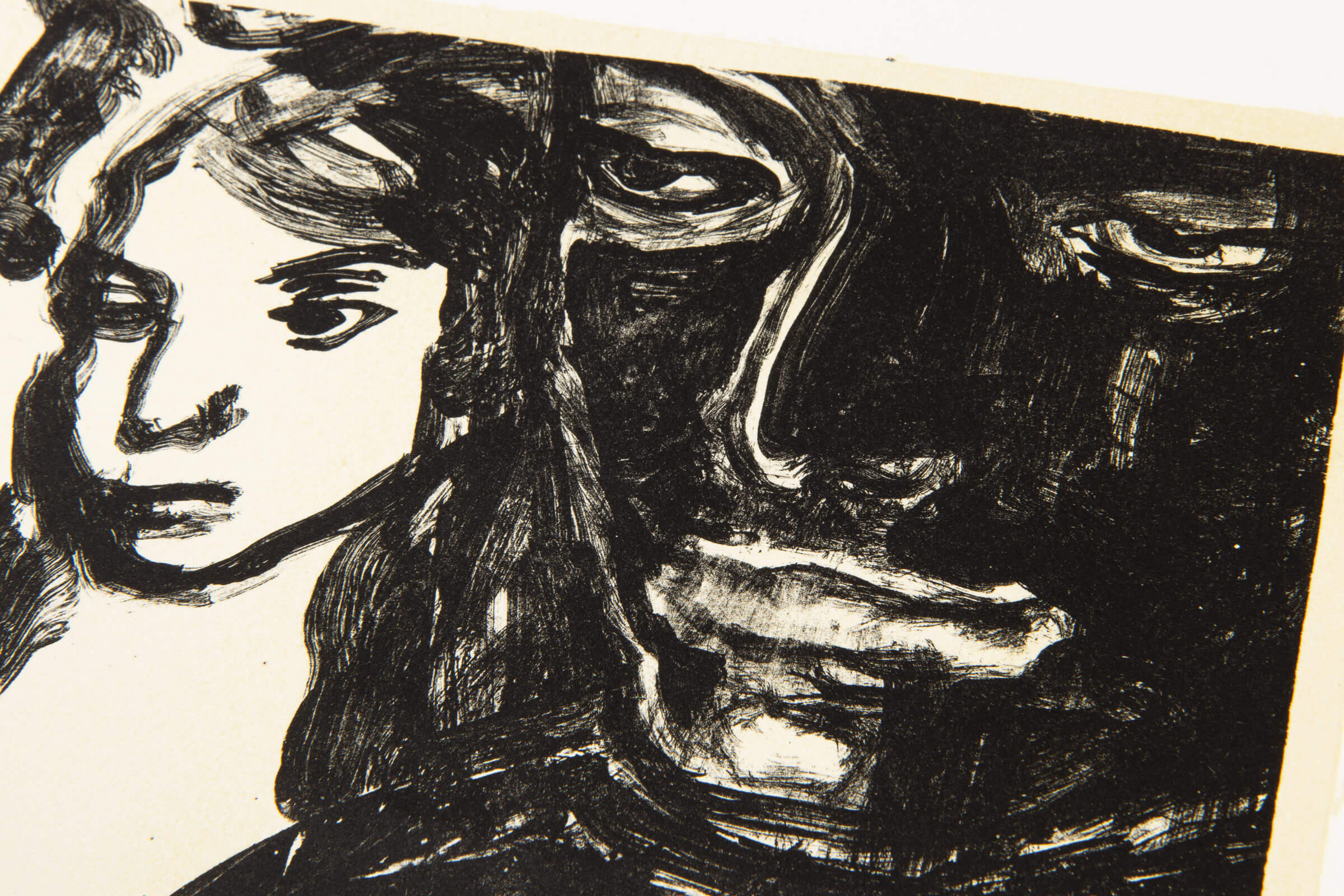
Works such as A Long Silence (1989), a hand-signed colour lithograph, typically trade in the $2,000 to $3,000 range at auction and through dealers — a considerably more accessible point of entry than her paintings, whose top prices on the primary market alone reach $2.5–3 million according to art advisors. Because major Dumas paintings so rarely reach the secondary market, her prints and works on paper have become, for most collectors, the most realistic way to own an original by an artist who has voluntarily kept much of her work out of public circulation.
For collectors, this scarcity of paintings makes Dumas's limited edition prints genuinely significant rather than incidental. Works are held in the permanent collections of MoMA, Tate, and the Centre Pompidou.
Marlene Dumas (born 1953 in Cape Town) grew up on her family's vineyard in Kuils River during the height of apartheid — an upbringing that sharpened, permanently, her sense of how images classify and control bodies. She studied fine art at the University of Cape Town before relocating to the Netherlands in 1976, completing further studies at the Ateliers '63 in Haarlem and later reading psychology at the University of Amsterdam. She has lived and worked in Amsterdam ever since.
Dumas does not paint from life. She works exclusively from photographs — press images, pornography, Polaroids of friends and lovers, art-historical reproductions, newspaper clippings — sources already saturated with meaning before she ever touches a brush. Using thinned oil on canvas or ink on paper, applied wet-on-wet so that pigment bleeds and stains rather than sits, she dissolves the photograph's claim to documentary certainty. Faces blur. Flesh drifts toward green, violet, or bruise-blue. The resulting figures are never portraits of specific people, even when the source is identifiable — they function instead as sites where race, sexuality, violence, and vulnerability are staged for the viewer to confront.
This method places her at the centre of what critics have called painting after photography: rather than retreating from photography's authority in the late twentieth century, Dumas used it as raw material, reopening questions the photograph pretends to have already settled. As she has put it herself, "painting doesn't freeze time — it circulates and recycles time like a wheel that turns."
In 2004, Dumas became one of the first living women artists to see a work sell for over $1 million at auction. Two decades later, in May 2025, her 1997 painting Miss January set a new auction record for a living woman artist entirely, selling for $23.4 million at Christie's New York — confirmation of a market position built patiently over four decades, largely outside the speculative cycles that have driven many of her contemporaries.
The Teacher (1987), drawn from a South African class photograph, confronts the racial segregation of apartheid-era schooling with a directness rare even within Dumas's own body of work. It sold for close to $3 million at Christie's London in 2005, an early marker of the painting's historical weight.
The Painter (1994) depicts Dumas's daughter Helena at four years old, her hands and face smeared with paint — child as artist, artist as child, the roles of maker and subject collapsing into each other. Painted from a photograph rather than from life, as almost all of Dumas's work is, it stands as one of her most quoted meditations on what painting itself actually does.
Stern (2004), a posthumous portrait of Ulrike Meinhof of the Red Army Faction, was shown alongside two other portraits of politically violent women — a triptych confronting how death, gender, and radical politics intersect in the historical record.
Miss January (1997), Dumas's current auction record at $23.4 million, exemplifies her recurring engagement with the female body as contested image — desire and vulnerability rendered inseparable, exactly the tension her critics and admirers alike return to again and again.
Editions are not a secondary output in Dumas's practice but a genuine extension of its central concern: how images circulate, repeat, and accumulate meaning through repetition. She has worked across lithography, screenprint, and digital print since the 1980s, producing editions as small as seven and as large as 250 through publishers including the Hamburg print institution Griffelkunst — several, notably, released without a fixed edition size, printed instead to standing subscription.
Works such as A Long Silence (1989), a hand-signed colour lithograph, typically trade in the $2,000 to $3,000 range at auction and through dealers — a considerably more accessible point of entry than her paintings, whose top prices on the primary market alone reach $2.5–3 million according to art advisors. Because major Dumas paintings so rarely reach the secondary market, her prints and works on paper have become, for most collectors, the most realistic way to own an original by an artist who has voluntarily kept much of her work out of public circulation.
For collectors, this scarcity of paintings makes Dumas's limited edition prints genuinely significant rather than incidental. Works are held in the permanent collections of MoMA, Tate, and the Centre Pompidou.


Marlene Dumas: Key Questions
Collecting Marlene Dumas?
Looking for a specific artwork or have a question about an edition? We're happy to advise on availability, pricing, condition, and provenance — and to source artworks beyond our current selection.
What is Marlene Dumas known for?
Marlene Dumas is known for psychologically intense figurative paintings made from photographic sources — press images, pornography, personal snapshots, and art history — that confront race, sexuality, violence, and identity. Based in Amsterdam since 1976, she is widely regarded as one of the most significant figurative painters of the past four decades.
Does Marlene Dumas paint from photographs?
Yes, exclusively. Dumas works from existing images rather than live models — a deliberate choice that lets her interrogate the authority images already carry rather than pretend to document reality directly. Translating a photograph into paint, for Dumas, reopens a question the photograph appears to have closed.
Is Marlene Dumas a political artist?
Marlene Dumas's work engages political themes — race, apartheid, violence, gender — but rarely through direct slogans or activism. Growing up in apartheid-era South Africa sharpened her awareness of how images classify bodies and assign value, and her paintings examine the ideological weight embedded in visual culture through structural inquiry rather than explicit propaganda.
Why are Marlene Dumas's portraits so haunting?
Dumas's figures rarely resolve into fixed likeness. Working wet-on-wet with heavily diluted paint, she lets pigment bleed and stain rather than describe — faces blur, flesh shifts toward green or violet, edges dissolve before they settle. Because her subjects are never quite finished in the traditional sense, the viewer cannot look away comfortably; the paintings seem to shift the longer they're observed, refusing to harden into a stable image the way a photograph would.
How much do Marlene Dumas works sell for?
Marlene Dumas's unique paintings have reached extraordinary prices — her record stands at $23.4 million including premium, set at Christie's New York in May 2025 for Miss January (1997), the current record for a living woman artist at auction. Because major paintings rarely reach the market, her signed lithographs and prints — typically $2,000 to $3,000 including premium — represent the most accessible way most collectors can own an original work.

Buy art online
Shop editions with transparent pricing, accurate condition reports, and fast dispatch. Built for international collectors — buying original art made simple and reliable.
Worldwide shipping
Every work ships fully insured and tracked, handled only by trusted international express carriers — DHL Express, FedEx, UPS — and typically dispatched within five days.
Professional packaging
Meticulous packing is our craft. Each artwork is packed in-house to archival standards — multi-layer construction built to ensure it arrives in mint condition, anywhere in the world.
Secure payment
Checkout is powered by Shopify Payments — the same encrypted, PCI-compliant infrastructure trusted by millions of merchants worldwide.